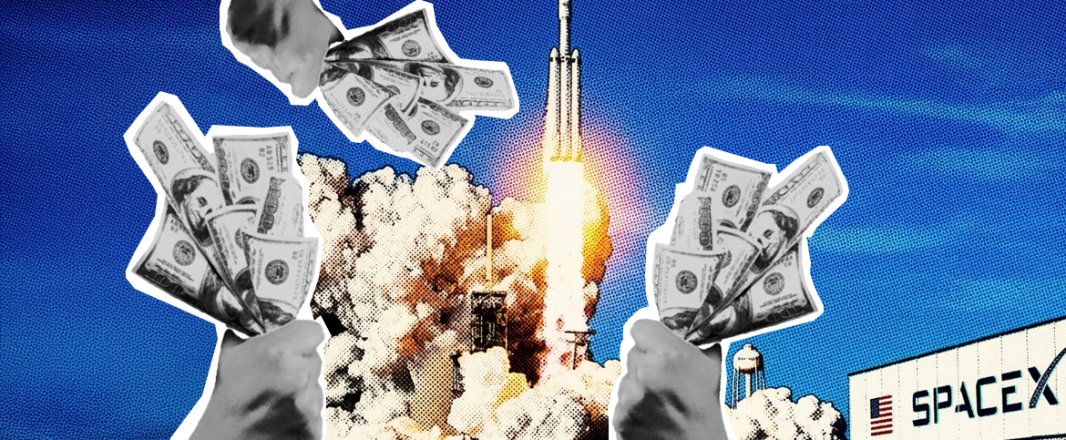
Everyone is talking about the eventual SpaceX IPO as though it is preordained to be the largest and most successful public offering in history.
Maybe.
But perhaps we should spend a little more time discussing the risks. Not the risks to SpaceX itself. The risks to everything around it. Perhaps nowhere is this more present than in the Aviation and Travel Startup Ecosystem.
The narrative is seductive. SpaceX is not being valued as a launch company. It is being valued as a unique combination of rockets, satellite communications, national infrastructure, AI enablement, defense capability, global connectivity, and perhaps most importantly, Elon Musk’s ability to attract capital. That is a very powerful story. The question is whether the public markets are buying a company or buying a narrative. That ripples out very broadly.
Aviation is awash with failed startups particularly in eVTOL.
History tells us that these are not always the same thing. The eventual IPO will be more than a listing. It will be a test of whether public markets are still willing to pay extraordinary premiums for visionary stories in an environment where interest rates remain elevated, geopolitical uncertainty is increasing, and investors are becoming more selective about where they place long-term bets. What will be that impact on our little corner of the world.
If the offering succeeds beyond expectations, the implications are enormous. A generation of private “mega-unicorns” will suddenly see a pathway to liquidity. Venture investors will celebrate. Founders will dust off IPO plans. Investment bankers will proclaim the reopening of the technology capital markets. But what happens if it doesn’t? What happens if the market decides that even SpaceX has limits? A disappointing IPO wont simply impact SpaceX shareholders. It would send a shockwave through the entire venture ecosystem. The companies most at risk would not be the billion-dollar giants.
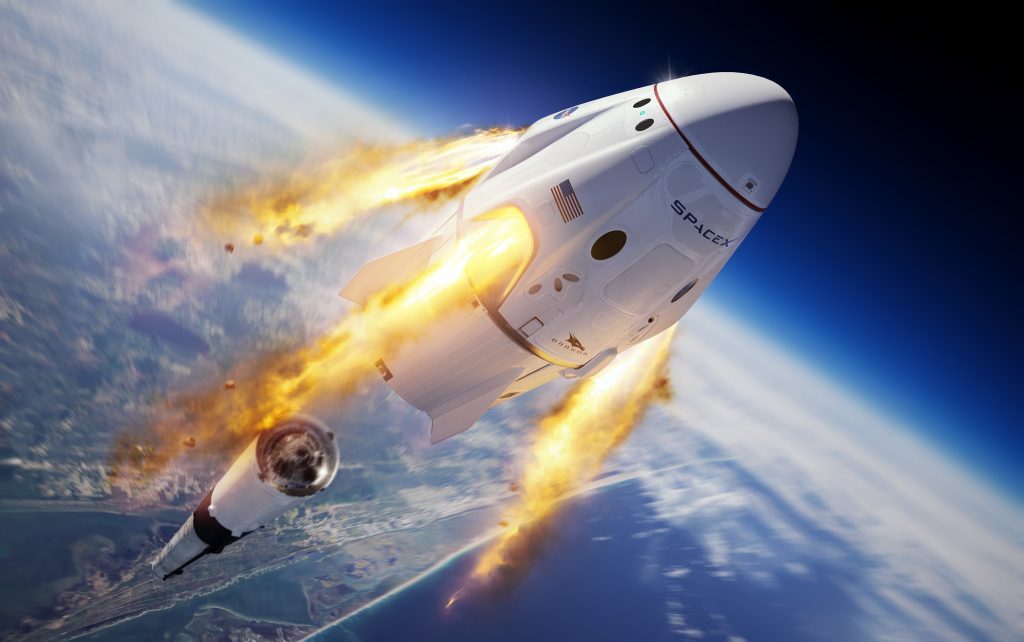
Image credit: SpaceX
In my view the already difficult world of capital raising for Travel Startups will feel the heat. For years, startups have relied on the assumption that larger pools of capital would continue flowing through the system. A blockbuster SpaceX IPO could attract vast amounts of investment capital into a relatively small number of mega-scale opportunities. Capital that might otherwise have found its way into emerging companies, specialist funds, or early-stage innovation in Travel could instead be concentrated into a handful of perceived “can’t miss” assets.
In effect, the gravitational pull of Musk’s orbit becomes so strong that it bends the trajectory of investment across the broader market of Tech. This is where the contrarian view begins. The real question isn’t whether SpaceX deserves a trillion-dollar valuation. The real question is whether the ecosystem can absorb it, AND the subsequent impact.
Because capital is not infinite. Every dollar invested in one opportunity is a dollar unavailable somewhere else. The venture industry already faces longer holding periods, fewer exits, reduced liquidity, and increasing pressure on follow-on funding rounds. A giant SpaceX listing may not solve those problems. It may amplify them. The irony is that SpaceX could become both the symbol of a healthy innovation economy and the catalyst for greater capital concentration within it.
The company may be successful. The IPO may be successful. But those are not necessarily the same thing as the market being healthy. Sometimes the biggest stories cast the longest shadows.
And it is often in those shadows where startups struggle to grow.
About the author: With over 40 years of experience in the travel and distribution technology industry, Timothy O’Neil-Dunne is the Principal at T2Impact, LLC, an analysis and consulting firm that specializes in aviation, travel, and leisure.