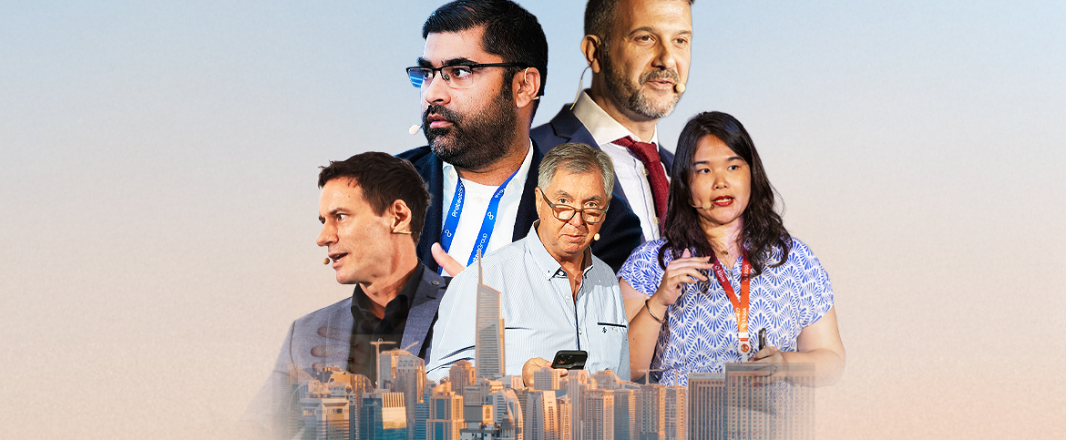
Gathering the key takeaways from WiT Phocuswright Middle East 2026
“It was the best of times. It was the worst of times.” I simply had to open WiT Phocuswright Middle East last week in Barcelona with the opening line from Charles Dickens’ The Tale of Two Cities.
It felt apt – an event that should have been held in Dubai, shifted to Barcelona, because since February 28, the ground has shifted in the region and while hope springs eternal – will the current peace talks in Switzerland hold, will the Straits open or not – business has to go on, and businesses on the ground have to manage the uncertainties and shift with the shifts.
The day that followed was dense with data, conviction, and the kind of honesty that emerges when an industry is under pressure and can no longer afford comfortable narratives.
Since the start of this year, we have already staged WiT in Cape Town and Tokyo, and I had attended conferences in Amsterdam and Las Vegas, and I wanted to bring forth those learnings to this event.
At WiT Africa, co-founder Stephan Ekbergh said that travel runs on two things: technology and relationships – one moves us forward, the other holds us together.
At WiT Japan, the concept of omotenashi – anticipatory hospitality so intuitive it meets needs before they’re expressed – offered a model for what AI might amplify rather than replace.
At Phocuswright’s AI in Travel Marketing Summit in New York, the data showed that 56% of US travellers are already using AI to plan travel, up from 33% in a single year. The fastest behavioural shift ever tracked.
Barcelona was where all of that converged with the immediate reality of a region at war.
Here are 10 things I took away from WiT Phocuswright Middle East 2026.
1. The ground shifted, the foundations didn’t
Ross Veitch, co-founder and CEO of Wego, watched his bookings fall approximately 50% at their worst after February 28, when airspace across the Gulf effectively closed. He made a 20% cut to his team – something he had avoided entirely during Covid. He was direct about his working assumption: “This political instability is going to persist. It’s not going to be resolved next weekend.”
And yet his long-term view on the region has not shifted. Young, fast-growing populations. Sovereign wealth funds deploying hundreds of billions into tourism infrastructure. A strategic imperative shared by Saudi Arabia, the UAE, and Qatar to become the world’s travel hub. “The macro stuff is still strong. This washes across eventually.”
Muzzammil Ahussain, CEO of Almosafer put the same thought differently: if you’re on a train doing 1,000 miles per hour and you slow to 500, you’re still doing 500. Saudi Arabia’s rationalisation of investment – Neom scaled back, construction awards down – is not collapse. It is focus.

Ross Veitch, co-founder and CEO of Wego: “This political instability is going to persist. It’s not going to be resolved next weekend.”
And tourism, he was clear, remains very much a focus: new airlines launching, the Red Sea open, Qiddiyah’s entertainment assets coming online, Expo and the World Cup committed and unmovable.
Alberto Yates, regional manager EMEA, of Booking.com noted that as soon as there were signs of peace, bookings spiked. The demand is there, it is waiting, he said.
Boon Sian Chai, vice president-international markets, said Trip.com Group opened a new office in the Middle East – a larger one – in June. His message: “We look at our Middle East business as a long-term business.”
2. Domestic travel is not a consolation prize, it’s a pillar
The data point that surfaced repeatedly across the day: domestic and regional travel in Saudi Arabia is not a fallback triggered by the conflict. It was growing before and has been accelerated.
Ahussain said that in 2025, before the current disruption, both domestic and international travel grew simultaneously. The Saudi consumer has enough appetite for both. “We don’t see domestic as a cannibalisation, rather as additional wallet share.”
April was Almosafer’s best domestic month ever, outperforming even Ramadan. Trip.com reported triple-digit growth in Saudi domestic bookings during the conflict period.
The products are there now in a way they weren’t during Covid: the Red Sea, AlUla, Qiddiyah, luxury domestic offerings that didn’t exist at the same level before. Tania Platt, B2B head of global travel, of Visa noted that Visa’s own Ramadan 2025 research had already shown Saudis choosing staycations and celebrating in-region.
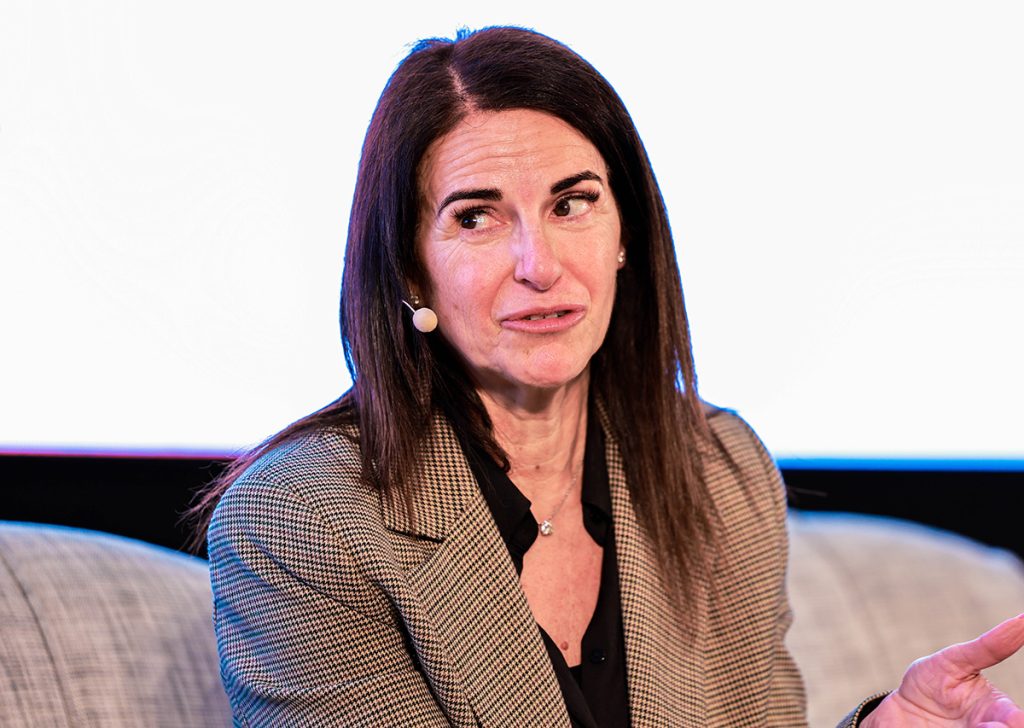
Tania Platt, B2B head of global travel, of Visa noted that Visa’s own Ramadan 2025 research had already shown Saudis choosing staycations and celebrating in-region.
3. Saudi travellers are moving west. The routing has changed too
Ahussain mapped the shift in Saudi outbound travel with data that should reshape airline and OTA strategy: Dubai, Doha, Bahrain, Thailand, the Maldives, all down significantly. Turkey, Egypt, Morocco, Spain, France, the UK, all growing.
The directional shift is partly about comfort with proximity to conflict. But there’s a secondary change that is equally important: routing. Saudi travellers who previously connected through Gulf hub carriers are now routing through Turkish Airlines, EgyptAir, or direct Saudi routes.
The result: new direct routes are being established. Direct to Madrid has just launched. Direct routes to European cities that previously required a Gulf hub connection are opening. And once Saudis find a destination they like, Ahussain noted, they return. “It’s not trending for one year. It’s continuous visits.”
Timothy O’Neil Dunne of T2Impact, who watches flight flows obsessively, said the same: Istanbul is emerging as an independent hub, not just a waypoint. Aviation drives everything, he said, adding, the new connectivity corridors will shape travel patterns for years.

Muzzammil Ahussain, CEO of Almosafer: “We don’t see domestic as a cannibalisation, rather as additional wallet share.”
4. The inbound gap is real and it’s a window
Wego’s Veitch was blunt: “It’s really noticeable, the absence of tourists in Dubai. It’s actually probably the best time to visit as a traveller right now. Traffic is down, hotels want to welcome you.”
Ahussain quantified the gap: European travellers book six to 12 months out. The back half of 2026 is effectively written off for many of them. Government travel advisories recommending against travel to the Gulf are a major obstacle – Veitch said he hopes they get revised quickly. Corporate travel policies are adding to the freeze.
Booking.com and other platforms redirected marketing to build new corridors and unlock latent demand. The message – book now, cancel any time – was deployed with Covid-era urgency. It worked, slowly. Staycation business is returning. Restaurant trade in Dubai is rebuilding. Hotels are using the downtime to reinvest. Dubai Airport is under construction.
The consensus – the inbound gap is six to eight months. The time now is for building: infrastructure, product, trust, and the perception correction that has to happen in source markets before European and Asian visitors return at scale.
5. Resilience isn’t built during good times
The crisis accelerated things that should have happened anyway. Wego’s most striking example: when Iranian strikes knocked out UAE-hosted data centres and took down their entire customer service infrastructure at the exact moment tens of thousands of passengers needed help, Veitch compressed his entire automation roadmap into weeks. The result: 60 to 70% of customer service issues are now resolved without a human touching them.
He also made a decision that will define Wego’s next chapter: at the start of Q2, the company moved to 100% agentic engineering. No more manual coding. Engineers now oversee fleets of AI agents. “A pretty dramatic speedup in the amount of stuff getting done.”
Tourism industry veteran to entrepreneur, Essam Al Salah of OceanAir Travels has built his business through every crisis since 2010: not by waiting for the storm to pass, but by finding the next opportunity within it. Through the financial crash, COVID, and the current phase of uncertainty, he has kept moving: deepening his business roots in the UAE with new restaurants, luxury domes in the desert, and sandbag houses, Taking OceanAir from Dubai to the world was always the plan, and this period simply presented the right moment to act on it, deploying directors to China, Japan, Rome, and Dubrovnik to lay the groundwork all underpinned by an unshakeable trust in the UAE’s leadership and the belief that the country will emerge stronger than before.
“If you look at a person like me, who’s always building during crises – I trust our government, I trust our leaders. All I did was find the next thing.”
O’Neil Dunne called it at the closing “Final Bets” panel: “We demonstrated our unpreparedness and our lack of resilience. COVID was lesson one. This is lesson two. I’m hoping people have learned.”
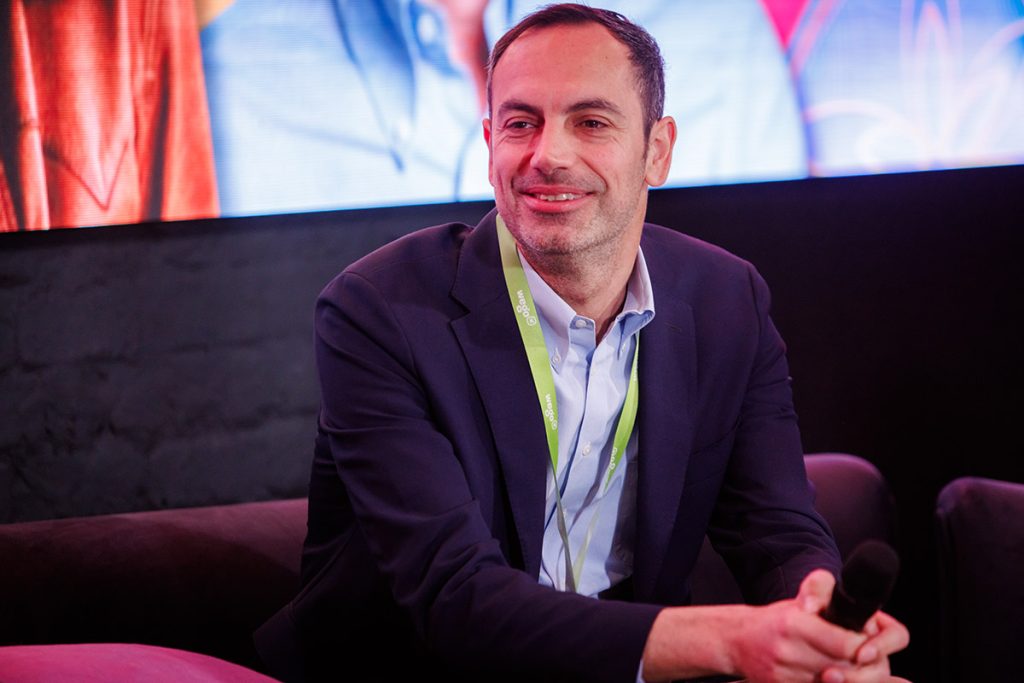
Alberto Yates, regional manager EMEA, of Booking.com noted that as soon as there were signs of peace, bookings spiked. The demand is there, it is waiting, he said.
6. The GEO battlefield matters more than the ChatGPT plugin
Multiple speakers arrived at the same conclusion via different routes: being first into ChatGPT’s plugin store was valuable for learning and PR. It is not yet a meaningful traffic driver.
Mehdi Hemici, Chief Loyalty & Ecommerce Officer, Accor, said, “GEO is the battlefield, for sure.”
Generative Engine Optimisation – the work of ensuring that AI systems can find, interpret, and surface your content accurately – requires building entirely new layers of semantic content. Standard hotel description pages are not sufficient. You need emotional connections, nuanced language, audience-specific proof points, so that when someone asks an LLM for “a romantic hotel in the wine regions of Portugal for my anniversary,” your property can be chosen.
“AI is emotionally hungry,” he said. Content needs to reflect that.
Ahussain’s framing: ChatGPT is for learning and experimentation. The real traffic question is visibility through GEO. What’s working more for Almosafer is WhatsApp as a conversational commerce piece. More than 50% of Almosafer’s after-sales interactions now happen on WhatsApp, not voice. End-to-end WhatsApp bookings are in the mid-single digits and growing. During the conflict, Almosafer’s Kuwait store became a physical hub for customers who needed human reassurance, but the after-sales coordination happened largely on WhatsApp.
Almosafer is embedding AI into the WhatsApp journey to move from robotic conversations to something more authentic. “That’s where our focus is now.”
Veitch observed that organic traffic from AI platforms is running roughly 100 times higher than traffic from the actual plugin. The traffic that does come through converts exceptionally well, but the volume is not yet there.
7. Loyalty that makes people pay is loyalty that means something
Hemici shared a striking data point: in Asia Pacific, paid members of Accor’s subscription programme generate 40% of the company’s total loyalty revenue. Usage rate: 80%. They spend more in restaurants, stay longer, return more frequently. And they become the brand’s most powerful advocates – because they pay, they feel compelled to justify the choice, and they pitch their friends.
“We are asking customers to pay for their loyalty. We better be up to the level and deliver benefits that resonate,” he said.
His framework for what real loyalty looks like: emotion is the input, behaviour is the output. Get the foundational pieces right – simplicity, trust, a digital wallet where members can see exactly what their points are worth – and the emotional connection follows. The emotional connection drives the behaviour, which creates the data, which enables prediction of the next best action.
The inertia-versus-genuine-loyalty distinction matters: 84% of travellers admit to gaming loyalty programmes. What Accor is building toward – through experiences like the PSG Dream Tournament, where members play on the pitch with professional players alongside their children – is a different category of memory entirely. “You’re literally living your childhood dream,” said Hemici.

Timothy O’Neil-Dunne, Principal, T2Impact Ltd: “We demonstrated our unpreparedness and our lack of resilience. COVID was lesson one. This is lesson two. I’m hoping people have learned.”
8. The human moat is real but it needs to be built deliberately
The most persistent theme of the day, arriving from every direction: AI is powerful, but it cannot replace the human dimensions of travel that matter most.
Florian Sengstschmid, CEO of the Azerbaijan Tourism Board, who studies destinations through a sociological lens, argued that the most important questions in destination development are not answered by data. Data tells you what. Sociology asks why. Why does this community want tourism? In what form? On what terms? Those questions require human judgment, community engagement, and the patience to translate culture rather than package it.
Carolyn Turnbull, CEO of Nammos Hotels & Resorts, named emotional intelligence as the leadership skill most needed right now. “AI doesn’t have the feelings that a human does. Looking at your team and your guests with sincerity and true intuition is a quality that is sometimes forgotten.”
Al Salah’s entire philosophy of building OceanAir is rooted in a conviction that authentic culture cannot be performed – it has to be lived. The ghaf tree in the desert, the guests sitting on the floor in the majlis, the real gahwa host: these are not experiences that can be automated. They can be reached by travellers who find them through AI. The finding is AI, the experience is human.
Tania Platt’s final bet: invest in human capital. Not instead of AI, alongside it. OAG’s CEO Filip Filipov’s bet: omotenashi, the Japanese capacity to read what someone needs before they know they need it, will become the differentiating quality as AI handles everything else.
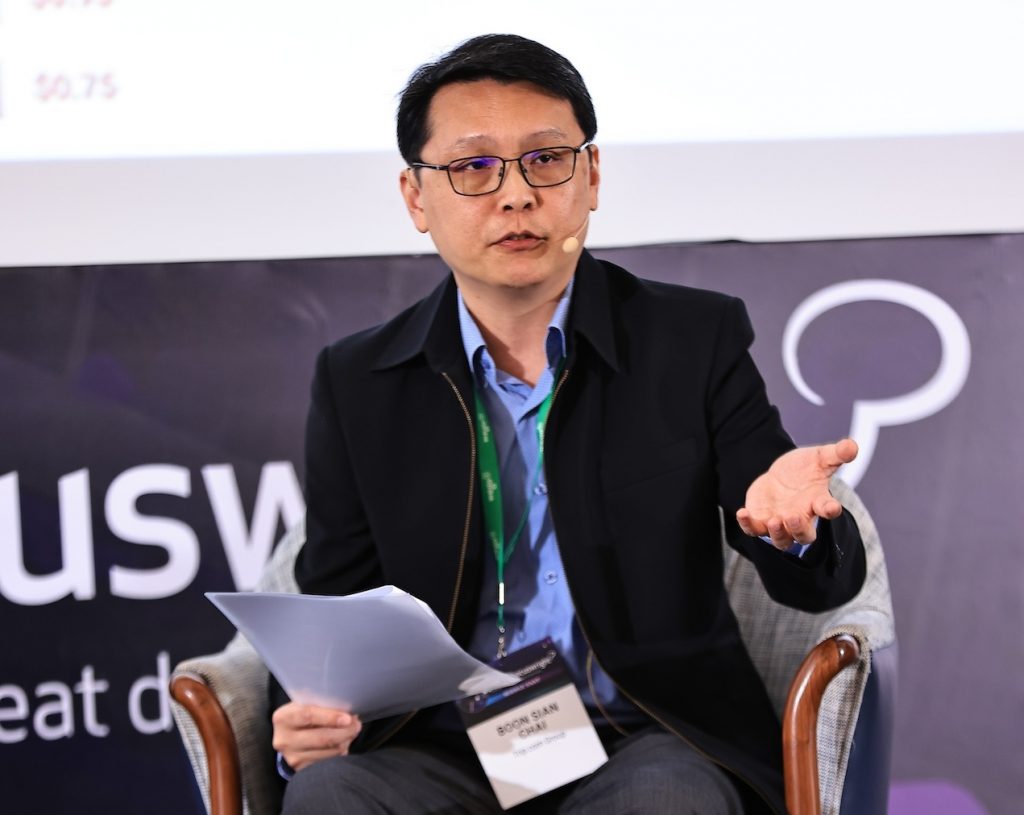
Boon Sian Chai, vice president-international markets, said Trip.com Group opened a new office in the Middle East – a larger one – in June. His message: “We look at our Middle East business as a long-term business.”
9. For startups, the fear is real – the pace of change
When asked what their biggest fear was, each of the founders in the “Founders & Futures: Global Startup Showcase” named the same one, just from different angles: the pace of change.
For Marius Nigond of iWander, it’s the question of defensibility in an era where capabilities compound weekly. “The amount of stuff we got done on Friday just with the new model. It’s exciting, but it’s terrifying, because we’re all building and who’s coming around the corner?”
For Shlomi Beer of ImpersonALLY, the adversary compounds at the same rate. “Everything we are using for good reasons, the bad guys are using for wrong reasons. Sometimes it’s not one guy – it’s organisations with hundreds of employees making hundreds of millions of dollars.”
The pace of fraud innovation is, structurally, the same as the pace of AI innovation.
For Angelica Handover of SocialSeal, the challenge turned ethical. SocialSeal was approached by a political party that wanted to use the platform’s demand intelligence to insert itself into public conversations about quality of life. She said no. “I have three kids. My kids will be exposed to this kind of manipulation on a daily basis. How can I make sure they’re street-smart enough to navigate this new, messy world?”
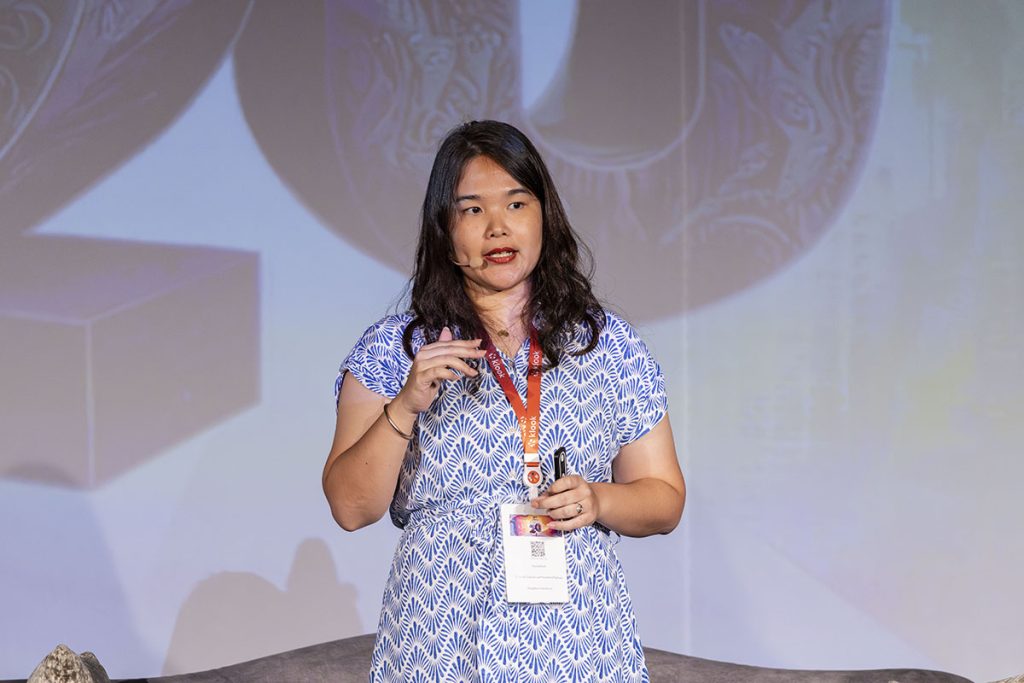
Angelica Handover of SocialSeal: “I have three kids. How can I make sure they’re street-smart enough to navigate this new, messy world?”
10. The confusion is real, so is the opportunity
O’Neil Dunne said that the immediate future will be defined by confusion. The force and capability of AI, and the force and capability of humans, are not yet on the same path. They are going to clash. The AI-generated content flooding the internet – hollow, cloned, algorithmically confident and contextually wrong – is already creating a trust problem that the travel industry will feel acutely.
Veitch, for his part, is not confused about where this leads. “We’re going to look back and see this as the start of the AI era, more than the Middle East market disruption. This is the very early stages of something like the singularity, where AI starts developing AI and it all starts going very fast. That’s going to have more impact on us than this little kerfuffle.”
At the closing, I asked the audience how they felt after the day. They chose “more optimistic” by a clear majority.
And that’s the industry’s superpower – optimism in the face of ground shifts. A time to be present and double down. In every crisis, find the opportunity. Build domestic, build regional, build trust. Build experimentation into your culture. Take the leap.
I also asked the room, were they techies or fuzzies? Most of the room leaned techie. But the day kept returning to the same conclusion. Even AI is emotionally hungry. The future belongs to those who can be both – techie and fuzzie.