
Before my interview with Florian Sengstschmid, CEO of the Azerbaijan Tourism Board, at WiT Phocuswright Middle East, I asked Claude, give me three good reasons to visit Azerbaijan.
Claude, having apparently tracked my recent interest in Dylan Thomas’s birthplace in Wales, came back with three answers calibrated for me: Azerbaijan is a living crossroads of civilisation, it has a literary and artistic soul, and it remains untouched by mass tourism.
I put the same question to Sengstschmid. He responded, “If you asked me to pitch Azerbaijan in 30 seconds, I would revert with a question rather than an answer. I would ask: you think you’ve been there, you think you know what it is – but actually you don’t.”
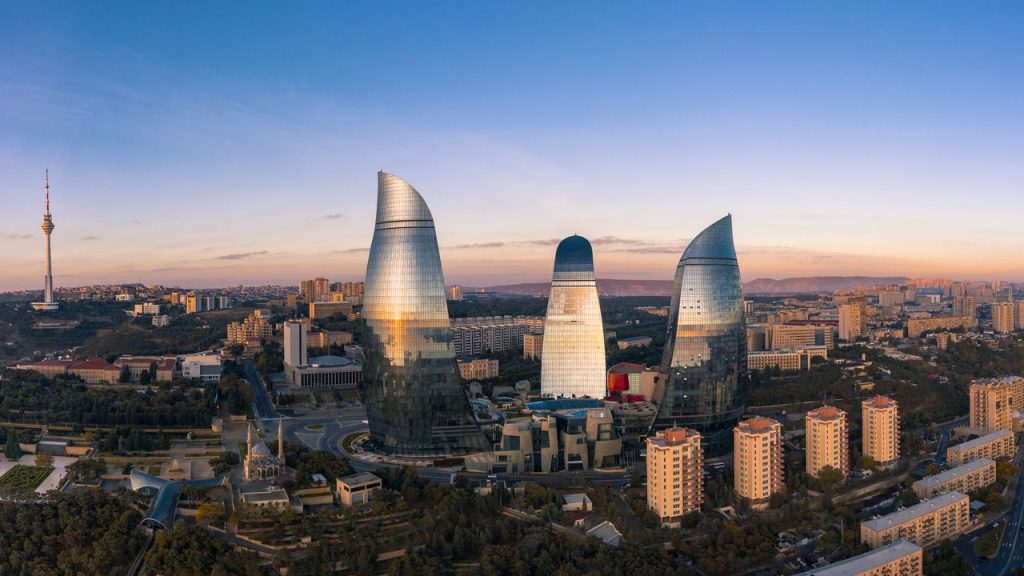
Did you know the Nobel brothers made their fortune in Baku, and left a beautiful villa there? That the Siemens brothers transported copper across Azerbaijan and left industrial heritage? That the park in the capital was designed by European star architects and feels like a European city? That the only entirely Jewish settlement outside Israel and the United States, sits in a country that is 80% Muslim, secular by constitution and by choice? That this Muslim country has a beautiful wine history?
With that, he opened the door to a destination he has been marketing for close to nine years.
Why he chases emerging destinations
Sengstschmid has an interesting background. He is Austrian-born, trained in tourism and sociology, and has spent his career in places most destination marketers wouldn’t volunteer for: Estonia, Greece, Vietnam, Bhutan, Hungary, Lithuania, Georgia. He ran the Austrian National Tourism Board’s regional operations for Russia and CIS countries.
What draws him to emerging destinations, he said, is threefold. First, they are raw and genuine – identities still being negotiated, cultures not yet flattened by over-tourism.
Second, tourism in these places creates visible, direct impact: jobs, improved livelihoods, rural development. “Tourism is a development tool.”
Third, and most personally: the work of translation. “Translation of culture, of people, of identities into the context of destination marketing and destination development.”
That, he said, is what kept him in Azerbaijan.
On the question of models – which destination got it right? – he hedged, “There is not one model.”
Bhutan, often cited as the gold standard of sustainable tourism, he called “overstretched”, a tiny landlocked country with 200,000 to 300,000 visitors a year and one open land border. Beautiful, worth visiting, but not replicable. Austria’s tourist levy, collected in villages and redistributed to communities bearing the impact of tourism, is closer to something transferable.
Azerbaijan sits at roughly three million visitors with, as he put it, still “air to grow.”
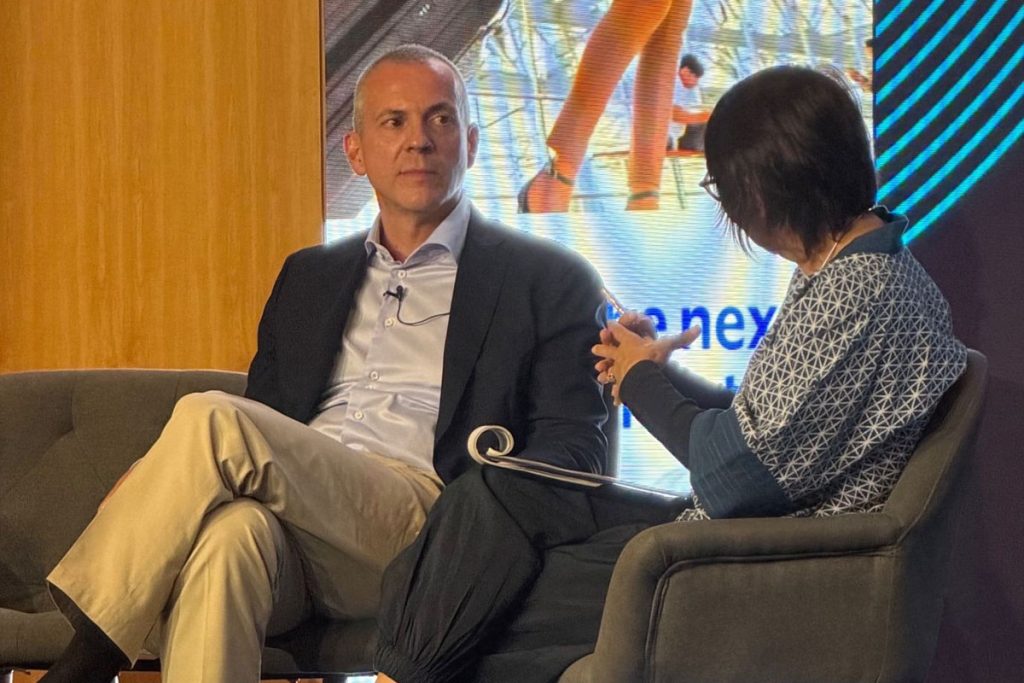
“Translation of culture, of people, of identities into the context of destination marketing and destination development.” – Florian Sengstschmid, CEO of the Azerbaijan Tourism Board
The NTO-NTA hybrid: Policy meets marketing
In 2018, Azerbaijan created what he describes as one of the most innovative models in global tourism governance: an authority that functions simultaneously as a National Tourism Organisation and a state tourism agency, a hybrid of marketing and policymaking, sitting directly within the cabinet of ministers.
“Policy makers, marketers, product and experience development teams, destination development teams, all sitting together. Sometimes very challenging discussions. But we believe it’s the right approach, especially in emerging destinations where you need to bring these two elements very close to each other.”
The sociologist in him is visible here. Where most tourism bodies market downward from data, Sengstschmid’s team is asking why: why does this community want tourism, in what form, on what terms? “Numbers tell us what’s happening. But the question goes deeper, why is this the case?”
Slow food, black bee honey, and the Greater Caucasus mozzarella
The approach shows up in how Azerbaijan develops its culinary tourism identity. Rather than packaging a narrative for international consumption, the tourism board partnered with Slow Food, a global organisation built around good, clean, fair food, to let communities define what they want to showcase.
The answer from local communities was specific: hazelnuts, rosehip syrup, a local variety of mozzarella from the Greater Caucasus, black bee honey. “These communities said: this is what we want to showcase, this is what we want to keep, these are our traditions.”
The board’s job was to bring those traditions into the right channels and the right audiences – not to invent a narrative, but to amplify an authentic one.
This, Sengstschmid argued, is the shift from what tourism boards used to do – produce top-down content, broadcast a message – to what they need to do now: engage with communities, surface what’s genuinely there, and distribute it through the platforms where travellers actually live.
Micro-targeting by affinity, not geography
On the question of marketing Azerbaijan’s complexity in an age of 30-second attention spans, Sengstschmid separated the challenge into two parts.
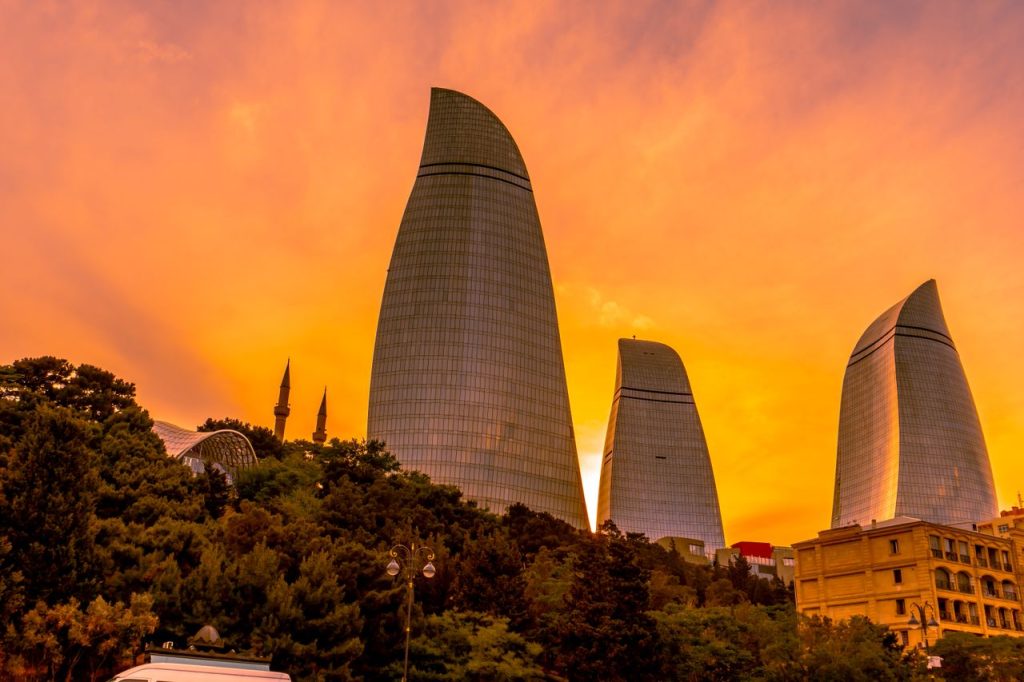
The first is the 30-second question – not a pitch, but a prompt. “Did you know?” deployed as a door-opener, calibrated to the specific affinity of the audience. For European visitors, architecture. For Indian visitors, the Zoroastrian connections. For Jewish travellers, the heritage. For golfers, the courses. For classical music lovers, the opera house and the Philharmonic.
“It’s really micro-targeting. It’s about affinities.”
The second is the distribution question. And here, Sengstschmid was direct: “It’s not about tourism boards anymore. The tourism board is not the inspirational source.”
The job is not to produce the wow creative. It’s to seed native content on the platforms where travellers consume it – Red Note, Tongcheng, Weibo, WeChat, TikTok – through local content creators, journalists, and influencers who can bring the Azerbaijan story into their own narratives.
The conflict, the Istanbul hub, and the road to recovery
On the impact of the current regional conflict, Sengstschmid was to the point. “It hurts. It hurts Azerbaijan, it hurts the region, it hurts the world.”
The east-west connectivity tissue that the Middle East represents, for Azerbaijan as much as anyone, has been disrupted.
What has helped: the Istanbul hub, which has maintained connectivity as a routing alternative, and Azerbaijan’s growing national flag carrier, which has been adding new destinations to its core source markets.
Over the first five months of 2026, Azerbaijan saw growth from Europe and Central Asia. He is positive about recovery. And he believes the GCC hubs will remain important long-term connectivity nodes for the country.
Three words, two books, one reason for hope
Asked to describe Azerbaijan in three words by 2040, he didn’t hesitate. “That’s easy. That’s our brand: real, uplifting, and warm.”
For anyone wanting to understand Azerbaijan more deeply, he recommended Azerbaijan: 100 Questions Answered, a Q&A on culture, society, and people that he read when he first arrived in the country, now in its fourth edition.
And for understanding humanity at this particular moment, he recommended Humankind by Dutch historian Rutger Bregman, a book built on the argument that people are not as bad or as evil as they are often presented to be.
“There is still hope in humanity. In an industry driven by people, to people, this has to be our belief: that there is good in people.”