
When HopeGoo, the international travel platform of Tongcheng Travel, entered Malaysia, it knew it had to take a highly localized approach so that it wouldn’t be just another Chinese app chasing Malaysian travellers but to become a travel companion for Malaysians heading to China — and eventually, beyond.
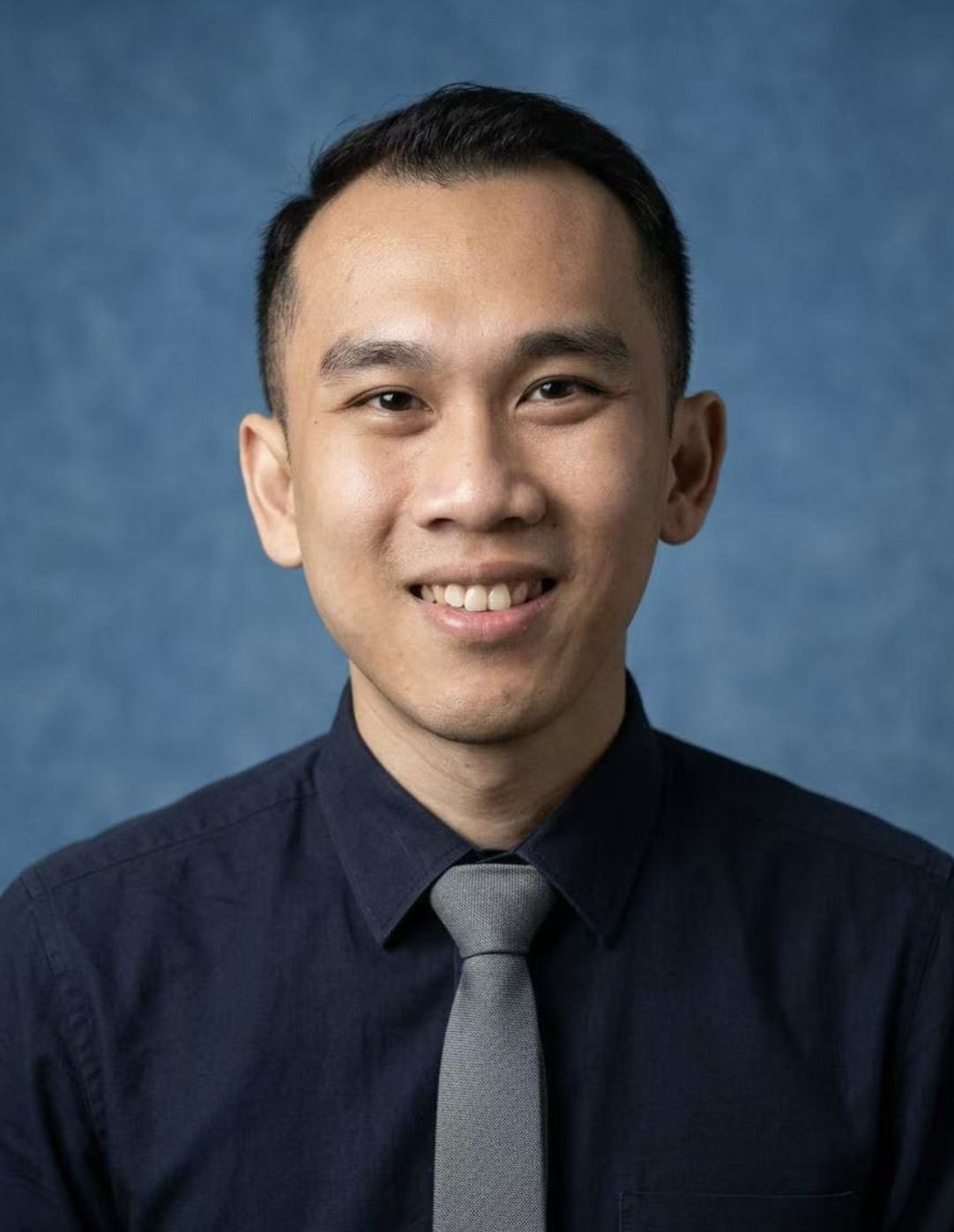
Instead of parachuting in a Chinese national to head the business, it appointed a local Malaysian with experience across hospitality, growth and fintech. Kent Chin, HopeGoo Malaysia’s App User Growth Senior Manager, Malaysia was brought in to help the company understand the market from the inside.
Chin, HopeGoo Malaysia’s App User Growth Senior Manager, Malaysia, was upfront from the beginning about what he could bring to the role – and where his limits were. He understood HopeGoo’s roots as a China-backed platform, but he was also clear that his strength was the Malaysian market, not written Chinese.
“I told them I was comfortable working with a China company,” he said. “But I also had one limitation — I am not able to read and write Chinese. If you are okay with that, then okay.”
Why Malaysia?
While most companies might see Singapore as the easier Southeast Asia market to explain to headquarters, Chin saw Malaysia as a bigger opening. Singapore, he said, is already saturated across flights, attractions and hotels. Malaysia gives HopeGoo more room to prove where its China strength can matter.
The choice of Malaysia also makes sense. It has long-standing travel, cultural and tourism links with China, while Malaysian travellers are also active across regional destinations such as Thailand, Indonesia and Singapore.
Plus, the country is increasingly attractive to Malaysian travellers, but it can still feel complicated for those unfamiliar with its local digital ecosystem – from maps and transport, to attraction tickets, hotel communication and on-ground assistance.
The timing also helps. The China–Malaysia visa-exemption agreement, signed in April 2025 and effective from July 2025, allows ordinary passport holders from both countries to enter visa-free for up to 30 days per trip. It builds on earlier visa-free moves that have already helped lift travel demand between both markets.
HopeGoo was already accessible before its Malaysia push, but access was not the same as relevance. “The content and promotions were not personalised,” Kent said. “You could use the app last year, but what you saw might not make sense to you.”
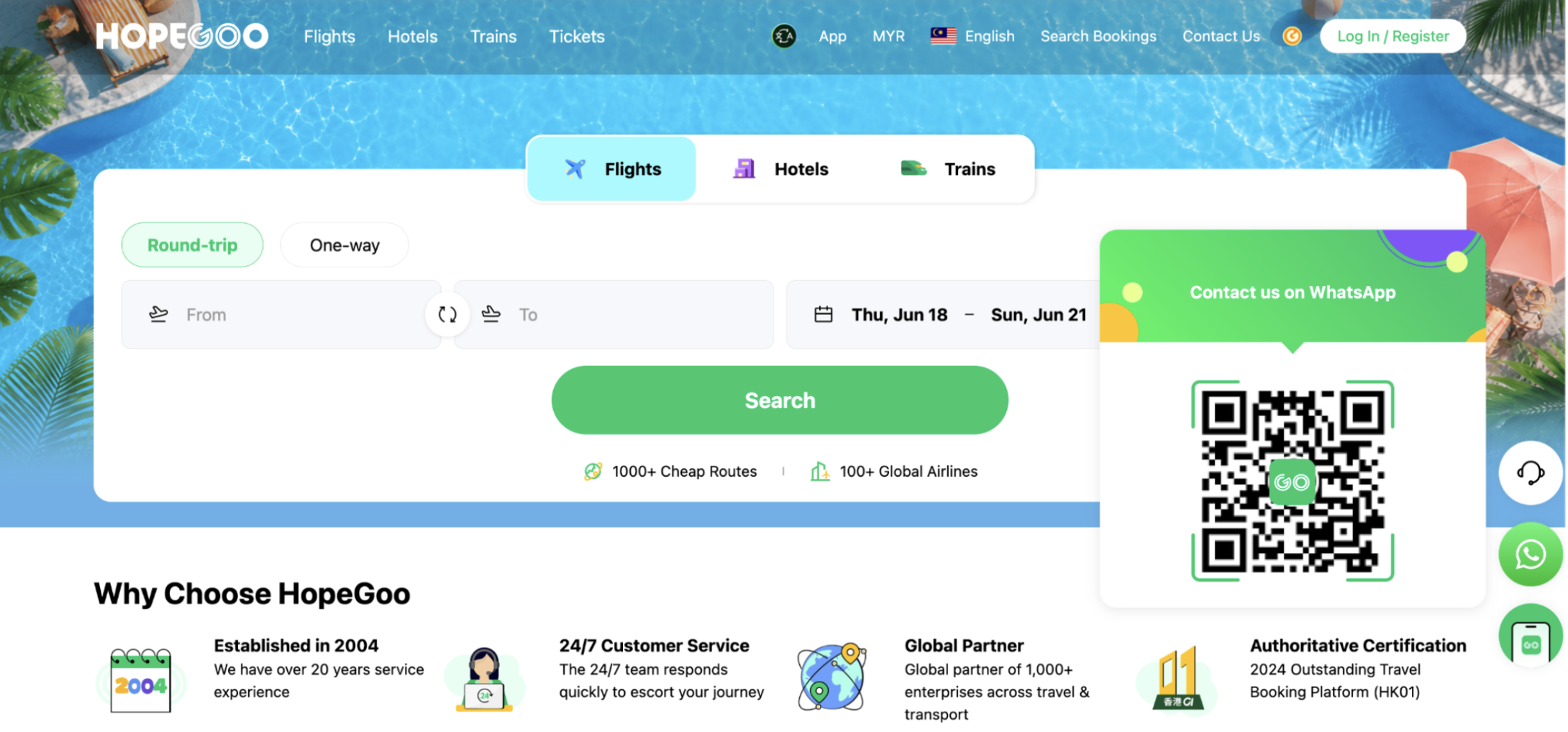
That became the Malaysia team’s first job: make the app feel local enough to use, from mobile number registration and ringgit payment, to language options, local promotions and product features that made sense here.
Building “Your Travel Companion” Butler Service
Said Chin, “When HopeGoo launched in Malaysia, we had to work on everything.”
That work went beyond language, currency and payment – Chin saw the bigger opportunity as reducing the fragmentation around travel planning.
“In Malaysia, all the travel apps are very fragmented,” he said. “What if everything can be in a single interface?”
That gives the platform a clearer job: to be remembered by Malaysians when they plan, book and need help travelling through China, he believed.
One of HopeGoo’s flagship services in Malaysia is “Your Travel Companion”, a 24/7 one-on-one WhatsApp Butler.
The service can be activated by downloading the HopeGoo app and contacting in-app customer support. From trip planning to on-the-go assistance abroad, it is designed to simplify the travel experience so travellers can focus on the journey rather than the hassle.
It is currently tailored for tourists visiting China, with plans to expand to more destinations.
For Malaysia, the WhatsApp layer is not just a service feature. It is part of the localisation strategy. “For Malaysia, people rely on WhatsApp. It is behaviour,” Chin said.
He said HopeGoo’s support layer is human-backed, which matters because travel problems are rarely just operational. A hotel issue, cancellation, booking confusion or payment problem can quickly become stressful when a traveller is overseas.
He understands this from personal experience. Before joining HopeGoo, he had a difficult hotel situation while travelling in China. “What I saw was not what I got,” he said.
That experience shaped how he views customer support. A good price may win the first booking, but support builds trust.
“Beyond product and pricing, good customer service and support, and giving travellers the information they need when they are having trouble — that will make the difference,” he said.

Social First, Because Travellers Scroll Before They Book
HopeGoo’s Malaysia growth began gaining stronger momentum around March, when the team activated its first major local campaign.
Chin said the campaign involved travel creators, local communities and platforms such as Xiaohongshu, with content reaching Chinese, Malay and English-speaking audiences.
“We saw a significant increase,” he said.
He said that HopeGoo Malaysia achieved around 50,000 new users or downloads within roughly three months.
HopeGoo is also localising through payments. Kent pointed to Touch ’n Go as an important payment gateway and campaign partner, reflecting HopeGoo’s effort to work with local habits that Malaysians already understand.
“We can focus on one partner, and then we can focus with a lot of campaigns,” he said.
The China Weight Helps
As the international travel platform under Tongcheng Travel, backed by Tencent and Trip.com Group, HopeGoo has the weight of Chinese tech behind it.
HopeGoo was built as Tongcheng Travel’s international-facing platform, extending its travel services beyond Mainland China. Its offering covers flights, hotels, trains, tickets and activities, supported by the wider Tongcheng ecosystem.
After serving millions of users across Mainland China and Hong Kong over the past two years, HopeGoo is now expanding across South-east Asia, with Malaysia among its key markets.
Chin confessed to having his own assumptions before joining a Chinese company.
“There are a lot of rumours about working in a Chinese company — working very hard, pushing KPIs, people being very stiff,” he said.
His experience has been more open than expected. “I am thankful we have understanding management that is willing to learn local culture and understand Malaysian behaviour,” he said.
What stood out to Kent was the message coming from headquarters to the China-side team: do not carry a purely China-centric mindset into international markets.
“They are willing to understand different cultures and different travel markets, whichever market they are going to enter,” Kent said.
China Gives The Engine. Malaysia Tests The Handling.
HopeGoo has the advantage of Tongcheng Travel’s scale, product experience and China travel infrastructure. That gives it credibility from day one.
But Malaysia will show a different capability: adaptation.
To grow here, HopeGoo cannot rely only on being backed by a major Chinese travel platform. It has to be useful in the exact moments Malaysian travellers care about.
Kent believes technology and AI will help make the journey smoother, but he is clear that human support remains important.
“AI will help smoothen the whole process,” he said. “But it cannot replace human.”
That balance may define HopeGoo’s Malaysia chapter.
It is bringing China’s travel muscle into Southeast Asia, but its success will depend on something more local: WhatsApp support, familiar payments, social discovery, multilingual communication and the ability to listen.
China gives HopeGoo the engine. Malaysia shows the handling.