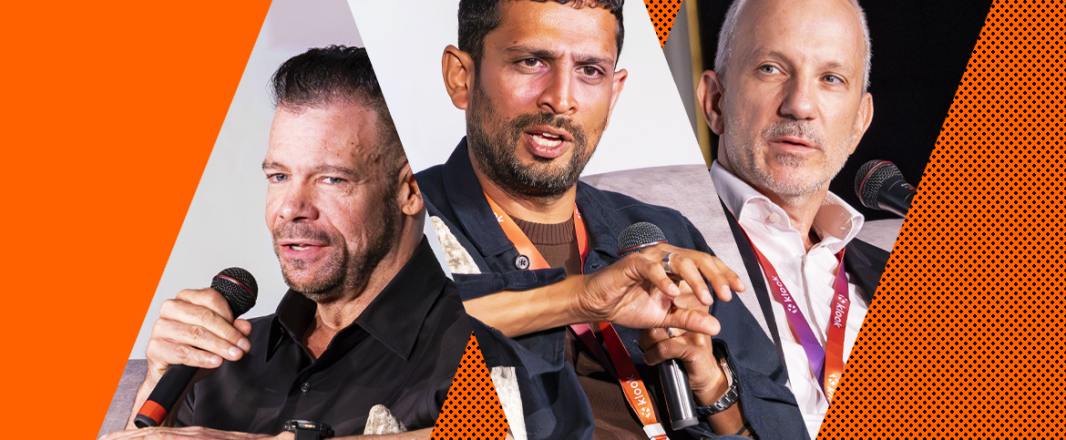
The front end of travel gets all the attention. The apps, the campaigns, the loyalty programmes, the AI-powered search experiences – these are what travellers see and what the industry talks about at conferences.
But as a panel on “B2B: The Power Layer of Travel” at WiT Japan made clear, the real battle right now is being fought somewhere far less visible: in the infrastructure layer that powers everything above it.
B2B travel is growing at 18 to 25% annually, in an industry growing at six to eight percent. Why?
The simplest answer is, as Brett Henry, President Asia Pacific at WebBeds, puts it, is that everyone wants to sell travel now. “It’s not just OTAs – it’s credit card companies, it’s banks. Grab wants to distribute travel. Everyone wants to become a travel distributor. And the B2B infrastructure companies are the ones that provide them that content.”
Raphael Lanfant, vice president partnerships in APAC and the Middle East at Hopper Technology Solutions (HTS), added the technology dimension: B2B is growing because it gives non-travel companies access to global inventory, pricing infrastructure, AI servicing tools, and fintech capabilities they could never build themselves.
The credit card portal, in particular, has emerged as one of the fastest-growing booking environments in travel. HTS powers travel propositions for HSBC, Lloyds, Capital One, ABC in Canada, and – in Japan – Sumitomo Mitsui Credit Card Company’s eTrip platform. “Younger demographics are going from OTAs to new ways to book travel where the bank has a very strong value proposition: flexibility and trust.”
Jay Patel, global account director B2B travel at Visa, framed the financial institution dynamic as a structural shift rather than a tactical one. Banks built their businesses around consumer relationships – the assumption being that a customer acquired for banking would remain for life. That assumption no longer holds.
Fintechs like Revolut, which started as a low-FX travel card, acquired a banking licence, and now runs a full travel booking system, have demonstrated that if you offer a better experience across FX, payments, and travel within a single app, consumers will follow. “The traveller doesn’t like being hit by crazy credit card fees. They’re looking for different ways to pay.”
Travel is where the fintech-to-bank conversion plays out most visibly.
For Japan specifically, the B2B boom has a second driver: inbound demand. Distribution partners worldwide need access to Japan’s inventory. As geopolitical tensions have redirected travel away from parts of the Middle East and Europe, Japan has been a direct beneficiary. “When you make it more difficult to go to Europe or the Middle East, you just increase the Taiwanese and Koreans coming here,” said Patel.
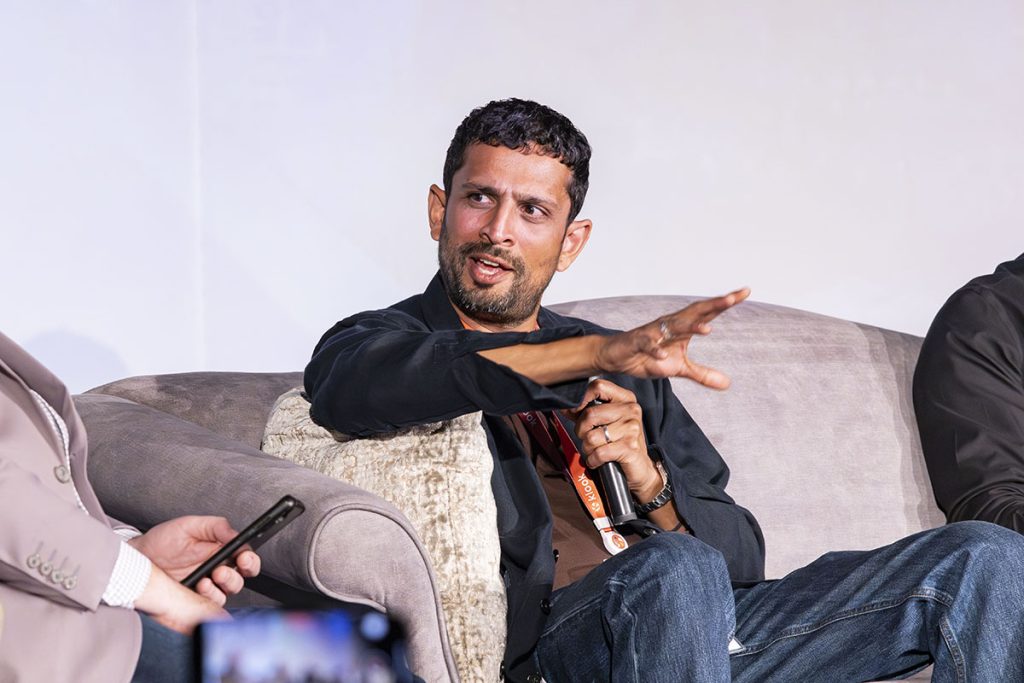
Jay Patel, global account director B2B travel at Visa, framed the financial institution dynamic as a structural shift rather than a tactical one. Banks built their businesses around consumer relationships – the assumption being that a customer acquired for banking would remain for life. That assumption no longer holds.
The data that AI cannot reach
Moderator Timothy Hughes of Agoda posed this question: a large share of the most valuable data in travel sits behind API keys, inside databases and warehouses, inaccessible to public AI models. Is that locked data the secret to keeping B2B relevant in an AI world?
Henry’s answer was blunt: “AI platforms are just one more constituent that wants access to travel, just like banks and loyalty programmes. I could have listed AI companies as one more constituent driving growth in B2B, because we are the people who will provide that normalised data layer.”
Henry made the distinction between what AI is being used for publicly – content creation, email drafting, social media – and where its real value in B2B travel lies. “Using AI for content creation, which is the majority of what we see people doing – writing emails, creating pictures, social media strategies – this is not the value.
“The value is AI applied to decision making: pricing algorithms, large-scale data analysis, millions of decisions per hour.”
The underground AI revolution in B2B travel, he argued, is not happening in chatbots. It is happening in pricing engines, servicing automation, and decision support systems that operate invisibly and at a scale no human team could match.
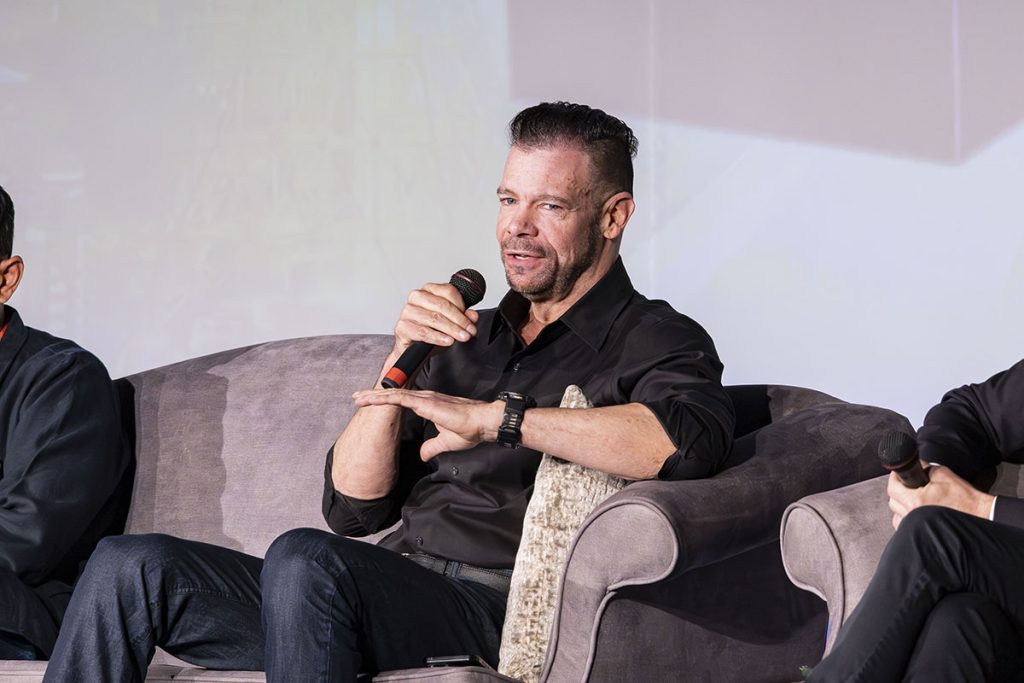
Brett Henry, President Asia Pacific at WebBeds: “It’s not just OTAs – it’s credit card companies, it’s banks. Grab wants to distribute travel. Everyone wants to become a travel distributor. And the B2B infrastructure companies are the ones that provide them that content.”
Hughes countered: large language model architecture is fundamentally predictive, not analytical. Its job is to predict the next word, not to interrogate a problem and reach a sound conclusion. Lanfant agreed – the serious B2B players are not dropping their AI investment into LLMs. They are building proprietary models on top of their own data to drive specific, high-stakes operational decisions.
For example, he said, HTS has taken millions of customer service conversations from its US business and used that data to build an AI servicing solution that handles post-booking queries – flight number updates, contact changes, rebooking requests – that previously required a paid human agent.
“Instead of a typical example where I need to update my contact details, and that person answering before is going to be paid by someone for something that could have been done very, very simply.”
Patel echoed the theme: the real-life AI use cases gaining traction right now are operational, unglamorous, and deeply valuable. “It’s much more around mitigating risk, making decisions, handling effects. AI for speed decisions; human for trust, especially for edge cases – flight disruptions, weather, emotional travellers.”
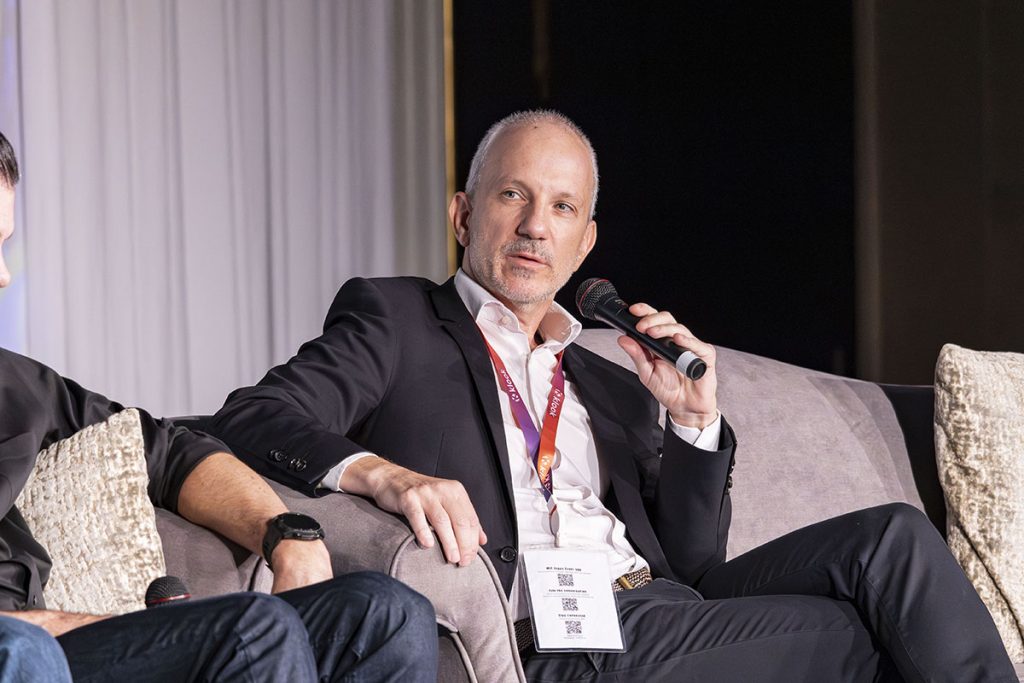
Raphael Lanfant, vice president partnerships in APAC and the Middle East at Hopper Technology Solutions (HTS), added the technology dimension: B2B is growing because it gives non-travel companies access to global inventory, pricing infrastructure, AI servicing tools, and fintech capabilities they could never build themselves.
The blurring of B2B and B2C, and why trust is the real currency
Hughes raised the question that sits beneath the entire B2B conversation: does the distinction between B2B and B2C still mean anything? The traveller booking through Capital One, through Revolut, through an OTA, through a hotel’s direct site – they just want a room. They do not know or care about the infrastructure layer that delivered it.
Henry held firm on the distinction but reframed what it is actually about. “The B2B proposition is a lot around relationship and trust. I might not have the best content, or the best tech platform, or even the best pricing, but if you trust me to take care of your customers, you will give me your business.”
In B2C, every sale is hand-to-hand combat. In B2B, the ecosystem is built on long-term trusted relationships between partners who depend on each other to deliver for the end customer. When something goes wrong for that traveller, it reflects on every party in the chain. That accountability is what holds the B2B layer together.
Patel drew the banking parallel explicitly: banks that built consumer loyalty over decades are now discovering that loyalty is not permanent, and that the fintech players threatening their position are doing so not through superior products alone but through superior experiences at the moments that matter.
“Travel is such an emotional thing, a big investment, especially with current prices. The experience of that traveller going wrong – whoever they booked with, they’re not going back there.”

Moderator Timothy Hughes of Agoda posed this question: a large share of the most valuable data in travel sits behind API keys, inside databases and warehouses, inaccessible to public AI models. Is that locked data the secret to keeping B2B relevant in an AI world?
What needs fixing and what won’t be fixed soon
Asked what they would change in travel distribution over the next two to five years, the panel was honest about the gap between aspiration and reality.
Lanfant named personalisation: the breakdown of guest data across the OTA-wholesaler-B2B-channel manager-property chain means that a traveller who has stayed at a hotel 250 times still gets asked if it is their first visit. “You’re only receiving a name, a room type, and a price. All loyalty status, all booking history gone.” The problem is structural and long-standing, and solving it would require every layer of the chain to cooperate in ways that commercial interests currently prevent.
Henry went smaller and more specific: mapping. “If I could fix something, it would be mapping. Hotel mapping, room mapping – if those problems went away, my life would be beautiful.” It is unglamorous, deeply technical, and the source of enormous operational pain across the entire B2B layer. It is also, he implied, nowhere near being solved.
Patel pointed to fragmentation in payments: too many booking environments, too many reconciliation spreadsheets, too much arguing about discrepancies. “How do you bring a single layer, some sort of uniform approach across the industry?”
The summary from the panel: the infrastructure of B2B travel is improving, accelerated by AI and by the sheer volume of new players investing in it. But the plumbing – the mapping, the data continuity, the payment reconciliation – remains stubbornly unresolved, and the complexity is growing faster than the solutions.
What holds it all together, in the end, is the same thing that has always held B2B together: relationships between people who trust each other to deliver.