
A ryokan owner, a global brand VP, a lifestyle acquirer and a boutique operator debate what will actually make a guest choose you in the next 20 years.
A panel at WiT Japan on “The Next Generation of Hospitality” brought together four voices with sharply different stakes in the answer.
Kyohei Yamamoto is the third-generation owner of Beniayu, a traditional ryokan in Kyoto. Masaya Hasebe is vice president of global management at Seibu Prince Hotels Worldwide, a Japanese group with ambitions to reach 250 properties by 2035 and a recent $90 million acquisition of boutique lifestyle brand Ace Hotel International. Mark Shrives is vice president of digital for APAC at Marriott International, a company with over 30 brands and 75% direct booking rates through its app in North Asia. And Morris Sim is executive director of Montara Hospitality, a boutique operator in Thailand that has learned to use its very smallness as a competitive weapon.
The question threading through everything: in a world of infinite choice, algorithmic discovery and AI-curated itineraries, what actually makes a guest choose you?
The authenticity question and whether it can scale
Yamamoto kicked it off, by stating that his ryokan’s identity is not something that can be replicated or scaled. It lives in the specificity of place, the continuity of family, the relationship with a particular community over generations.
What Yamamoto has built instead of scale is the YODA Alliance. Thirty-three smaller ryokans, each independently owned, each deeply local, working together to promote the category without surrendering what makes each of them distinct.
“Each ryokan is very individual. We cannot blend together, but we are still trying to make some good things for the ryokan.”
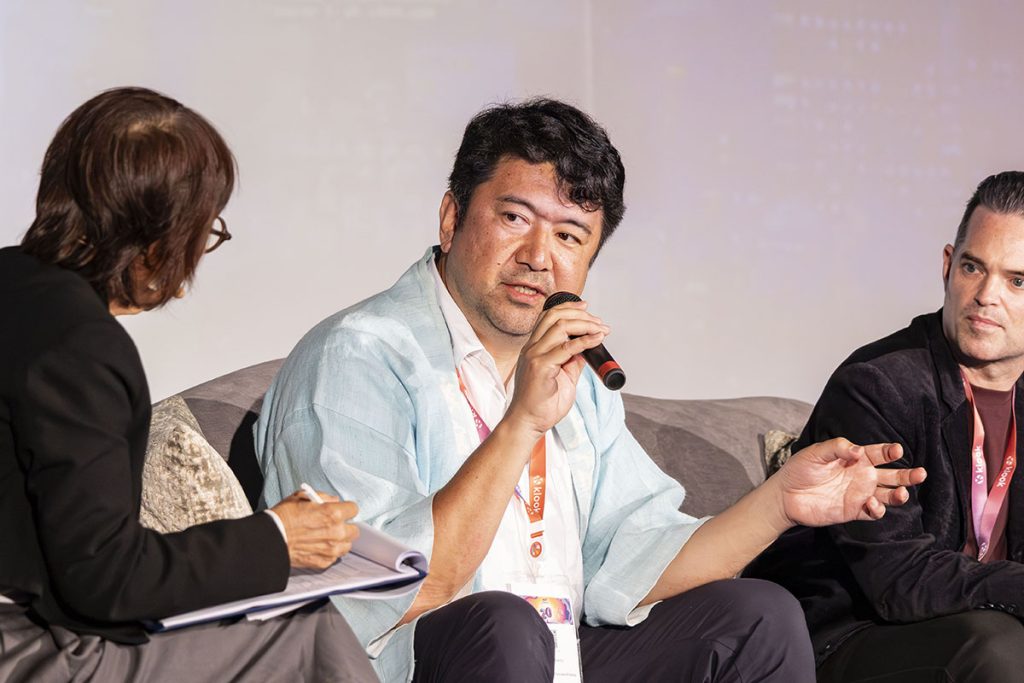
The alliance gives them a marketing voice, he said. What’s more challenging is working together on the procurement side, to achieve economies of scale.
He shared this observation. Two kinds of travellers arrive at his ryokan: those who want the complete traditional experience – tatami rooms, Japanese breakfast, deep immersion in the culture – and those who want authentic Japan but also a Western breakfast after two or three days.
“We try to make a very comfortable situation for both.” The ability to read that distinction and serve both without either patronising the purists or alienating the compromisers is, in its way, the definition of “omotenashi” applied to product design.
Seibu Prince and the lifestyle gap
Hasebe’s story is about recognising what is missing and moving to fill it. Seibu Prince has 96 properties, 11 brands, a range from luxury to scale and until recently, no lifestyle brand. The acquisition of Ace Hotel International, with its in-house designers, architects and creative studio, was not primarily about adding eight boutique hotels to a portfolio, it was about acquiring a creative capability and a sensibility.
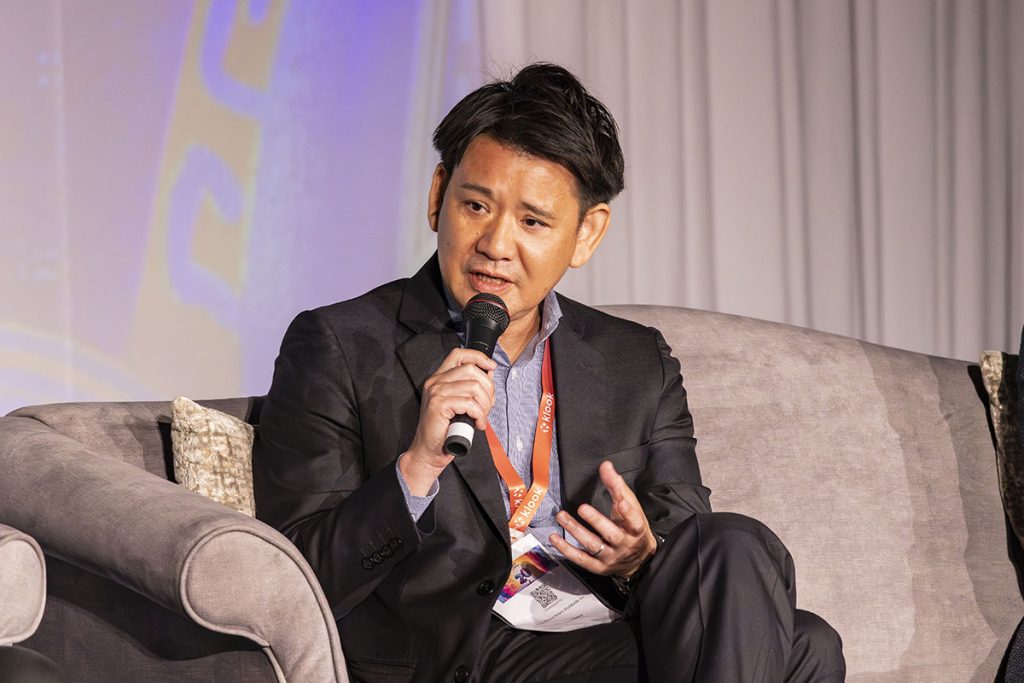
“Ace Hotel is not just a place to stay,” Hasebe explained. “It’s rooted in creativity. People gather, walk into the lobby, meet friends. It’s an open space – DJ music, art, community connections. They need to be connected to the local neighbourhood.”
On the question of whether experiences can simply be acquired, Hasebe was thoughtful. “Experiences cannot really be bought. Authenticity needs to be created over time.”
You can acquire the infrastructure, the creative talent, the brand architecture, he said. What you cannot acquire is the accumulated relationship between a place and its community and that has to be earned.
Marriott and the distribution reality
Shrives brought the data point. In North Asia, 75% of Marriott’s direct bookings happen within the app. In APAC broadly, the figure is close to 70%. For a company of Marriott’s scale, operating across 30-plus brands with deep loyalty infrastructure, the app has effectively become the primary channel.
The implication for AI-driven discovery is nuanced. Marriott has signed partnerships with Google and OpenAI. Its CEO has described AI as an opportunity to redefine customer acquisition.
Shrives pointed out what AI actually changes at the booking stage. “When you’re booking travel to the Maldives or something important for your family, you almost want the friction of visiting the website and finding that information yourself.”
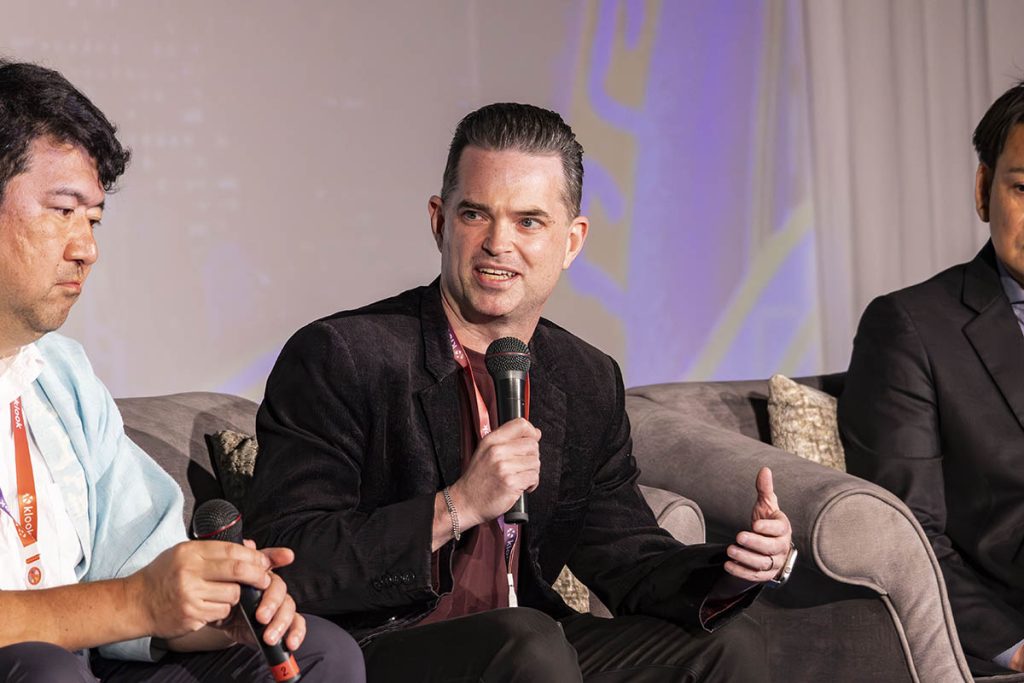
The hotel website, he argued, remains the single most robust source of truth and its importance to AI discovery has, if anything, increased, because it is the feed from which LLMs draw their understanding of a property.
The more important point was about what happens when AI surfaces hospitality options at scale. “It’s much easier for you to be exposed as a boring brand through AI than it was before,” said Shrives.
The “beige” hotel – the property that looks like every other property, whose website describes the same amenities in the same – has nowhere to hide when an AI agent is sorting through thousands of options on behalf of a traveller who knows exactly what emotional outcome they are seeking.
Marriott’s response is to teach its hotels to talk differently. “We’re teaching hotels to complete content about what makes them connected to the location and destination, not just features and amenities.”
The platform it is building integrates experiences and itinerary planning into the booking journey, because the company recognises that loyalty engagement is increasingly built around experiences rather than room nights.
Montara and the independent advantage
Montara Hospitality operates high end luxury properties in Thailand, its best-known one being Trisara, Phuket. Sim said on a generic OTA search for a beach resort in Phuket, it loses: too expensive, too niche, buried under a hundred more affordable options. But when the search parameters include wellness, a specific restaurant offering, kids’ activities, and beach access, the list narrows to Trisara and perhaps one other property. Specificity is the moat.
“The critical thing is not whether AI will replace whatever. It’s how we make ourselves legible and understandable for an AI agent in terms of what our special qualities are.”
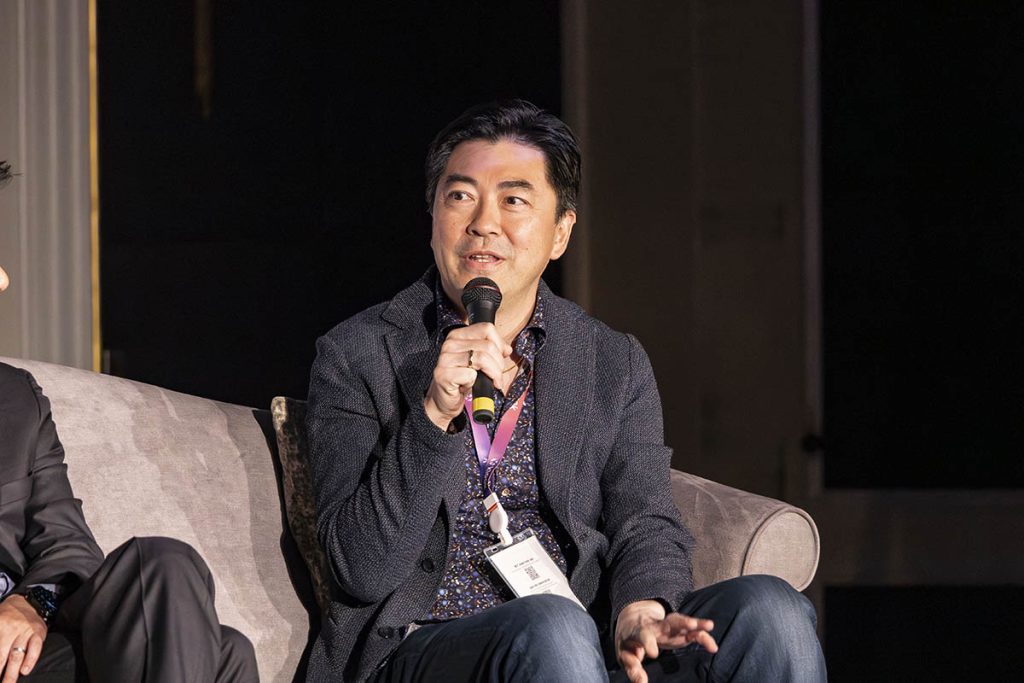
Hotels that invest in building genuine differentiation and communicating it clearly – on their websites, in structured data, in the language that AI agents can parse and act on – will benefit from AI far more than they ever did from OTAs.
“I actually think AI will do them far greater good than an OTA has ever done.”
His concern about luxury sameness was delivered without pointing fingers. “I don’t think hotels are getting things wrong per se. I think they’re getting things right, but all in the same way. Consistency becomes flavourless when you’re flawless all the time. You become very forgettable.”
Adding that he used to work with Microsoft, Sim said, “I feel like the rhythm of technology, in terms of what it does, really hasn’t changed much. It’s about democratising access to a lot of different things, whether it’s productivity or knowledge, so with that comes precision, and precision is now entering into the hospitality space in a way that has never been before.
“When precision means hospitality and there’s no soul to it, it feels very, very cold, and for those of us in the luxury space, you have to introduce the soul element into it. If you just have the soul but not the precision to let the technology understand what you are, you become invisible. We basically don’t want any invisible, because we’ll go out of business – so we have to basically play along with the technology and make sure that our story is legible and understandable by the engines in such a way so that we’re able to continue to delight new customers.”
The experience imperative – two vital questions to ask
The conversation’s closing movement was around experiences, not as an add-on, but as the primary driver of choice.
Yamamoto described the ryokan’s expanding programme: a sauna experience, bicycle tours with local guides, activities that connect guests to the community around them. The ryokan has always been experiential by nature. What has changed is the intentionality with which it curates and communicates that offer.
Hasebe framed Ace Hotel similarly – a property where the lobby is a gathering place, where local artists and musicians are regulars, where the boundary between hotel and neighbourhood is deliberately porous..
Shrives said, “We’ve always been really good at selling hotel rooms. We have to get better at selling travel experiences.” Bonvoy, the loyalty platform, is the vehicle for that – increasingly integrating experiences, itinerary planning and destination content into the booking journey, so that the stay and what surrounds it are conceived as a single product rather than a room with optional extras.
To the moderator’s question – if every brand is now offering meaningful experiences, does that simply become the next version of sameness – Sim pointed to the difference between “curated” and “meaningful” experiences.
“We ask ourselves two questions – ‘can this experience only happen here’ and ‘can procurement from another hotel copy this experience next week’. If the answer to the first is yes, and the second is no, then that’s meaningful vs curated.”
To the question the panel started with – what will make travellers choose you in the next 20, the answers were, “Meaning, trust, authenticity, good relationships.”