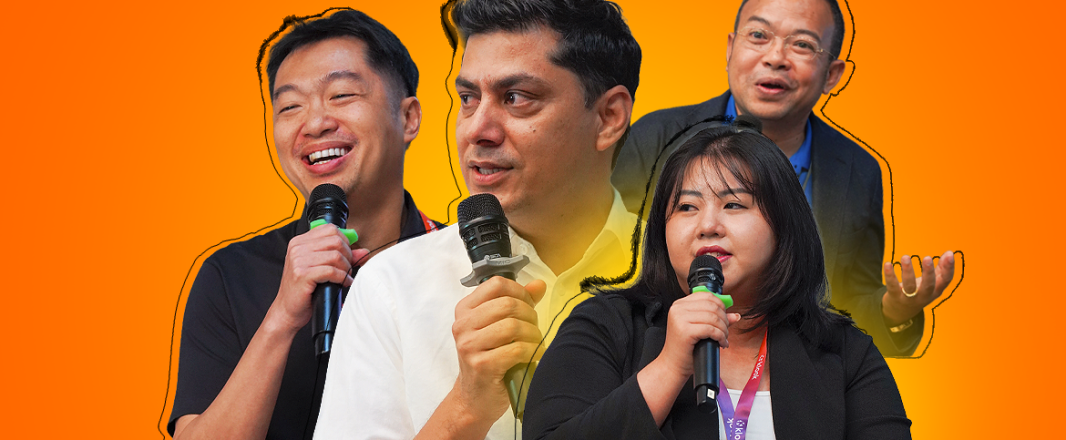
How ready are SMEs to seize the AI moment? That was the question asked at WiT Indie, and moderator Sarah Wan of Klook kicked off the session by asking her panellists to rate their AI-readiness on a scale of 1 to 10.
Vikram Malhi, CEO and founder of ZUZU Hospitality, a revenue management platform for independent hotels, rated his business a six. Puchong Nakchatree, founder & managing director, Bigcountry Experience, Thailand went with seven – “because I’m a tech person, and I do everything myself.” Adeline Tong, country manager, Singapore & Malaysia, GetYourGuide put her marketplace platform at an eight, noting the company still has “a long way to go” despite two decades in the business. Chan Chee Chong, CEO & co-founder of GlobalTix, landed around six as well.
The Revenue Manager’s job is going away – and that’s the Point
Wan pressed Malhi on a bolder claim she’d heard he’d made: that AI will eventually remove the human revenue manager from hotel operations entirely.
He responded, “I feel AI is going to replace the traditional revenue manager role – no human can outsmart a model making thousands of pricing decisions a day across enormous amounts of data. The question becomes what a revenue manager does instead, and I think there will be a role, but it moves from operator to strategist.
“Instead of playing every instrument in the orchestra, you become the conductor – you tell AI what to do and keep an eye on it. I think that’s coming very soon, probably within the year.”
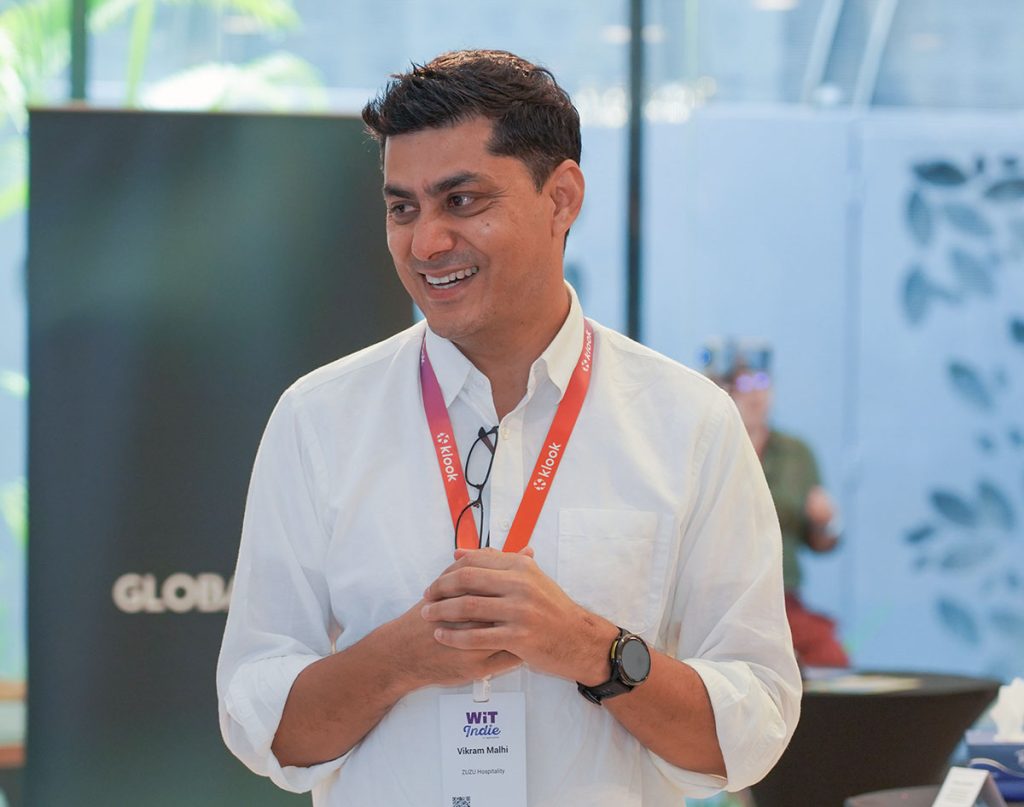
Vikram Malhi: “I feel AI is going to replace the traditional revenue manager role – no human can outsmart a model making thousands of pricing decisions a day across enormous amounts of data.
Do SMEs actually trust AI enough to adopt it?
Chan, whose ticketing platform GlobalTix works closely with independent operators, was blunt about the real barrier to adoption – and it isn’t technology.
“Indie operators don’t have much manpower, and when things hit, operations always comes first – that’s why you’re answering calls at 3am. My advice for indie operators is this: you don’t need to build AI on your own. Just look at the software you’re already using – your finance software probably has AI built in too. Explore what you already have, and you’ll be surprised how much is already there.”
Tong identified the mismatch she sees most often among operators approaching AI for the first time – not a lack of ambition, but a mismatch between the size of the promise and the size of a sensible first step.
“The biggest gap is expectations versus entry points. People imagine you plug in AI and your business runs completely differently tomorrow. What we’ve actually seen, across operators everywhere, is that they didn’t start with something big – they started with something very specific.
“There’s no one tool that fits everyone; it depends on what kind of business you’re running. Don’t expect AI to be a magic wand that changes everything overnight. Try something small and grow from there.”
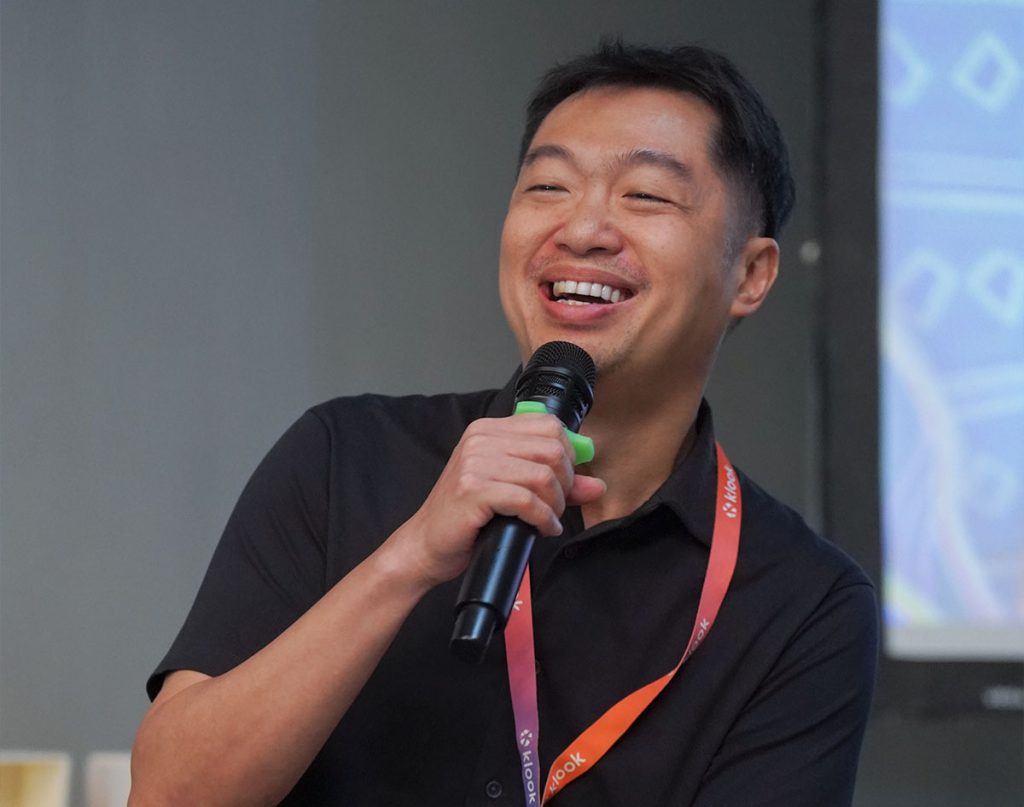
Chan Chee Chong: “The biggest gap is expectations versus entry points. People imagine you plug in AI and your business runs completely differently tomorrow. What we’ve actually seen, across operators everywhere, is that they didn’t start with something big – they started with something very specific.
What they are actually auilding
Asked what practical use of AI has surprised them most; the panel’s answers ranged from the operational to the deeply personal.
Puchong: “During peak season, we handle around 1,500 people a morning for pickups and operations. When I learned about automation, this was something I’d been waiting for – for more than 10 years – to use AI for the operations side, so my staff can focus on customer experience instead. We do the same thing every single day, so we need good energy every day. AI helps with that part.”
Malhi: “What’s helped most is functional experts – people who know a process inside out, like onboarding or pickup and drop-off – now having the ability to build a fully automated solution themselves, because they know exactly what they want. One of the biggest frictions in software has always been translating what a business owner wants into technical requirements, and the technical team building something completely different from what was actually asked for. Now that expert can spend half a day on AI and build something highly customised themselves. That’s a big shift.”
Chan: “No-brainer, but a very easy one: automation in email. Now, with AI, operators can automate a huge share of their inbox – and that alone solves maybe 30% of their problems.”
Tong: “I’m amazed by how people use AI to read customer reviews – instead of manually going through them one by one, you can ask: tell me the top three things my guests love, the top three complaints, is there a difference between peak season and low season. It’s always been the voice of the customer, but AI makes it much easier to discover and turn into actionable items.”
Asked whether there’s a point at which he deliberately keeps AI out, Puchong was clear that automation stops where the human relationship with the traveller begins.
“I protect this line very carefully – that’s why I focus AI on the operations, on the workflow, right up until we meet the customer. Once our customers are with us and having that experience, AI cannot replace that moment.”
The fear behind the adoption
Wan turned the conversation to a fear she said she’d heard repeatedly from small operators — that AI-driven discovery will eventually work against them rather than for them.
Chan reframed the fear as an opportunity, pointing to what’s already happening in China’s short-video ecosystem.
“With AI, you can crawl through everything on your website and build content at scale. In China, Douyin sells more tour and activity tickets than some OTA channels, because indie operators have the best content in their hands – they know their product better than anyone, and they can’t push it to the OTAs fast enough, so they just do it themselves. AI opens up that opportunity, especially for indie operators.”
He added, “If you’re not at least a little fearful of AI, that’s the wrong instinct – you should always be cautious, because it’s sometimes far too powerful. It’s a great friend for business, but unfortunately, a foe for some jobs.”
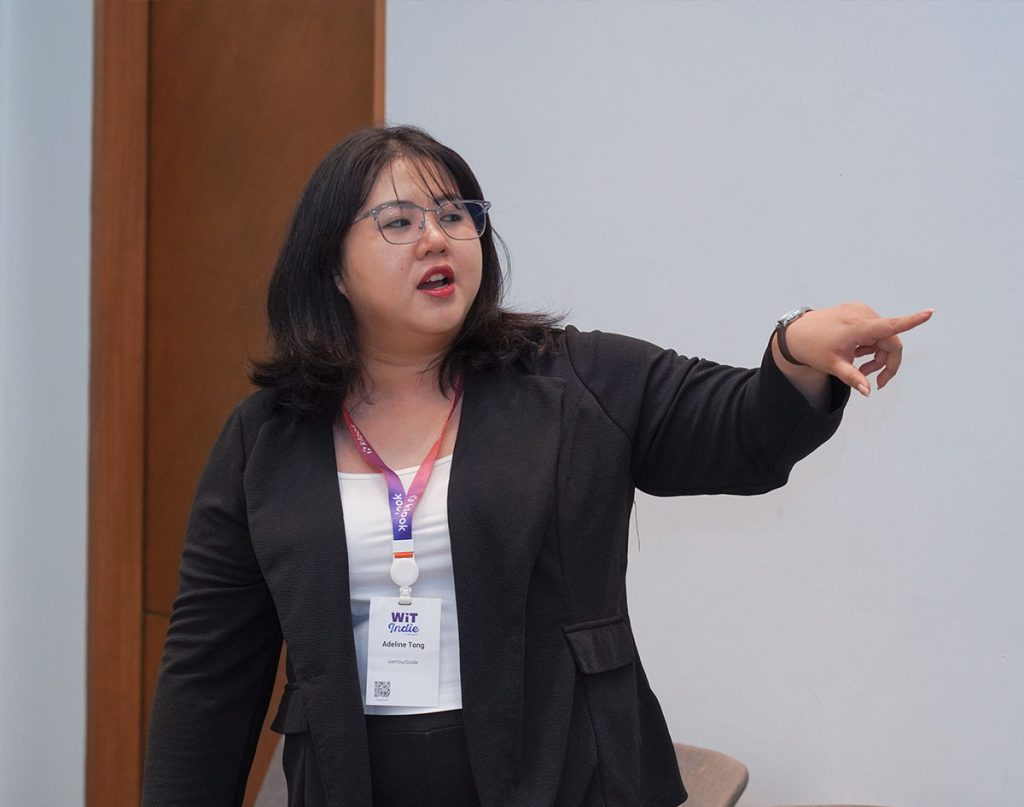
Adeline Tong: “I’m amazed by how people use AI to read customer reviews – instead of manually going through them one by one, you can ask: tell me the top three things my guests love, the top three complaints, is there a difference between peak season and low season.”
Levelling the playing field with OTAs
Malhi argued that AI’s biggest structural shift may be undoing the advantage big hotel chains have held for years – the ability to out-spend everyone else on pricing technology.
“OTA algorithms have historically rewarded whoever has the best pricing engine, and big chains have invested millions to stay on top. AI lets small hotels compete on that ground too – the differentiator stops being who has the best spreadsheet and becomes who has the best hotel and the best experience. Independent hotels already make up 50 to 60% of bookings, and I think that only grows from here. Today it’s about who has the most computing power; that’s going to shift significantly in the next six to nine months.”
Puchong said the shift already makes him feel more equal to bigger players in his dealings with OTAs. “Even as a small operator, when I have AI, I’m using the same marketing and the same automation software as a big company. If we can handle more customers – 1,000 to 2,000 – the relationship with OTAs should get stronger, not weaker.”
Tong pushed back on any framing of AI versus operators. “It’s not AI versus operators; it’s AI plus operators. As a booking platform, we integrate AI to help listings surface in AI discovery. But AI is a tool – at the end of the day, just a tool. Something it can’t fake is storytelling, the characteristics and personality an operator carries. None of the operators, none of the OTAs, none of the competitors can replicate that. Use AI as your assistant for the heavy lifting but protect your storytelling fiercely – that’s what represents you most.”
Chan agreed the product still has to come from the operator, whatever AI can automate around it. “As product owners, we’re responsible for creating a great product. AI can make the video, but the prompt still comes from you – what you want to say, why your destination is special. You’re still responsible for the product; AI just makes distribution so much easier, automatically posting across Instagram, TikTok and everywhere else.”
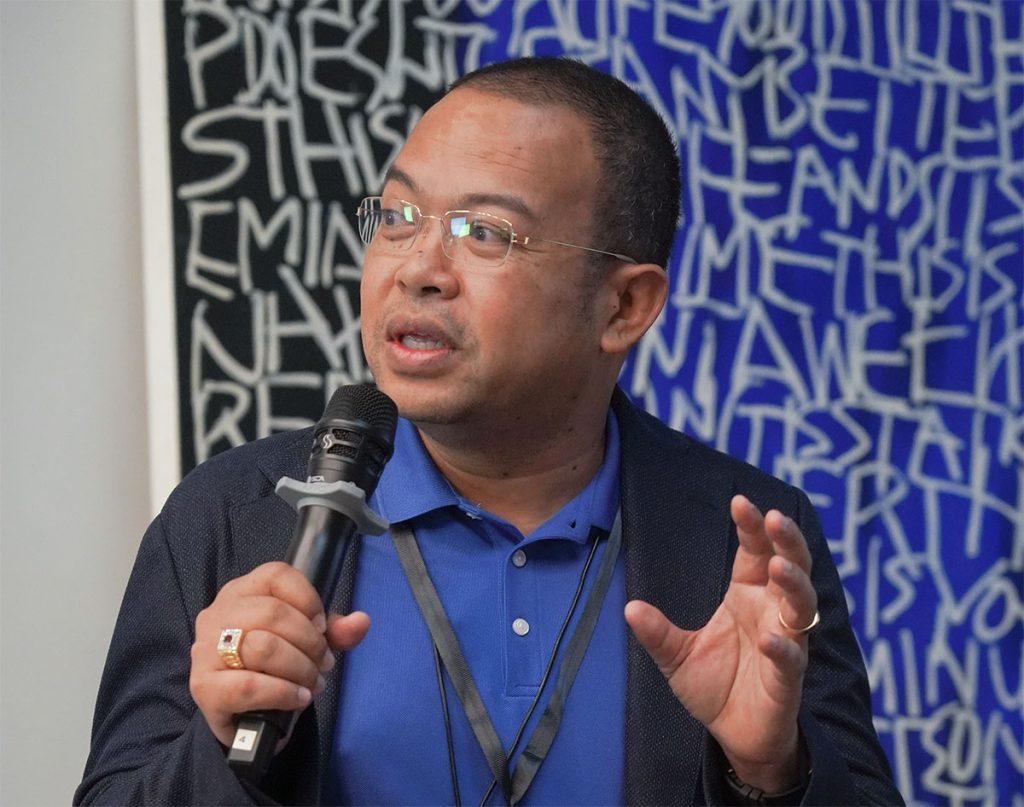
Puchong Nakchatree: “Even as a small operator, when I have AI, I’m using the same marketing and the same automation software as a big company. If we can handle more customers – 1,000 to 2,000 – the relationship with OTAs should get stronger, not weaker.”
Five years from now: Is there still room for the AI holdout?
Wan’s closed the panel with this question: if an SME doesn’t adopt AI within five years, is there still a place for them in the industry?
Said Tong, “This reminds me of the old days when having a website felt optional – it isn’t anymore. In five years, AI won’t be a nice-to-have, it’ll be a baseline. There’s still room for operators who don’t adopt it, especially ones heavily reliant on repeat, community-driven customers but it gets harder and harder, because travelers themselves are increasingly using AI to discover inspiration in the first place.”
Chan added, “In China, there’s a small group of restaurants that say, I don’t care about review platforms, my food is the best, and people still come. If your product is genuinely the best in the world, you can say you don’t care. But if you’re merely above average, you’d better adopt AI to make sure people can still find you.”
Puchong’s response: “My recommendation is to try everything yourself first, before handing it to a technical team, to keep things simple. I think within two or three years we’ll all be using the same tools – it’s not just question-and-answer AI anymore, there are thousands of AI agents that can fit whatever work you do.”
The final word to Malhi: “It’s almost like asking, do you adopt electricity? It’s just there, everywhere – you don’t really choose to adopt it. AI is going to become that kind of lifeline. The question that’s left is your product and your experience – those won’t be replaced. Everything else will be AI.”