
Booking.com’s Alberto Yates and Trip.com’s Boon Sian Chai on navigating conflict, building trust, and why the Middle East bet still makes sense
When the conflict broke out in the Middle East, both Booking.com’s Alberto Yates and Trip.com’s Boon Sian Chai, speaking at WiT Phocuswright Middle East in Barcelona last week, described the same instinct: move fast, and move on three fronts simultaneously. Employees first, travellers second, supply partners third.
For Yates, who operates across a vast and varied territory as Vice President, Partner Services EMEA, it meant activating a response team quickly, managing a surge of cancellations, and ensuring customer service teams had the right information to handle force majeure situations while also keeping accommodation and flight partners briefed on every step.
Chai, VP of International Markets, described Trip.com’s response as a race against inconsistency. With multiple business units – hotels, flights, attractions – each operating on different cancellation timelines, the risk was a fragmented and confusing customer experience. “It’s no point hotels offering free cancellation for three days if airlines are offering 40 days,” he said. Within three to six hours, the company had aligned policies across all units.
He also made a deliberate choice to overindex on flexibility. Where airlines offered 14 days of free cancellation, Trip.com extended to 21. “We expect, from our experience, that the crisis will not just end in 14 days.”
The self-service app absorbed much of the volume that would otherwise have overwhelmed customer service teams, a practical application of technology at a moment when speed mattered most.
“Crisis is an opportunity,” Chai said. “We want customers to know: when you face an issue like this, you can always rely on Trip.com.”
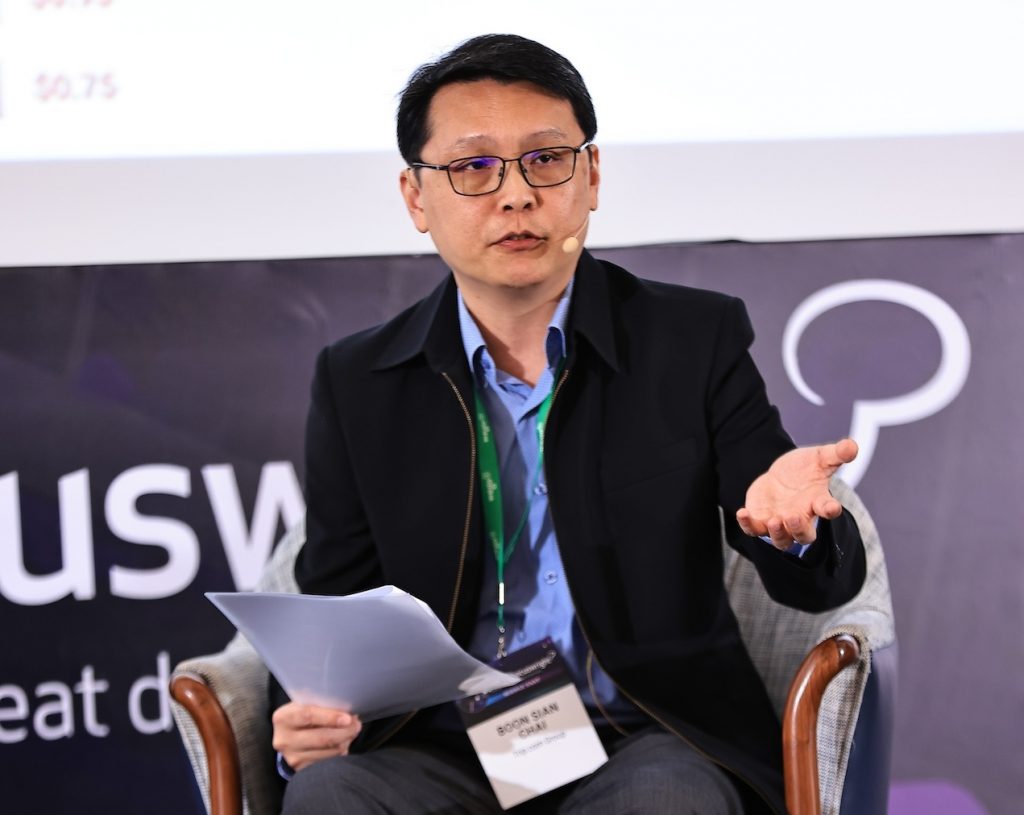
Boon Sian Chai, VP of International Markets, Trip.com
What the data actually showed
Yates noted that the region’s impact on Booking Holdings’ overall numbers was minimal. European travellers, notably, kept travelling within Europe without significant disruption.
Domestic demand in Saudi Arabia remained a different story entirely – staycations and short-break travel held up in ways that softer markets couldn’t match.
For Trip.com, the conflict effectively reshuffled the strategic deck. Religious travel, the Indonesian and Malaysian Umrah and Hajj traffic that forms a core pillar of the company’s Middle East business, dipped in the early months before rebounding sharply. “When Hajj came back in June, we saw triple-digit growth,” Chai said. “Religious travel didn’t get much impacted.”
The broader picture, both agreed, is one of structural resilience. The region’s geographical position, its young population, the scale of government investment in tourism infrastructure –none of that changed. And both executives had seen enough market cycles to know what follows a ceasefire signal.
“As soon as there were good signs of peace,” Yates said, “you can see the spike in bookings.”
Long-term conviction, short-term patience
Both Yates and Chai were steadfast in maintaining that their Middle East strategy was not under review.
For Booking.com, the connected trip vision – flights, accommodation, transportation, insurance, rides – remains unchanged. What has shifted is the emphasis on making travellers feel safe enough to rebook. “It’s just a matter of feeling safe to travel again,” Yates said.
Trip.com’s situation is different in one important respect – they are, as Chai readily acknowledged, “newly on the block.”
Unlike Booking.com and Expedia, which have operated in the region for years, Trip.com is still building its foundation: payments, localisation, brand recognition, supply relationships. The conflict created space to do that work without the noise of peak demand.
“We want to use this opportunity to build more relevance with local partners, and help customers understand what Trip.com can offer.” The company now has offices in Dubai, Riyadh, Jeddah, Bahrain, and Oman.
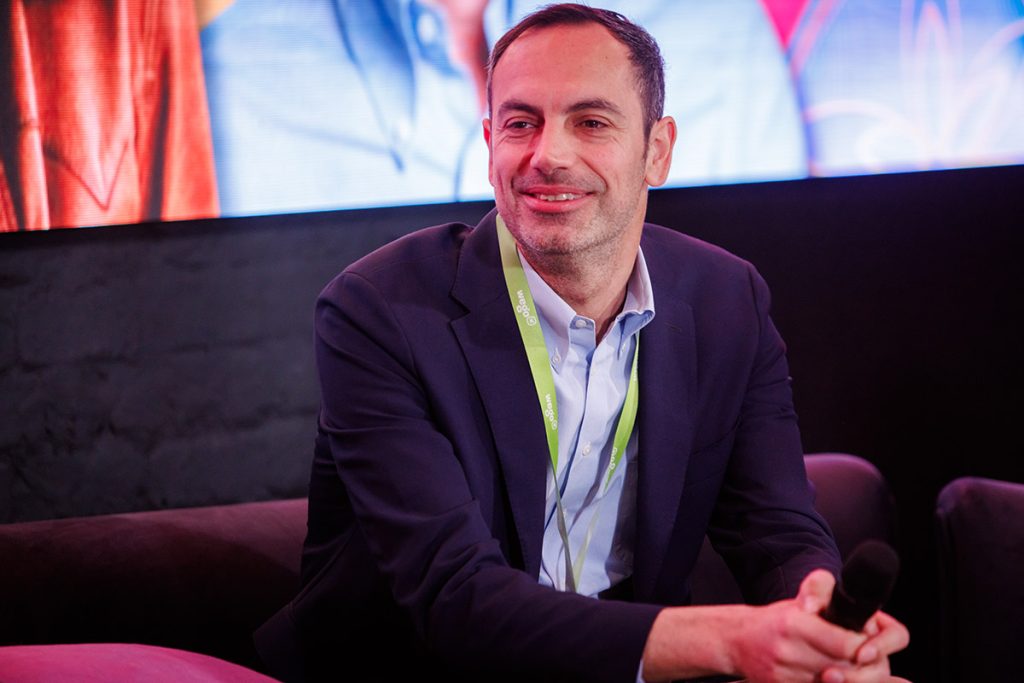
Alberto Yates, Vice President, Partner Services EMEA, Booking.com
AI: The personalisation moment has arrived
If one thing shifted the conversation from crisis management to genuine excitement, it was AI –and specifically what it now makes possible in a region that was always complex to serve.
Yates referenced the long years when personalisation was a buzzword in search of a definition. That moment, he argued, has passed. “Now I can really make your trip your own trip.”
With a supply base built over decades, deep partner knowledge of local travellers, and AI that can read not just text but images and reviews, Booking.com is focused on creating what he called “a perfect match” between traveller intent and property reality.
The harder challenge, he acknowledged, is trust – specifically, the gap between AI-assisted trip planning and AI-completed booking. “People like to browse, to picture themselves in a place. That connection, between dreaming and booking, is a gap AI might not yet fully bridge.”
Chai’s framing was more operational. Trip.com’s AI playbook in the Middle East is built around a specific problem: an enormous amount of relevant, useful information – hotel menus, local services, religious travel logistics – exists offline, and nowhere on the internet. The company is building a knowledge base by encouraging partners to upload this offline content directly into its systems. When a customer queries TripGenie about laundry costs at a specific hotel or the logistics of a religious itinerary, the answer is there.
On the partner side, Trip.com has introduced what it calls the “eBooKing Genie” – an AI assistant embedded in its extranet that allows accommodation partners unfamiliar with the system to ask natural-language questions about market trends, pricing dynamics, and occupancy forecasts. “We provide a genie for our partners, so that they can also leverage AI on our system itself.”
The Asian playbook, Chai said, translates but selectively. The principles of scale and localisation are universal. The content, the language, the specific texture of religious and cultural travel in the Middle East requires its own layer.
What held, what shifted
Moderator Phocuswright’s Pete Comeau closed with a rapid-fire question – name one thing that shifted when you expected it to hold, and one thing that held when you expected it to shift.
Yates chose forecasting as his casualty. Pre-pandemic, patterns were readable. Now every projection requires layering in conflicts, fires, political shifts, sentiment swings. “Forecasting is getting more and more complicated.” What hasn’t shifted: demand. Travel appetite, in his experience, remains the most durable variable in the system.
Chai’s answer was regional. The Middle East’s trajectory as a major travel hub – inbound, outbound, and domestic – is holding. What has shifted is the composition: domestic and regional travel are doing the heavy lifting while international recovers. “The Middle East is going to be a real big hub in the next 10 to 20 years,” he said.