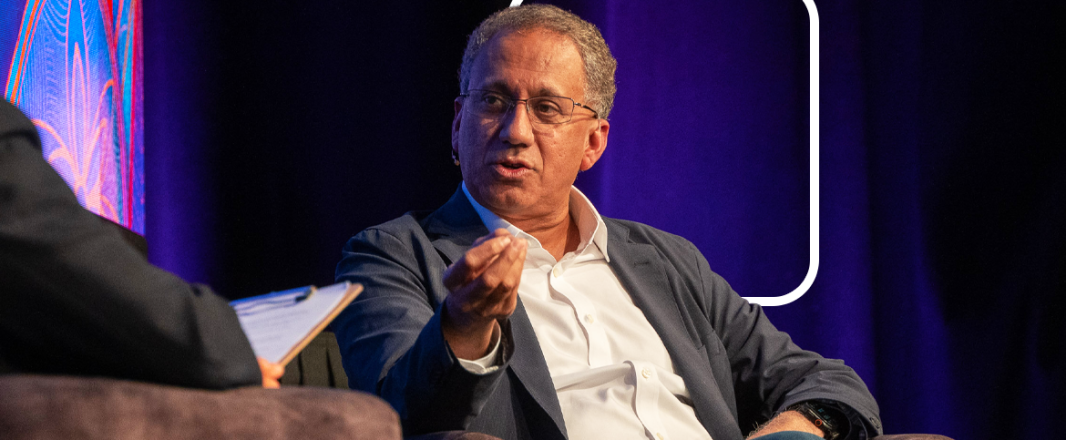
Sankar Narayan has done this twice now. Not built a company from zero – inherited one. First at Xero, where he arrived as CFO and left as COO with the company’s enterprise value multiplied threefold. Then at SiteMinder, where he has spent seven years as CEO alongside founder Mike Ford, scaling the world’s largest hotel distribution platform from a sales-and-infrastructure story into what he now calls one of the leading commerce platforms in travel.
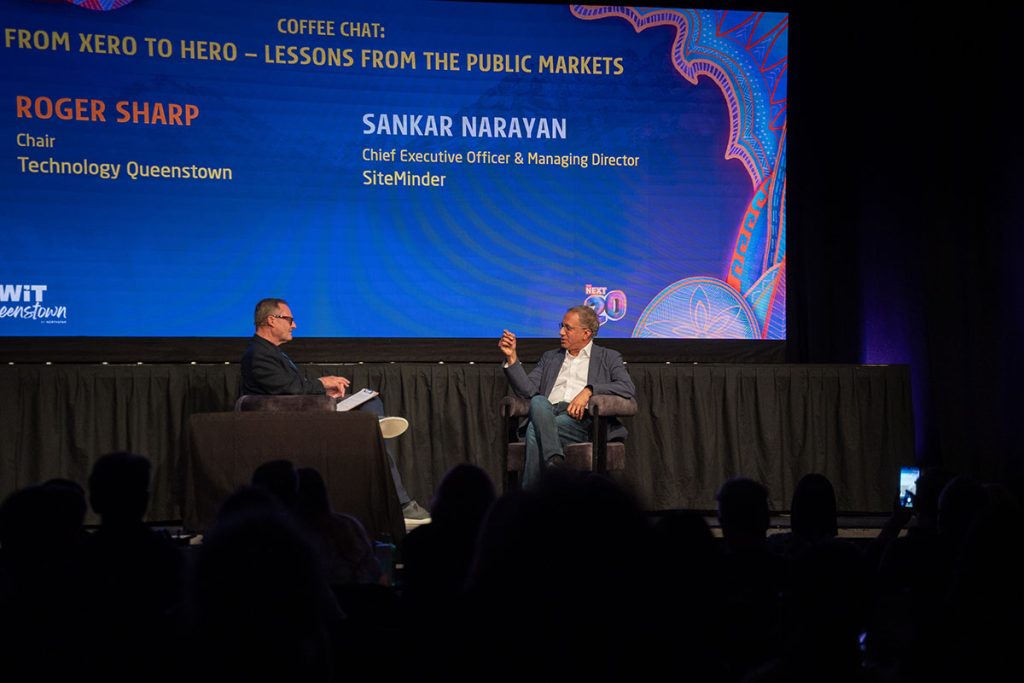
It is, he said during his Coffee Chat at WiT Queenstown, a delicate kind of succession – one most operators get wrong.
“Founders build businesses right, so they start the business, they put their heart and soul into everything else – the mortgage, the house – to fund their business in the early years,” Narayan said. “Then at a certain scale, every business goes through it: you want professional managers coming in. What you’re there for is to scale the business, preserve the great elements, and put in discipline.”
The mistake, he said, is walking in on day one and rewriting the playbook. In his first three years at SiteMinder, Narayan deliberately stayed out of product decisions, deferring to Ford’s judgment while he focused on scaling the sales function and the operating platform – the plumbing that let SiteMinder go from thousands of hotels to more than 53,000 today, and from a modest inventory base to over two and a half million rooms under distribution, connected through more than 400 channels to the world’s OTAs.
Only in the last three years, after Ford stepped back, has Narayan taken a firmer hand on product.
“You defer to their judgment on product while you’re looking to scale the business,” he said. “Don’t come in on day zero and look like you’re going to change all the parts of it. Look at where management can add value and preserve the great elements of what made the company special.”
Public markets, private boards
Three years into the CEO role, Narayan took SiteMinder public – in the middle of Covid, a detail he still finds faintly absurd. Asked whether he preferred running a private, VC-backed business or a listed one, he declined to pick a side. “There are pros and cons on both sides. It’s not that one’s better than the other – they cover different opportunities and different challenges.”
In private companies, he said, shareholders tend to sit close to the business, deep in its day-to-day detail – useful, but with a thin line between board and management. Listed companies draw a harder line: the board sets strategy and direction, and holds management accountable, but isn’t in the weeds.
“I’ve got a great board that says: we’re here to set the strategy and direction, and if you don’t perform, we’re here to fire you. That’s okay. But the job of managing the business is management’s job.”
The morning Spain shut its borders
SiteMinder closed a capital raise in early 2020, weeks before the world stopped travelling. Narayan traced the unravelling almost country by country: China shutting down first, then Italy, then the early morning call from his head of sales in London telling him Spain had shut its borders at 2am.
With SiteMinder’s customers spread across 150 countries and Europe as its largest market, there was no regional shelter from what followed. The response, he said, was to strip back to fundamentals: “Go back to your roots. What are you really good at? Make sure you excel at providing that service for customers to see them through what could be a prolonged period.”
SiteMinder used the downturn to add new products – expanding into distribution and other adjacent tools – rather than chase new customer acquisition, a bet that he says kept retention intact through the crisis. The company went on to list on the ASX in November 2021, one of the last IPOs to get away before the market shut for capital raises for the best part of a year.
Search is dying, execution isn’t
On AI, Narayan was characteristically unsentimental about where the real risk sits. Discovery, he said, is being reshaped wholesale – the shift from search to AI-driven discovery is one the industry has already made peace with. The harder problem is what comes after.
“It comes down to execution. Reliable execution. You need to be able to translate that intent –you can’t make up rooms, you can’t sell the same room twice. You need trusted infrastructure.”
When a traveller commits hundreds or thousands of dollars based on what an AI agent surfaces, the room has to be there, priced as advertised, on the day. “No amount of AI in the front is going to fix that execution if it’s not there. It’s both of them working together.”