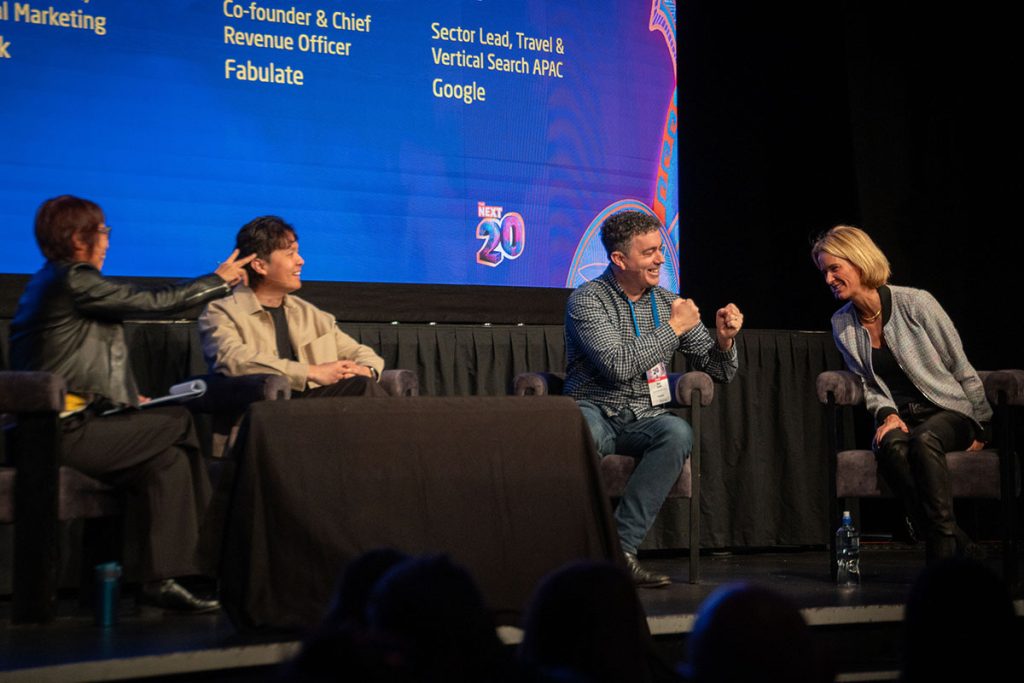
A panel at WiT Queenstown representing Klook, Google and Fabulate shares tips and insights on what’s working and what’s not
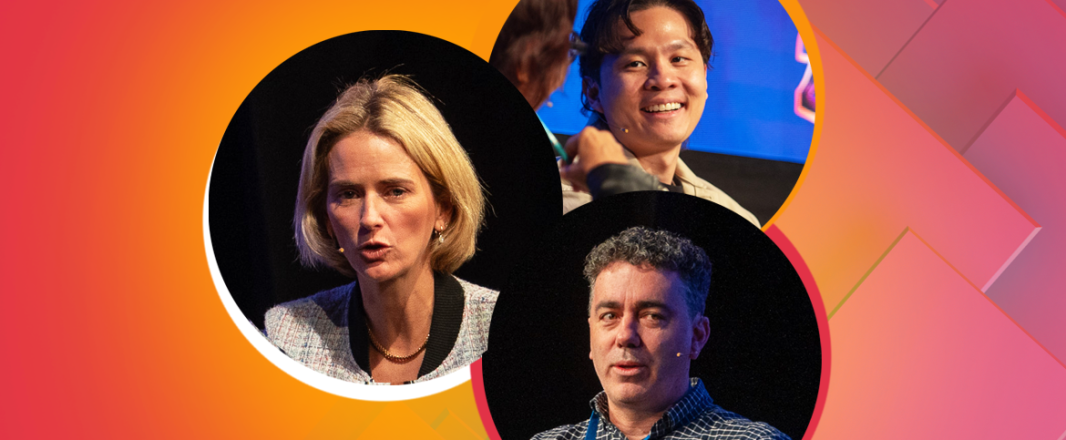
Social and AI have increasingly become the means by which travellers discover places and things to do – and the panellists at WiT Queenstown – Marcus Yong of Klook, Ben Gunn of Fabulate, and Hermione Joye of Google – were no exception.
Asked how they discovered their last truly memorable trip, Joye said she discovered a Port Douglas family trip through Gemini. Gunn’s inspiration came from social, landing him at a luxury stay in Tasmania he now recommends unprompted. Yong, through social, discovered snowboarding for the first time in Hokkaido, has been hooked ever since with Queenstown now his current cool spot.
Forty thousand creators and three surprises
Yong’s Klook runs a creator network now numbering around 40,000. It recently gathered a hundred of them together in Taichung, Taiwan, and is about to do the same in Phu Quoc, Vietnam, in September.
Three lessons stood out from the ground from the Taiwan event, he said. First: the youngest creators, 18 to 25, are using AI as a creative partner rather than a shortcut – Klook expected the opposite going into a recent hackathon, assuming younger creators would resist AI in the name of authenticity. Instead, everyone reached for ChatGPT or Claude to brainstorm angles.
Second: social commerce is no longer top-of-funnel work. Creators are now thinking natively about conversion, because commission follows conversion. And third, the one Yong said he was proudest of: travel still runs through people, not platforms. The real content comes from creators’ interactions with merchants, partners and the night-market stallholder – which is why Klook prioritises putting creators directly in front of the people they’re filming.
Joye’s view from inside Google backed up the shift with harder numbers. Search queries are getting longer, more conversational and are now posed as questions – “best hotels” has given way to eight-word-plus questions like where the best hotel is for a family of five? whether typed into Search, AI mode or Gemini.
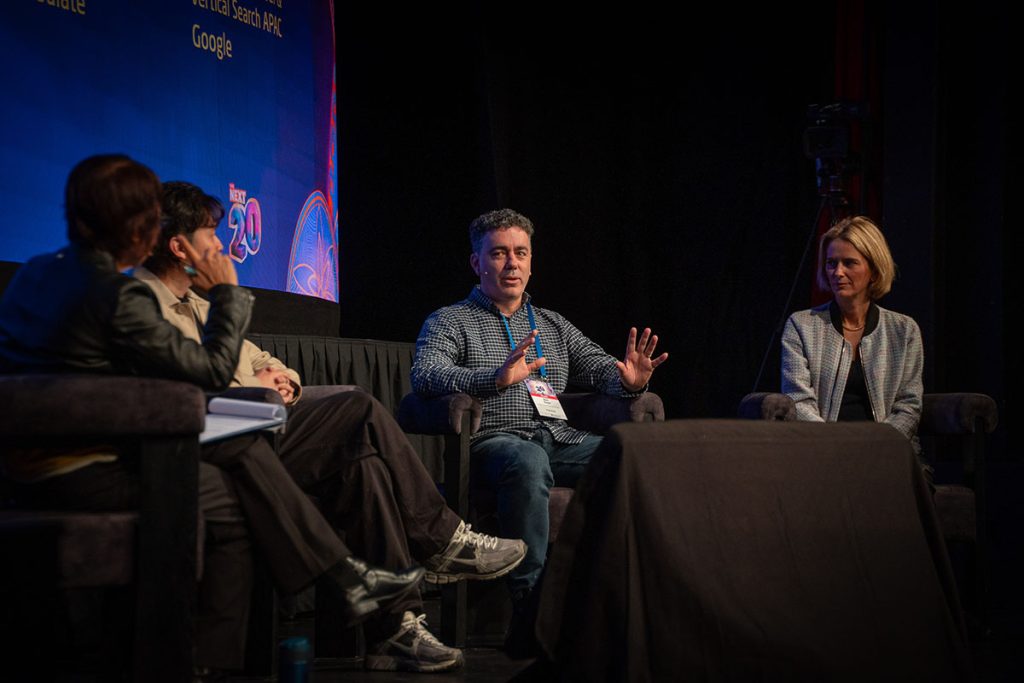
Gunn, whose Fabulate platform tracks more than 300 million creator profiles, said commissioning expensive influencer content and then declining to put paid media behind it is counterproductive.
And the APAC skew is stark: the region generates approximately one quarter of global travel searches but more than 70% of global travel views on YouTube, a gap Joye attributed to video’s advantage in a linguistically fragmented region. AI adoption tracks the same pattern: seven of the world’s top 10 markets for AI usage sit in APAC, India highest of all, while Australia and New Zealand behave more like the US.
Gunn, whose Fabulate platform tracks more than 300 million creator profiles, was blunter about where brands are getting it wrong. Two mistakes recur constantly: commissioning expensive influencer content and then declining to put paid media behind it – “you wouldn’t go to the trouble of making a TV commercial and not run a campaign behind it” – and briefing creators too prescriptively, cramming in so many brand messages that the authentic voice audiences actually trust gets flattened.
Yong offered an explanation for the first problem: the content team and the paid social team, at most brands, simply don’t talk to each other.
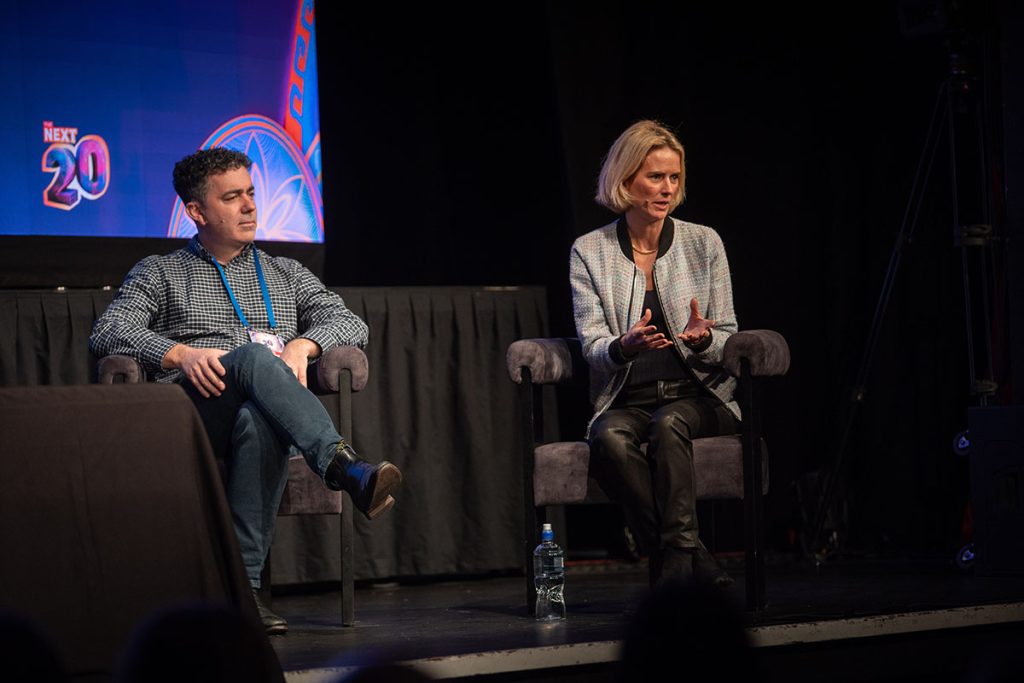
Google’s Hermione Joye connected the dispersal instinct to broader shifts her team has tracked across South-east Asia: travel spending is now outpacing growth in essentials like groceries and fuel by 3.3 times.
One tip to be more discoverable
They were then pressed for a single piece of advice each on how brands could become more discoverable.
Yong said that Klook builds its whole content strategy around capturing demand versus generating it. Klook, he argued, isn’t in the business of manufacturing inspiration – that’s a DMO’s job, or an airline’s. Its content exists for the moment someone already knows they want to go somewhere and needs to work out what to actually book: self-drive or not, lakeside stay or not, speedboat tour or not.
Gunn referenced a finding shared by Angelica Handover of SocialSeal when she shared the Asian traveller intent for New Zealand and disclosed a data point that 98.5% of the content people find on social isn’t brand content.
Gunn’s advice – go find the right creators, of which there is no shortage.
Joye’s tip pointed at product: two Google ads, Demand Gen for video and AI Max for search, both designed to power your ads with the best of AI and simplify the advertising process across Google platforms.
TikTok Shop – nice idea, brutal operations needed behind it
Klook was among the first travel brands into TikTok Shop, and Yong shared two numbers. New-customer rates from TikTok Shop and TikTok Go run 85–90%, an extraordinary figure for a channel that’s essentially untapped by traditional SEO-driven acquisition.
But the second number explains why TikTok Shop still mostly works with major OTAs rather than independents: it’s operationally brutal, said Yong. Prices, titles and inventory have to move in real time as the algorithm shifts and new product placements open – Yong described watching four out of five competing brands drop a price within hours while one lagged, visibly stuck with stale inventory.
Layer on travel’s naturally high average booking value, and the consideration journey – will I get a refund, where do I actually go if something goes wrong – makes impulse conversion far harder to engineer than it looks from the outside.
Joye referenced the power of YouTube sharing that the 2025 research paper launched by Google across South-east Asia in partnership with Kantar, showed where the appetite for the platform was the strongest: Indonesia leading, with Vietnam, the Philippines and Thailand close behind, skewing heavily Gen Z.
Short-form content drives awareness, longer-form drives the loyalty that turns a follower into a repeat buyer – smaller basket sizes, but real repeat purchase behaviour once a creator has a shop attached. Travel products aren’t yet sold this way at scale, though Joye confirmed that Google is working on evolving its YouTube products to factor in the change in behaviour, with new product launches coming soon.
On measurement, Gunn pointed to what he’s called, in his own writing, the “great purge of 2026” – millions of fake followers and inflated engagement stripped from platforms – as the reason brands have moved well past follower counts toward engagement rate, saves and shares.
The most advanced clients, he said, are now chasing closed-loop reporting: tracing a specific piece of creative content, run on YouTube, all the way through to an actual purchase.
Joye confirmed Google is actively building that bridge for businesses via it’s tech stack and measurement offerings (Meridian being their new open-sourced offering) — tagging content to track search spikes, site visits, newsletter sign-ups and basket size in one continuous line.
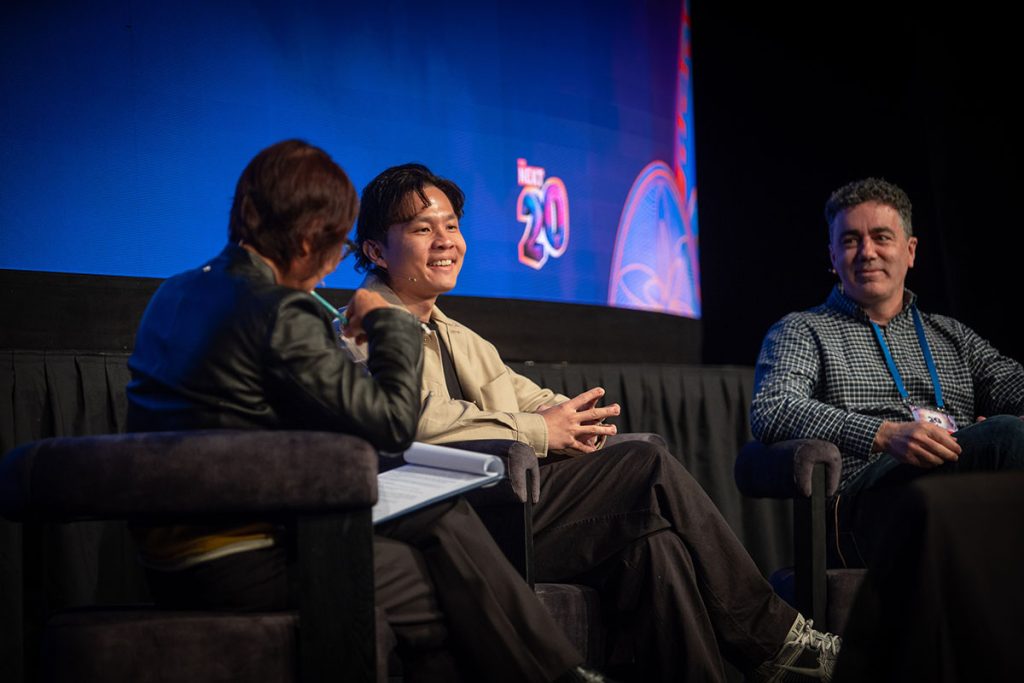
Klook’s Marcus Yong said the youngest creators, 18 to 25, are using AI as a creative partner rather than a shortcut.
Using social to send travellers somewhere quieter
Turning the conversation towards using social for dispersal of travellers, Yong cited Klook’s Hiroshima campaign, built on a trend the team had spotted: the rise of secondary-city travel within Japan, where predominantly Asian travellers fly into Tokyo or Osaka and increasingly want a deliberate side trip.
The challenge was perception – Hiroshima’s association, for most travellers, begins and ends at the Peace Museum. Klook ran a 24-hour hackathon with roughly 130 creators, generating hundreds of pieces of microcontent pushing the city’s transport options, including local rail passes, and the campaign delivered 15x growth in Hiroshima pass sales over 12 months.
The city’s own tourism board, watching the content land in real time, told Yong they’d never seen anything like it – their prior playbook had been polished TV commercials, not a swarm of fast-turnaround clips from a hundred different angles at once.
Joye connected the dispersal instinct to broader shifts her team has tracked across South-east Asia: travel spending is now outpacing growth in essentials like groceries and fuel by 3.3 times, travellers are booking earlier for peak periods but increasingly later for everything else, and off-the-beaten-path destinations are gaining real share. That the dream to book windows has lengthened to 4mth, but now consists of nano research moments that happen almost daily.
Her advice was clear, invest in video content and work to have a clear brand strategy both visually and for recall and that from from a inventory/destination perspective there were two distinctive audiences: build early-planning content for the travellers who book ahead, but keep meaningful inventory available for the growing share – disproportionately Gen Z – who book close to the date, so they aren’t shut out entirely.
Rapid fire: Forward thinking, not reckless
Closing on quickfire hot takes, the panel found itself in more agreement than the format wanted.
VisitScotland’s decision to close 25 visitor centres and redirect the budget to TikTok and digital content: forward thinking, unanimously. Catalonia Tourism Board’s shift from targeting geographic markets to targeting mindsets: also broadly endorsed, with a nod to comments from Air New Zealand’s CEO the previous day making a near-identical case for smarter, more targeted budget allocation. Klook’s partnership with PlayStation to tie its Hokkaido push to the game Ghost of Yōtei drew the panel’s only real split — gimmick, or clever move — before settling on clever, with Yong revealing for the first time publicly that the real strategic goal wasn’t Japan at all: it was using gaming as a low-cost entry point into the US market.
Asked whether New Zealand could do something similar, Yong pointed to its own obvious asset — a newly announced Netflix series set in Queenstown — and drew the comparison to the “Emily in Paris effect”: ride the wave of a cultural moment, but only if the inventory is actually there to catch the demand it creates.