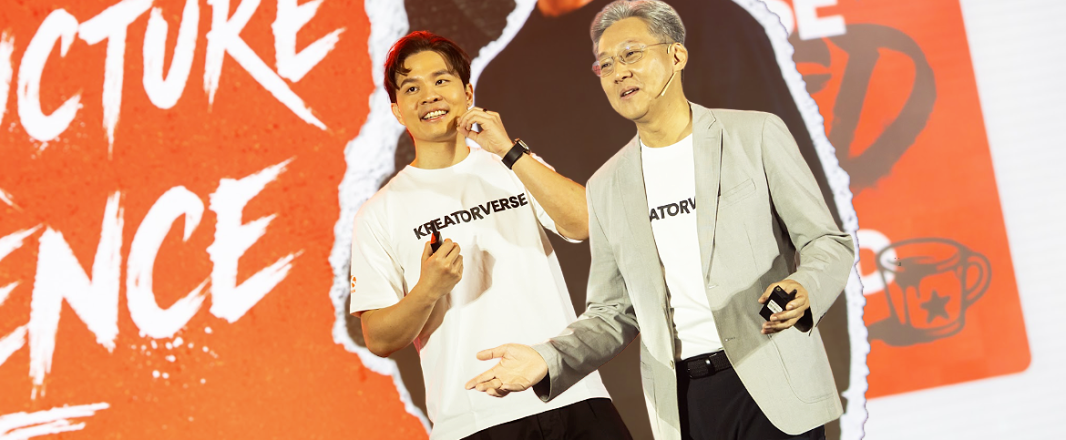
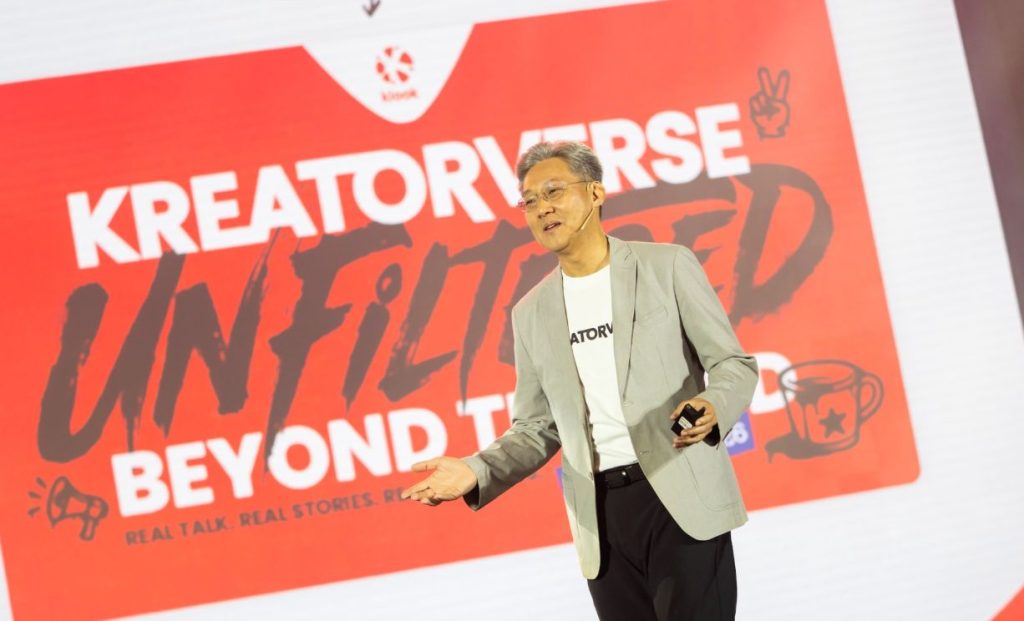
“3 years ago, when we launched Kreatorverse, it was an experiment. Last year, it was starting to form a structure. This year, we see scale,” said Wilfred Fan, Chief Commercial Officer of Klook.
Then came the warning.
“When things start to scale, it becomes a red ocean. There are too many creators, too many brands and too much content being pushed out. Eventually, not everyone in this ecosystem will survive.”
That is the more interesting place to begin the story of Kreatorverse 2026—not with Phu Quoc’s beaches or the familiar promise of reach and engagement, but with what happens after the creator boom.
Content creators have already proved they can influence where people travel. The harder question is what happens when every brand has a creator strategy and AI allows almost anyone to produce more content, faster.
When content becomes abundant, what remains scarce?

For Klook, the answer emerging from this year “Unfiltered: Beyond The Feed” edition is a combination that is harder to manufacture: human curiosity, trusted judgment, commercial relevance and a community that makes the creator economy feel less transactional—and less lonely.
Phu Quoc was an appropriate stage for that conversation. Kreatorverse still had the energy of a creator trip, but the discussion had moved beyond simply sending people somewhere beautiful and waiting for the posts to appear. The questions were now more engaged and perhaps difficult: how should a creator work with a brand brief without losing their voice? Where should AI enter the process? What separates content that earns attention from content that moves someone closer to a booking?
Kreatorverse is growing up alongside its creators. What began as a social-content experiment is becoming a more deliberate system connecting destination discovery, human emotion and commerce.
Behind the feed, a lonely loop
Wilfred’s most revealing lesson did not come from a campaign dashboard. It came from listening to creators describe their working lives.
“A couple of the creators told me they were actually relatively lonely,” he said. “Those who had recently converted to becoming full-time content creators were particularly lonely.”
The public version of the job is movement: a new country, hotel or experience. The private version can be a closed production loop.
“Their work is: go out to make content, go home to edit, publish, and while they are publishing, they already need to think about the next round,” Fan said. “Every day is just that loop.”
Even a spontaneous moment can become material before it becomes a memory.
“The moment they find something interesting or exciting, they already have the camera on and start talking to the camera instead of talking to friends, family or the people around them.”
Kreatorverse gives them a temporary escape from having to explain that rhythm.
“Everybody knows what the other people are feeling,” Fan said. “They don’t have to say, ‘I’m a creator—don’t be surprised if I suddenly start taking a selfie or videoing people.’ They feel relaxed.”
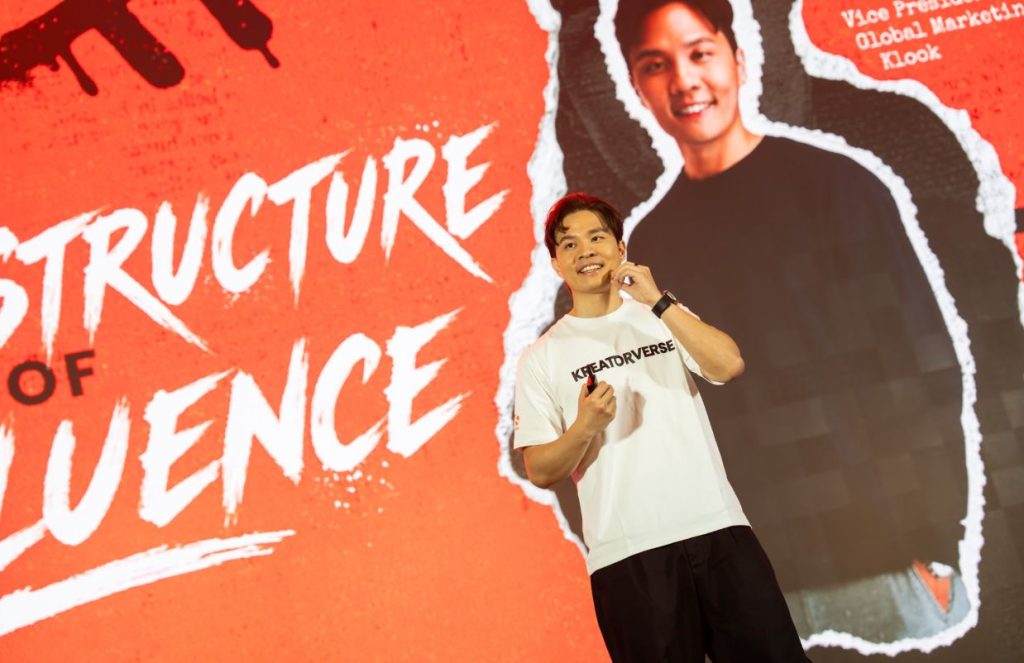
That is why Marcus Yong, Vice President of Global Marketing at Klook, called community the foundation of the programme. But watching the creators together, it also felt like a journey Klook has witnessed over several years.

The creator behind @Shrug My Shoulder, whom I caught up with again, is now expecting a baby. Her husband is a software engineer, so AI is naturally becoming part of how they accelerate their production process. Yet what interests me more than faster editing is how her content may evolve alongside her life—from travelling as a couple, and soon, family travel in the next chapter of her journey.
The creator Klook first worked with 3 years ago is not necessarily the same person, or speaking to the same traveller, today. AI may speed up the workflow, but community allows the brand to grow alongside the human using it.
This is more than a sentimental benefit. A long-term relationship gives Klook context that a campaign report cannot: how a creator’s interests are changing, whether their audience is moving with them and which travel products now fit their life. The community becomes a kind of living memory—not only of what creators have sold, but of who they are becoming.
AI can accelerate content. It cannot decide what matters
If loneliness is one pressure, abundance is another.
“2 years ago, I was exploring AI. Today, AI is doing my job—not all of it, fortunately,” Wilfred joked.
But the question behind the joke is serious: “Is everybody going to be a creator? Or will only the people who stick around at the top sustain, while the rest retire or move on?”
Marcus sees AI as a production partner, not a replacement for the creator. Klook’s AI video tool, VIMO, can shorten the editing process by organising clips, overlaying text and music, and offering different cuts for different audiences.
A creator could, for example, ask the tool to assemble one version for families with children and another for couples. AI can propose the direction and perform the mechanical work; the creator still decides which version sounds true to the experience and to the audience.

“The shooting cannot replace the human, because you still need the human to experience it and know what story you want to tell,” he said. “The whole story—from filming to deciding what you actually want to say and post—is entirely done by the human.”
Efficiency, however, creates its own problem.
“Everyone can flood the market with a lot of content,” Marcus said. “But how do you determine what is quality content versus poor-quality content? That is where human judgment comes in—to say, ‘This is too AI. I don’t like that.’”
The new scarcity is not content. It is judgment.
The same applies to selecting creators. Klook begins with performance: creators who have delivered views, engagement and sales, as well as new participants showing potential. It then looks for representation across markets, personalities and interests.
The familiar faces at Kreatorverse include what Marcus calls Klook’s creator “all-stars”—people who have grown with the programme and proved they can do more than generate views. Newer creators enter the mix after showing potential over the previous 12 months. If the working list contains 300 names but only 150 places, Klook then balances markets, content styles and the needs of the destination.
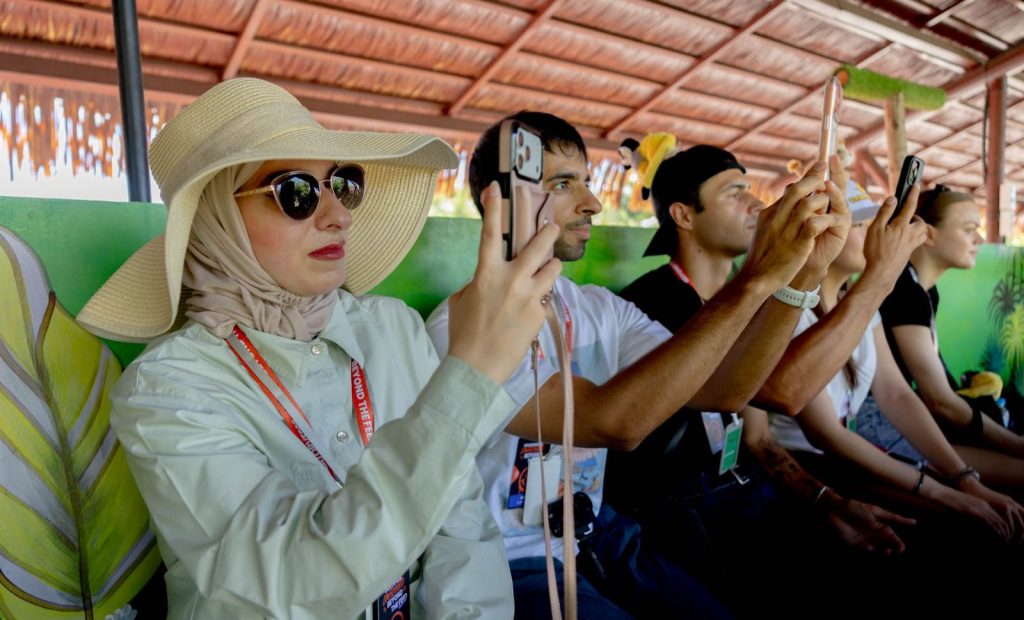
That matters for a global platform. A group dominated by one region, personality type or travel style might perform well individually but fail to reveal the range of stories a destination can support. An adventure creator, a shopping specialist and a parent travelling with children may encounter the same place but make three entirely different products visible.
But Yong said the final decision “has to be done by humans.”
“The account managers know the creators’ likes and dislikes,” he said. “They know a particular creator may be good at indoor content, but if most of the itinerary is outdoors, that creator may not be the best person.”
They also know how someone’s life has changed—whether they now travel with children, what they want to explore next and which experiences will feel natural rather than assigned.
“You can build a CRM system, but nothing beats the human understanding developed across 12 months of working with a creator,” Yong said. “You can get a little bit from AI, but the full understanding is harder.”
Technology helps the programme scale. Relationships stop that scale from becoming generic.
From curiosity to conversion
For Marcus, authenticity is not a visual style. “Authenticity is about bringing the customer as close to the real experience as possible.”
Platforms are good at structuring information through descriptions, images and reviews. Creators add emotion.
“They bring in what they liked and what they didn’t like,” he said. “Normally, platforms are very structured and logical, but you cannot bring in the emotional side of the house. That is where the creator engine complements what we are good at as a platform business.”
This is why Marcus does not see AI and social discovery as competitors.
“There are almost two engines. The first is AI, which does a fantastic job pulling information and researching. But the second is: with that information, how do you feel?”
A traveller may ask AI to build an itinerary, but before booking an activity, many will still search social media to see another person doing it.
“You don’t just want the brand or tour operator talking about its own product,” Marcus said. “You want to see other people talking about that product. To me, AI and social don’t compete. They complement each other.”

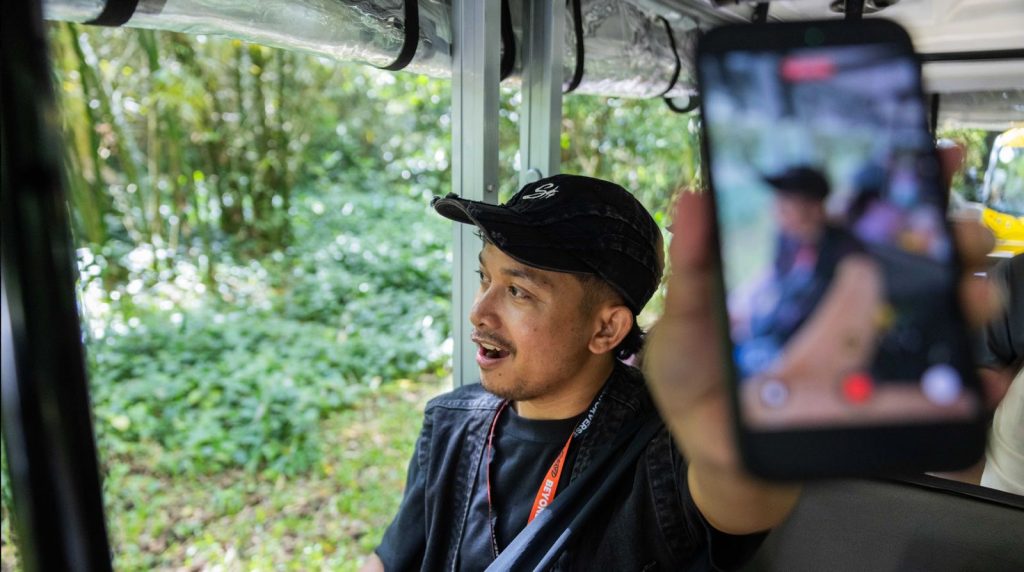
Vietnamese creator, Melon described Klook’s role from the other side: “Klook is the bridge to products that we would never know existed. And, of course, that makes us curious.”
That comment captures the exchange. Klook gives creators access to experiences they may never have found independently. Their curiosity then determines how those products are translated for an audience. Klook supplies access; the creator supplies the human reason to care.
But curiosity alone is not the business model. Klook wants the inspiration to become bookable.
“The unique thing about our creator programme is that it is not just an influencer programme where you commission a creator to make content, they post it, and that is it,” Marcus said. “We have the ability for creators to bring it to our platform to convert and make bookings.”
Klook Kreator Shops let creators curate products in a way that fits their identities. They also give Klook behavioural signals: did customers arrive and leave, add an activity to cart but fail to check out, or respond to the content but not the offer?
“Is it a platform problem in the way we display information?” Marcus asked. “Is it a product problem where the creator endorsed it, but it is so new that there are not enough reviews? Maybe we need the creator to create more content about it.”
The distinction is important because reach alone cannot explain where a booking journey breaks. A creator may have attracted the right customer, yet the product page may lack information, the activity may have too few reviews or the offer may not be compelling enough to close the sale.
Marcus described the sort of conversation Klook can then have with a creator: “Henry, you are driving a lot of sessions to the Kreator Shop, but compared with other creators, your conversion rate may only be one-third of theirs. The fact that people are coming means they are interested in the content, but they are not converting. Is it the offer? Is it how we describe the product? How can we change that?”
“That becomes very powerful,” he said.

The creator is no longer simply a media channel. They become storyteller, merchandiser and a live feedback loop between traveller demand and travel supply.
Those signals also inform Klook’s own decisions. If an activity generates interest through creator content but needs stronger product information or broader exposure, Klook can decide whether to improve the listing, commission more explanation or put its own marketing dollars behind it. The creator’s audience is not simply buying existing supply; its behaviour helps Klook understand which supply may be ready to scale.
The brief still matters. Klook sets the commercial objective and key messages but lets creators interpret them in the language their audiences expect.
“We tell them we want to drive commerce, so we need them to talk about the deals or what customers can get from the Kreator Shop,” Marcus said. “But how they do it—at the end, at the front, through drama—we leave that to them.”
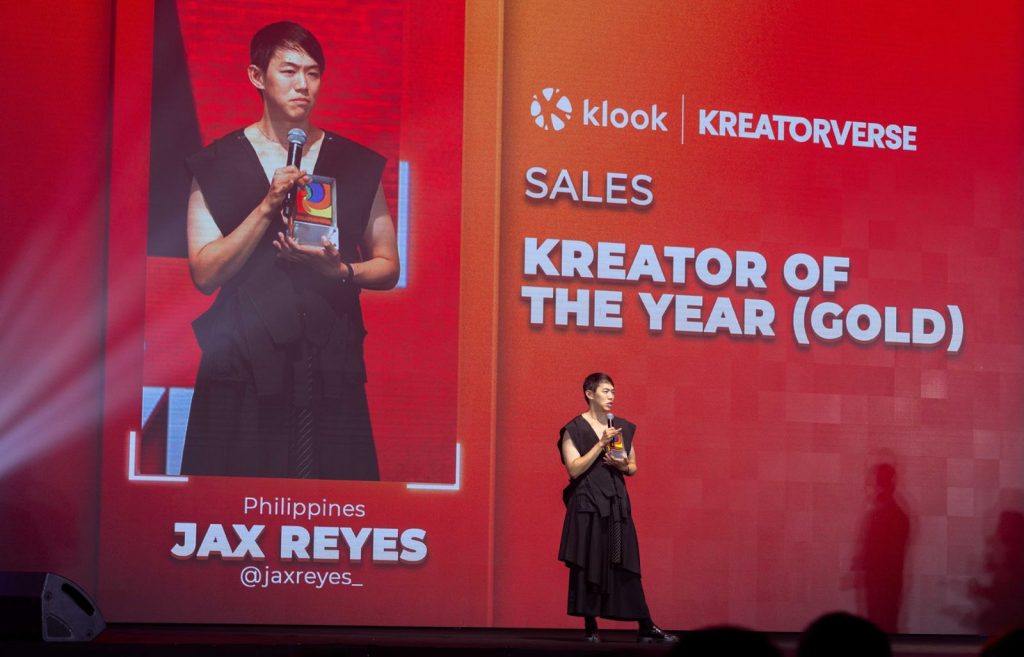
Jax Reyes, one of Klook’s biggest creator success stories and a winner for 3 consecutive years, reduced it to a simple formula: “Share the value, then give them the best deal.”
That is the compact version of Klook’s entire content-to-commerce journey. Value earns attention. The deal gives that attention somewhere to go.
It also explains why Klook cannot make every Kreator Shop look or sound the same. Followers expect recommendations that reflect the person they chose to follow—whether that creator is adventurous, chaotic, family-oriented or obsessed with finding value. Standardising the message too aggressively might make the brand easier to control, but it would weaken the trust Klook is trying to convert.
Community, curiosity, conversion
Marcus described Klook’s three Cs as a pyramid rather than three equal circles.
“The base is community. The middle is commerce. The top is content,” he said.
Content gives creators a reason to tell a story: a new destination, experience or angle. Commerce connects that story to a booking and commission, even if the transaction happens months after somebody sees the original post.
Community gives the relationship continuity.
“Most brands do content,” Marcus said. “But at the heart of it all, the foundation is community. That is why we invest so much effort in bringing partners and creators together to learn, because community is what keeps it sticky. Without community, content and commerce can be very one-off.”
That “stickiness” is commercially useful to Klook, but it is also an answer to the isolation Wilfred heard about. It gives creators colleagues in a profession often practised alone—and a space where their growth is recognised beyond the latest metric.
Klook has also begun taking parts of that community offline. At selected travel fairs in Southeast Asia, creators have been brought in to speak directly to travellers—sharing how they planned a European itinerary, for example, before audiences received a code or incentive to book. The creator is no longer a face playing silently on a screen but a person travellers can listen to, question and trust in the room.
In Japan, Klook experimented with a Kreator Fest where leading travel creators brought their fan bases together for a day of talks. Someone already considering Vietnam could hear a favourite creator explain the destination, then move directly from interest to a relevant offer.
“The majority of the programme is still digital because we are an online booking platform,” Yong said. “But these physical activations augment the programme in markets where they are relevant.”
That movement from digital reach to physical proximity is not necessary everywhere, but it shows how the relationship can deepen. The feed introduces the idea; a human encounter can make the recommendation feel real.

The programme itself has followed a similar journey.
“In Year 1, it was: here is the content, create it, have fun,” Marcus said. “Year 2 was about creating meaningful content beyond the primary destinations. Year 3 goes further into the pain points creators have: when they receive a brief, how do they write good content and balance what the brand wants with their authenticity?”
The shift is visible in the destinations themselves. Hiroshima required creators to move beyond a story dominated by the sadness of its history and reveal other ways to experience the city. Phu Quoc asked a different question: what happens when creators go beyond the polished feed and speak honestly about the pressures, compromises and commercial expectations behind their work?
This year, Marcus said, the creators’ questions and reflections suggested that the “Unfiltered: Beyond The Feed” theme had landed. “One or two of them were tearing during the sharing,” he recalled. “The realism—taking the good and the bad—was brought to life.”
That may be the real new story from Phu Quoc. Kreatorverse is no longer simply a trip designed to generate a burst of destination content. It is becoming a system in which creators help travellers feel an experience, help Klook interpret demand, help products find the right audience and help one another survive a profession more demanding than it appears.
“Humans, emotions and community are at the heart of this programme,” Yong said. “It is not this or AI. This is the nucleus, powered by AI.”
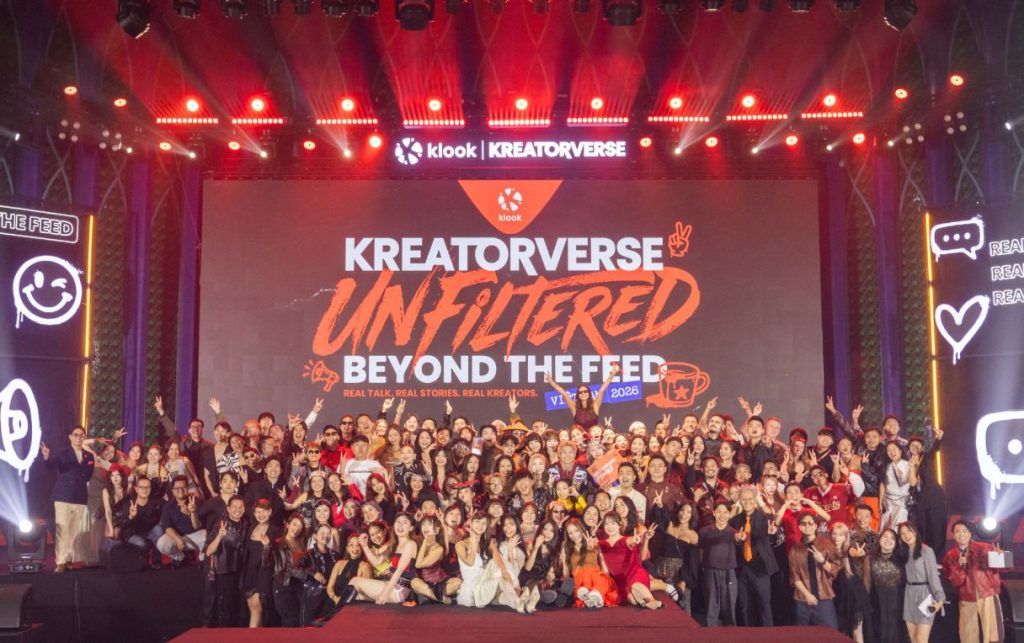
What survives the red ocean?
Wilfred cannot know which creators will survive. Formats, algorithms and AI tools will keep changing. Some people dominating today’s feeds will disappear from tomorrow’s.
But he returned to one quality that can outlast those shifts.
“They should continue to feel curious,” he said. “I think the curiosity part will not really die.”
Follower counts may grow or stall. A creator may sustain a full-time career or eventually move into something else. Curiosity gives the work value even before the algorithm validates it.
“Even if they don’t sustain it, if they are still curious and want to explore, capturing their content allows them to reflect on their own life, growth and development over time,” Fan said.
For him, curiosity also protects something personal beneath the commercial pressure. Creators may not have a fixed workplace, clock or predictable pay cheque, but they decide each day which new thing is worth pursuing. “They fill their curiosity with excitement,” he said, “and then facilitate other people to visit and experience it themselves.”
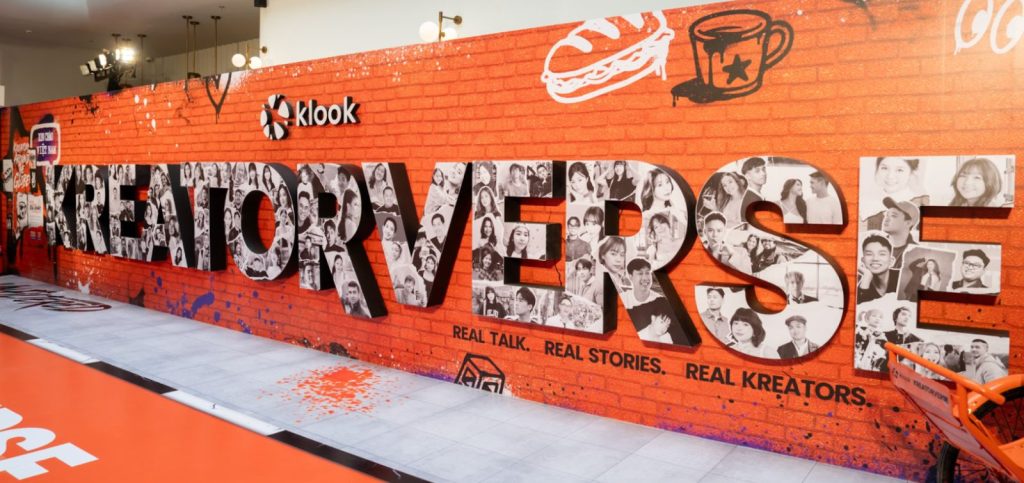
The creators of this year Kreatorverse offered 3 clues to what comes next. Melon spoke about access to products that ignite curiosity. Jax spoke about translating value into the best deal. Shrug My Shoulder’s changing life showed how a creator can evolve, taking an audience into a new chapter.
Not everyone will survive by producing more. Production is becoming the easiest part.
The creators who matter in the next phase will be curious enough to notice what a machine cannot, honest enough to show both pleasure and friction, commercially aware enough to turn attention into action, and connected enough not to disappear into the lonely loop behind the feed.
In the red ocean of content, the winners will not be those who merely create more. They will be those whose judgment audiences still trust because it is grounded in authenticity—and whose curiosity still makes someone else want to go.