
ZUZU Hospitality’s new “Kea” platform wants to fix the data mess independent hoteliers deal with daily, and Queenstown is the testing ground before it goes global
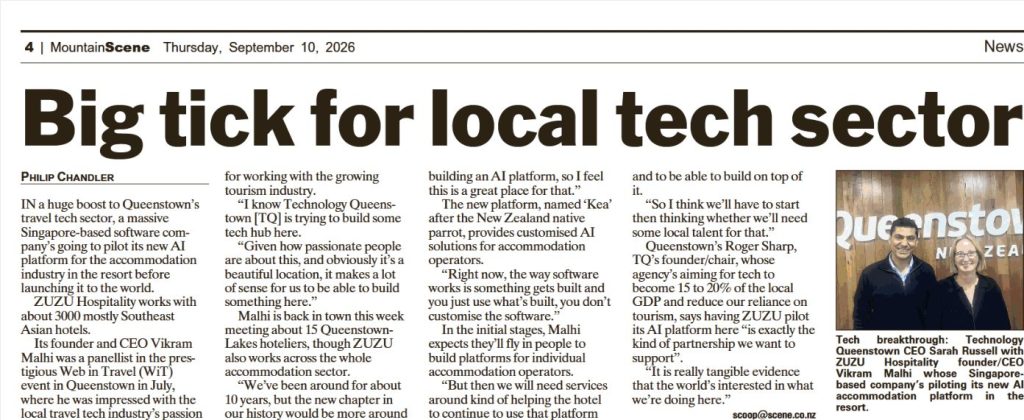
Singapore-based ZUZU Hospitality is piloting a new AI platform for independent hotels in Queenstown, just seven weeks after founder and CEO Vikram Malhi first pitched the idea at WiT Queenstown in July. The company, which already works with around 3,000 hotels across Southeast Asia, has built the platform, called Kea after New Zealand’s native mountain parrot, to run customised AI solutions on top of a hotel’s existing systems and data.
The pilot is backed by Technology Queenstown and involves roughly 15 Queenstown-Lakes hoteliers, giving ZUZU real-world testing conditions before a wider release. Malhi says Kea targets two core issues in hospitality: fragmented, disconnected systems that make hotel data hard to use, and generic software that doesn’t fit how individual properties actually operate. The pilot will run for around six months, after which ZUZU plans to expand the platform across its Southeast Asian and New Zealand client base, with global rollout the longer-term goal.
We caught up with Vikram to get into the finer details of launching Kea and the speed behind deploying the pilot programme.
Q: What specific gap in the hospitality market does Kea address?
There were really two problems we saw. First, the same fragmentation that exists across hospitality everywhere: independent hoteliers juggling disconnected systems for data, distribution, and guest communication, with no easy way to turn that data into decisions. Second, customizability: every hotel is different, and every hotel’s needs are different, so off-the-shelf solutions rarely fit; they need something built around how they actually operate. We wanted to take that burden away entirely, because a hotel’s primary focus should be guest management, not operations and tech management.
Q: And how did you identify this gap, particularly in this region?
WiT (Queenstown) is where this all started. I caught up with Roger Sharp, CEO of Technology Queenstown, and that conversation was about the hotel industry needing an AI platform. From there, Technology Queenstown has been an incredible partner, both in showcasing the product and in building real relationships with local hoteliers who’ve been generous with their time and input. Technology Queenstown gave us access, credibility, introductions, event logistics, and an ongoing feedback network, connecting us to 10 to 15 hotels in the region, which was critical to understanding what real-world product usage looks like on the ground.
Queenstown specifically is where we saw the opportunity to actually go build this. The local technology scene here is aspirational, there’s a genuine ambition to get to a place where technology is actively building Queenstown, and both hoteliers and tech players were eager to work toward that together. It’s not only one of the world’s most prolific holiday destinations, it’s also a potential test bed for global tourism, a place small enough to move fast in, but demanding enough that what works here says something about what will work everywhere else.
Q: What’s one trait of the Queenstown hospitality space you rarely see elsewhere?
What stands out is how willing independent hoteliers and the local tech scene are to experiment together and see the point of building a product jointly, rather than waiting for something fully proven before engaging. A lot of that comes down to Technology Queenstown, who were the ones who actually spruced up the local connections that made this kind of early, hands-on collaboration possible.
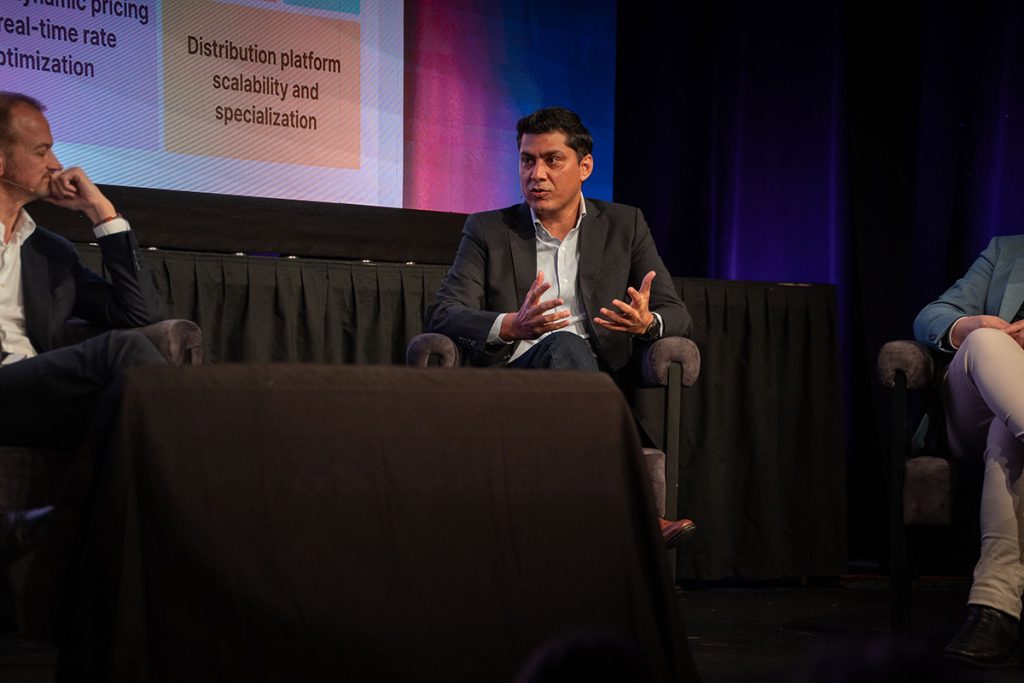
Vikram Malhi speaking about where accommodation tech is heading and what it means for operators next, at WiT Queenstown
Q: It took seven weeks to plan and deploy Kea. What contributed to that speed?
Three things. First, we weren’t starting from zero: Kea builds on top of a hotel’s existing product foundation, and ZUZU is data-rich, which made building on top of our own properties’ data that much easier. Second, AI itself has made processes and people more efficient, both internally and externally, what used to take months of engineering can now be assembled and iterated in weeks. Third, our team has real hotelier and OTA backgrounds, so we weren’t guessing at the problem; we already understood the operating reality we were building for.
Q: What are your success metrics, and when will you know if the pilot has worked?
Success for us looks like three things: hotels being able to access and actually use their own data, hotels making smarter decisions without spending hours manually digging through that data, and hotel teams spending more of their time on guest experience rather than on operational grunt work. We’re giving the pilot around six months before we assess how it’s landed.
Q: Any plans to expand solutions like Kea to the wider region?
Yes, we want to work with our existing client base across Southeast Asia, and definitely New Zealand. Beyond that, the plan is to go global. This is a product that can sit on top of any hotel’s data and build solutions from it, so it isn’t tied to one geography.
Q: What lessons and data do you hope to learn from the pilot?
Our ambition is to build Kea into an end-to-end hotel intelligence platform, one that also makes decision-making easy for hoteliers. From the pilot, we’d like to see the kind of tools that enable hoteliers’ day-to-day life, the kind of data that enables them to take quicker decisions and from a product perspective, what a vertically integrated product looks like in the world of AI.