
I stepped out of the United States in July, embarking on an extended journey that carried me through Europe and deep across Asia. By the time I am done – I hope to have visited at least seven islands. As someone whose life splits between East and West, travel isn’t merely transit – it is a forced calibration of reality, not just someone’s warped politics.
When you sit in tech enclaves in Seattle or London, the discourse surrounding artificial intelligence sounds like a civilization preparing for an existential siege. The narrative is weighed down by anxiety: runaway models, cognitive obsolescence, regulatory gridlock, and battles over the massive power and water footprints of hyperscale data centers. Think Gates vs Ellison! Politicians posture, lawsuits multiply, and there are even whispers of a nascent, twenty-first-century Luddite pushback. The prevailing Western perspective treats AI as an extractive predator – a force threatening to dismantle white-collar dignity and upend human craft. The Terminator is coming!
Then you land in Asia.
Stepping into the haze of Singapore the dialogue was a true breath of fresh air even with that high PSI number. Coming straight off an electric week at the WiT Singapore conference, followed by an overland road trip catching up with friends across Malaysia and Thailand, the contrast could not be more stark. In APAC, nobody is standing around wringing their hands over token limits or agonizing over the moral weight of server farms.
They are simply getting on with it.
The architecture of adoption
A few days before hitting the road north, I sat judging an Alibaba Cloud Agentic AI Hackathon. The young developers competing weren’t theorizing about AGI doom loops or debating philosophical alignment frameworks. They were tearing through open-weights models, aggressively fine-tuning lightweight agents on local edge devices, and orchestrating practical enterprise workflows in hours. They were coordinating swarms of agents. Developing super agents. The focus wasn’t academic hand-wringing; it was ruthless, pragmatic utility.
Yet the real revelation wasn’t confined to air-conditioned demo stages such as Marina Bay Sands or corporate ballrooms. It was out on the street.
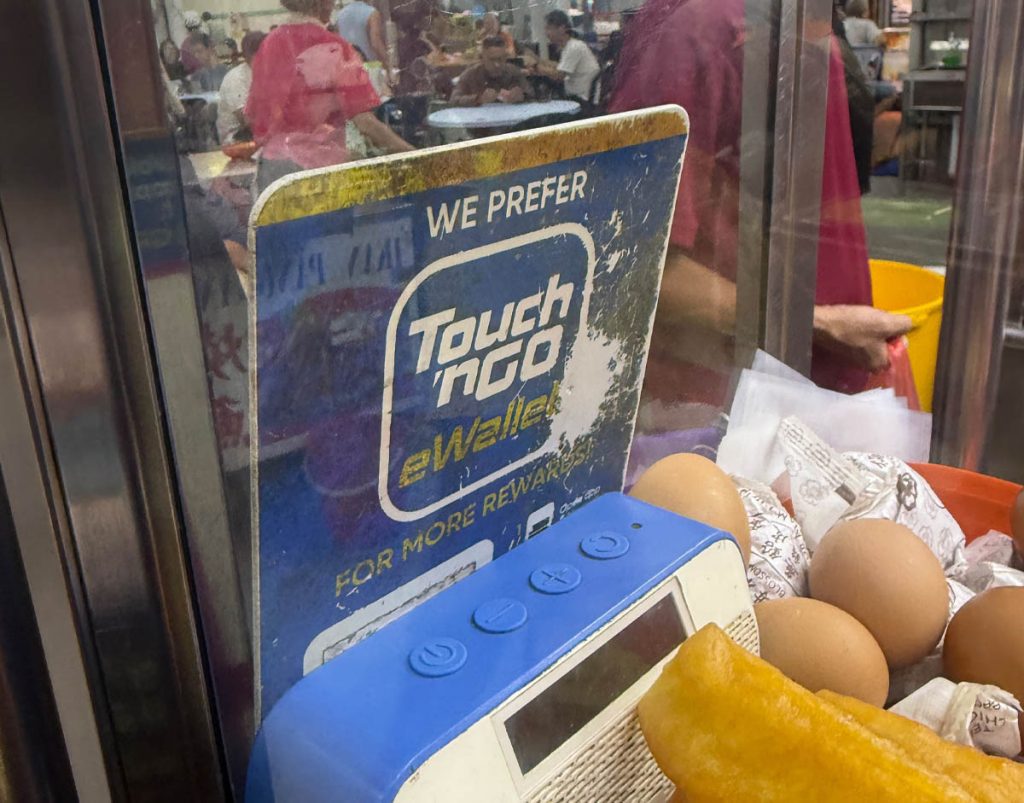
Driving through Malacca and up to one of my childhood favourite places – Pangkor Island – you see where the rubber truly meets the road. I stood watching a hawker expertly toss a smoking wok of char kway teow over a roaring flame, I watched Ikan Bilis (anchovies) drying in the sun, while another man turned fresh shrimp into delicious concoctions over glowing coals. Resting on a modest wooden stand between fresh pomelos and deep purple mangosteens – the kingly durians having just closed out their season – hung a laminated QR placard.
Next to the cashier’s till sat a smartphone running a lightweight localized model via a basic chat interface. The stall owner was using it on the fly: translating supplier invoices from regional dialects, checking inventory pricing, and recalculating margins in real time.
There was no fear of replacement. To him, the tool wasn’t an apex predator; it was an apprentice carrying the heaviest sacks so his knees wouldn’t have to.
The leapfrog DNA
This cultural divide is not an accident of geography; it is rooted in how technology has historically intersected with society.
The West built its institutions atop centuries of layered bureaucracy, legacy banking, copyright protectionism, and entrenched individual specialization. When a radically disruptive general-purpose technology arrives, it directly threatens those carefully defended silos. It feels like an attack on the self.
Asia, by contrast, has never had the luxury of falling in love with legacy overhead.
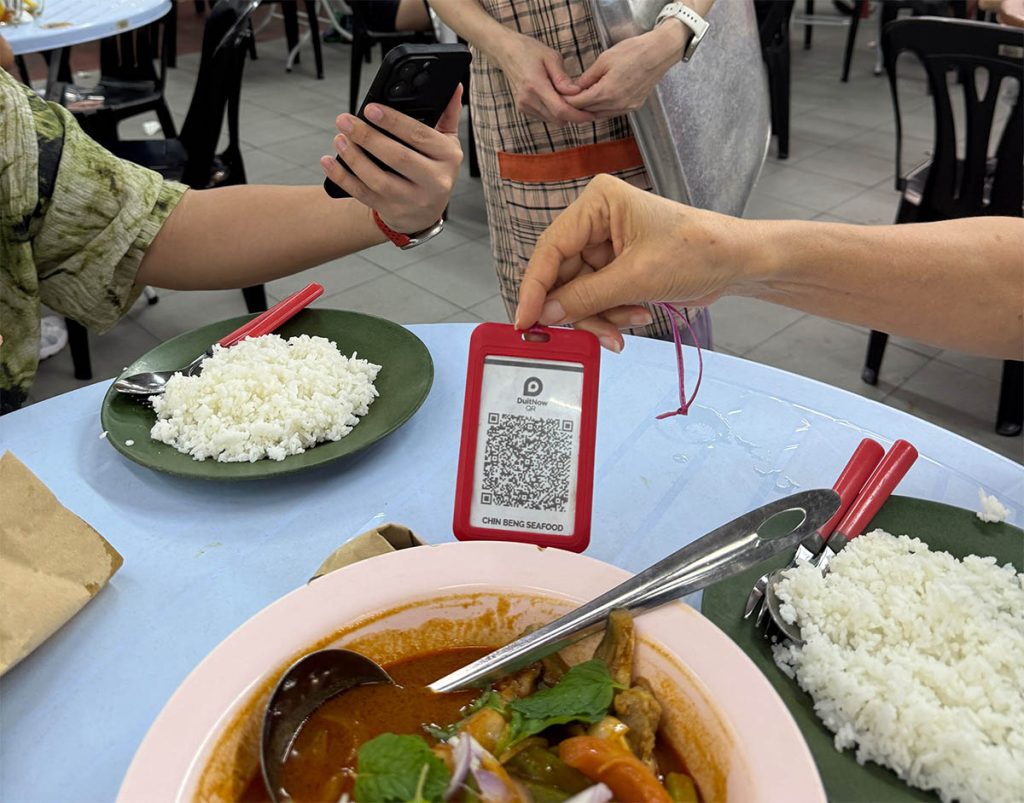
Thirty years ago, Malaysia rolled out Touch ‘n Go cards while Western transit authorities were still arguing over mechanical token turnstiles and legacy magnetic stripes. Fast forward to India’s UPI and Paytm: zero-fee, frictionless digital rails bypassed decades of expensive POS hardware, transforming every street vendor with a five-dollar laminated code into a fully integrated digital merchant.
In this part of the world, technology was never seen as a real threat to an established paradise. It was the great leapfrog, an elevator, an equalizer, and a bonus that enabled ordinary people to bypass archaic systems entirely. A smartphone and cheap 5G blew away all the crap.
So here is my take on it.
| Axis | The Western Posture | The APAC Reality |
| Dominant Sentiment | Existential dread, displacement, and defensive regulation | Pragmatic adaptation, rapid execution, and daily utility |
| Infrastructure View | Data centers viewed as resource drains and threats to the grid | Essential utility rails driving national digital competitiveness |
| Model Philosophy | Monolithic, walled-garden frontier giants guarded by red tape | Agile, open-weights, edge-deployed inference customized locally |
| Consumer Stance | Fear of cognitive loss and creative hollowing-out | Immediate leverage to expand capacity and hustle faster |
Who Serves the community?
The travel and hospitality industry sits squarely at the crossroads of this cultural divergence.
For thirty years, global travel distribution has been locked behind static screens, rigid GDS command lines, and brittle legacy rules. And let’s not forget those terrible, restricted contract clauses. As we move toward an era defined by ambient computing, intelligent agents, and dynamic, multi-modal interaction, the winners will not be the organizations trapped in legislative paralysis or philosophical fatalism.
The winners will be those who meet the user exactly where they stand – whether inside a global airline (OCC) operations centre or beside a hawker stall serving satay in the tropical heat. YUM!
Two distinct worlds are looking at the exact same matrix of model weights. One sees a threat to be barricaded behind fear and prohibitive regulation. The other sees a tireless partner ready to help build what comes next.
The answer to which culture will ultimately make this intelligence a truer aid to its communities is already visible across the markets and roadways of Asia Pacific. They aren’t waiting for permission. They are simply building. I am very thankful I get to see this. It fills me with optimism, not just hope.