
Well, well, well, the great Agentic race is officially on. I’ve lost track of the agents coming our way.
At WiT Singapore, there was of course a lot of talk about what all this means for travel. I played with three possible scenarios in my head and tested it, in various conversations.
One is a world ruled by horizontal agents, where travel is just one more errand. Another is a universe of specialised agents, much like the phone in your pocket today, crammed with apps. The third is a collective Travel Agent, built by the industry together – to fend off the outsiders.
The generalists
First there are the general-purpose agents, Muse and Instinct among them, and more I don’t know about. This is a race between giants and startups. Muse was built inside Mark Zuckerberg’s Meta (giant is too small a word). Instinct was built by 20-something Noah Shinn, probably in a co-working space somewhere, today’s equivalent of a garage. Shinn has said publicly that Instinct has done $1b of transactions, half of them travel.
Curious, I asked Instinct itself how much of that was outside the US. Its answer: it could confirm Noah Shinn founded Instinct, but it didn’t have access to company transaction stats, and instinct.com was the best source for numbers like that.
Talk about passing the buck.
The specialists
Then come the agents built for travel alone.
First out of the gate is Lola, the reincarnated agent from KAYAK co-founder Paul English, now given a new lease of life under Booking Holdings’ wings, with good pal and co-founder Steve Hafner by his side.
Second, also from Booking Holdings this week, is Vayo, which CEO and co-founder Mike Fridgen describes as “not another planning tool, chatbot, or do-it-all agent.” It builds your trips from the confirmations in your inbox, catches price drops and refunds, and goes after the hard-to-get 7pm table. It’s backed by a planned $100M from Booking Holdings, and the beta is invite-only.
Booking Holdings is one of those companies that can afford to back several horses, so it may have the winner … or not.
And then there are the startups, such as Odessia. Its pitch is that where Odysseus took 10 years to get home from Troy, Odessia would have him home by the weekend. The Sequoia-backed agent has just come out of preview. Its founder is Francis Davidson, who started Sonder at 19 by renting out his university apartment in Montreal.
Sonder did not have a long life. It filed for Chapter 7 liquidation in November 2025, and in July 2026 its brand was bought by TravelAI and relaunched as an AI-curated list of urban stays.
Looks like its founder is making his own leap of faith with another one.
Which world will emerge?
I put the big question to Agoda’s CEO Omri Morgenshtern and CTO Idan Zalzberg during our interview on stage.
They too shot down the third option pretty quickly – so okay, I will give up on that one.
Omri sees a world where we have a lot of these individual agents but eventually, they will merge, and that this will happen in almost every category, including travel. Then there will be the specialised agents – “the future of friends” – whether that’s three or five, regional or global, just like how the world of apps evolve.
They were clear that travel deserves its own agent.
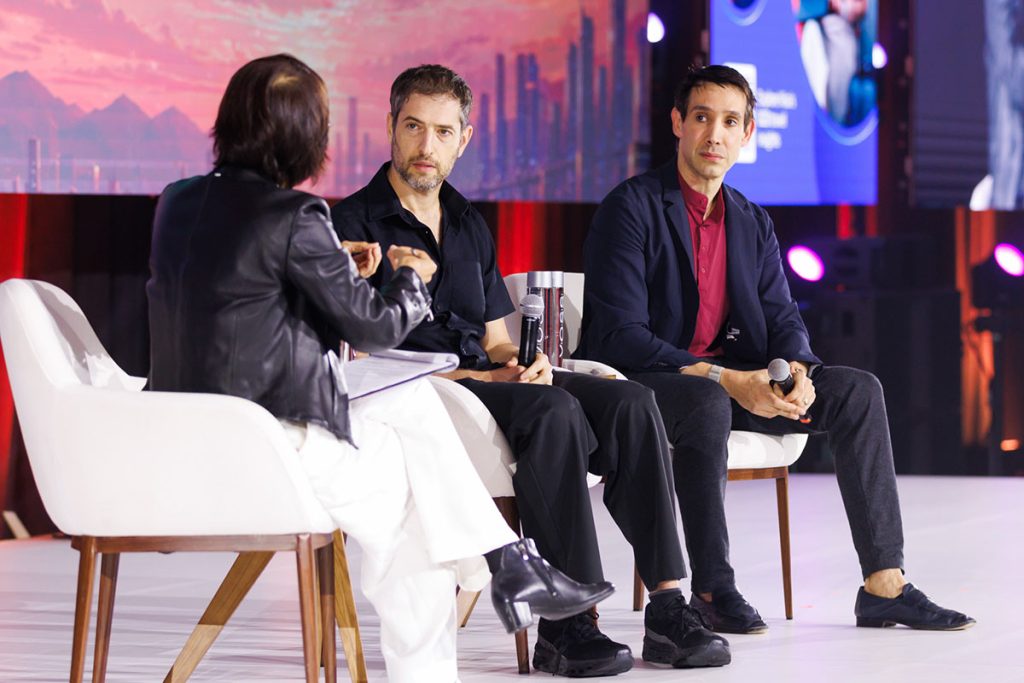
Agoda’s CEO Omri Morgenshtern and CTO Idan Zalzberg
“These personal, general agents are great, and there’s a lot of day-to-day stuff they can help with,” Zalzberg said. “But we all know here how complex travel is in its own right. It’s a problem that deserves its own solutions.”
I told them about my own experience with Instinct. It crossed the line from useful to annoying when it started organising my schedule and meetings without being asked. It hadn’t earned that right yet. An agent has to earn trust one domain at a time, and that’s something humans get instinctively. Machines, apparently, do not.
Zalzberg nodded. “When you come to me to talk travel, I’m not going to say, oh by the way, do you want to buy a new gadget? If you work with an actual human travel agent, you appreciate that that’s the interaction you have. It’s not also your therapist sometimes.”
Focus and trust: that’s the case for the specialists. Expect swarms of them.
I also asked Rajnish Kumar of ixigo who’s built an AI-native agent within its own app. His bet is that agents are “the future of pretty much everything”.
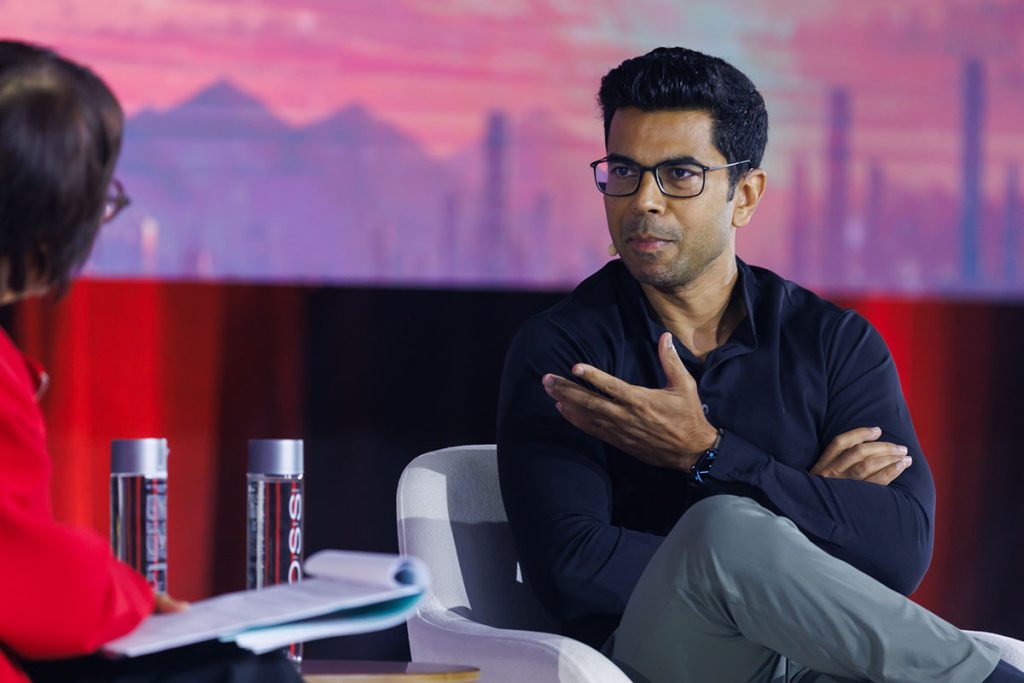
Rajnish Kumar of ixigo
“Extremely capable vertical agents trained to excel at very specific tasks and trained on proprietary data and private access to tools and workflows that others don’t have. My view is that agents will take decisions and provide recommendations based on a human curated collection of information rather than general internet and LLM knowledge.
“And that will lead to a new era of job creation where all the human capital will be used to assist agents which will then help everyone.”
As for the third future, the collective agent built by the industry, Agoda’s duo shot it down pretty quickly. So did almost everyone else I spoke to. Not practical, too complicated, and everyone wants to defend their own territory. The whinge board got really long on this one. Okay, I’ll give up on it.
Or maybe not quite.
Lessons from the hive
Something else I heard on the WiT Singapore Main Stage came from Clarence Chua, founder of The Sundowner Nature Experience Centre, who manages three apiaries across Singapore. His obsession with bees began when he found a hive in the shed on his rooftop. Instead of calling pest control, he called a bee rescuer. When the rescuer didn’t turn up in time, Chua rescued the bees himself. He has since saved some five million of them.
I know, I know, what do bees have to do with agents? Both are extremely busy creatures, and both are built to work. One does God’s work; the other does yours.
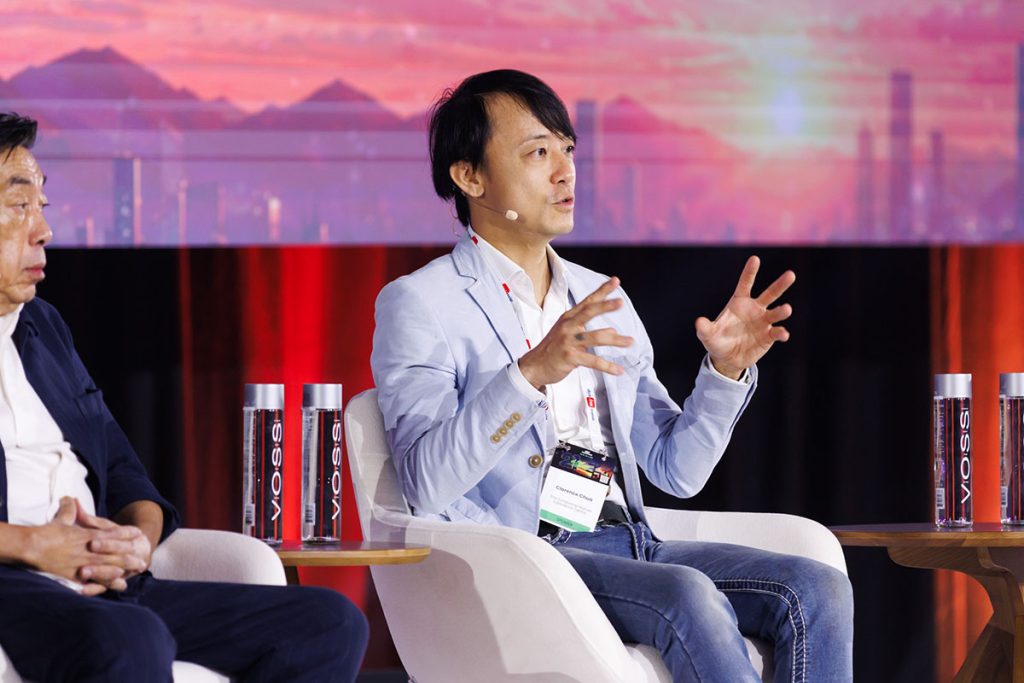
Clarence Chua, founder of The Sundowner Nature Experience Centre
But here’s the thing. A hive is the most successful collaborative agent nature ever built. Every bee is specialised, and every one of them works for the whole.
In the Agentic race, there will be winners and losers. The giants may beat the independents, or the other way round.
Me, I’m keeping a small bet on the bees. Perhaps there’s a lesson here for us in travel?