After attending two days of the Australian Pacific Aviation Summit in Sydney, I walked away with the impression of an industry model that’s fundamentally changed and every airline chief trying to find the right formula that works for it.

James Hogan (left) with Peter Harbison
There’s James Hogan, CEO of Etihad, who believes the alliance model doesn’t work because of disparate member interests. The only thing going for it is technology support, “that’s about it”, he said.
His way is “skin in the game” and so after his talk in Sydney on Tuesday, he jetted off to Mumbai to sign the agreement to buy 24% of Jet Airways and over the next 24 months, he said to expect integration of flights which will hub over Europe.
The first foreign direct investment in an Indian airline, Etihad hopes to tap into the market that was 42 million pax strong in 2012 and estimated to grow to 200 million in a few years.
For Etihad, it’s all about scale and costs reduction especially in procurement. Its investment in Air Berlin was recouped in eight months, Hogan said.
“It’s about how to lower costs, increase productivity, developing networks to support changing traffic flows and with technology evolution, new models are needed,” he said.

Alan Joyce
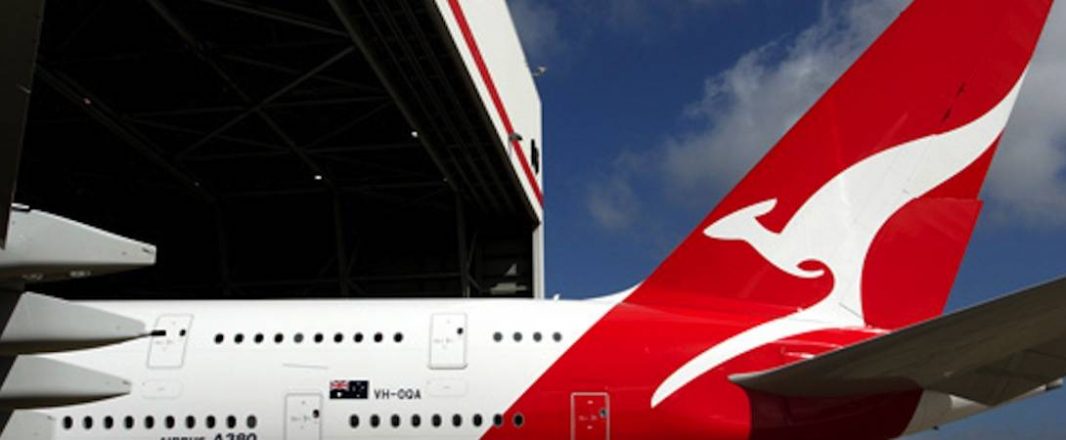
Then there’s Qantas, a believer in alliances and partnerships, and whose CEO Alan Joyce is convinced that its marriage with Emirates will allow Qantas International to soar again.
“Qantas Frequent Flyer, Domestic and Jetstar are great businesses and Qantas International will be again,” he said.
He is investing in product – seen in its impressive lounges in Sydney and Singapore, for starters, its frequent flyer programme and staff training and alignment. Alignment in the company, between management’s vision and staff empowerment, is leading to stronger commitment and focus on service standards, Joyce said.
The partnership with Emirates is giving the airline the shot-in-the-arm it needs to turn its fortunes around and when asked if he had considered Etihad as a partner, he said, “It’s like being offered a bike before a BMW.”
.gif)
Sean Donohue
Virgin Australia, which has transformed from a low cost to a full service airline, has struggled lately with the scope of change. Its migration to a new technology platform, Sabre, has not been without challenges but it was a move that had to be made, said COO Sean Donohue.
“We’re upgraded the airline, transformed the product and revamped our loyalty programme,” he said.
The airline is investing heavily in its Velocity frequent flyer programme by transforming lounges. “I am amazed by how early people come to the airport (in Australia) versus the US,” said Donohue.
In its HY2013 results, it announced that Velocity Frequent Flyer membership was 3.5 million, up by around 500,000 on H1 FY12.
It is also spending on a wifi inflight system that will feed entertainment to customer devices. Donohue said the airline currently has 20% of the domestic market.

John Gebo
United Airlines also made a showing, with John Gebo, senior vice president financial planning and analysis, saying the US airline industry was turning around and transforming.
“There’s less fragmentation, and more logical and profitable carriers, and there’s capacity discipline to produce profits,” he said. Airlines now have stronger balance sheets vs chasing market share which has proved not to work.
“Capacity discipline has better matched supply with demand – despite severe recession in 2009, the industry has produced real yield growth – the speed of recovery would not have been possible without capacity discipline.”
United was now investing in product, service and people and unbundled fares and value-add products, a trend that’s here to stay, are allowing investment in high margin products that customers value.
By 2015 though, Peter Harbison, chairman of CAPA, sees a clear dominance of low cost longhaul in Asia. AirAsiaX was already the fourth largest foreign airline to Australia, ahead of Malaysia Airlines.
This is because the bulk of the traffic growth in Asia will come from the burgeoning middle class which will demand value fares and low cost airlines can target low fare traffic without polluting their brands.
With 58% of all air seats in South-east Asia now low cost, it is clear that even a reputable airline like Singapore Airlines is struggling, hence its move to set up Scoot, to take on the low cost market.
Expect the same battle to move to North-east Asia as the low cost effect spreads to that region. Group CEO of Jetstar Jayne Hrdlicka said the purpose of Jetstar Hong Kong was to offer low fares to a new set of consumers.
The process of change will however take longer in North Asia, said Harbison. “They still don’t get it.”