Key learnings from WiT Singapore 2022 and their impact on talent and local communities
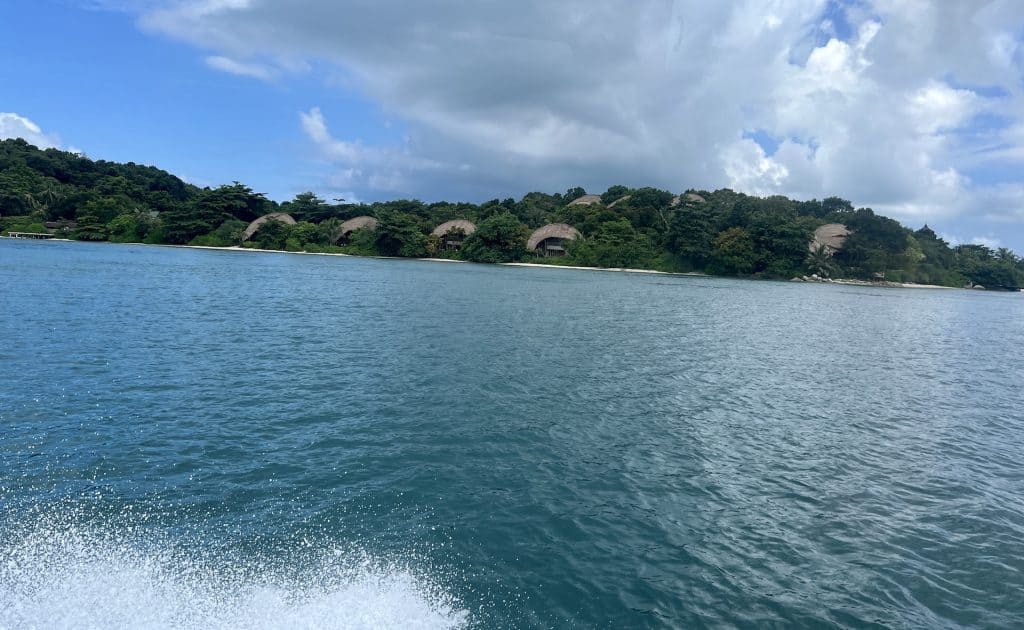
EVEN the heavy downpour could not dampen my excitement at returning to the private island of Cempedak, three years since my last visit. I wondered what the all-bamboo, adults-only resort would look like and how its staff were, after more than two years of being closed for business.
I imagined the huge smiles on their faces – the 200-strong team on the islands of Nikoi and Cempedak must have been so relieved to see the return of guests from June this year. Through the pandemic, the islands’ permanent staff were kept on payroll, given the run of the islands to eke whatever livelihoods they could extract from the natural environment and, through a partnership with Seven Clean Seas, cleared the surrounding areas of a total of 300 tonnes of plastic.
It was on a similar choppy boat journey to Cempedak three years ago that I had learnt a valuable life lesson. Seeing my face turn slightly green during the ride, someone had said, “keep your eye on the horizon” and those words, as it turned out, kept me steady throughout the pandemic.
As I stepped off the boat onto the pier, I stopped, breathed in the sea air and felt the rain splatter on my face. This was the moment I had dreamt of for three years, and I believe no amount of AI, VR, AR and metaverse can ever replicate that feeling.
At the spa, my therapist Asi told me how glad she was to be working again. For two years, she helped her mother bake cookies and do whatever they could to feed their family of six. “This is so much better, I am so happy tourists are back,” she said as she worked on the knots in my shoulders.
I believe too that no amount of AI, VR, AR and metaverse can ever replace what Asi does with her hands.
At WiT Singapore 2022, while there was comfort in knowing some of the real things in travel will never be replaced by technology, there was also recognition that we stand on the cusp of something big that’s sweeping through travel.
I am reminded of a French phrase, “Entre Chien et Loup” which literally means “Between Dog and Wolf” – it describes that time of day when the light is such that is becomes difficult to distinguish between a dog and a wolf, between friend and foe, between known and unknown. And I believe the convergence of several forces accelerated by the pandemic – technology, consumer activism, sustainability, government regulations, new traveller demands, talent challenges – has created such a moment in travel.
Here are the key themes I gleaned from WiT Singapore 2022.
1. Web3 Is On Its Way, Collaborate To Face It
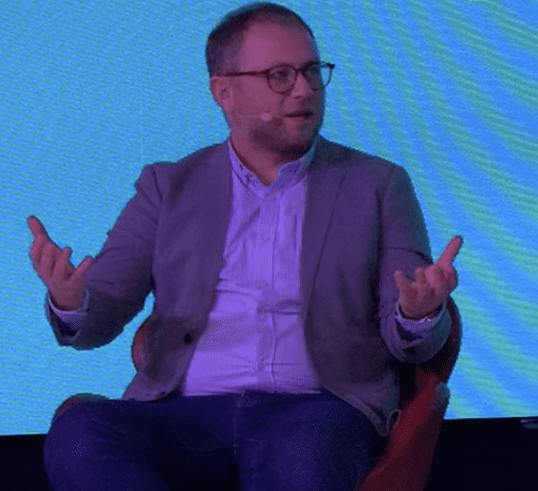
Tom Simpson: “What is needed is a range of new tactics in the interplay between travel and the consumer.”
To Tom Simpson, strategic advisor of Anzu.io, Web3, which encompasses “all technologies associated with the blockchain”, is but the continuation of travel’s digital journey of the past 20 years – from physical travel agent shop to e-commerce to apps “which added an extra layer of interactivity” to the “insane adoption” of QR codes during the pandemic.
“What is needed thus is a range of new tactics in the interplay between travel and the consumer,” he said. This includes the metaverse, “an interactive layer sitting on top of reality”, and loyalty programmes enabled by blockchain and NFT. The prediction was made that “in five years, all the major travel players will have blockchain- and NFT-enabled loyalty programmes”.
In the panel “Welcome To The Third Digital Age of Travel”, Timothy O’Neil-Dunne, principal, T2Impact, said Web3 brings the promises of decentralisation around the concepts of tokenisation, ownership of digital assets and users as shareholders. In smart contracts, code is law – and decentralisation will require consensus and collaboration. “Collaboration is the only way out of here,” he said, because “silos equal extra costs”.
The biggest impact will be on identity and payments, the latter of which is the largest controllable expense with “the cost of payment now higher than the cost of distribution”, said O’Neil-Dunne. “Payments is fragmenting, real wallets will start to appear, credit card companies will become less relevant. Web3 will solve cross-border payments.”
Omri Morgenshtern, CEO of Agoda, called it “an awesome set of concepts”. “What I really like is how it offers unique opportunities around transferring money quickly and cheaply outside the traditional slow banking system, and the fact that it allows interesting ideas around loyalty. Imagine a fluctuating loyalty token (travel coin). This can change our business, but not much more than any other business.
“However, every place it will meet the “non virtual world” like if you want to tokenise real-estate, or real contracts, or stocks, you’ll face regulation whether you like it or not, and the “decentralised nature” I think will collapse very fast. So fascinating ideas, but don’t think the world will become decentralised.”
Morgenshtern is also a fan of metaverse and Augmented Reality. However he thinks this trend potentially needs more than five years. “Problem is the hardware and interfaces more than the software. Once a good hardware is there, I think it will explode just like smartphones.”
As he said this, Meta announced the release of its new mixed-reality headset Meta Quest Pro which, at $1,499.99, costs nearly four times that of the company’s cheapest Quest 2 headset – not exactly a mass adoption price point.
Takeaway: Start embracing Web3, in thought and deed. Yes, there will be tons of friction as we transition from Web 2.0 to Web3 – but do not dismiss it, instead, experiment with it.
2. The Middleman’s Role – Prove Your Value In The Supply Chain

Mary Li: “Web3 will enable small travel agencies good at building communities, creating content and engaging socially to reach their consumers directly.”
Web3 will bring disruption to the middlemen everywhere, payments not excluded, said Aung Kyaw Moe, CEO and founder of 2C2P.
“Web3 will allow customers to provide input and give them the ability to shape the service going forward. It will empower consumers and connect them with the source. It will remove the layers of middlemen and we are one of them and so we are under threat. But every threat is an opportunity. We have to study the potential pitfalls and improve our product, no one has the right to exist unless we prove our value in the supply chain.”
Asked how Web3 could transform flight distribution and the travel agent’s role within the ecosystem, Mary Li, CEO and founder of Atlas, a low cost flight retailing platform, said, “In the past years, we’ve seen OTAs dominate travel because they have the resources to invest in tech – so travel has become more standardised, more data-driven, less fun.
“Web3 will change that, it will enable small travel agencies who are good at building communities, creating content, engaging socially, to reach their consumers directly. We want to build that low cost, Web3 open platform that travel agents can access easily and get the tools they need.”
Takeaway: Think harder about your value in the supply chain and how you can enhance it further.
3. Convergence of AI and product will change everything
This is one area Ross Veitch, CEO and co-founder of Wego, is watching closely and has been experimenting with in his company.
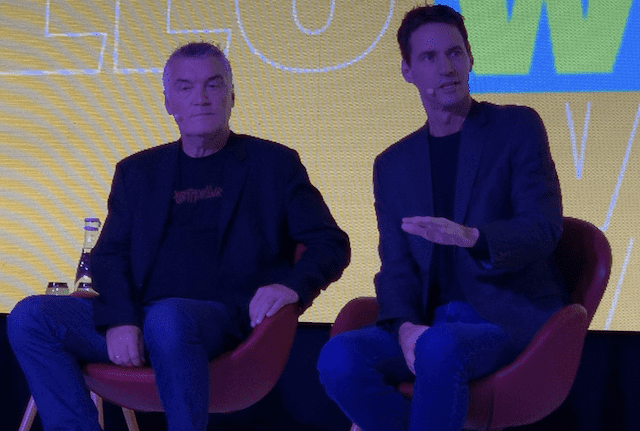
Johnny Thorsen (left) on the convergence between corporate travel and sustainability and Ross Veitch on the convergence of AI and product, and what that means to jobs.
His predictions:
• AI/ML capabilities will continue to develop at exponential rates and this is going to shock most people
• AI driven product features will be widespread across the online travel industry, unlike today
• By 2030 products will finally be personalised
• Conversational agents will be good enough to be used widely for shopping and service
• Much coding, UI design, ad creative and content authoring will be done by AI systems or by humans assisted by AI tools
• Building online travel products will involve less ‘plumbing’ and more feature innovation
Jobs will be replaced, no doubt, by these technologies but new jobs will be created. Asked what job in travel should humans not be doing right now, Agoda’s Omri Morgenshtern said, “Finding the best rates for consumers. It’s a hard, huge problem that is only solvable at scale with machines.”
And as for what travel job should not be performed by humans in five years’ time, he said, “Human interface to consumers. I think we should be at a stage that the product is so good, you don’t feel you’re missing much talking to a person or using the online platforms.”
Takeaway: See these tools as extending human imagination and capabilities. They will set you free to do higher level things that machines cannot. As Agent Smith said in “Matrix”, “Never send a human to do a machine’s job.”
4. Sustainability the ONE word to rule them all
In the word cloud generated by the audience around “what words do you associate with the new world”, sustainability was the ONE word to rule them all, popping up in almost every session – as reported in this article.
While it will have impact across all sectors, the biggest will be on corporate travel, with multinationals beholden to “do the right thing”.
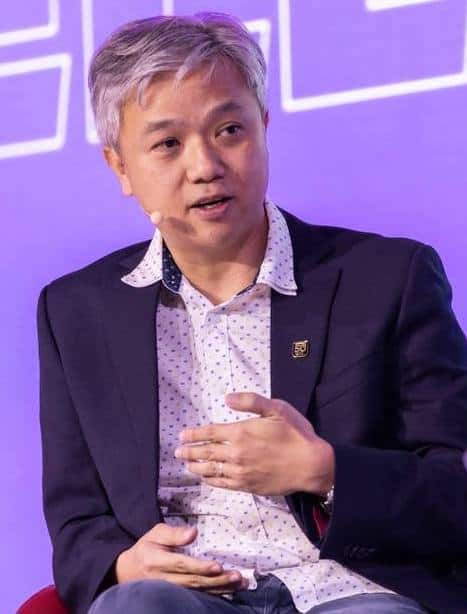
Lee Cheh Hsien: It doesn’t need an invention but a new way of thinking about how we produce and consume.
According to Johnny Thorsen, vice president, strategy and partnerships, Spotnana, the convergence of sustainability and technology around corporate travel will result in:
• Fully integrated trip value, purpose and carbon impact KPIs
• Online and offline merges into single platform
• Corporate ownership of technology
• Seamless integration between systems with launch in a day
• Move from booking-centric to trip-centric business and service model
Lee Cheh Hsien, planning division director of Sentosa Development Corporation, which became the first island destination in Asia to be certified by the Global Sustainable Tourism Council this August, said it was important to think about innovation in sustainability as not just around technology. “Rather it is about mindset – don’t think linear, think circular.”
Asked what his favourite invention was that would spur us towards a sustainable future, his answer was – “not an invention, but a new way of thinking about how we produce and consume. Think mobile phones that will be repaired and upgraded module by module rather than replaced, or a business model that rewards reuse of buildings rather than demolishing and rebuilding.”
Takeaway: Rethink everything you’ve done and see if you can do it in a different way, definitely not linear. And doing something, however small, is better than doing nothing.
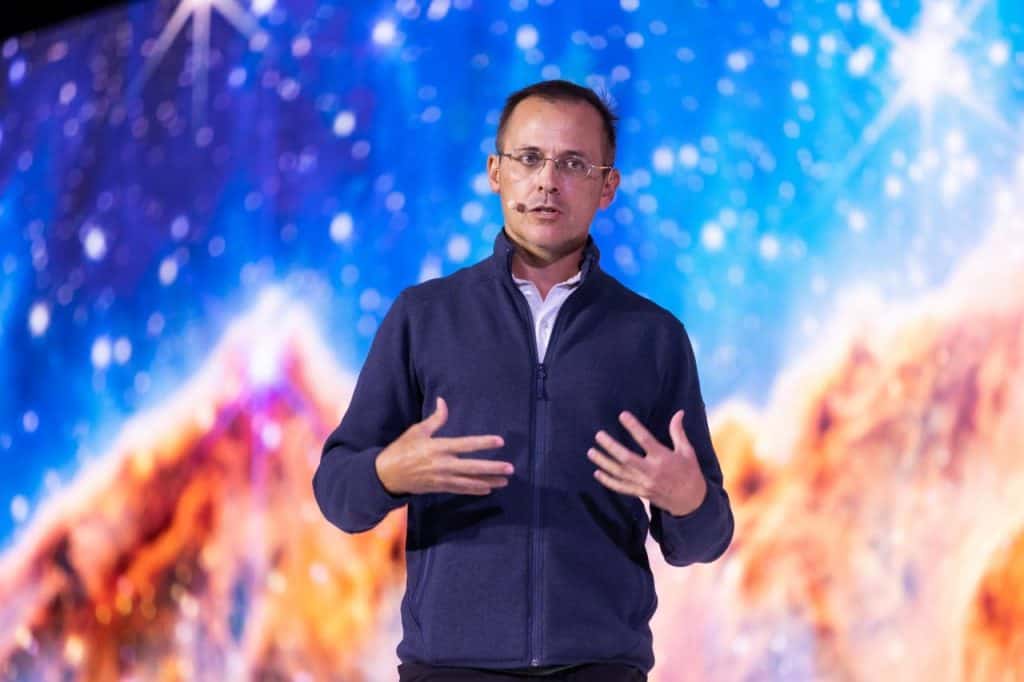
Fritz Demopoulos: “Are there prospective entrepreneurs in this audience today who can come up with new solutions, ideas and approaches to better manage on a holistic level our people?”
5. Time to do, not talk – caring for talent in innovative ways
In his talk, “Exploration & Rejuvenation: Two Sides Of The Same Coin”, Fritz Demopoulos, CEO, Queen’s Road Capital, challenged the industry to take better care of its talent “which has been beaten to a pulp” and to come up with innovative solutions.
“Our people are showing strains. We – the travel industry – are fundamentally a service and people industry. The behaviour of frontline service workers in travel and tourism can be the difference between exceptional experiences and something we’d rather forget about. While many of us could work from home – the white collar and techies – the vast majority of our staff didn’t have this luxury. The top 1% of us never really experienced the brunt of Covid.
“However, most of our people who provide essential services did. What can we do to alleviate these strains? Are there new compensation and benefit models to better meet the needs of this massively important input to our industry? Can we come up with learning, development and training solutions for our people? Or new ways of offering tipping for exceptional service? Are there prospective entrepreneurs in this audience today who can come up with new solutions, ideas and approaches to better manage on a holistic level our people?”
This is imperative as travel faces a massive challenge in staffing up to meet the travel recovery underway. There’s been a hollowing out of the industry, particularly in hospitality, with hotels laying off staff by the thousands during the pandemic. Most of these staff have moved onto other things and besides, what’s the attraction in returning to an industry that did not look after them during dark days and now expects them to do more for basically similar terms and conditions?
Takeaway: It’s time to transform thinking around talent. Think of new ways to attract talent by positioning travel differently to a new generation, and think of new tech that can engage and reward them differently.
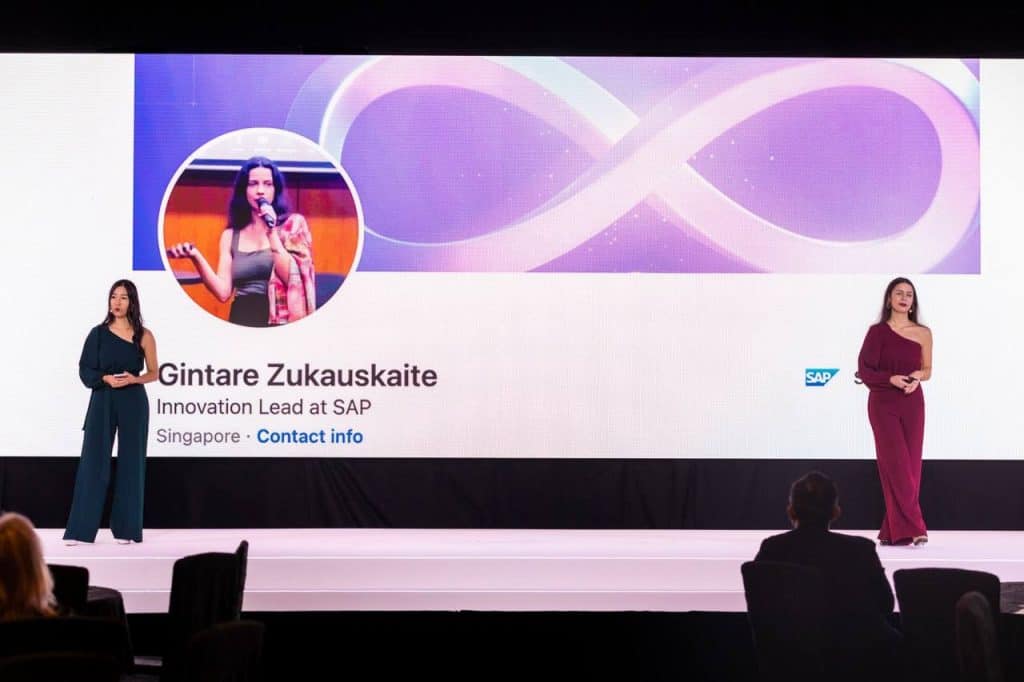
Lily Wu and Gintare Zukauskaite challenged the notion of linear career paths.
6. To Gen Z/Y, career paths are no longer linear
In their talk on “How to be part of the creative economy in the new world”, Gintare Zukauskaite and Lily Wu of Third Space said career paths are no longer linear. You can build your own career path by tapping into your skills and harnessing technology to create something new for yourself.
The current world of technology has opened up opportunities for entrepreneurs, artists, whatever you want to be to have the smallest viable audience for your work. Be a doer, be a self starter, be a problem solver, they said as they talked about how they have blended art and tech to create an immersive experience for travel.
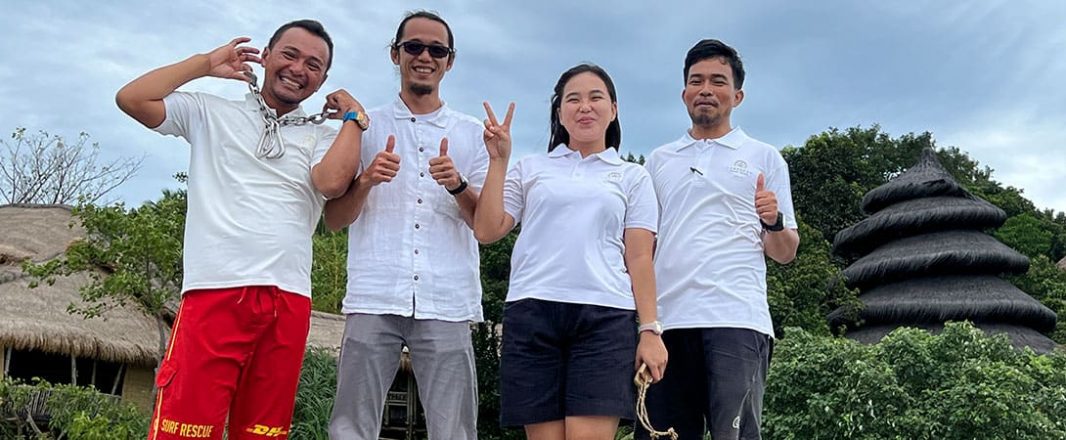
On Cempedak, as I observed the staff going about their work – all smiling and happily doing it, serving guests, making sure their every need is met – I wondered what impact this new world would have on them and their future.
There’s more technology in use in the resort now – there’s an app you can use to book spa services and view the daily menu. There’s a tablet in-room where you can request for services – bring me some ice, please – and almost immediately, an ice bucket arrives. But most times, the service is so personal here, you just have to ask a human and it happens almost as fast. And what’s the point of hurrying anyway in island living?
Technology can give our talent the ability to extend themselves – so they can upskill and work their way up the ladder. Likely one day, one of these youths, mostly from Bintan, will become general managers. Some may leave for the big city and seek new fortunes.
One of them, Jimmy has created a brand of syrup called Tejalak, using natural local fruits and herbs. He experimented with it during the pandemic and his product is now being sold in supermarkets in Batam, another Indonesian island nearby. “We work with local farmers and ensure they are paid fairly,” said Jimmy.
Indeed, the biggest impact on them through working on Nikoi and Cempedak is their raised consciousness about sustainability and circular economies because these two islands have sustainability at its core. They’ve had more exposure than most of their peers to caring for the environment. Their clearing of 300 tonnes of plastic during the pandemic opened their eyes to the extent of the problem. “I tell my kids everyday not to use plastic and not to throw things into the sea,” said Jimmy.
Likely, his kids are among the more than 400 currently enrolled across the 11 Learning Centres run by the Island Foundation, which was established by the owners of Cempedak and Nikoi, to give education opportunities to children in these remote island communities of Indonesia.
These are “concerned citizens” in the making and they are the ones that will have most impact on the ground and if technology can help them amplify that message, then that’s Tech For Good.
So as travel returns and now we are awaiting the second wave of reopening from North Asia, we need to embrace the new tech but think of it not only in terms of how it can make our businesses more profitable, but how it can help build a more compassionate, empathetic and sustainable industry.
Long tail businesses such as Cempedak and Nikoi, with boots on the ground and heart in what they do, can do much to show the way and oh yes, no amount of AI, AR, VR and metaverse can ever replace these gems in the sun.
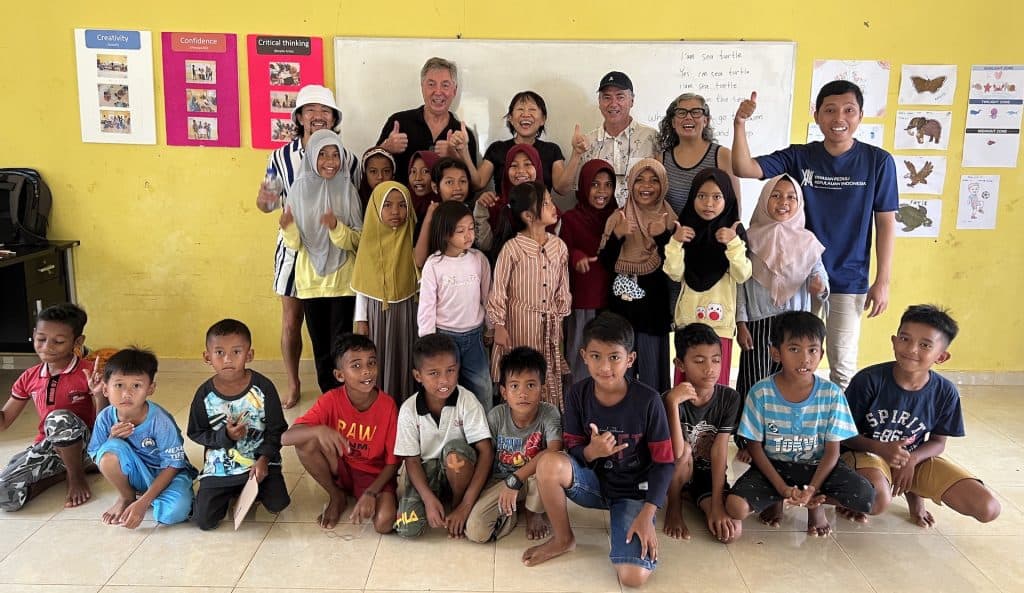
“Concerned citizens” in the making: Children in island communities around Bintan are being taught about the environment as part of the Island Foundation education outreach. The Island Foundation was set up by the owners of Cempedak and Nikoi and there are currently more than 400 children being taught across its 11 Learning Centres in the region.