
For a man who’s spent the past seven months leading the integration of a US$3 billion acquisition, involving 115 hotels across 40 countries, Michael Issenberg, the chairman of AccorHotels Asia Pacific, was looking decidedly relaxed when I caught up with him in Sydney.
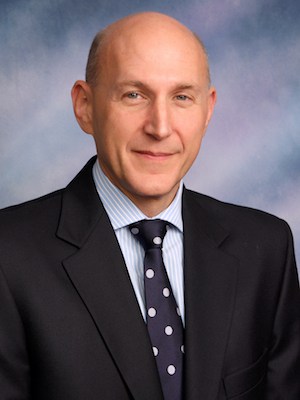
Michael Issenberg: “Content is king, content is the experience, we own the content, we must give a great experience.” (Image credit: AccorHotels)
Since Accor’s acquisition of Fairmont Hotels & Resorts last December, Issenberg’s been shuttling to and fro between Paris and Toronto to head the integration and last week, the acquisition was formally completed and now everything that Issenberg has been planning and strategising can be put into action.
“We couldn’t really execute on anything until the acquisition was finalised, we had to operate as two separate entities, but now it’s full steam ahead.”
Issenberg says it’s been an “intellectually stimulating and challenging” exercise – to learn about the history of the brands, Fairmont, Raffles and Swissotel – and how to put the brands together. Out of the 115 hotels, 70 are Fairmont, 32 Swissotel and the rest Raffles.
It’s not his first integration project – he also led the exercise after Accor’s acquisition of Mirvac in Australia “but that’s one country, 40 hotels. This is way bigger and more global”. But he did learn one lesson – “keep it whole until you are ready to integrate”.
He also wonders if destiny has a part to play in it. He grew up in North America but left 31 years ago and has never done business on the continent. As such, this was an eye-opening exercise.
He also started his hotel career in St Francis in San Francisco – he was the one who had to put up a sign to flag it Westin back then – and down the road was the Fairmont “which we always saw as our competitor and I always thought Fairmont was an American, not Canadian company”.
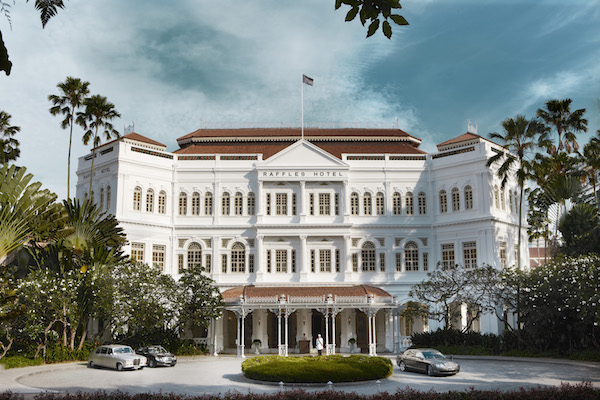
Raffles Hotel Singapore (image credit: AccorHotels)
In Singapore, where he’s been based for the last nine years, his office is in Raffles City which overlooks the Raffles Hotel “and knowing what an icon and institution it is for Singapore, it’s very humbling” to have Raffles part of Accor now.
And to top this list of coincidences, Issenberg was with Mirvac before he joined Accor.
Marrying Fairmont service with Accor distribution and development expertise
Two key reasons drove the acquisition – giving Accor access to the North American market and a strong foothold in the luxury market.
“Part of buying brands is the people and that’s been our singular focus – retaining the right people, and getting that message out early. We have to find a way to preserve the Fairmont culture but also integrate it with Accor.”
Nine key executives were let go from day one and inevitably, there will be some job losses. “This is the least pleasant part of any integration.”
He says what Fairmont does better than Accor is in service. “They do a tremendous job with service. We do a good job but they are even better. While this is done mostly through people, we can look at how we can expand the processes.”
What Accor does better is in distribution because of its scale, and in development. “There is amazing opportunity to grow the brands in Asia Pacific – Raffles, Fairmont and Swissotel are under-represented. There is also opportunity to grow the Sofitel brand in North America now that we have a footprint there.”

Fairmont Banff Springs in Alberta, Canada (Image credit: AccorHotels)
One of the first moves is the setting up of a luxury division headed by Chris Cahill, a former Fairmont talent, who will lead six luxury brands – Sofitel, Pullman, M Gallery, Raffles, Swissotel and Fairmont.
Issenberg says there is no reason to rationalise the number of brands. “I feel we could have more brands. It’s a world where brands are every bit as important but it’s become less physical and more experiential. It is also less important to differentiate your own brands than to differentiate from the competition.”
Distribution systems will be integrated, sales forces will be combined and it is studying what to do with the three loyalty programmes run by Fairmont. “They were going to combine the three when they went on sale,” says Issenberg, who notes the acquisition brought in about 50 million members into the Accor fold.
And if you thought Issenberg took his foot off the pedal in his day job of looking after APAC, you’re wrong. “I was working 24 hours a day, never took my eye off the ball,” he laughs.
Development in APAC hasn’t slowed down, with 330 hotels under development, with most markets remaining strong. “Australia is stronger than it’s been the last few years, Indonesia, Thailand and Vietnam are healthy, South Korea has bounced back, Japan is strong. China is less strong, there is so much supply but demand is keeping up.”
Trends and future opportunities – from hostels to co-working spaces
He says there is one single mega-trend. “Travel is only going to increase, particularly in Asia. As the middle class grows, more people are going to travel and we will need more and more hotels, and we need brands that resonate with every category of traveller.”
The second mega-trend is digital but Issenberg believes the human element will remain as important. “The whole process before you arrive and after you leave has changed but the in-hotel experience hasn’t changed that much and I think much more important than technology is the human element.
“Content is king, content is the experience, we own the content, we must give a great experience. Why are salaries of athletes escalating? They are the content. We have the content, we control the content. That’s what we have to do best.”
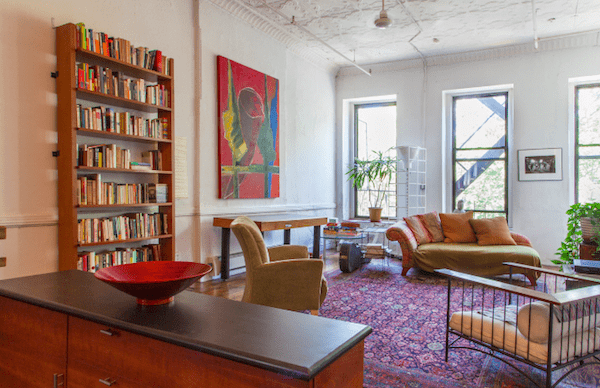
Oasis Collections: Two-bedroom loft in Lower East Side, New York (Image credit: Oasis Collections)
On Accor’s investments in Square Break and Oasis Collections, and acquisition of One Fine Stay, Issenberg says it could look at possibly acquiring in Asia Pacific to expand into alternative accommodation.
Asked about hostels, he says, “Watch this space.”
On trends such as the rise of the sharing economy and how it would impact hospitality, he says, “I heard a futurist describe it as ‘the digital layer of underused assets’. So for hotel companies, digital is what we have to get better at so that we can find ways to make use of our underused assets be it our executive lounges, meeting rooms, lobbies. That’s the key.”