
A new report released by Nielsen and Alipay, 2019 New Trends for Mobile Payment in Chinese Outbound Tourism, outlined the latest trends in Chinese outbound tourism and spending habits.
According to the China Tourism Academy, China’s outbound tourism market totalled over 81 million trips in the first half of 2019, up 14% year-on-year. As outbound numbers continue to increase, there has been a significant shift in the types of destinations generating traveller interest – from Tier 1 to Tier 2 and 3 cities.
Chinese tourists are also seen as driving the development of Chinese mobile payment overseas. According to the report, the market has maintained a stable growing trend in its consumer base. On the supply side, it is working with local merchants within tourism destinations, helping them to embrace “new retail models” as well as digitalise their operations so that they can readily capture Chinese tourist spend.
Here are some of the key highlights:
Transaction volume of Chinese mobile payments still rising
Mobile payment usage rate remained relatively stable in the past year, however the volume of mobile payment transactions abroad has increased. On average, Chinese tourists paid via mobile payment 3.4 times out of every 10 payments in 2019, up from 3.2 times in 2018.
The report attributes this to broader coverage of Chinese mobile payment methods across different retailers, duty-free stores, etc. Plus, the abundance of promotional and marketing campaigns displayed by mobile payment apps continue to feed into Chinese tourists’ focus on shopping while travelling.
“As the mobile payment environment for overseas travel increasingly matures and understanding of Chinese mobile payment solutions deepens, overseas merchants are showing a more open attitude towards the application of Chinese mobile payment platforms and digital operations,” said the report.
However, there was also a slight increase in cash payments – likely a result of travellers going to more remote destinations where cash is still the norm. Bank payments however, faced a decline. It reflects that while Chinese travellers are showing a clear preference for online payment methods, it is not the only deciding factor when considering where to travel. Card payments faced a decline.
Singapore the most popular destination for Chinese mobile payment services
Singapore ranked first on a list of countries with the highest rate of mobile payment usage among Chinese tourists (77%), followed by South Korea and Japan. Thailand ranked close behind in sixth place, reflecting Southeast Asia’s maturity in adoption of mobile payment solutions.
Singapore was an early adopter of Chinese mobile payment solutions. E-payments were listed as one of the strategic national projects in Singapore government’s 10-year plan for a Smart Nation by 2025. Almost all merchants (97%) indicated steady improvement compared to the previous year in terms of mobile payment usage and the amount of mobile spending by Chinese tourists.
As a result, 63% of merchants surveyed reported they would recommend Chinese mobile payment systems to industry peers.
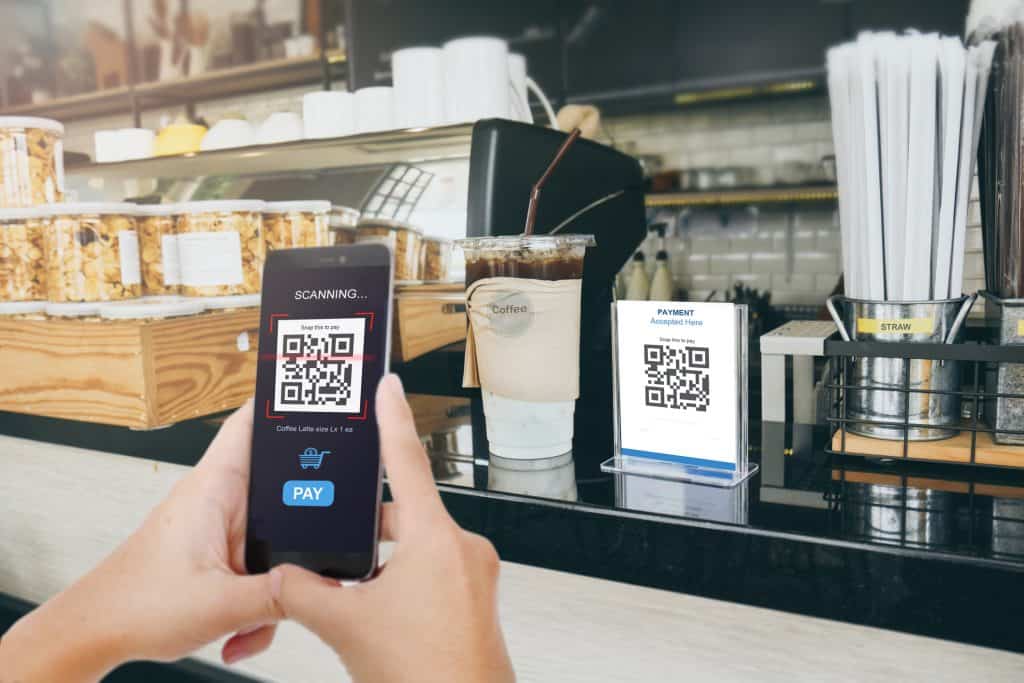
Mobile payment systems continue to help merchants digitise operations
Overseas merchants are also beginning to use Chinese mobile payment solutions to digitise their operations, with regards to inventory management and digital marketing.
“The integration of online and offline retail with a more digitised operation has further enhanced the consumer experience for Chinese tourists when traveling overseas and has resulted in a new experience for overseas merchants in their digital transformation,” said the report.
“The services provided by Chinese mobile payment platforms effectively helped overseas merchants improve end-to-end digital operations before, during and after payment. Nearly 70% of the UK merchants surveyed have begun utilising services beyond payment on Alipay. 82% witnessed an increase in sales and customer traffic after connecting to the Chinese mobile payment platforms.”
European merchants are finally catching on to Chinese mobile payment solutions as well
Though relatively later adopters of Chinese e-payment, some markets are beginning to become more proactive in implementing them. In The UK, 61% of local merchants have adopted Chinese mobile payment solutions in the past year. This has generated a positive feedback loop – with more Chinese tourists opting to pay via mobile, and increasing spend as a result. In the U.K. and France, the percentage of Chinese tourists who used mobile payments increased to 65% in 2019, with per capita mobile spending rising by about 10%.
This also has the added effect of more Chinese travellers going cashless while abroad.
More Chinese outbound customers are coming from lower-tier cities, and travelling to unique places
According to the report, there is a reduced difference in per capita annual overseas travel expenditure between China’s Tier 1 and Tier 3 cities, showing that the appetite for travel is extending throughout the country. There was virtually no difference between first and second-tier cities.
58% of Tier 3 Chinese tourists stated they made definite travel plans in the coming year, an increase of 20% compared with 2018.
In terms of their travel habits, tourists from Tier 2 and Tier 3 cities show a growing preference for more “diverse and in-depth” travel experiences, opting for destinations like India, West Asian and North African countries (i.e. Egypt, Turkey, Morocco and Israel).
According to Israel’s Ministry of Tourism, about 105,000 Chinese tourists visited the country in 2018 (compared to 47,000 tourists in 2015). This is also a result of direct efforts from countries to make themselves more accessible to the Chinese traveller – for example, Israel launch direct flights, established new visa centers and issued multiple-entry visas for Chinese tourists.
Despite curiosity for other destinations, Japan and South Korea still ranked as top travel destinations in 2019
There is no major shift in leading destinations for Chinese travellers, with most being within a four-hour flight away. Japan, South Korea, Thailand and Singapore rank as the top Asian destinations, with the remained being spread across the USA and Canada, the UK and France, as well as Australia and New Zealand.
While closer destinations still rank highly as preferred travel spots, Chinese outbound travellers are demonstrating greater willingness to travel farther for novel experiences.
Download the full report.