What do a discounted hotel room, a tube of lipstick and a frying pan have in common? They’re all available for purchase on the Alibaba platform, the Chinese e-commerce site that’s bigger than Amazon and eBay combined.
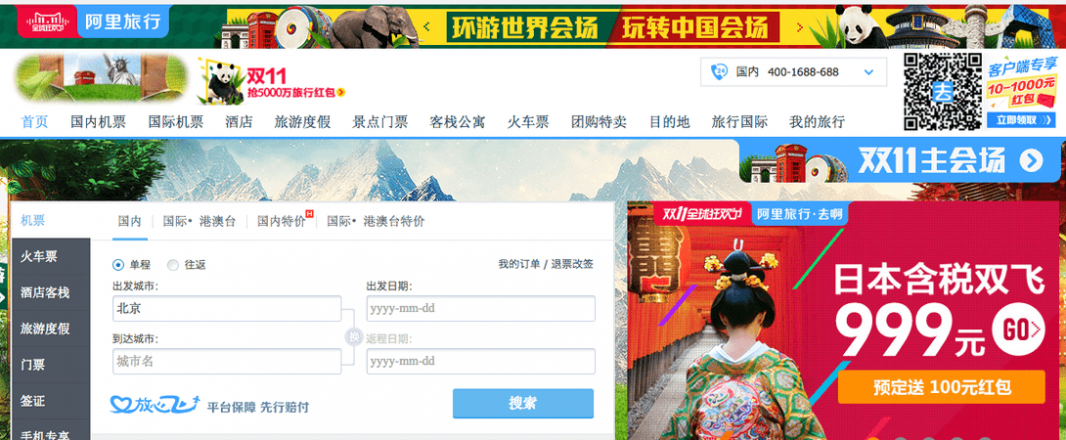
Alitrip, formerly Taobao Travel, was established as an independent, one-stop online travel platform in October 2014. Part of the Alibaba ecosystem, Alitrip served 50 million travellers in one year alone. With China’s biggest online shopping day less than a month away, all bets are off in terms of how high this number will go.
November 11– originally an anti-Valentines’ Day celebration – has been adopted by the Alibaba Group as Singles’ Day and marketed as China’s online shopping day. Last year, online sales (chiefly conducted on mobile devices) reached US$9.3 billion in 24 hours. Alitrip customers chalked up over 500 million travel packages, 300,000 air tickets and 150,000 hotel room nights during the sale.
Speaking to WIT, Sherri Wu, chief strategy officer for Alitrip said the driving force behind the travel marketplace was to create something innovative and disruptive.

Sherri Wu, Alitrip’s chief strategy officer
One of these innovations is the ‘post-post pay’ programme, described by the company as heralding the future of hotels. The system works by assigning a credit rating to customers (a strong rating means better hotel rates) then automatically deducting room charges from customers’ Alipay accounts, removing the need for credit card authorisation and deposits.
Checking in and out requires nothing more than a mobile device, an innovation Wu said is changing the hotel industry. “Hotels no longer need a big front desk”, she said, and the partnership reduces no-show rates to below 30 percent – more than 10 percentage points lower than the industry average. Since June this year, more than 5,500 qualified hotels and hotel groups including Shangri-la and Radisson have signed up to the programme, evidence of its efficacy. According to Wu, hotels believe this might be the next revolution in hospitality.
Another innovation is what Wu refers to as the ‘park of the future’. Visitors to theme parks, zoos and popular attractions can buy tickets and enter the park using their mobile phones, purchase goods and services with Alipay, China’s leading online payment platform, navigate the park with Alimap and access promotions offered through the Taobao marketplace. It is, in other words, like having a day out in the Alibaba universe.
Responding to a question on whether Alitrip’s success can be replicated elsewhere in the world, Wu acknowledged there were specific conditions within China that have led to the rapid growth of the business. Foremost is the behavior of Chinese consumers, who embraced the marketplace model – now 90 percent of the e-commerce landscape.
“We are not the first to invent the sharing economy,” she said. “The great thing about technology is that it can be replicated.”
What cannot be replicated, however, is the ‘Alibaba experience’, a holistic, responsive, data-driven approach to customer acquisition. Like its namesake, the Alibaba group possesses immeasurable wealth, but in the form of consumer data. Of China’s 500 million mobile users, the group claims half are active users on its platform.
This means Alitrip has a unique grasp on consumer behaviour, something Wu says can help travel merchants design a product that truly matches what consumers want. Already some clear trends have emerged, she said. There have been a lot of single airline ticket purchases, sans tours: an indication of the rise of Chinese FITs. The lines between business and leisure travellers are blurring, and “shopping is a big part of the trip”, she added.
The next phase of growth, said Wu, is to expand Alitrip’s reach domestically. In China today, offline bookings still far exceed online bookings. “We want to change the [domestic] travel industry and move them into the online world,” she said. “This will bring great benefits to the customer, especially those in Tier Two and Three cities.”
Should Ctrip be worried? I asked. Wu, smiling diplomatically, said Alitrip’s focus is on providing great products and services. “We’re not going to separate from the Alibaba Group.” This, I believe, summed up Alitrip’s very unique proposition.