
According to the Asia Pacific Villa Rental Market Research 2019 report by Villa Finder, the total private accommodation market has increased by 12% in the past two years, reaching a value of US$441m.
Bali remains the top villa market (>4000 villas), having grown 18% since 2017. Despite being over-supplied, there has been a 34% increase in villa construction, correlating with a drop of 10% in average nightly price. China outbound make up the bulk of customers (23%) while Australian travellers dropped to 19%.
However, Goa is currently enjoying the fastest growth rate in its villa rental market (23%), and it is expected to continue through to late 2020. In 2019, competition has increased and occupancy stands at a higher than average 60-70%. The main occupants are typically European and American families and groups.
Australia has also seen a strong increase in the number of rental villas available, primarily in Byron Bay (30%) and Sydney (33%). However, average occupancy has decreased, indicating an oversupplied market. The report predicts prices will also decline accordingly. Nevertheless, there has been a rise in Gen-Z customers (18-24) and corporate clients, though families still make up the bulk of renters.
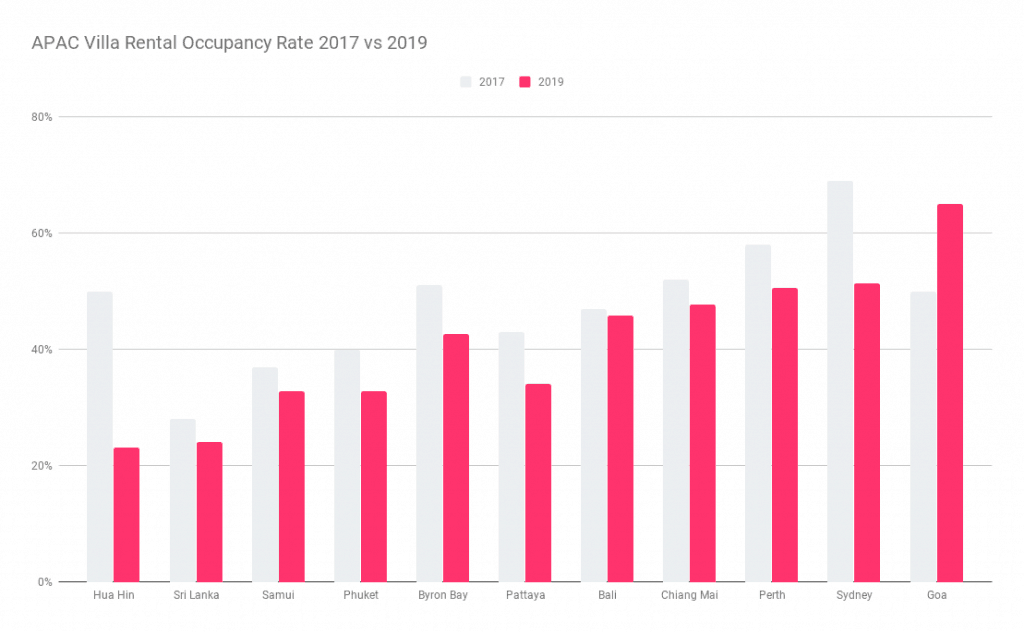
Sri Lanka’s villa market grew by 20% (reaching US$4.6m) with the number of villas rising by 25%, but also saw a drop in occupancy, particularly following the April 2019 terrorist attacks. Other markets on the rise include Japan, New Zealand, Vietnam, and Malaysia.
Despite growing supply, Thailand’s villa markets have dropped significantly across the country. The report attributes part of this decline to the July 2018 boat accident in Phuket, leading to a decline in Chinese tourist arrivals. In other parts, Hua Hin went down by 38%, Samui by 15%, Pattaya by 1.5% and Phuket by 2%.
The report concludes that despite rising supply and more competition, there is plenty of space for newcomers to claim their stake of the villa rental market across APAC. It argues that villas with unique selling points could mitigate the negative effects of declining occupancy rates by being savvier about their marketing and distribution strategies.