It was interesting that when asked which human quality they’d like to improve on as we hurtle into the age of Generative AI, travel leaders at WiT Japan & North Asia cited “emotional intelligence”, “empathy”, “listening” and “patience” among their answers.
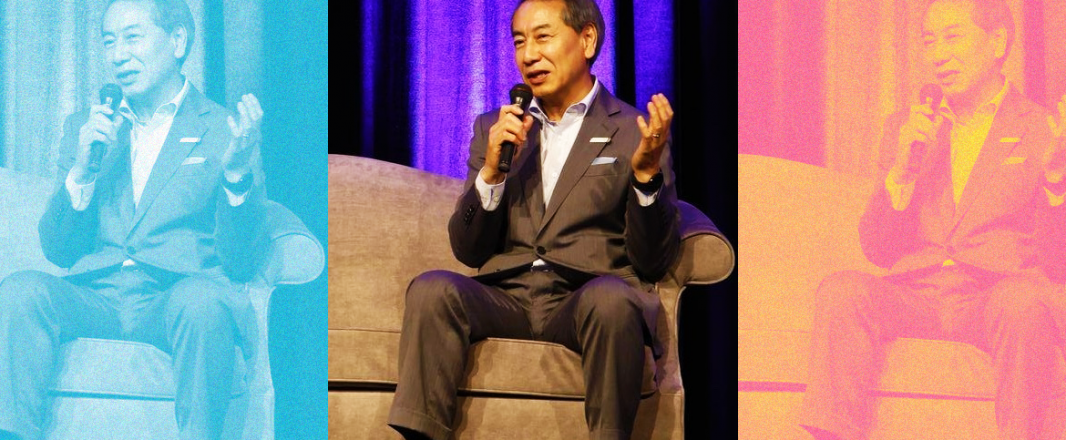
Eijiro Yamakita, President & CEO, JTB Corp, was among those who cited “emotion” as a quality he wanted to work on. “I want to improve the more emotional part because this is related to AI development. I’m always thinking about what humans can contribute to the society, so the people interface with technology is really important.”
It’s clearly an area that he will also personally have more time to work on, given the last three years of turmoil when he had to bring the 101-year-old Japanese travel giant back from the brink. JTB returned to profit for the first time in four years in the second quarter of fiscal year ending March 2024.
Sales were up 32% to ¥510 billion; gross profit up 28% to ¥118.2 billion; and operating profit totalled ¥8.7 billion, compared to the loss of ¥4.7 billion the same period last year. Its gross profit breakdown is a good indicator of the recovery trends in the Japanese market.
- Domestic travel increased by 25% to ¥46.6 billion (compared to ¥53.5 billion in the same period in 2019)
- International travel surged by 489% to ¥18.3 billion (compared to ¥56.5 billion)
- Inbound travel to Japan soared by 677% to ¥6 billion (compared to ¥9.3 billion)
- Global travel rose by 218% to ¥6.5 billion (compared to ¥9.1 billion).
Saying “full recovery is halfway there”, he noted that JTB anticipates recovery to around 80%-85% in 2024, with full recovery expected in 2025.
Inbound’s performance has been stellar and he said it’s seen dramatic growth in the tours and activities segment, driven by its partnership with Bokun, Tripadvisor’s B2B tours and activities platform. To grow this sector further, it has in place a partnership with Veltra to expand its tours and activities content and marketing for inbound travellers to Japan. Yamakita also cited its own development of local content in partnership with communities, as contributors to this growth.
While outbound has been more sluggish, he noted a trend towards nearby destinations being more popular due to factors like high airfares and inflation. Destinations in Europe were also popular due to the rise of thematic and purpose-driven travel, fuelled by mainly women travellers. “Women have strong power actually,” he said.
Its global business also became one of the best growth segments in 2023. “The traffic from Asia Pacific to Europe and America, as well as vice versa, was strong. Lots of traffic was captured by the global network. On top of that, we’re trying to explore the MICE business which is really active.”
JTB has earmarked a planned investment over five years of ¥120 billion, up to 2028. It breaks down into:
- ¥61 billion for area development (enhancing the value of tourist destinations) and corporate business development (MICE-related and others)
- ¥45 billion for DX (digital transformation) and IT
- ¥16 billion for stores and facilities
He said JTB’s investment strategy has two main elements – making destinations more valuable and attractive, and enhancing the integrated customer experience across booking and destination touchpoints.
For example, he said JTB was renovating places like fish markets with local governments to create unique experiences that encourage longer stays and increased spending.
“It is also important to have more diversified destinations. In order to make Japan sustainably attractive as a destination, we need to find out the new places where the foreign traveller can visit and spend more time and money.”
In terms of stores and facilities, there was a reduction of ¥27.3 billion in fixed costs compared to 2019, with the number of stores reduced from 480 in 2019 to 280 by 2023.
He said that JTB is focused on creating an integrated customer experience across various touchpoints like booking, destinations, retail stores, and call centers, merging online and offline experiences.
“We are transforming the experience at the retail store, so it’s not only about the automation, but to make the customer experience better so that the people can go to the website, get information, sometimes make a call to the call centre and come to the retail shop. The whole experience is integrated and we want to make our stores more attractive places to visit, and not just to make a booking.”
It is introducing exclusive travel consultants desks “with experienced staff who have in-depth knowledge about destinations”.
This is where he sees technology such as AI playing its part to free up humans to handle the more specialised tasks, as well as streamline internal processes.
“JTB recognizes the need to embrace technological innovations like AI while also focusing on developing the emotional and human aspect of our services to understand people’s emotions and contribute to society,” he said.