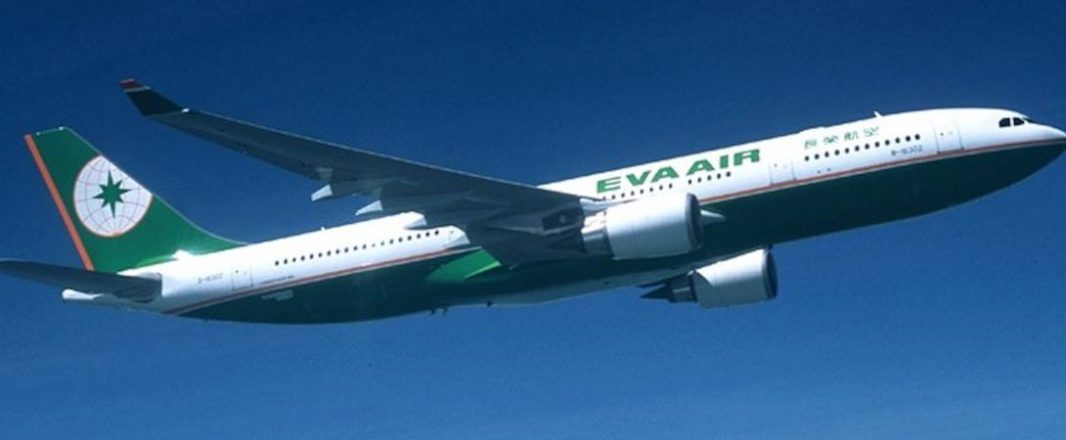
Asia is the largest, fastest-growing and most competitive market for air travel, as well as the world’s most competitive aviation market, according to a study by Amadeus.
Analysis from Amadeus Air Traffic Travel Intelligence solution shows that Asia experienced year over year growth of 9% between 2011 and 2012, followed by Latin America, at 6%.
Other key findings reveals Asia has the highest airline competition, with 75% of the region’s air traffic operated by three or more airlines and 27% by five or more. This contrasts sharply with other regions, such as the Middle East and Europe, where just half of all air traffic on its routes is operated by three or more airlines.
The analysis also shows that 22% of all global air travel is concentrated on just 300 origin and destination “super routes”, each of which carries over one million passengers annually. 69% of all global air travel is made on major routes with 100.000 annual passengers.
In terms of connecting air traffic, the Middle East as a strong performer, with the three key airports of Doha, Abu Dhabi and Dubai all showing high connecting traffic volumes.
.gif)
Asian domestic travel dominates world’s busiest air routes by passenger volume
Analysis of the busiest routes in the world by passenger volume shows that seven out of the top ten world’s busiest air travel routes are in Asia.
Jeju-Seoul in South Korea remains the world’s busiest air route, and many of 2011’s top origin and destination routes return to the league table for 2012,
Beijing-Shanghai has risen from seventh-busiest route in the world in 2011, to fourth busiest in 2012.
Sapporo-Tokyo has overtaken Rio de Janeiro-Sao Paulo to second-busiest route ranking, and Okinawa-Tokyo has entered the top 10 table, as ninth-busiest route in the world.

Competition increaing consistently within airline industry
Globally, the airline industry has become consistently more competitive over the past three years.
The percentage of air traffic served by just one or two airlines has fallen by 2% each year, from 39% in 2010 to 35% in 2012. Concurrently, the percentage of air traffic with four or more competing airlines has also risen consistently from 35% in 2010 to 38% in 2012.
Asia is the market with the highest competition between airlines in the world, with 75% of air traffic volume served by more than three airlines, and only 25% of air traffic served by one or two airlines. This contrasts strongly with other regions, for example in Europe 45% of air traffic volume is served by just one or two different airlines, and in the Middle East 50% of all air traffic has only one or two competing carriers.
The highly competitive nature of air travel in Asia may be due to the high concentration of passengers on a relatively low number of ‘super routes’, where several airlines vie for dominance.

40% of all global air traffic comes from 1,000 worldwide origin and destination routes
35% of air travel in Europe and North America is made on smaller routes with fewer than 100 thousand annual passengers. This contrasts sharply with other regions such as Asia where 85% of air travel is concentrated on routes that carry over 100 thousand passengers each year.
This concentration of Asian air travel suggests the region’s growth may continue as there is an opportunity for airlines to develop secondary links beyond the heavily competitive super routes.
In addition, the survey shows that in Asia the larger routes with over 100,000 annual passengers have a 4%-9% growth range, but the smaller and medium sized routes in the region are growing at approximately 19%-21% per annum.
.gif)
The rise of low cost airlines has been significant over the past decade, but this has been largely limited to traditional markets.
Europe has the highest concentration of LCC traffic, representing 38% of total air travel in 2012. South West Pacific and North America also have significant LCC penetration, with 37% and 30% respectively.
In markets where air travel is growing most strongly, LCCs’ respective share of overall air travel remains at modest levels – in the Middle East LCCs represent just 14% of all air travel, in Asia 19% and Latin America 25%.
Within specific regions, the spread of LCCs varies strongly.In Europe, Spain has the highest share of departing LCC traffic at 57%. UK follows with 52% of all originating air travel made on LCCs, up 4% from 2011 and passing the 50% milestone for the first time.
Despite the low overall share of low cost air travel in Asia some countries have bucked this trend. For example 65% of all air travel in the Philippines and 61% of all air travel in Thailand is made on low cost carriers.

Middle East rapidly growing as global air travel hub
The region’s three key airports of Dubai, Doha and Abu Dhabi are all experiencing strong overall air traffic growth of around 10% per annum. They have very high levels of connecting traffic, with each airport seeing around 50% of its total air travel volume connect. These figures demonstrate the region’s increasingly important role as a hub between Europe and the emerging markets of Asia and the South West Pacific.
When the three airports are taken as a group they already serve around 15% of air traffic volume between Asia-Europe and Europe-South West Pacific.
Overall traffic volume between Europe and Asia is growing by approximately 7% year over year, but traffic volume between these two locations and routed via the Middle East grew by approximately 20% between 2011 and 2012.
Pascal Clement, Amadeus’ head of travel tntelligence, said the rapid pace of change and increasing competitiveness of the global airline industry meant airlines and the travel industry increasingly need to base operational decision-making on data insights and analytics to identify opportunities and risks as they emerge.
“This data provides good news for the airline industry, showing that passenger air traffic has increased in every region of the world from 2011 to 2012. As in 2011, this growth is led by Asia, however, the data points to a further opportunity in the region, where the majority of traffic is on a small number of busy routes.”