
That’s when I realised that one man’s authenticity may not be another man’s cup of tea or coffee.
What is authentic? There are many definitions of the word – it could be “worthy of acceptance or belief as conforming to or based on fact” or “conforming to an original so as to reproduce essential features” or “made or done the same way as an original” or “not false or imitation”.
To me, Piazza San Marco is a tourist trap and so drinking coffee there, while an authentic Italian past-time, is definitely something every tourist must do when in Venice – equivalent to seeing the Big Ben for the first time when you visit London – but is it “authentic”?
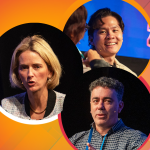
I was listening to Joseph Pine (above), author of “The Experience Economy”, talk to finalists of the Singapore Experience Awards about how to create experiences to differentiate themselves and authentic ones at that.
“You are competing against the world now for the time, attention and money of individual consumers. Time is limited, attention is increasingly scarce, money is consumable, the experience is the marketing,” said Pine.
“You have to create an experience so engaging that they can’t resist paying for it and being there.”
Using the example of Apple, which created its own retail stores, he said half of the company’s revenues now come from these outlets. Or ING Direct which created its own cafes in New York and there’s a financial barista you can consult. “Costs go down to zero, customers pay for the place.”
Or the man in California who got so tired of people telling him that the Internet was going to commoditise public libraries so he created the world’s first experience library where people can journey through time through the world of books.
He also cited an experience he had in Chengdu, China where he walked down Jing Ling Street and found it “an authentic experience, not a tourist trap”.
“Don’t create tourist traps, create resident traps,” he advised.
There’s a thin line though between tourist and resident trap. Lijiang Town, a UNESCO World Heritage Site in Yunnan and which was a resident’s village, is a tourist magnet but has become a hollowed-out area devoid of original character because everything now caters to the tourists. Yet some people may find it “authentic”.
Luang Prabang (right) in Laos was a residential place until it got UNESCO World Heritage Site listing and now the centre of town is a street market for tourists although pockets of original charm exist, battling the twin tides of commercialization and commoditization. 
Is Arab Street in Singapore authentic? It’s a fun place to go for sure – one of the more interesting enclaves left in Singapore, full of quirks and character found in the shops, bars and cafes. But is it close to the original?
I had an opportunity to catch Pine at a cocktail and I asked him my theory of the relativity of authenticity – A=MC square (Authenticity equals Mental & Cultural Background) and if he had an answer. He confessed he didn’t. “It’s hard, that’s why it’s so challenging,” he said.
He did share these tips though on designing experiences:
• Redesign for time, not just for activities. Time is the currency of experiences.
• Don’t charge for commodities, goods and services, charge for experiences. (He questioned if hotels could go beyond just charging for the room and perhaps charge an admission fee such as the Vinopolis, a wine museum in London, does? Pebble Beach in the US charges an admission fee, he said.
• Redesign for the how, not just about the what. Service is about the what. Work is theatre. Staff need to know that when they are working, they are on stage and they need to act.
• Don’t interview them (staff), audition them. Choose your attitude,
• Rededesign to be real, not phony
• Render authenticity. If you are authentic, you don’t have to say you are authentic. If you don’t say you are authentic, it’s easy to be authentic.
Quoting Polonius in Shakespeare’s Hamlet, “To thine own self, be true, And it must follow as the night the day, thou canst not then be false to any man”, he said being true to self is the mantra of the Experience Economy.
• Treat your customers as the individual they are.
But what’s coming next is that “every customer is a multiple market” and that’s the future of customization, said Pine.
• Redesign to fuse the real with the virtual
Create virtual experiences, spend more time in the virtual world, fuse that virtuality with the reality, he said.
• Redesign for outcomes, not just memories
“Experiences can be commoditised too, in fact they are the easiest to do so, been there, done that – customise the experience so that it becomes a life transforming experience, such as ‘travel that can change your life‘.”