“Traumatised, shocked and stunned, but we will get over it,” says Emirates’ Sir Tim Clark
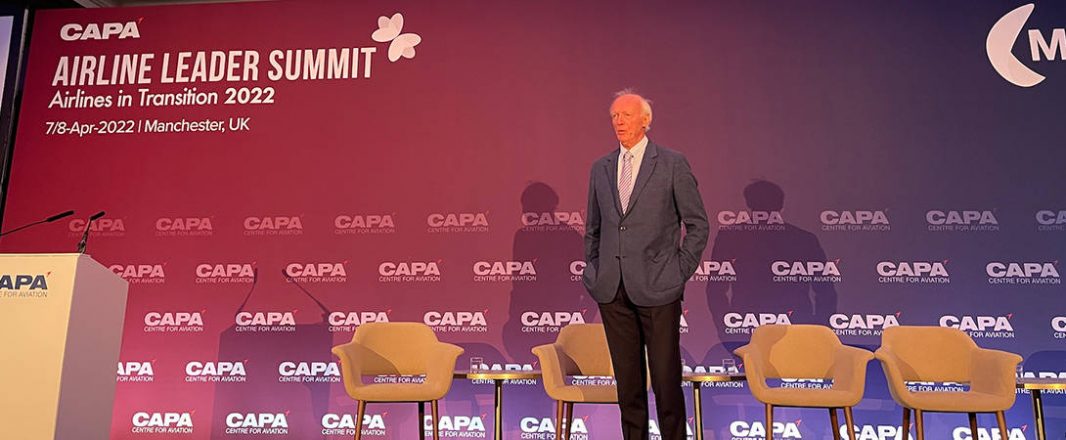
SO on the one hand, you have Peter Harbison, chairman emeritus, CAPA (Centre of Aviation) painting a rather grim picture for the future of aviation – he believes the golden days may be over – and on the other, Sir Tim Clark, president of Emirates, declaring “the beginning of our third epoch”.
Whichever side you are on, there’s no denying the reality that airlines, having been through the worst storm, are emerging into what many call the perfect long storm of forces which will persist long after this pandemic is declared over.
In his opening address, Harbison declaring “in the history of modern aviation, there has never been a time when there were so many forces of change”, reeled off a list – massive debt, rising interest rates, stagflation, prolonged high fuel costs with the war on Ukraine a “nice cherry on the cake”, emissions reductions costs, need to invest in new tech, resources/supply chain issues, longhaul narrow body aircraft orders and their transformational impact on routes, dominance of lessors, dozens of new entrants and a changing world order.
And if that were not enough, there’s changing passenger profiles. “Are passengers ready to fly again and pay higher prices?” asked Harbison, who questioned, “does anyone seriously think it’s over? Many travellers don’t.”
Regardless, he believes business travel will be reduced – he reckoned by at least 20% – and leisure travellers will prefer simple, low priced, point-to-point travel – all of which will reshape longhaul.
The increase in orders for narrow body aircraft – these aircraft are meant for intra-regional or domestic routes and they produce 30% lower emissions – also means markets would be transformed, said Harbison, leading him to question the future global role for the Middle East carriers which are connectors.
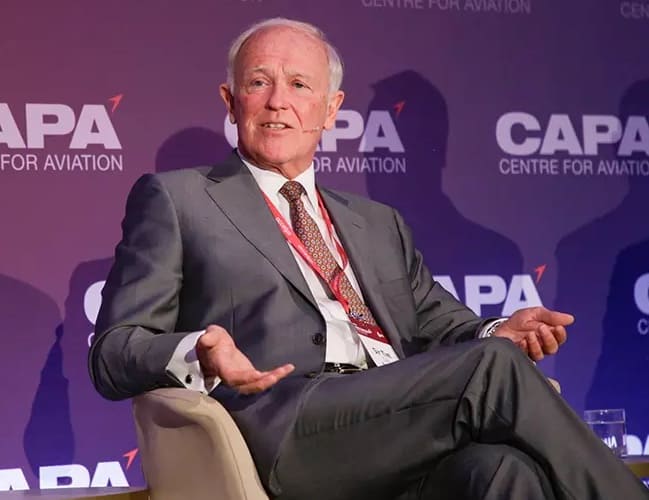
Sir Tim Clark: “Change of the segments and the behavioural characteristics of those segments are changing and due to technology, we have a better chance of understanding consumer behavior at the micro level.”
Two challenges that Sir Tim immediately responded to. On passenger demand, he said, “The market has come back. Yes, it’s been traumatic but for some strange reason, trauma engenders increased demand and spawns new segments within those demand. In absolute terms, the global economy will emerge from this, traumatised, shocked and stunned, but it will get over it.
“In the past four to five months, the corporate market has been very strong, surprisingly so, and is putting our premium cabins under greater pressure. Understanding the way things have changed, what people are going to want, is key and technology will help you to identify the different segments within the demand.”
Sir Tim said technology now enables airlines to design B2C retailing tools for the corporate segment. “Change of the segments and the behavioural characteristics of those segments are changing and due to technology, we have a better chance of understanding consumer behavior at the micro level.”
As for the future role of the Middle East, he said, “I don’t share the view that the longhaul international superhub will come under threat. The future will still be the same basically, incumbents will still be there.
“We may not have a Cathay Pacific – I really fret that such a great airline should be subjected to this terrible situation out of their control – I worry about that, but I see the beginning of our third epoch.”
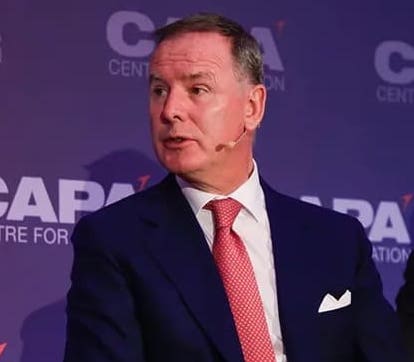
Tony Douglas: Travel demand is going off like a fire hydrant as restrictions ease.”
Tony Douglas, Group CEO of Etihad Airways, said, “There’s no successful global economy that doesn’t need world class connectivity. Globalisation will increase, therefore demand will increase.”
He said that over the last nine months, the airline’s premium cabin loads are higher as a percentage of revenues. “People see the value of our product and there’s a lot more cash in the system. Travel demand is going off like a fire hydrant as restrictions ease.”
Indeed, for first quarter 2022, he said, Etihad would be profitable for the first time in its 18-year history. “One gift from Covid is how agile we had to get – for example, flying to seasonal destinations such as Mykonos, we would never have done that before.”
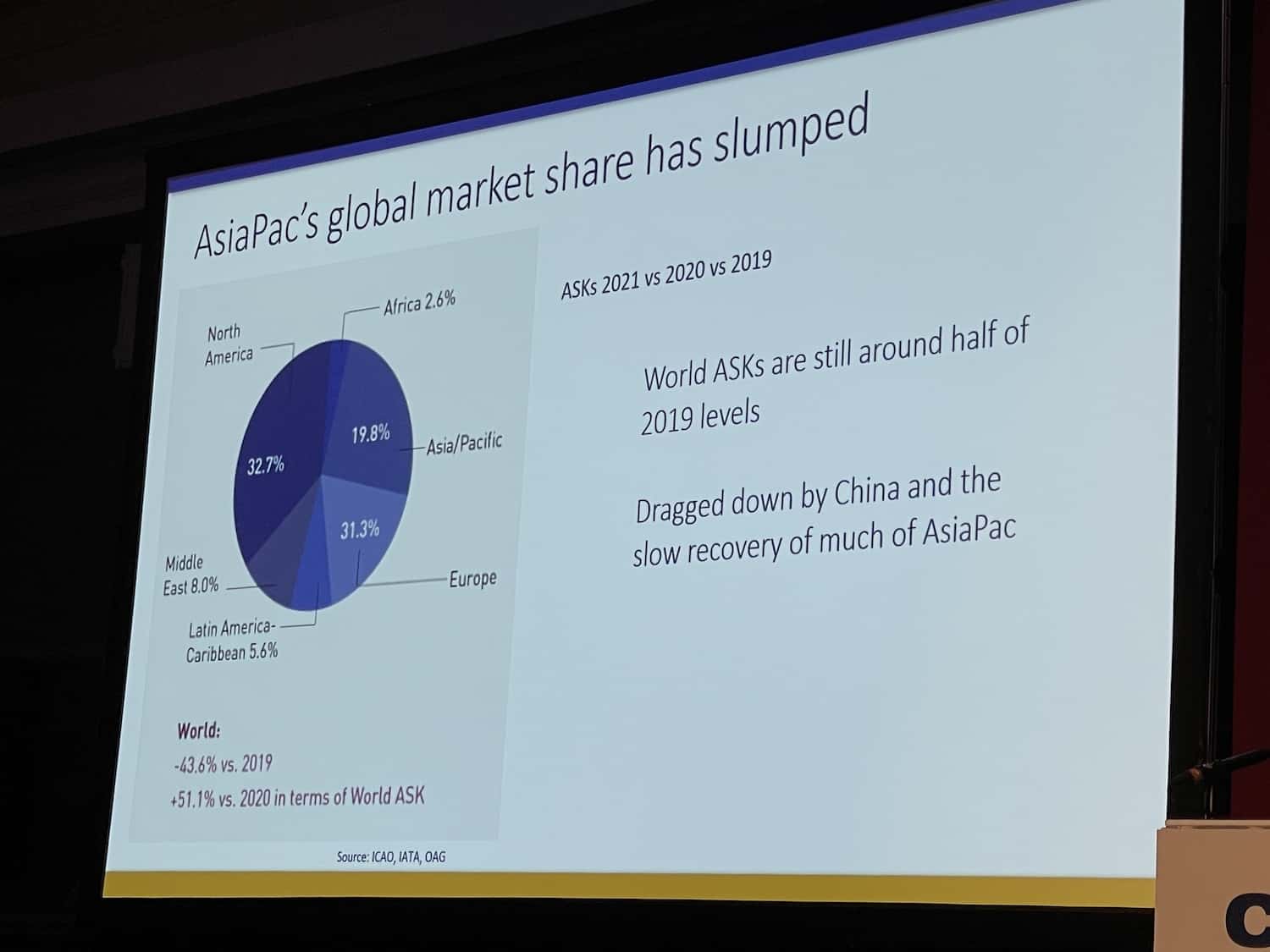
It is clear that Middle East carriers have had the advantage during the pandemic over Asia Pacific carriers. Their region being the first to reopen, carriers like Emirates, Etihad and Qatar have performed well while their APAC competitors have struggled. “APAC’s global market share has slumped,” said Harbison.
Saudi Arabia, the market to watch, has declared ambitions go from 100 million passengers to 330 million passengers by 2030.
Sir Tim said the challenge is airports and how they are going to accommodate the new demands, with slots going to be at a premium. “I see huge opportunities for Emirates as a superhub for the next 10 years. There’s just going to a reset to do what we are doing, and it can be done profitably.”
During the pandemic, Harbison noted that 57 new airlines have sprung up, there’s been 33 exits while 69 airlines have remained dormant. “Clearly there are opportunities within a crisis,” he noted.
One opportunity is for airlines to place much greater focus on the non-flying elements of airlines which make money. “In 2020, American said its Advantage FFP was valued at between US$19.5b-$31.5b and in March 2021, it used its FFP as backing for a US$10b bond sale,” he said. In contrast, the airline which operates a fleet of 891 aircraft, of which it owns 458 – the owned aircraft have a combined value of $13b.
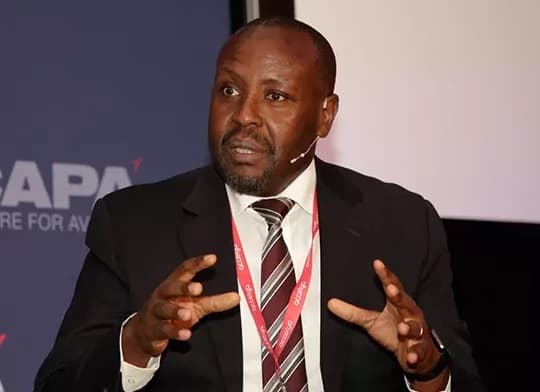
Allan Kilavuka: “There’s a need to consolidate aviation.”
One of the biggest opportunities for global aviation is Africa and being able to unlock intra-African air travel. One airline trying to champion this is Kenya Airways whose CEO Allan Kilavuka said that the continent accounted for 2.6% of global air traffic, 70% of which is flown by foreign carriers. “African carriers should grow but face constraints in equity and capital. How do we change that?”
His mission is to connect African trade zones which are so fragmented “so many airlines that are not viable”. “There’s a need to consolidate aviation and we are working with South African Airways to see how that can work,” he said.
Sir Tim said, “If you can develop intra-Africa, it unlocks Africa. Oddly, the African countries were more restrictive to their own carriers than global carriers like Emirates. If you are successful in championing this, Africa will be a better place.”
For the future, Harbison sees fewer/smaller major airlines, increased importance of low costs, a narrow body revolution, the Middle East ascendancy and alliances with significant equity positions. “There will be a re-evaluation of the traditional airline model – what role will governments have?”
“The conventional airline industry model has only survived because it has been nailed to the government perch,” he said, asking, “Are we going to waste this crisis? Covid is the most disruptive crisis ever, since World War 1?”