How travel needs to form “cross-group friendships” to find our own vaccine
On one of my first assignments as a cub reporter in Penang, I was sent to cover a fire in a village. With my editor’s words ringing in my ears – “be objective, don’t get emotional, just get the facts” – I set out with a mix of excitement and trepidation.
The scene was one of destruction. Two houses had been burnt to the ground. A woman was crying hysterically. I braced myself, went up to her, whipped out my notebook and asked, “How do you feel?” She railed at me, and wailed. “You stupid girl, how can you ask such a stupid question?”
I walked away, feeling stupid. I got the facts of the story in the end, but I found it very hard to be objective about the story. I felt for the woman and her family who had lost everything, and I didn’t sleep well that night.
I tell this story because I am finding it really hard to be objective this week about the countless jobs that are being lost in travel, and they are hitting closer and closer to home. My neighbours, a Singapore Airlines pilot, a flight attendant … more than 2,000 jobs cut at Singapore’s star carrier.
“I just said goodbye to 600 of my staff today,” said one chief executive.
The breakup of Accor Asia Pacific, affecting people whom I know really well, and whom I have watched grow the company over decades; Booking.com closing five offices – and that’s just the tip of the iceberg with more to come if borders do not open soon.
It’s hard not to get emotional about the devastation to livelihoods of our comrades-in-travel and the places we have visited and loved.
On the other hand, there’s positive news trickling through as our industry valiantly fights back. Every now and then, a hotel opening in Thailand. Every now and then, an airline starting international flights – VietJet has said it will resume international flights this month. Every now and then, a cruise company says it is commencing sailings.
Every now and then, I hear of friends travelling. A neighbor just flew to Dubai for a business trip, did his tests and will have an extended visit to the region – four to six weeks. I spoke to a hotelier from China who said she’s just returned from her first business trip to Beijing and found it “bizzarely exciting” and that it was so good to see colleagues and customers face to face.
As I wrote this, I got a message from a friend who says he’s on a flight from Istanbul to Kuala Lumpur and will be landing in six hours’ time.
We latch on to these bits of good news like pennies from heaven.
It is clear travelling is possible. In other words, it is not impossible. We just have to solve it in a logical manner and give governments the confidence to unlock the doors that have shut. And behind the scenes, I am confident many parties are trying to solve this problem.
This week, this piece of news caught my eye – the headline says the WTTC believes an internationally-coordinated plan to save travel and tourism can be expected within four weeks. It immediately raised hopes, and then I read this bit.
The coordinated international plan is focused on:
- Securing widespread international agreement on the standardised testing protocols on departure, including no quarantine for travellers
- Each government guaranteeing protection for travellers and ensuring resources are set aside to repatriate travellers
- Establishing agreement on a traffic lights system of reporting COVID-19 numbers to ensure global consistency, with reduced or removed quarantine periods based on cases that are above or below 25/100,000 of the population over a 14-day period
- Piloting of air corridors to resume international and business travel.
Unpack that and you have to think that it seems highly unlikely that such a plan will be realised in four weeks. Getting bilateral agreements alone is challenging enough – look at how Singapore is trying to negotiate bilaterals with countries perceived to be of similar risk and how it’s had to go ahead with unilateral agreements, which cannot be the longterm answer.
In this article, two guest writers – Timothy O’Neil-Dunne and Henry Harteveldt – proposed “a comprehensive, pragmatic, multi-layered, and adaptable health screening programme optimised for travellers and travel industry workers, especially airport and airline staff and airline passengers” as the best and smartest way to restart travel. The article shows the two travel veterans have thought logically and thoroughly about how to create safe zones and bubbles within bubbles to keep customers, employees and destinations safe and if we do it step by step, we can fix this. The technical solutions are there, but the political mindset is not.
Travel is an industry that knows how to fix problems. Granted this is a problem of the most gargantuan proportions, but a crisis of the most gargantuan proportions will unfold if we don’t get our act together soon and convince governments to trust us.
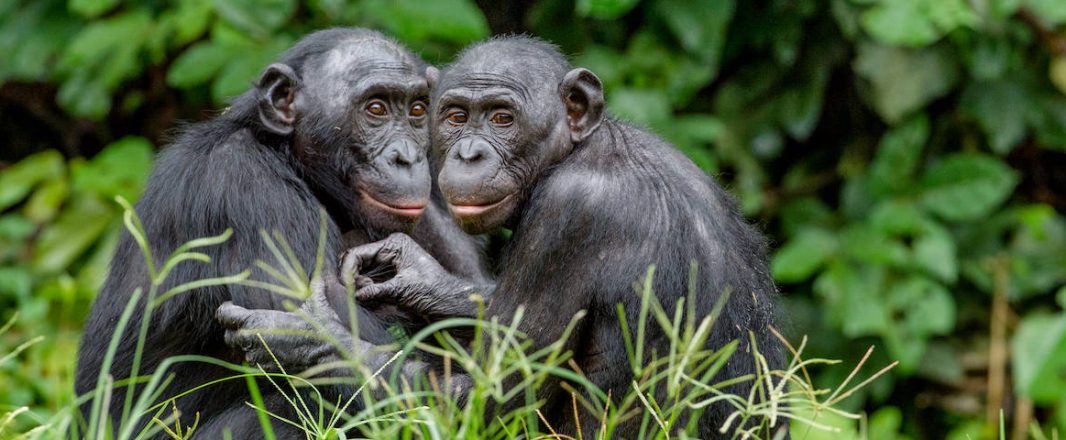
I was listening to Alan Alda’s podcast “ Clear + Vivid” where he was interviewing Brian Hare and Vanessa Woods, co-authors of “Survival Of The Friendliest” about what dogs and bonobos can tell us about what has made humans survive. And one key trait is our ability to form cross-group friendships. Their belief is “cross-group friendships is the best vaccine to dehumanisation”.
As I was listening to this, I realise that is what travel is about – it enables humans to form cross-group friendships at scale, which means travel is also the best vaccine as well to dehumanisation.
Now, we in travel have to form cross-group friendships among ourselves, across the different sectors, to unlock our own vaccine. Because if we wait till a medical vaccine is produced and distributed at scale, we won’t have much of an industry left. And that’s objectively speaking.
Featured Image Credit: Getty Images