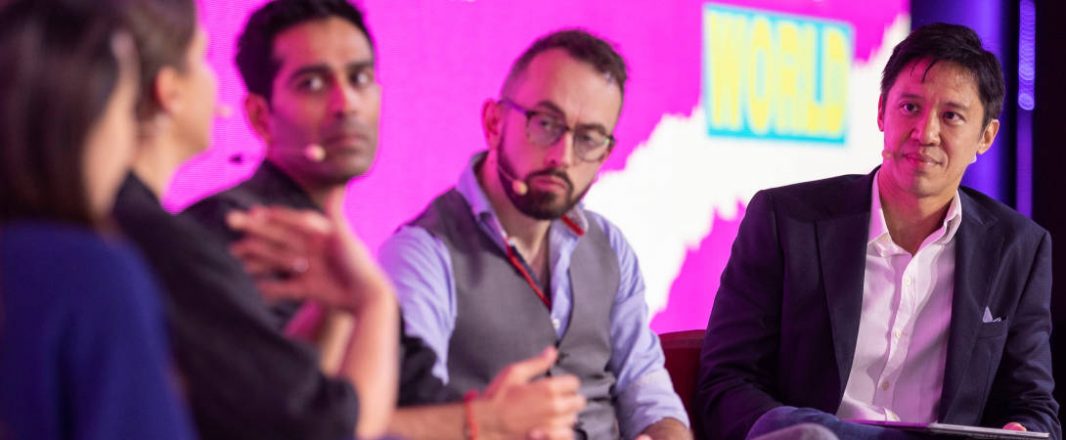
In more ways than one, WiT 2022 embraced the desire for a new world order, beginning with travel. Sure, there was the theme and its addictively catchy tune calling out ‘Hello New World’. Yet as Luke Clark writes, just by sitting through a few sessions, you began to sense that this might be more than a mere tagline.
As the comeback event for the online travel industry post-pandemic, WiT 2022 carried with it a spirit of hope from those regathered again for the first time since 2019. In short, the sentiment seemed to be: “We have been away, we’ve seen the darkness – and we are here to start helping to make things better.”
This is not to say that greater yield and bolder strategies for market uptick were not under discussion. When you’ve recently plunged the depths in a revenue sense, nobody can be blamed for the desire to refill rice bowls. Yet just like the rain in the air of this tropical island in early October, this felt like it was far more than a gathering of souls looking to turbo-charge their cash registers. Listen carefully, and what you heard in the air was a taste for some genuine change.
Vulnerabilities up close
This is, in many ways, a response to a glaring set of market realities. There is a war happening in Europe. There’s a battle under way towards net zero. And there’s the continued absence of travel’s biggest market in China from our newly reopened airports. Add to the list the fact that despite reopening its offices, much of the travel industry’s time is now spent contending with a severe lack of available talent.
Add these factors together and you have a travel conversation ripe for new and innovative thinking. The result was an energy in the WiT panels that can only be described as revisionist. Such thinking was alive and well during the session titled ‘Hello, Fresh Diverse Voices’. Yet rather than demonstrating innovation through disruption as the programme billed, these new voices seemed to be espousing a desire to change the world as they see it.
Moderator Darrell Chan, Asia Pacific general counsel at Airbnb, quantified the new picture that stands before the travel industry: “We’re still in the middle of a pandemic, but we have seen fundamental changes in the way travel has happened – highlighting the vulnerabilities of the travel sector, as well as changes to travel patterns.” Rather than a swift return to mass tourism, Airbnb was observing a much more dispersed travel market. Indeed, an Airbnb-commissioned study this year on rebuilding tourism in APAC pointed to the rise of a more conscious traveller.
“About 57% do care deeply about the implications of their travel choices,” said Chan. “Two-thirds want to use travel to meaningfully connect with communities and cultures. And more than 7/10 agree that COVID-19 has changed the thinking about sustainable tourism.”
The focus on sustainability soon needed to move beyond a focus on our environment alone, he said – to ensure that we also help benefit the cultures and communities we serve. Yet in a world where travellers would increasingly be more value- and values-driven, and where the future seemed less clear than ever, one thing was clear. “What we require is governments and organisations to work together to reshape a new travel industry. And we need innovative thinking in trying to solve those problems.”
Change the model, change the world
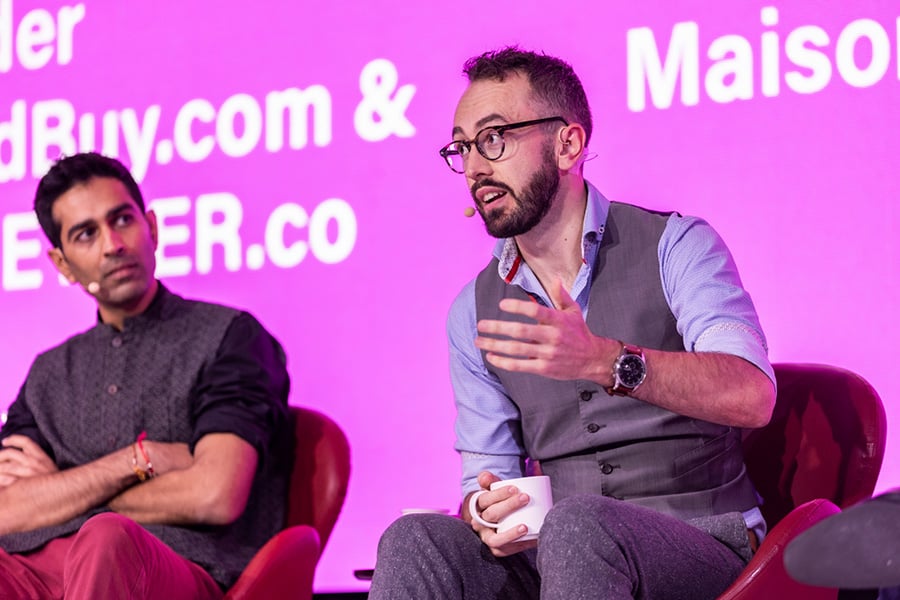
Akshai Sarin, founder of BlessdBuy.com & TTOGETHER.co, spent his early life in various capacities, from being a beatboxing musician, through to becoming a national marketing professional to watch, billed early as one of India’s ‘Top 20 Young Creative Entrepreneurs’.
Yet once he realised he wanted to use his talents for a different end-goal than pure profit, Sarin began exploring a new model. “The purpose behind this was to kind of re-envision traditional capitalistic and commercial enterprise – as more inclusive within communities, and for the betterment of the planet.”
He began by asking, why do enterprises exist? “It’s not just to make money, but also to benefit the community at large. And that’s what we’re trying to do – create verticals that disrupt different industries and bring in an inclusivity to them.”
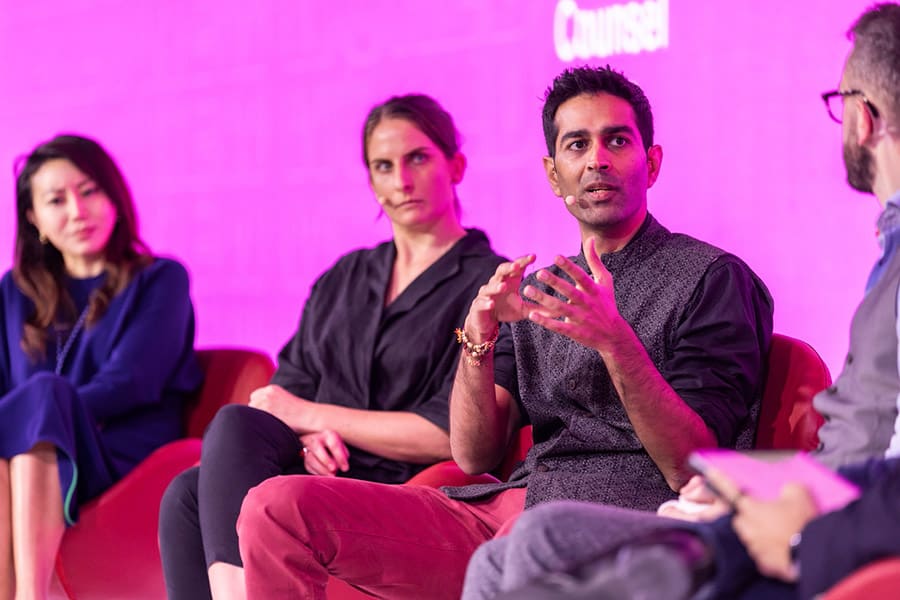
70% of our revenue – not our profit – is going back to the communities. So it’s a win-win for everyone.” ~ Akshai Sarin, BlessdBuy
The result was a platform that has helped turn consumers into contributors. Working with large hotel chains, Sarin and team created cottage industries for bamboo toothbrushes and other sustainable men’s amenities. “What started off with me and some farmers in the northwest of India making like 500 toothbrushes, is now making two and a half million toothbrushes for one of the largest hotel chains in the world,” he says. “We are now working with the biggest FMCGs in the world to make 20 million toothbrushes by the end of this year,” he described. Besides the sustainability benefit, the projects have provided employment to people in the villages, and bought direct benefit to farmers. “And 70% of our revenue – not our profit – is going back to the communities. So it’s a win-win for everyone.”
Sarin drew particular inspiration for his ventures from a quote by the Dalai Lama. “He said, ‘Human beings were created to be loved. Objects were created to be used. The world is in chaos, because these two things are the other way around.’”
The scent of a sea-change
Elizabeth Liau is the founder and CEO of Maison de L’Asie, dubbed Asia’s first luxury niche fragrance house. “We create fragrances that are released in chapter stories. Every chapter has its own theme, and it’s inspired by Asia,” she describes. Originally working in quantitative finance, Liau soon realised her early experiences had given her a platform to from which to explore travel, philosophy and memory. Spotting the potential for a marriage between fragrances and stories, she felt that the scents could help to fill meaningful gaps for her customers. “I believe that fragrances provide this more holistic and considered approach to experiences.”
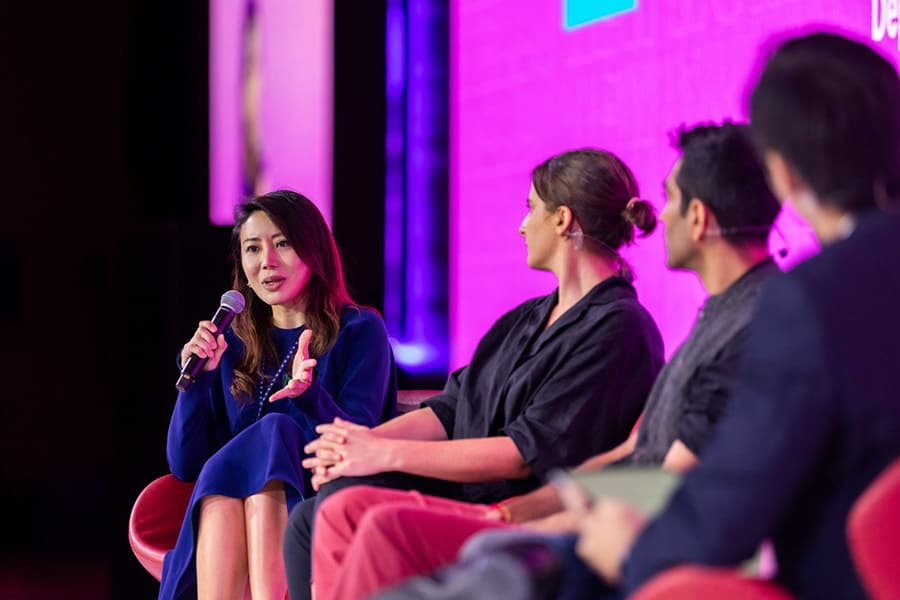
“I think a lot of people today are really looking deeper. Consumers are expecting a lot more – and looking for a more elevated interpretation.” ~ Elizabeth Liau, Maison de L’Asie
As she told WiT, innovation through meaning was something that the market was increasingly demanding. “I think a lot
of people today are really looking deeper. Consumers are expecting a lot more – and looking for a more elevated
interpretation,” she says. “I like this quote by Marcel Proust, who said that, ‘the real voyage of discovery isn’t seeking
new landscapes – but in having new ideas.’”
Inequality is our biggest enemy
Formed in 2010, The Island Foundation was formed by the parent company for Nikoi Island and Cempadak Island
resorts. Its executive director, Courtney Saville, arrived three years ago with a laser-focus on working with teachers and
children in over 11 partner communities on the issues of social, environmental and economic sustainability. Over time, The Island Foundation has evolved into an independent organisation with a more diversified funding stream and a focus on education, primarily within the remote and impoverished Riau Islands. “We’re mainly working with communities that are quite fundamentally under-resourced,” Saville describes.
Previously, many students from small island coastal communities in Indonesia were leaving school without the higher order
thinking skills, including solution identification, or problem-solving. “So we’re working directly with students to
help them develop those skills – and also training teachers within schools, towards a more student-centred focus in the
classroom.”
Many traditional communities in the Riau Islands were once orang laut, or sea people, who spent a tough nomadic
existence living in rudimentary thatched craft atop the ocean floor. Saville and her team have worked with a large
number of children who were among the first generation to live on-land, or who lived on one the more remote of the
2,498 Riau islands.
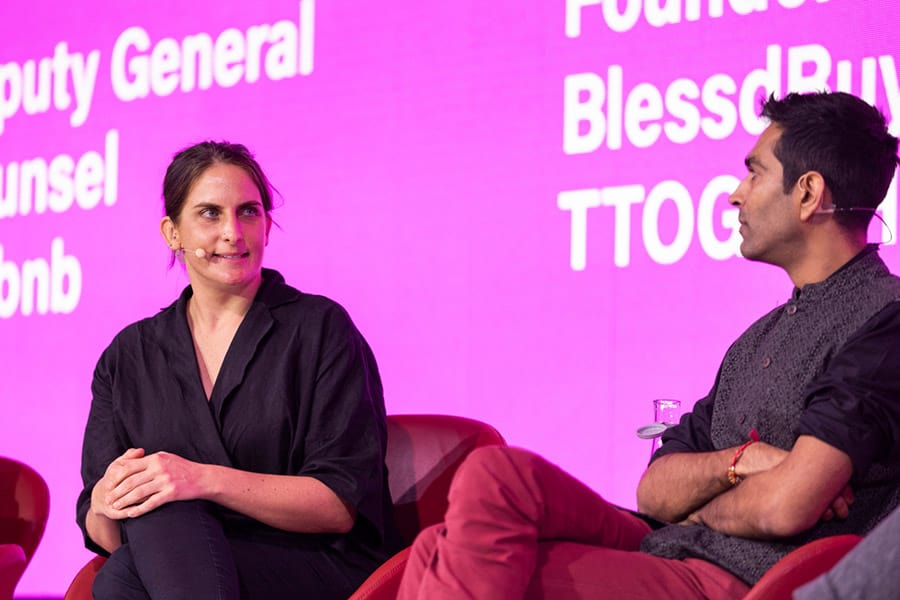
“We’re working directly with students to help them develop those skills – and also training teachers within schools, towards a more student-centred focus in the classroom.” ~ Courtney Saville, The Island Foundation
Yet despite the gaps in opportunity, she says her team found numerous stories of reinvention. “There’s so much
innovation happening from the smallest scale – from how a woman approaches her housekeeping, to how a
community tries to address nutrition deficit by setting up a community food garden,” says Saville. “They’re not getting
the attention, but it’s innovation nonetheless.”
All in for net zero
The WiT start-up winner for 2021, Thrust Carbon is a carbon intelligence platform for travel, which uses data to help its
partners report, reduce and remove emissions. Founder and director Mark Corbett says the last 12 months have been
an exciting time personally and professionally. “Winning last year was a huge steppingstone for our business in terms
of demonstrating actual sustainability results to clients and partners.”
One document that drove Corbett’s sense of mission was the IPCC report on Climate Change, within which the UN
General Secretary proclaimed that its latest climate report represents ‘an atlas of human suffering’. “We are not on course to hit any of our targets by 2030,” Corbett laments. “I am incredibly hopeful we will hit net zero by 2050 – we really have to. And that means a fundamental problem: how do we as a community in travel, explore the world to grow our businesses, without our actions having to cost the earth?”
Trying to save the world started with solving problems, he insisted. “And often trying not to overcomplicate things. We
looked at why don’t people offset enough. And for us, all the research just pointed to lack of data, lack of trust, and
lack of transparency.”
“How do we as a community in travel, explore the world to grow our businesses, without our actions having to cost the earth?” ~ Mark Corbett, Thrust Carbon
For Corbett as for other innovators, a critical part of the equation is to convince people that change is not only possible
– once the process gains speed, it can even become viral. “The more we see success stories happen, the more it
inspires the rest of the industry, as well as putting pressure on them.”
Yet equally, he warned that for those who resisted taking the process seriously, customers may soon have the last
word. “One of our TMC partners told me recently that 20% of their enterprise clients have now removed hotels from
their travel programme – because they couldn’t justify their sustainability claims.”
Innovators need a community
So how can we unlock innovation in our own companies and lives? For Akshai Sarin, sometimes the best change results
from gaining distance from the challenge at hand. “I’d say innovation comes from stepping away from the problem and
getting a bigger picture and see how things connect. That’s how I work as a creative person.”
Courtney Saville believes true reinvention can only begin once we’ve tackled basic issues of fairness. “In order to unlock
innovation, we all need to be looking harder at the issues of inequality – and how we can address them.”
For Mark Corbett, gaining more success might mean more shots in the dark. “There are a tonne of awesome early stage
start-ups in this network,” he says. “To increase your success rate, double your failure rate. Be ready to work with some
start-ups, knowing that not all of them will work out – but the ones that do when you partner them early, will
absolutely deliver the goods.”
Speaking to the tech-centric crowd, Elizabeth Liau warned that changing the game might mean going deeper than the
next killer app. “What we’ve been hearing is that there are software approaches to this. But if we’re really changing
mindsets, it’s about challenging the status quo,” she says.
Yet Liau does note one encouraging caveat: “And as with everyone here, whatever it is, there’s still success even in
trying.”
In summarising the vibe of an inspiring panel, Airbnb’s Darrell Chan reached for a suitably uplifting quote, by author
Sarah Ban Breathnach: “She says, ‘The world needs dreamers and the world needs doers. But above all, what the world
needs most are dreamers that do.’ So be the dreamers that do.”