From HK Express to Northern Pacific Airways, low-cost airlines plan their way forward
THERE are some advantages to starting an airline after a pandemic and one of that is the ability to start with a blank slate, which is why Bonza, the new Australian domestic airline went fully mobile – which means no one can buy a ticket except through the app, making it an industry first globally and in Australia.
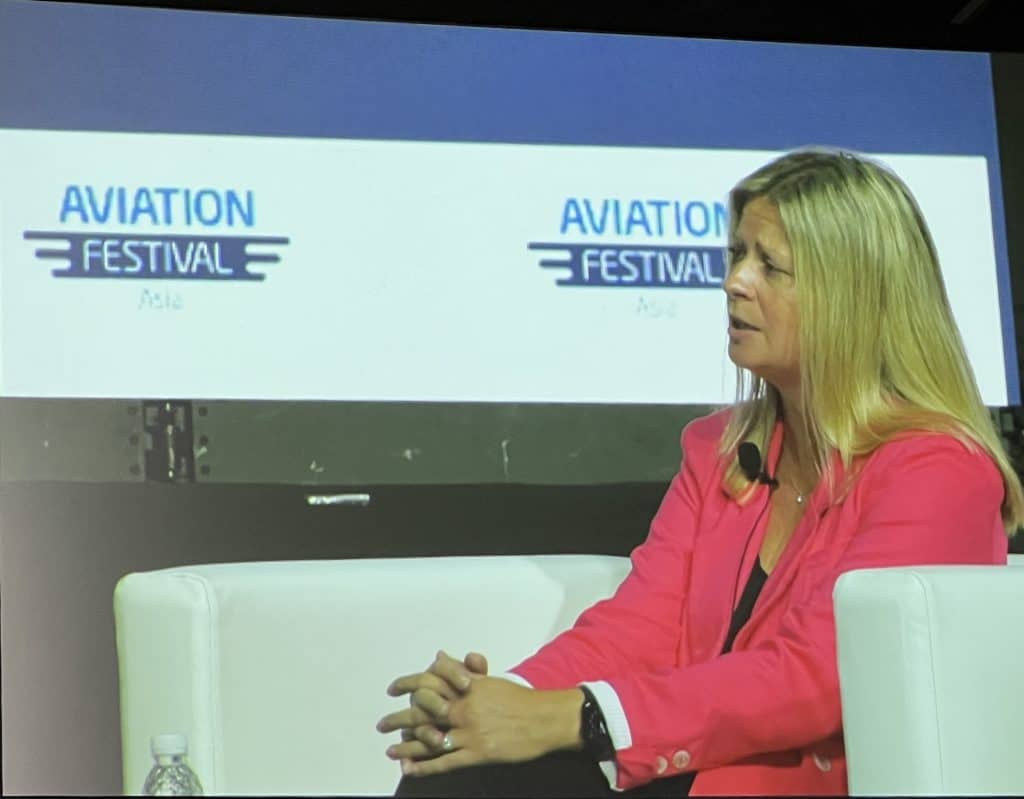
Carly Povey: “We want to be a retail brand of choice and an app first strategy felt like something we couldn’t walk past.”
Speaking at Aviation Festival Asia, Carly Povey, chief commercial officer, said, “It’s not for the faint-hearted but it gave us the opportunity to reimagine digital from day one, which is one of the benefits from the challenges of Covid. We wanted something that would give us meaningful interaction and scalable communication.
“We want to be a retail brand of choice and an app first strategy felt like something we couldn’t walk past.”
And even though it’s only been four weeks since launch – Bonza started services in February, Povey said the strategy was working. “Ninety nine percent of our customers are booking via the app, the rest are from regional travel agents. Everything shows us that customers are ready for the change, but we are certainly not complacent.”
Bonza launched operations with its inaugural service from its base at Sunshine Coast Airport to the Whitsunday Coast. Its initial route map has 17 destinations and 27 routes – all of which are regional with the exception of Melbourne. 93% of Bonza routes are not currently served by any airline, and 96% are not currently served by a low-cost carrier.
At the launch, Manish Raniga, CEO of Airline Investments, 777 Partners (owner of Bonza), said, “Our collective ambition from the get-go was to be an e-commerce company of choice – in a nutshell, an all-encompassing travel retail brand that happens to operate aircraft. Our travel technology teams work in collaboration with Bonza to build the digital platform focused on connecting partners as a central design goal and travel retailing over time. We’re at the beginning of that journey, but naturally will retail the right products, at the right time, merchandised in a relevant way.”
Flyadeal to invest more in mobile
Flyadeal, the Saudi-based low cost carrier which launched in 2017, also describes itself as a 100% digital airline. CEO Con Korfiatis said that 99% of sales are through digital channels, of which 60% are through the mobile app and 77% of customers are under 35. It has sales offices at airports to handle last minute bookings.
And it is investing more in mobile, not the website. “Mobile is the way forward but until we see those web channels become less relevant and less required, we will continue to have something there.”
The 100% digital model works well domestically in a market of young travellers and where its brand is well-known but as the airline expands to South Asia, it will pursue a hybrid model – “some digital, some traditional”.
HK Express opts for Wechat miniapp, Northern Pacific plans flights to Korea, Japan

Mandy Ng; “Every airline needs to understand customer behaviour and make business decisions based on that.”
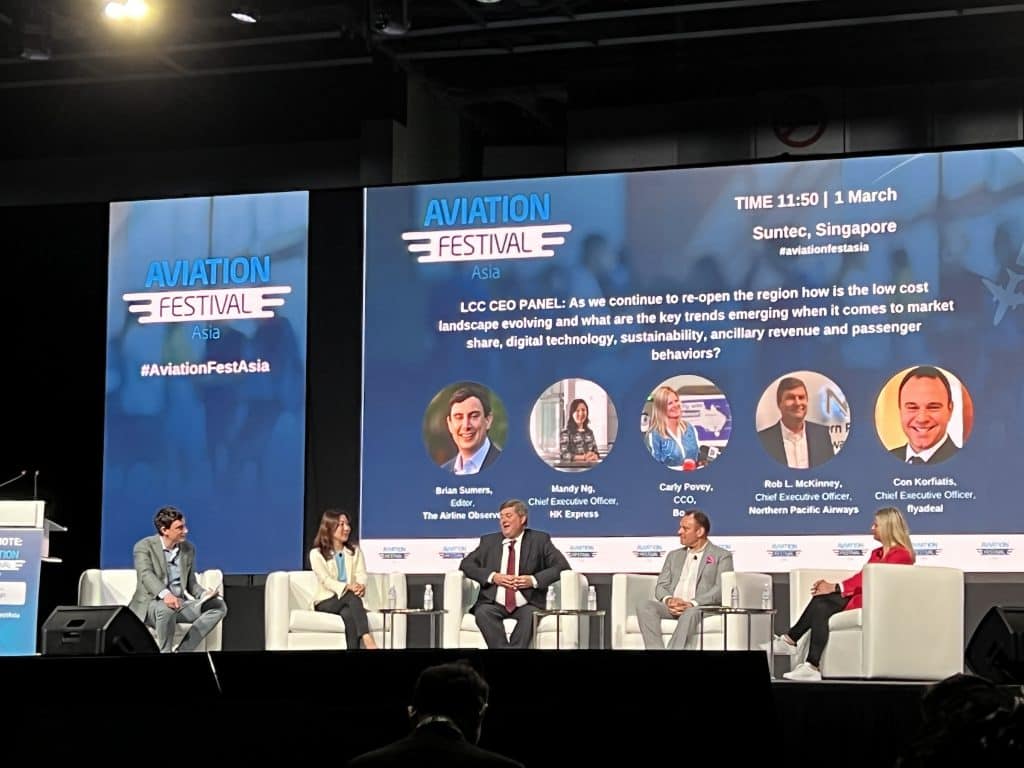
Mandy Ng, CEO of HK Express, said adopting a mobile-only strategy depended on whether it is relevant to the target market. “We are based in Hong Kong, serving Hong Kong and the Greater Bay Area – other than our own app, we have to consider other digital channels. We have our Wechat miniapp which is more relevant to our customers.
“Every airline needs to understand customer behaviour and make business decisions based on that.”
Meanwhile, another new airline, Northern Pacific Airways, is making plans to offer an alternative bridge between Asia and continental USA, via Anchorage, Alaska.
CEO Rob McKinney said it hopes to replicate the success of Icelandair by offering options for passengers to create a more extended layover to experience the last frontier. Since Ravn Alaska owns the startup airline, he said in an earlier interview, “It’ll be really easy for us to book the same reservation on the same code. If they(passengers) want to divert, stay here or hop on a dash 8 and see part of Alaska, it’ll be incredibly easy for them to do that.”
At Aviation Festival Asia, he said, “We have an entirely new terminal sitting there and it gives us a good base from which to grow the airline.”
Northern Pacific is planning B757 flights to South Korea and Japan this year, and has sights on Taiwan and China in the future.
Climate change is an industry issue, not a low-cost vs legacy thing
The four airline executives responded briskly to comments that had once been made by Lufthansa’s CEO about low cost airlines adding to climate change problems, given they make it easier for people to fly on cheap fares.
Firstly, they said it wasn’t healthy for the airline industry to be blaming each other; rather they should be working together to address the challenges.
Korfiatis said, “This is not a low cost vs legacy airline issue. The debate is within the airline industry and we have an equal responsibility to humanity and life.”
Calling it a “confronting topic”, he said, “We don’t have a blueprint yet but it’s definitely a focus and we are prepared to invest in it.”
Povey said Bonza was operating with 20% more fuel-efficient aircraft. “Our flights are aimed at those routes which would require car travel for days and allow Australians to travel within their own country. Travel is essential. We want to make meaningful change beyond a tokenistic way.
“Our aircraft, our app, a paperless journey for customers, all food and drink sourced from local producers, the first airline to use reusable cups – it’s small but makes a big difference.”
McKinney said that low cost airlines make flying accessible to more people and “that raises all boats, it’s good for the economy”.
All the executives agreed data was essential in reducing wastage, whether it be of food or fuel usage, and for predictive maintenance. “Low cost airlines offer passengers a choice to pay for what they need, that means reduced waste and unutilized resources. Everyone is playing a role and consumers are too, by being more receptive to what we do,” said Ng.
“If the last few years have taught us anything, it is, diversification is key.”
From “Bonza Budgies” to tours and activities, diversification is key
As for what’s their best selling item onboard, Povey singled out the “Bonza Budgies”, a type of swimwear known as ‘budgie smugglers’ worn in Australia. “We are also selling socks. All these things only become significant when you build a brand. We are working with local designers and adding more fun items for the novelty factor.”
All the executives agreed that “bundling beyond flights” was the way to go, and all were looking at adding hotels and tours and activities to their offerings.
Ng said whether you called it superapps or another name, “it just means a platform to offer relevant products and services and superapp is one way of executing. Another option is partnerships and working with people that are good at offering these products.”
Said Povey, “If the last few years have taught us anything, it is, diversification is key.”
Citing the example of Jet2holidays, one of the UK’s largest tour operators, “it started as an airline 20 years ago and now they are a holiday package company”.
“Being able to offer the entire travel experience is key – 93% of where we fly to, no one can go direct now. With our owners, 777 Partners, technology will allow us that agility to allow the customer to feel confident. We will see more diversification in the industry as a result. Watch this space.”
The best news, said Korfiatis, is “basic human desire to travel is back. Low cost, leisure, they have missed it. We are a very travel and lifestyle-oriented airline, less focused on work, and Covid pushed it even more in that direction. It’s been a breath of fresh air – that’s why we grew 50% last year.”