


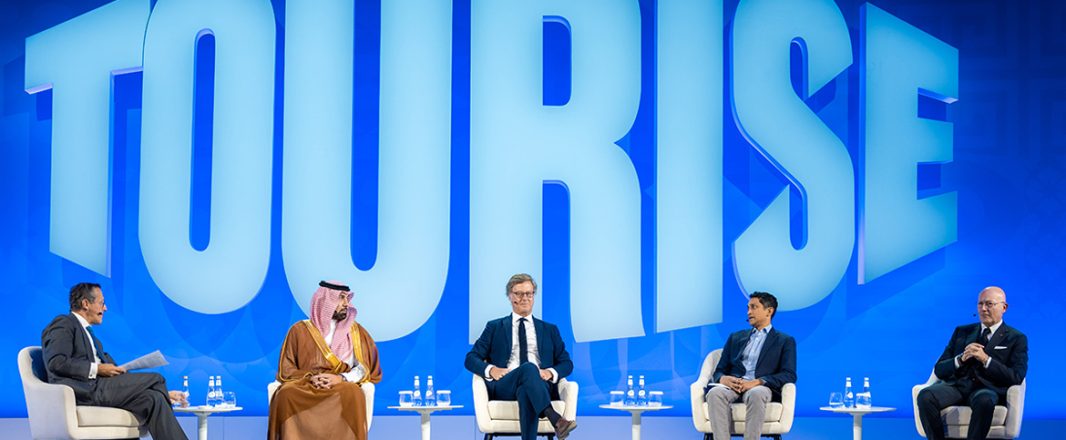
In one of the most animated and layered conversations at TOURISE 2025, CNN’s Richard Quest masterfully steered a panel featuring HE Fahd bin Abdulmohsan Al-Rasheed, advisor in the General Secretariat of the Council of Ministers and Chairman of SCEG; Sébastien Bazin, CEO of Accor; Ferit Şahenk, Chairman & CEO of Doğuş Group; and Premal Shah, co-founder of Kiva.
The session’s core question – What does it mean to invest beyond margins? – opened into a bigger exploration of vision, values, responsibility, and the evolving contract between places and the people who power them.
The vision comes first and then the collective builds on it
Quest began by posing this view: Tourism projects, from cities to hotels to cultural districts, begin as acts of imagination. Someone dreams first. Everyone else builds on top.
HE Fahd Al-Rasheed underscored that the Kingdom’s meteoric rise as a tourism and business events powerhouse – “17,000 events a year” – is a product of deliberate curation. Destinations succeed because someone choreographs the entire experience, from arrival to the moment a visitor walks past local sellers and artisans.
Bazin echoed this foundational truth: “Somebody has to decide a plan… when that person exists, when the vision is laid out, then you want or not to be part of it.” They are actors, he said; the vision-holder is the director.
But Quest pushed the panel to acknowledge the co-creation reality: each investor brings its own vision, and by layering them together, something new emerges. “You all merge the visions into one,” he noted.
Certainty attracts capital
Dogus Group’s Şahenk talked about why the Kingdom is drawing unprecedented investment flows.
“Capital is not the problem… What we don’t like is uncertainty. What I like in Saudi Arabia – it’s so certain. I know who to go to, who to talk to.”
His point was sharp: in a world where markets are volatile and investors drown in ambiguity; a long-term vision paired with bureaucratic alignment is as powerful as financial incentives.
Şahenk revealed plans to create a family office investor club focused on hospitality, reflecting a global shift: family capital is increasingly shaping destination development.
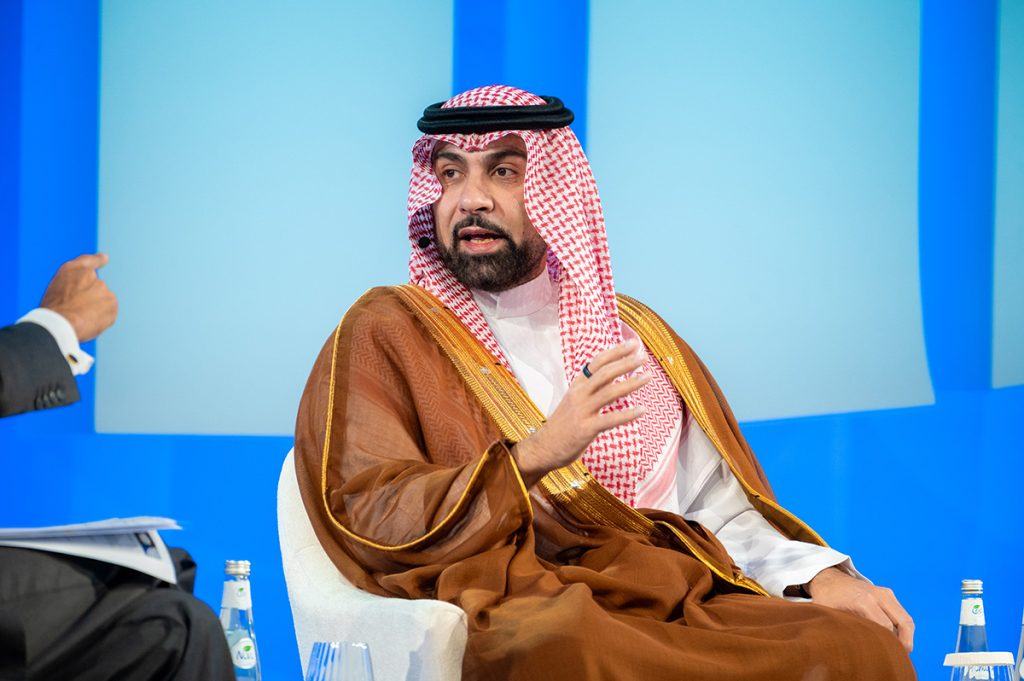
HE Fahd Al-Rasheed underscored that the Kingdom’s meteoric rise as a tourism and business events powerhouse – “17,000 events a year” – is a product of deliberate curation.
Locals at the heart of destinations
For Şahenk, building destinations is not an extractive act – it is a cultural one. “What I create in Saudi Arabia has to be part of this country… part of its heritage, culture, the people.”
His vision is not about competing on price but on time – on designing places so compelling that guests willingly give more of it.
This echoes a global truth: destinations thrive when their people thrive.
And it flows directly into Bazin’s biggest paradox.
The paradox of big hospitality: What you take vs. what you give
Bazin held nothing back. Accor opens one hotel every day worldwide, he said, and yet each new property raises a moral question:
“What am I taking away from the local community… water, electricity, food? And how much am I contributing — in employment, local economy, governance?”
If the second column doesn’t outweigh the first, “we don’t open.”
He believes growth must be regenerative, not extractive.
He also warned that human capital, not infrastructure, will be the Kingdom’s biggest hurdle. You can build roads and metros — but can you train thousands of Saudis to serve global travellers at world-class levels?
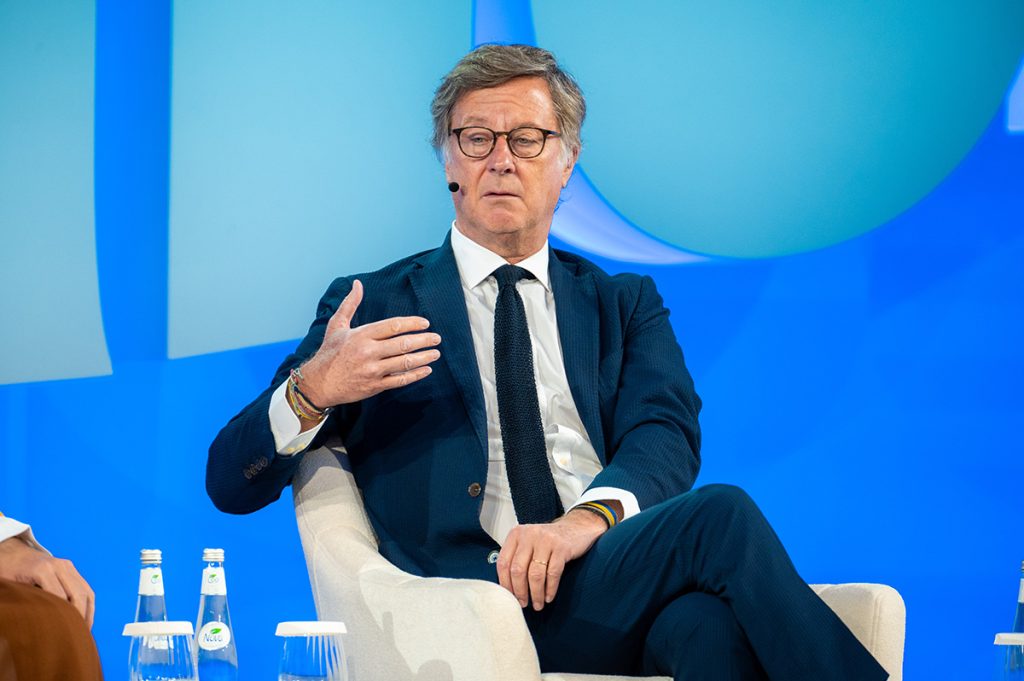
On Accor opening a new hotel every day, Sébastien Bazin, CEO of Accor, held nothing back. “What am I taking away from the local community… water, electricity, food? And how much am I contributing – in employment, local economy, governance?” If the second column doesn’t outweigh the first, “we don’t open.”
SMEs: The middle that holds destinations together
No one spoke up more passionately for SMEs than Kiva’s Premal Shah. While the others spoke of rails and metros, the co-founder of the micro-financing social enterprise spoke of food trucks, home kitchens and micro-entrepreneurs, the people who turn a trip into a memory.
Kiva’s work, he explained, unlocks micro-investments for small tourism businesses around the world, and he cited its partnership with platforms such as TripAdvisor. A guest leaves a review; TripAdvisor gives them $25 of zero-interest capital to lend to local SMEs. Default rate? Just 4%.
Shah said, “We can be travellers. We can be pilgrims. We can go off the beaten path. But to have an authentic experience with locals, we need to invest in SMEs.”
He called it a form of transformational tourism, where visitors engage deeply and leave a positive footprint on the communities they touch.
Shah also added that new translation technologies – from AirPods to Meta glasses – will soon transform cross-cultural encounters, lowering barriers and deepening connections at the grassroots level.
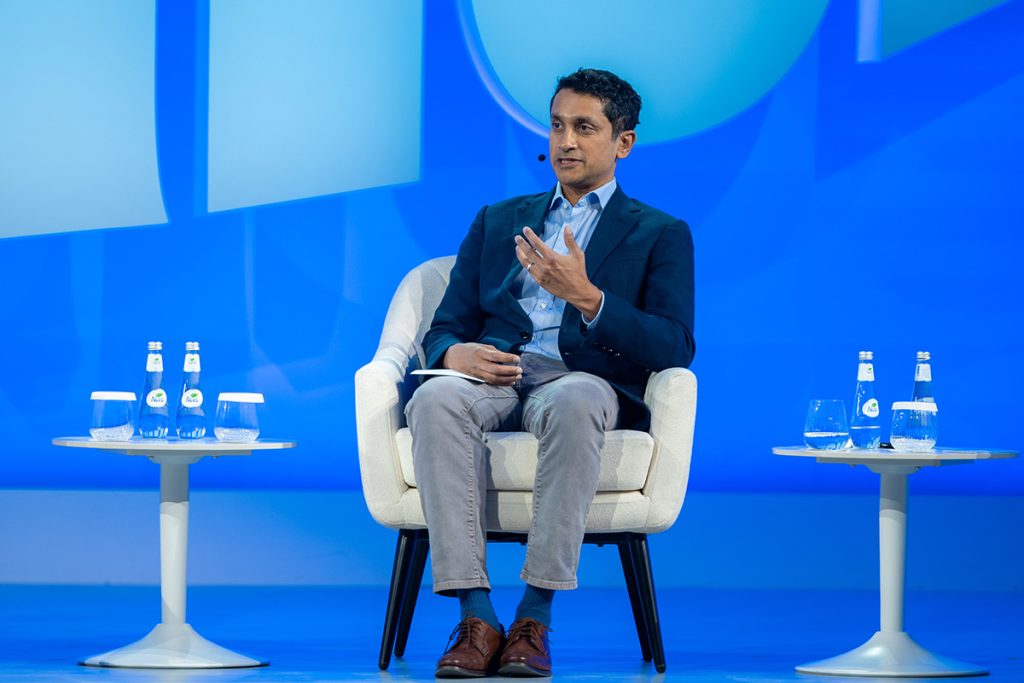
Premal Shah, co-founder of Kiva, said, “We can be travellers. We can be pilgrims. We can go off the beaten path. But to have an authentic experience with locals, we need to invest in SMEs.”
Beyond sustainability: The era of socioeconomic responsibility
Quest said the quiet part aloud: sustainability in tourism has been reduced to “sheets and towels”. But the real sustainability is economic – ensuring the entire ecosystem can survive shocks.
HE Fahd took it further: “This is about socioeconomic sustainability… a return to localization… engaging the local population as SMEs and as the people who serve you.”
When the pandemic hit, Bazin reminded the audience, Accor paid every single employee –and that act of trust is still remembered. “They remember that you did it,” he said. Values matter.
And without SMEs, tourism collapses. France proved it during Covid: its 40,000 travel SMEs had an average of just nine employees – too fragile to weather storms. When the small players fall, the big players fall next.
“There is no big guy and small guy,” Bazin stressed. “You come to a destination to discover that destination.”
Europe vs the New World: A moment of reckoning
Quest mischievously prodded Bazin about Europe’s decline. Bazin didn’t flinch: “Europe won’t lose… but Europe needs money.”
With 80% of global hotel capital now coming from the US, Middle East and Singapore, Europe’s problem is not tourism appeal, it’s investment climate.
High interest rates, political drift, demographic headwinds – these are Europe’s constraints. And yet, Şahenk reminded everyone, the world still learns hospitality from Europe. Identity, heritage, and know-how remain Europe’s strengths.
Wellness reimagined: From fads to fundamentals
When Shah brought up wellness, Quest groaned: “I hear weird music and spas.”
But Shah reframed it. He said that we are craving a return from “normal to natural”:
fire circles, nature, traditions, healing – because in the 21st century, the epidemic will be mental illness.
Wellness, he said, is not a trend, it is an ancient human need waiting to be rediscovered in modern tourism.
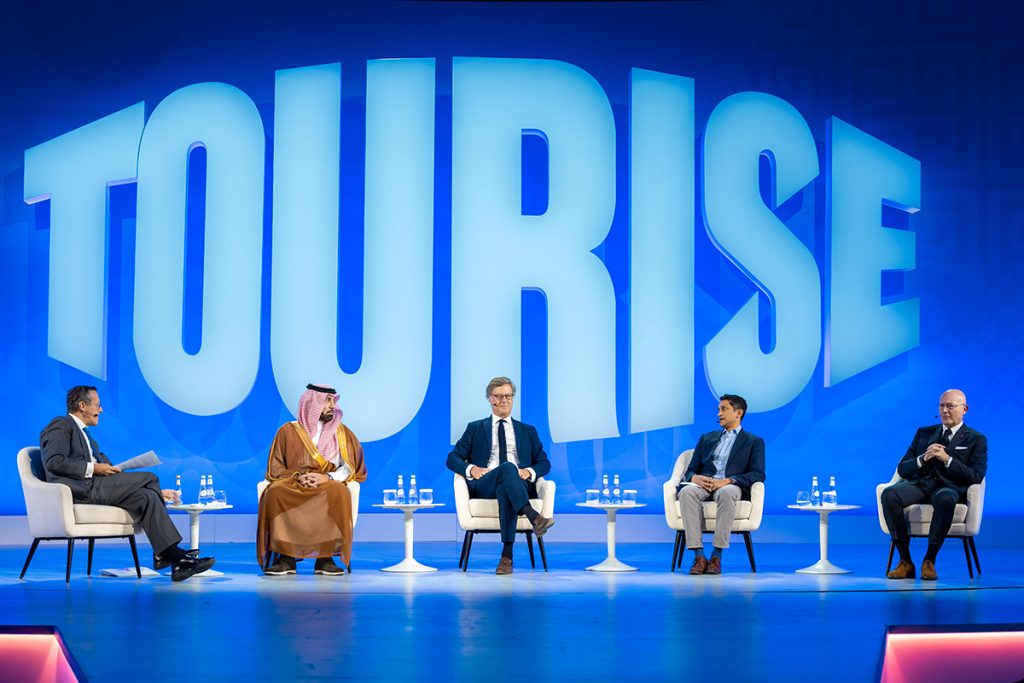
From left: CNN’s Richard Quest, HE Fahd bin Abdulmohsan Al-Rasheed, advisor in the General Secretariat of the Council of Ministers and Chairman of SCEG; Sébastien Bazin, CEO of Accor; Premal Shah, co-founder of Kiva; Ferit Şahenk, Chairman & CEO of Doğuş Group.
What job would you do for a week?
Quest ended by asking each panelist which entry-level hospitality job they’d pick for a week.
The answers revealed their truths:
- HE Fahd Al-Rasheed: the food truck – “you’re serving people and eating the whole time.”
- Ferit Şahenk: HR/Talent – “our business is about touching people.”
- Premal Shah: surf guide or dive operator – nature as transformation.
- Sébastien Bazin: receptionist – “that first smile is 90% of everything.”
And Quest himself? He once wanted to sell ice cream and deck chairs on the beach.


