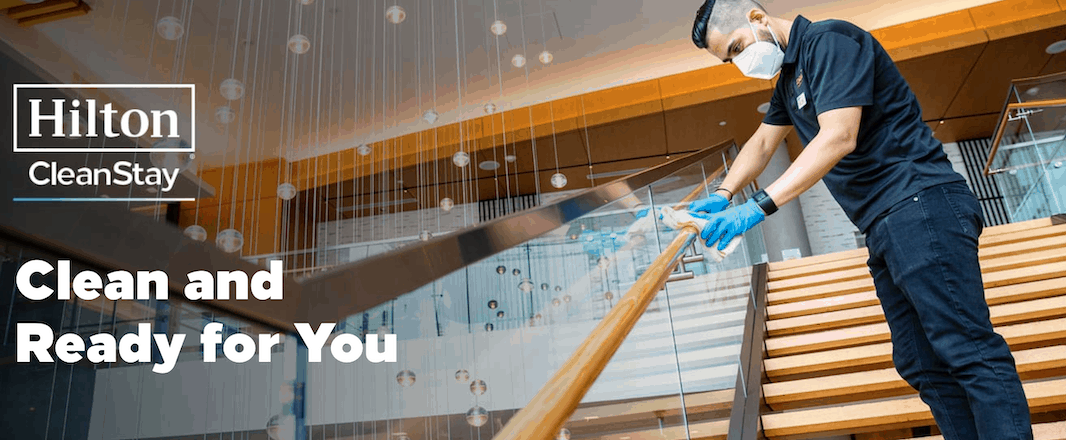
Who could have imagined hotels would be advertising their cleaning processes and products on their websites, or building entire marketing campaigns around how they keep their hotel rooms cleaned and sanitised?
But in this new world we live in, these are now valued and marketing hooks because cleanliness and hygiene standards are likely going to be top on the list of how guests (or future guests) select where they stay.
Hilton recently kickstarted a global roll-out of Hilton CleanStay, “an industry-defining standard of cleanliness and disinfection in Hilton properties around the world, to allow guests to enjoy a cleaner and safer stay starting this summer, while keeping Team Members safe on the front line”. It also promotes Hilton EventReady with CleanStay, “a global meeting and events program designed to create event experiences that are clean, flexible, safe and socially responsible”.
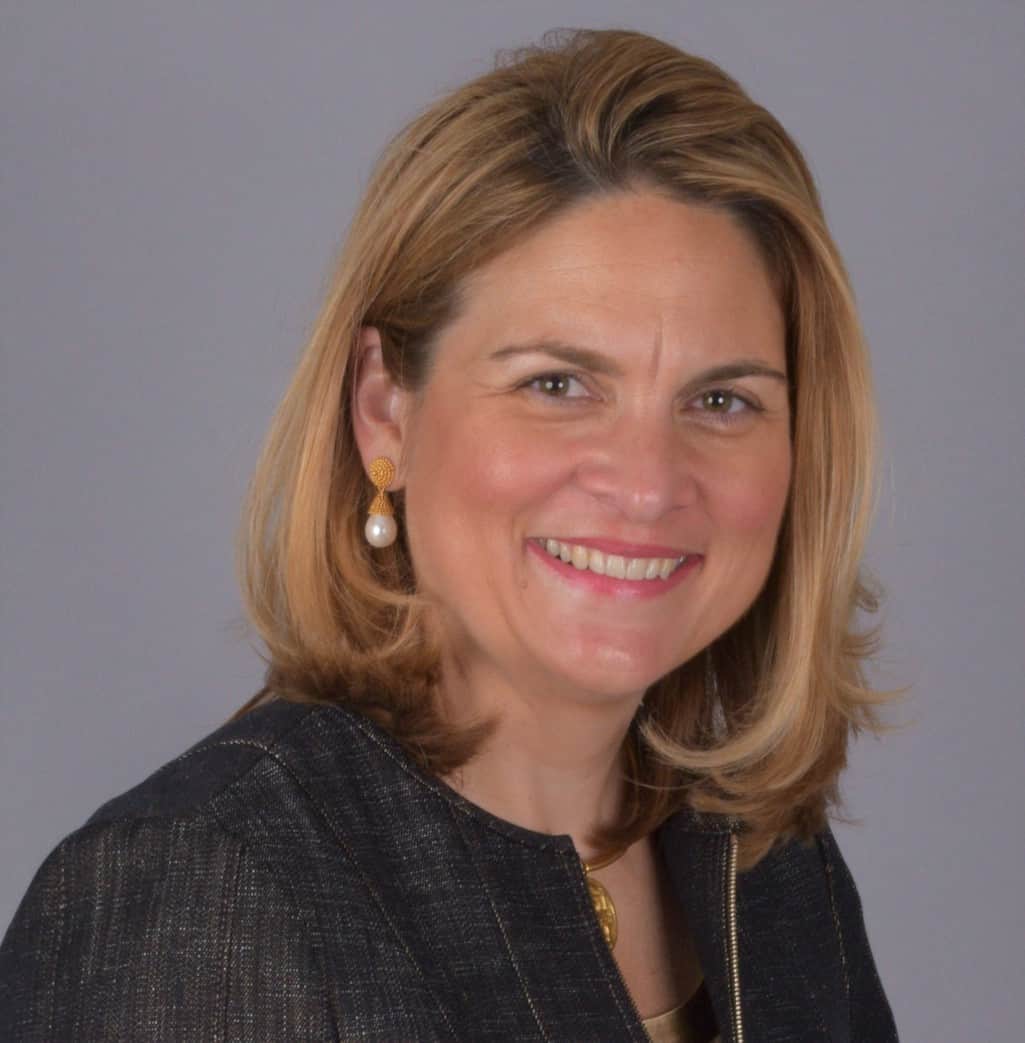 Web in Travel asks its senior vice president brand management Asia Pacific at Hilton Alexandra Jaritz (pictured), spokesperson for this campaign, the thoughts behind it.
We could not have imagined that hotels like Hilton would be launching entire campaigns around cleaning processes, but here we are in the new world and Hilton has done just that. Tell us the back story to this and your thoughts about how important the value of cleanliness and hygiene is now moving forward.
The safety and well-being of our guests and Team Members have always been our highest priority, even prior to the pandemic. As we navigate the new normal, consumers are now even more conscious of cleaning and hygiene practices, relying more on trusted brands, experts and technology to help them and their loved ones stay protected – both inside and outside the home. The expectation of what cleanliness means has also changed, as it is now more about killing viruses rather than simply removing dirt from surfaces. These evolving preferences thus reinforced the need for us to provide our guests the assurance and peace of mind when they return to travel and stay at our hotels.
In every step of our response to this unprecedented situation, we have remained focused on ensuring that everything we do is directed to the same goal of protecting our guests and Team Members.
This very goal thus led us to adapt and innovate quickly as a team, to introduce enhancements building on our already high standards of hygiene and safety across all our properties, with the announcement of Hilton CleanStay back in April. Hilton CleanStay, which has been rolled out across our more than 6,200 properties worldwide as of mid-July, includes new procedures to help our guests enjoy an even cleaner and safer stay from check-in to check-out, where hospital-grade cleaning products and upgraded protocols were already in use. The programme creates a focus on cleanliness that will be visible to guests throughout their entire stay – at check-in, in guest rooms, restaurants, fitness centres, spas, meeting and event spaces and all public areas, with extra disinfection of the top 10 high touch areas in guest rooms. A Hilton CleanStay room seal will also be placed on the guest door to indicate to guests that their room has not been accessed since being thoroughly cleaned.
How important is it for the industry to collaborate and define industry standards around cleanliness and hygiene factors? Would we see a separate rating system for this in the future, similar to the star rating system for overall quality and built of hotel? If so, what do you see Hilton’s role is in leading such an initiative?
In a post-pandemic environment, the new norm around enhanced hygiene and cleanliness will define what the hotel experience looks like in the immediate future. Ultimately, what we as an industry must recognise is that people will not go where they do not feel safe – so this is a critical task that the industry will have to address.
In addition to hospitality organisations like ours rolling out initiatives and policies like Hilton CleanStay to implement enhanced cleanliness and safety measures for guests, we are also seeing national campaigns and policies such as Singapore’s “SG Clean”, to rally businesses and members of the public to adhere to good sanitation and hygiene practices, as well as offer industry-specific guidelines on such practices.
Hilton CleanStay is a rigorous program that incorporates the scientific expertise of our partner RB, expert in cleaning and disinfection and maker of trusted brands such as Dettol and Lysol – marking the first partnership of its kind in the hospitality industry.
This, combined with the research, expertise and guidance from the world-renown Mayo Clinic, cements our commitment to create the safest and most hospitable stay from check-in to check-out, while keeping our Team Members safe on the front lines. All Team Members will be provided with personal protective equipment, enhanced training on both overall health and wellness, as well as new operational standards for cleaning guest areas, all designed to protect their well-being while continuing to deliver unmatched Hilton hospitality.
Do you expect some of these new standards that we see now to protect travellers and prevent the spread of COVID-19 being adopted permanently even when we overcome the virus (likely through introduction of a vaccine)? For example, temperature taking.
The onset of the pandemic has undoubtedly changed travel as we once knew it. In the short term, travel and hospitality will look a little different, as can be expected, with measures like the wearing of face masks and social distancing becoming the new normal when the world starts travelling again. The key for us remains to be capturing demand where it exists in an agile and adaptable manner by making the appropriate adjustments along the way.
In addition to an elevated emphasis on cleanliness and hygiene standards, we recognise a growing desire for contactless options to minimise physical contact. As part of Hilton CleanStay, we will be leaning more into technology and contactless options, and doubling down on our Digital Key technology for guests who would like to have a contactless arrival experience.
We anticipate these measures and changes to continue playing a key part in the hospitality industry in the near future.
What are some of the concerns you have heard from the meetings and events market? Give me some examples of how Hilton has addressed these concerns in the programme?
As with guests and consumers, a key concern and area of focus of customers planning and attending meetings and events of any size and scale is around the health and safety of attendees and meeting organisers. Naturally, there is now a heightened sense of attention around the minute aspects that could potentially have an impact on this. To this end, meeting planners have started asking for innovative solutions across the entire event experience to cater to the increased need for cleanliness and safety.
Given that meetings and events are a core part of our business, it is vital that we are ready to meet the needs of our partners and clients who choose to hold events at our hotels. We have thus introduced Hilton EventReady with CleanStay, a global, industry-leading cleanliness and customer service program specific to meetings and events.
Hilton EventReady with CleanStay will provide curated solutions including elevated sanitation standards in line with Hilton CleanStay to address every touch point of the meeting experience. These include room seals for guest and meeting rooms, sanitizing stations in public areas and meeting spaces, and an EventReady Room Checklist.
With the increased emphasis on booking flexibility these days, Hilton EventReady with CleanStay also provides flexible pricing, space options and contract terms, responsive offers to meet customers’ needs as well as the Hilton EventReady Playbook, which delivers expert guidance and curated resources for solutions, such as Hybrid Meetings that seamlessly combine on-site attendees with those in remote locations, room sets and creative networking.
Recognising that meeting planners and customers are navigating the unknown during this time of uncertainty, we have also rolled out the Hilton EventReady Flexible Offer. Through this, we are offering customers flexible cancellation with the Hilton Express Meeting Agreement as well as double Hilton Honors Event Planner points, on top of the Hilton EventReady with CleanStay program. The global offer applies to bookings now through December 31, 2020, for meetings or events taking place now through May 31, 2021.
How much has having all these new processes and procedures added to the overall cost for hotels? What can the meetings/events customer expect when they return?
In terms of operationalisation, we are partnering with vendors and owners and are working very closely with them to find new ways to offset the costs of operating under these new measures.
The new standards in cleanliness are part of the new normal that we will all have to navigate as an industry, and our customers simply would expect nothing less when they return.
In your own surveys, what are you seeing as “the evolving needs and expectations of travellers” when travel recovers?
Since the start of the COVID-19 pandemic, we have been conducting surveys of our guests to get a better understanding of their changing expectations and preferences. We have found that enhanced cleanliness, safety, and hygiene practices contribute more to customers’ buying decisions as opposed to discounts and promotions in a post-COVID-19 environment. So, while cleanliness and hygiene protocols used to be carried out back-of-house and after hours, these measures are now made visible to our guests to help to give them peace of mind throughout their stay at our hotels.
Based on customer research, travellers are also leaning more towards minimizing physical contact. At Hilton, in addition to physical distancing measures, a contactless experience is delivered through the use of digital check-in, Digital Key and Connected Room.
Do you find any disparity in the needs/expectations of travellers here in Asia to those in other regions of the world?
Globally, safety consistently remains the top concern for travellers as consumers become more conscious about the need for heightened cleaning and hygiene practices. Hilton CleanStay was thus developed to provide our guests the assurance and peace of mind when they resume their travels and stay at any of our hotels around the world.
While concerns and expectations of travellers are largely similar regardless of region, global industry research has also shown that Asian travellers are more ready and confident about travelling as compared to Western travellers – a clear reflection of the pent-up demand for travel in the region. However, long-haul international travel remains off the cards for the majority of Asian travellers, with most opting for domestic, short-haul travel in the interim.
Keeping in line with pre-pandemic travel trends, millennials in Asia are set to be the readiest to travel once border restrictions are lifted, with 49% indicating a desire to travel within the next six months in an APAC-wide travel sentiment survey. In addition, we are observing high levels of confidence in international branded hotels in a post-pandemic environment, as consumers are reassured by the enhanced cleaning processes with new and improved technologies offered by international brands.
Any additional insights into the recovery patterns you see or predict to see that you can share?
While we are unable to predict long-term outcomes from this crisis, we are confident that our world and our industry will recover – and we fully expect that our customers will be eager to travel, experience the world and connect with each other again as soon as it is safe to do so.
As the COVID-19 pandemic brought non-essential travel around the world to a halt almost overnight, there is definitely pent-up demand for travel around the world. With long-haul, international travel an unlikely reality for now, we have seen accelerated interest in domestic travel in Asia Pacific – first starting with domestic land travel, followed closely by domestic air travel, giving rise to recovery in the domestic travel sector. In fact, the recovery momentum for short-haul travel in Asia-Pacific is expected to be the strongest, exceeding that of Europe.
Around the world, we have started seeing green shoots of travel returning, and some of the earliest signs of recovery are in fact in Asia-Pacific, led by our hotels in Chinese Mainland. Since China’s lockdown was fully lifted in early April, the region has reached a current occupancy of 62 percent. Across the Asia Pacific region, our estate has also witnessed an uptick in momentum, reaching almost 50 percent occupancy in some markets in recent days.