
The latest “Travel and Mobility Tech Sector Attractiveness Report” from Lufthansa Innovation Hub provides an in-depth analysis of investment activity among 60 travel and mobility corporations from 2018 to 2023.
The report highlights noteworthy trends and investment priorities in aviation, ground transport, hospitality, and online travel, offering insights into how these sectors navigate economic challenges and evolving market conditions.
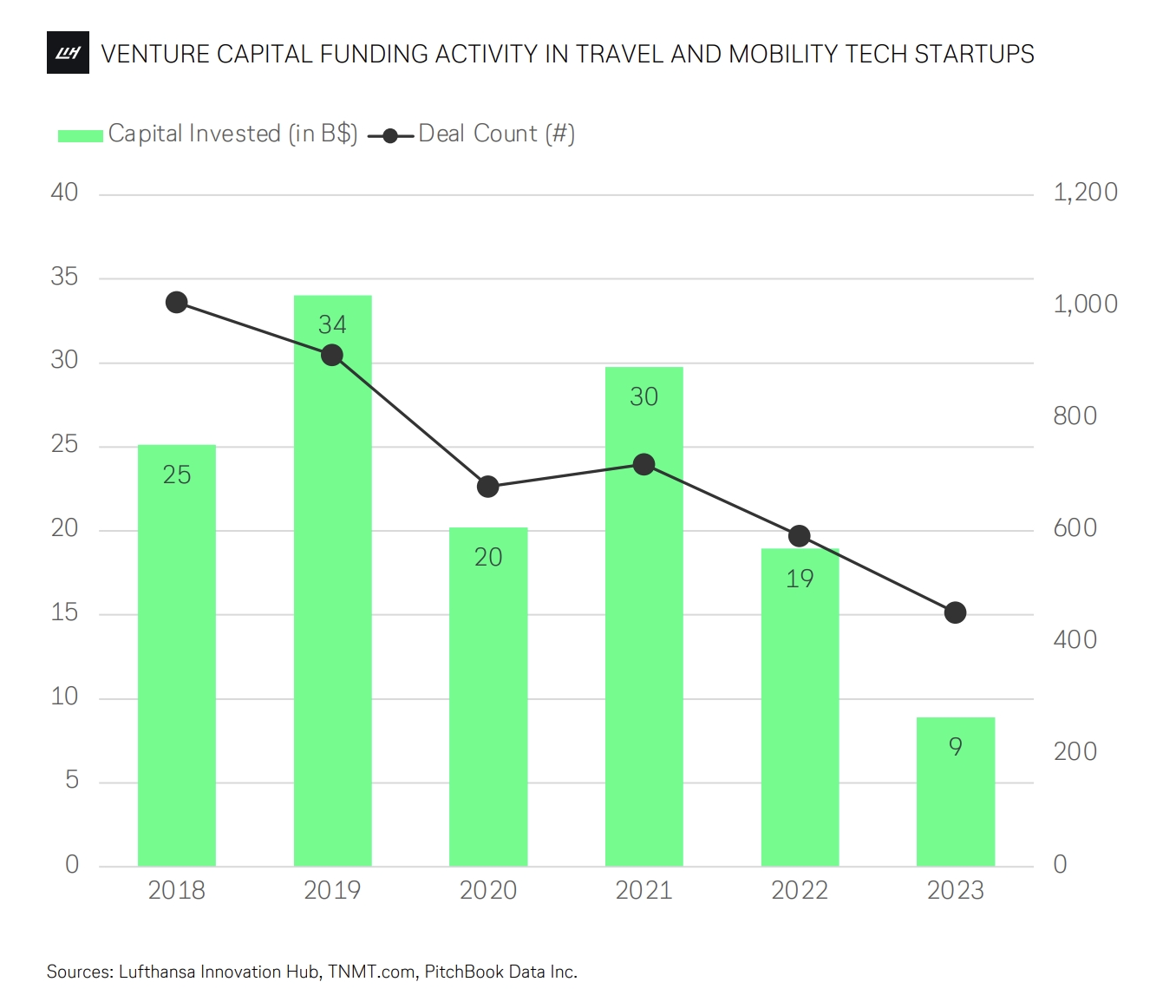
The report highlights that venture capital (VC) investment in travel and mobility tech startups experienced a sharp decline in 2023, falling to less than $10 billion, which is less than one-third of the 2021 peak.
This reduction is attributed to rising global interest rates and the increased cost of capital, leading VC firms to adopt a more cautious approach. Despite this downturn, the need for innovation in the industry persists.
The report also emphasises that in contrast to the VC funding landscape, corporate investments in travel and mobility have demonstrated resilience. Despite a steep dip in 2020 due to the pandemic, investment levels rebounded in 2021 and 2022, nearly reaching pre-pandemic figures. However, 2023 saw a slight downturn, reflecting broader economic uncertainties.
While VC funding has declined, corporate investments remain robust, while AI and Machine Learning continue to be key investment areas, reflecting their transformative potential across the industry.
Sector-specific trends
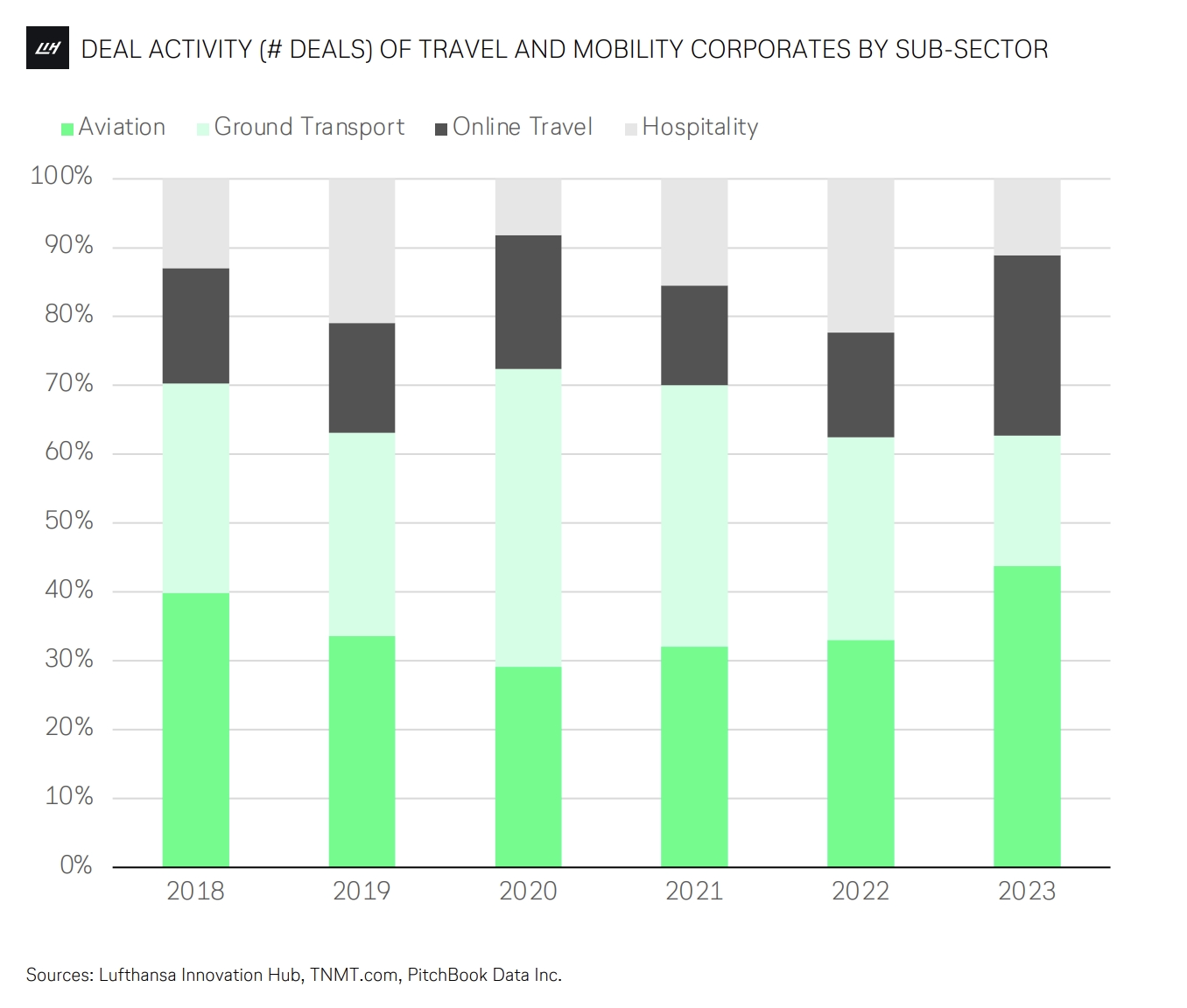
The report categorises investment activities into four main sectors: aviation, ground transport, hospitality, and online travel.
Key findings include:
- Aviation and ground transport: These sectors account for 60-70% of deals annually. Established corporate venture capital funds and structured investment strategies in these asset-heavy industries drive stability. Major players such as Boeing’s AEI HorizonX, Aerospace Xelerated, Airbus Ventures, and JetBlue Ventures have made significant investments, totaling over 180 deals in aviation over the past five years.
- Online travel and hospitality: These sectors participate less in investments, with fewer institutionalised funds. Investments are often opportunistic, depending on financial availability.
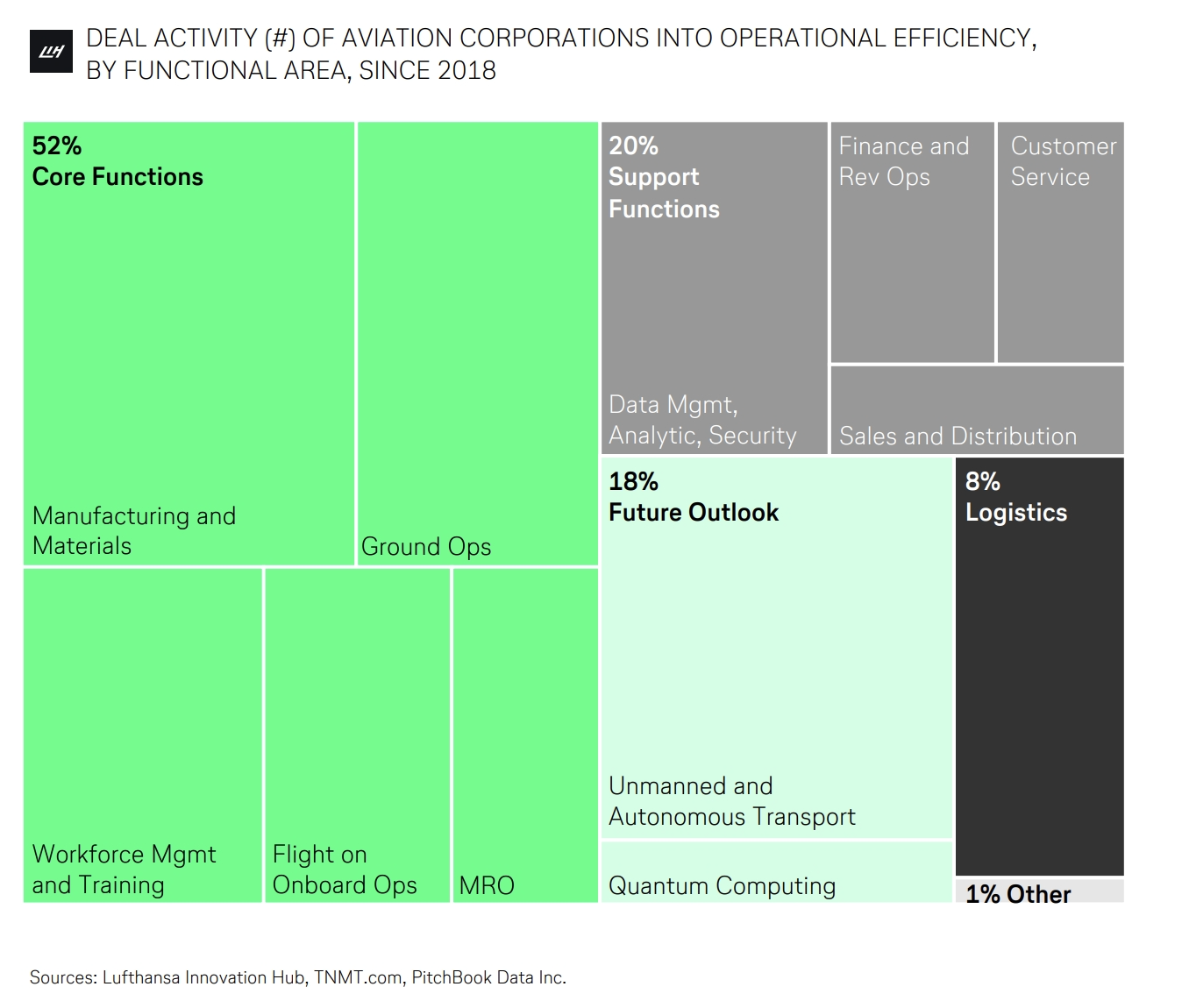
- Sustainability and operational efficiency: There is a strong focus on sustainability, particularly in aviation and ground transport, driven by regulatory pressures and public scrutiny. Investments aim to enhance operational efficiency through digital transformation and technological innovations.
AI and Machine Learning investments
The report indicates that Artificial Intelligence (AI) and Machine Learning (ML) are pivotal across all sectors, attracting two-thirds of investment deals since 2018.
Key applications include:
- Autonomous driving: Investments in computer vision and LIDAR systems for autonomous vehicles.
- Robotics and drones: Automating manufacturing processes and refining delivery systems.
- Predictive analytics: Optimising processes and increasing operational agility.
- Customer support: Enhancing interactions through natural language processing and large language models.
The sustained focus on AI highlights its role as a fundamental driver of future growth and innovation in travel and mobility.

Shifts in hospitality and online travel
According to Lufthansa Innovation Hub’s data, hospitality companies have expanded beyond traditional boundaries, investing in startups offering tours, experiences, and travel-related services. This trend, partially driven by the pandemic, aims to diversify revenue streams and enhance customer experiences. However, investment activities slowed in 2023 due to rising energy prices, inflation, and staff shortages.
Online Travel Agencies (OTAs) have pursued expansion strategies, including notable acquisitions like Trip.com’s purchase of Travix and Despegar’s acquisition of Best Day Travel. Asian investors have been particularly active, with companies like AirTrip and Yanolja leading investment activities.
Emerging trends in electric mobility
Ground transport investments have increasingly focused on electric vehicle (EV) charging infrastructure and battery swapping technologies. Significant initiatives include joint ventures like Kakao Mobility and LG Unplus developing charging infrastructure in Korea, and TIER supporting the UK-based Bonnet platform.
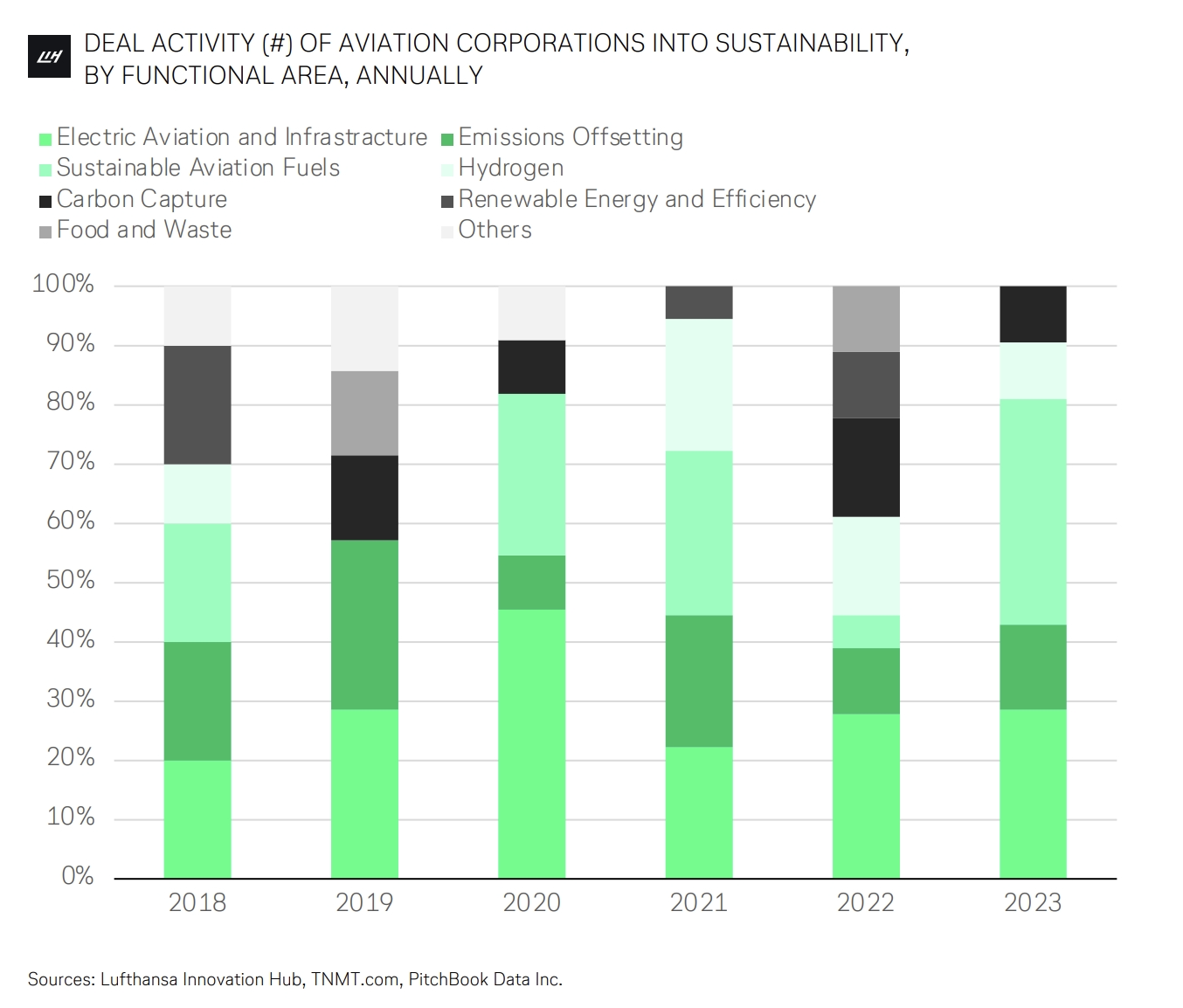
Aviation’s sustainability investments have surged, with over 30% of deals focused on decarbonization. This trend is driven by regulatory pressures and commitments to reduce emissions, such as the International Air Transport Association’s (IATA) goal of net-zero carbon emissions by 2050.
However, the report also notes that the environmental impact of electric vertical take-off and landing (eVTOL) aircraft remains a subject of debate.
Header image credit: Lufthansa Innovation Hub