Thomas Clayton, CEO and founder of Bubbly (pictured below left), was sceptical about travel apps in the beginning. “I used to think, every travel company is coming up with a mobile app but no one would use them.”
 Today, as a “passionate frequent traveler who lives on the road” who does about 100 hotel stays and flies 400,000 miles, and as a Starwood Preferred Guest, he finds himself using the SPG app a lot and booking through the app. “They’ve proven me wrong – if you have a strong loyal segment, there’s a good case for a mobile app.”
In general though, Clayton says travel is not an easy segment for mobile – it is not a frequent experience and so it does not have high recall among users. “Most people only travel once or twice a year and often you may have the app but you forget it’s there.”
Where travel apps work well is in the areas of flight search – “I live on Hipmunk, Kayak and Skyscanner”; same-day booking apps such as HotelQuickly – “you are on mobile already and you want a room”; and in-destination/post-arrival “where location is very important and where someone is on the go”.
“The young business traveller wants to do something hip and cool so I think the big markets are in post-arrival and from an economic standpoint, you get frequent users and it’s easier to keep them engaged.”
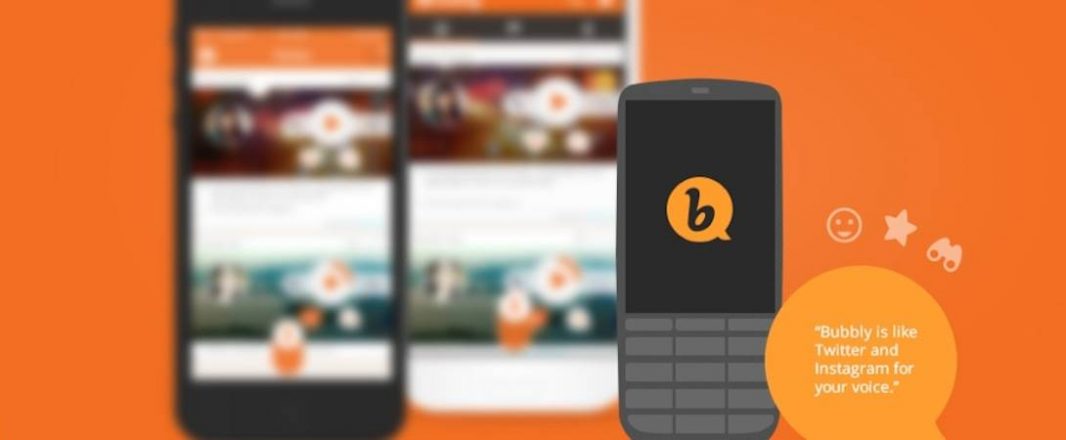
Clayton should know about mobile in Asia, he’s been involved in the space since 1999 and he’s a believer in the mobile first strategy for Asia. His Singapore-based Bubbly service is known as the Twitter of voice. Initially founded in 2005 as a mobile messaging service called Bubble Motion, it moved onto a social media platform and rebranded as Bubbly recently. “It made sense to do that – there’s more money to be made on social media than as a utility.”
The company has raised a total of US$50 million in funding from investors such as Sequoia Capital, Comcast Ventures, SingTel Innov8, JAFCO Asia, and many others. Bubbly now serves over 40 million users, 99 percent of whom are in Asia. Clayton moved to Singapore to head the business because it made sense to be in Asia where mobile penetration is high but 80% of which are feature phones. Up to 85% of Bubbly’s users are on feature phones and its biggest markets are Indonesia, India and Japan, followed by Thailand, Vietnam and Korea.
About 55% of users are female and its main demographic is urban youths aged 16-29. “We do see differences in customer behaviour – in Japan, people like singing more and it’s skewed towards female; in India, it’s more status updates and following celebrities.”
Revenues come from subscriptions, features such as voice stickers and enhancements and, soon, the company will get into social games, a strong revenue driver for messaging apps such as Line, Kakao and WeChat.
It is these players Clayton believes is changing the game in social and in this article, he said, “Although culturally targeted towards a different audience, these Asian networks will one day cross the pond and come to the U.S. and start competing out here. And although they started as pure messaging apps, they’ve increasingly added features to become full social networks. Basically, it’s only a matter of time before one of them comes out of nowhere to dominate like Gangnam Style.”
Asia, he says, is truly a ‘mobile first’ market and the space is “hypercompetitive with startups that are extremely lean and move super fast – faster than anything I’ve ever seen in the Valley. Given the competitive environment and the lack of institutional funds, they have grown up in an environment where these characteristics are absolutely necessary for survival. This factor, combined with the fact that Asia startups are used to dealing with extremely price sensitive consumers, they know how to be ridiculously creative and monetize in very nontraditional ways (i.e., stickers, games, etc) that is not always readily apparent to startups in the west”.
Having said that, he is however puzzled as to why travel in Asia is still so low-tech in service delivery. “In the US, I check in online on mobile, I get a QR code and I go straight to security without having to see anybody. Here, even in Singapore, you still have to print it out, go to a counter and have someone verify the passport. I don’t understand it.
“Perhaps it’s the fact that labour is relatively cheap here and there are no unions and airlines can keep their young and attractive flight attendants and recycle them,” he said. “They tried self-service check-in kiosks but that didn’t work because there are no queues and what do you want – check in with a cute girl behind the counter or a kiosk?”
The high feature phone penetration in Asia also makes it challenging for travel companies “because I can’t see anything useful via SMS except flight alerts. But then I guess it is the smartphone users that are the target market for travel companies which is why they are creating apps for this segment.
“Low cost airlines however could change the market as they are making it for a lot of people to fly for the first time.”
And what Clayton would really like to see as a frequent traveller is an app that aggregates low cost airlines. “There isn’t one app that has all the low cost airlines – now that’d be the killer app.”