
For a couple of years, I’ve watched them take shape. They looked like two giant armadillos that had got lost in a grove of super mushrooms.
Juxtaposed in front of the three towers of Marina Bay Sands and the circle of the Flyer, I felt I was watching a science fiction comic book being illustrated in front of my eyes.
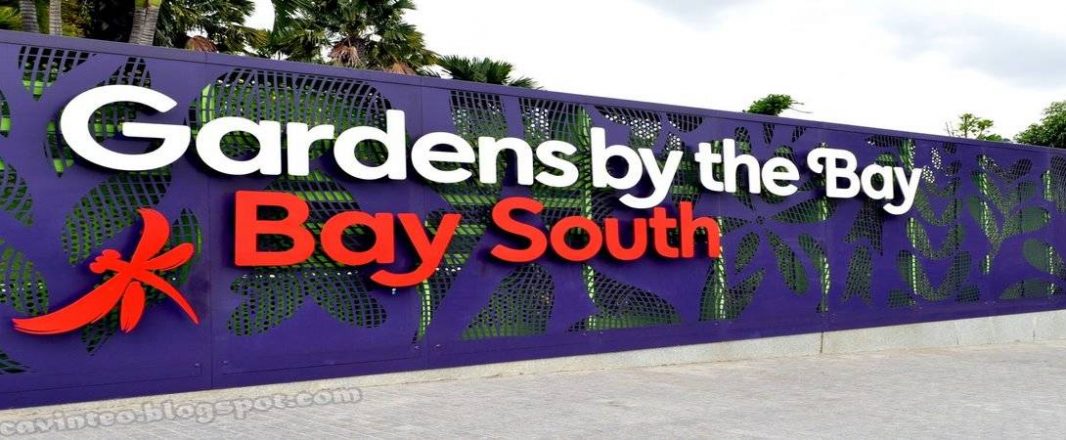
Now I know. I’ve seen the inside of the armadillos and I’ve walked the super trees – and I’m left gobsmacked by the architectural and engineering feat that went into creating Bay South Garden, the one-third of the Gardens By The Bay project that is designed to transform Singapore from “Garden City” to “City In The Garden”.
Opened on August 20, spread over 54 hectares and built at a cost of S$1 billion, it has already attracted one million visitors.
Aesthetically, I prefer nature to be well, natural, and this is a pretty built-up park with lots of structures – more like a garden theme park than a park park, if you know what I mean – but given the fact that it’s set right in the heart of city, they have managed to create an amazing nature wonderland kind of experience in the heart of an urban jungle.
I was lucky enough to be taken on a tour by the COO, Kenneth Er, who’s been working on this for the last nine years. His children, he told me, grew up in the park. How lucky for them, I thought. They had their own super garden, growing up. JR Tolkien dreamt of gardens and forests when he wrote “Lord of the Rings”.
The story of how it was built is a story unto itself and I am sure there will be loads of documentaries made, because there’s some pretty breakthrough technology being used in there.

The way the supertrees, standing between 25 and 50 metres tall, are held up and together by a web of cables. I felt like Spiderwoman when I was up walking the “canopy” which is a bridge built onto one side of several supertrees.
Everything tells a story in the park. The idea of the Supertrees came about because they felt a rainforest would not be complete without them but one, it’d take too long to grow them and two, given the change in micro-climes of our planet, it might be impossible to grow them to the height they used to grow to.
And so the idea came about to build them which is pretty much Singapore’s mantra – don’t have it, build it.
The Supertrees act like vertical gardens – amazing flora grows on them – and they act as shade as well. So they’re not only pretty to look at but useful. They also work as environmental engine. Inside one of them is a chimney that burns tons of horticultural waste collected from all over Singapore which is then converted into energy use for the park.
I am told the park is pretty self-sustaining and the latest technologies combine to cut energy consumption by 30%.
The supertrees come with technologies that mimic the ecological function of trees – photovoltaic cells that harness solar energy which can be used for functions like lighting, just like how trees photosynthesize; and collection of rainwater for use in irrigation and fountain displays, just like how trees absorb rainwater for growth.
I can see much application for these vertical gardens for hotel spaces and true enough, this week Westin announced it’d be introducing vertical gardens into the lobbies of participating hotels. Its new public space concept is currently on display at Westin Gaslamp Quarter in San Diego and will continue to roll out at participating properties worldwide throughout 2013.
Within the gardens are sections like the Chinese Garden and the Indian Gardens which tell the story of how plants follow people as we migrate across the world – so the garden also captures the history of Singapore.

.)
The other “wow” sections are the conservatories – Cloud Forest and Flower Dome (left) – my armadillo references.
I say “wow” because that’s what you say when you first step into them. You don’t know what to expect looking at them from the outside but step inside, and you’ll be blown away by the sense of arrival and space.
You’ll also love the coolness after walking in the tropical heat – so these conservatories are also highly practical. The idea was to create an environment friendly to both plants and humans and I almost felt I needed a sweater in there.
Again, the innovation is incredible – these conservatories would have been considered obscene guzzlers of energy in our more environment-aware world but today are made possible by the latest applications of environmental technologies.
I liked the different sections of the Flower Dome. There’s an Australian area which I particularly love, only because they have such unique thingies down under which we don’t have in Asia. There’s also a thousand-year old olive tree from Spain somewhere in there.
I can see the Dome will be very popular with events – when I was there, there was a huge Citibank event and I am told that event space for the park is fully booked for the rest of the year.
.)
There’s a strong accent on education. I learnt much during my three-hour tour. Why traveller palms are called that – because their leaves follow the sun. I saw double coconuts. In the section called “Secret Life of Trees”, I learnt about the birds and bees of the plant kingdom.
There are giant iPad-like screens where kids can swipe and learn how quickly and easy it is to destroy nature. Unfortunately, it also makes it too easy for them to grow back the trees – swipe and grow. There’s also a video that tells you what will happen if temperatures rise by a few degrees – very well done and scary.

Adding to the experience is the feeling that you are in this incredible space in the middle of a concrete jungle. The three towers of Marina Bay Sands are never far away and the play of light, shade, lines, structures is a constant delight. I kept falling over photographers and their paraphernalia.
You walk away with a new found-appreciation of nature, the desperate need to protect it and the amazing feats men can achieve if they are not too busy wanting to bomb each other.
And you know what, if a three-hour walk in these man-made gardens make you yearn for the real thing, then it’s served its purpose – it will inspire more people to travel to rainforests like Danum Valley in Sabah or the Amazon and create a bigger, collective desire to protect our environment.
Here’s a feel of the sense of arrival at the Cloud Forest.