
The first thing I learnt from listening to Robert Herjavec of “Shark Tank” fame is that dragons don’t exist in America, or at least they don’t believe in them as we do in Asia.
Speaking at the Expedia Partners Conference in Las Vegas held earlier this month, Herjavec, one of the sharks in the highly-rated reality TV series in which we watch entrepreneurs get chewed up by investors, said that when Sony decided to bring the series (called Dragon’s Den) to the US, the first thing Sony said was, ‘you cannot change the name, we love the name’.
Mark Burnett, the producer, then asked, “what’s a dragon?” And so, without a fight, dragons lost to sharks.
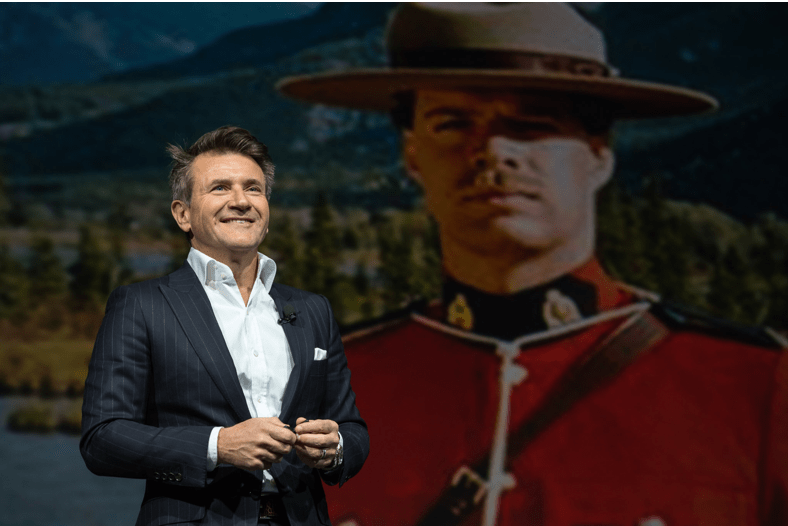
Robert Herjavec: “when you are going really quickly, where you look is where you end up”.
“It’s such an American name,” said Herjavec, who is incidentally a Canadian. Speaking of the rigours of being a shark on the series, now running for eight years, Herjavec said each year, more than 50,000 people apply with a couple of hundred chosen to come to Los Angeles to be interviewed and from then, a shortlist of under 200 is chosen.
They put in 12 hours a day, and film 37 episodes in 17 days. “It is all real, there is no script, no preparation. The average pitch is one hour, the longest was 2.5 hours – it all gets edited to seven minutes,” said Herjavec, who has also written several books including the latest, “You Don’t Have to Be a Shark: Creating Your Own Success”.
One surprise has been how popular the show has been for families. “No one saw it coming. We thought it’d be for men 18-25 but it’s surprising how many kids love our show.”
The good news is, the sharks aren’t always right. “Just because you get a no doesn’t mean no”. There are those who’ve been rejected who’ve gone on to build successful businesses, he said.
The most common mistake made by entrepreneurs – “because they are so afraid of rejection, they are afraid to talk to customers and they talk to families and friends. Their job is to love you. Test your ideas with someone willing to cut a cheque,” he advised.

His best investment – Tipsy Elves. “The business of America is consumerism.”
His best investment is in a goofy holiday apparel company called Tipsy Elves that makes ugly and inappropriate Christmas sweaters. He invested $100,000 for 10% equity in the business in 2013. The company started by a lawyer and dental surgeon was expected to do more than $10-$15m in sales last year
“You have to invest in stuff consumers will buy, not what you understand. The business of America is consumerism.”
A professional car racer with a penchant for Ferraris, Herjavec also shared lessons from his experience on the fast track. “At speed, everything happens faster and invariably you will have an accident.”
He recalls a lesson from a driving coach who told him, “when you are going really quickly, where you look is where you end up. Next time you spin the car, don’t look at the wall, look at the open green field and so I taught my body to do that and I stopped hitting the wall.
“Focus on the opportunity, not the danger. I am tech, the fastest business. There are 3.5b people connected to the Internet and 6.5b IP addresses. It will go even faster. By 2020, there will be 6b people connected to the Internet and 343 trillion IP addresses.
“The Internet will cease to exist, it will become electricity. The only time you notice it is when it’s not on. There will be a lot of risks, a lot of opportunities. It is human nature to avoid fear and rejection.”
He said Howard Schulze (Starbucks) visited 242 banks before he got a yes. Walt Disney went to 302 banks. “It takes a lot of time. The best way to get around risk is to do it again.”
Herjavec knows all about overcoming fear and rejection and taking risks. Born in the former Yugoslavia, he arrived in Toronto with his mother and father. “Nothing in my life that I ever do will be as hard as what my father went through,” he told the Expedia audience.
He delivered newspapers, waited at tables and launched a computer company from his basement. In 2003 he founded Herjavec Group, which has quickly become one of North America’s fastest growing technology companies.
Saying he’d never met a great business that didn’t have a great purpose, he added that “the good thing about having money is you get to repay. If I didn’t do something with my life, all the sacrifice my father made would not be worth it.”
His parting words – “work hard, play fair, and be nice”. Which you may think is rather at odds with being a shark – at least, sharks as we think of them in Asia.