“I fold this into the spirit of exploration”, says Mungo Park founder
REMEMBER Mungo Park, the online adventure site set up by Microsoft circa 1996 in the early days of Expedia, and which was meant to stir up the spirit of exploration in travellers? Well, the man who created it is back with his new adventure, Steller.co, a storytelling platform dedicated to travel.
With Steller, a travel app packed with content created by influencers as well as anyone who wishes to be part of the community, Richard Bangs, whose name is synonymous with adventure and exploration (he was one of the founders of Sobek Expeditions in 1973), says he’s returned to his roots.

“I fold this into exploration. Just like with Mungo Park, this is a new frontier and I love going places no one has gone before on the Internet, so it’s not just about physical travel,” said Bangs, speaking from his Californian home by the beach.
Having said that, Bangs said he could probably qualify as the most well-travelled person during a pandemic, having visited five countries since it started. “I just returned from Africa few weeks ago and I think we were the only people in the national parks. I continue to explore the intrepid spaces of this planet.
“Digitally, I love experimenting with new tech, new platforms and new ways to create stories.”
Steller was built by former Microsoft colleague, Richard McAniff, who worked with the company for 21 years and was responsible for software tools including Excel and Access. “Richard built it as a hobby to combine his love of photography, travel and storytelling,” says Bangs. “Then he found that people were actually using it.”
Bangs and a couple of friends came into the venture two years ago, and revamped, reimagined and relaunched it as “the ultimate in travel-inspired storytelling, where you can discover & share incredible experiences from the world’s coolest places”.
It made Irish eyes smile and put Georgia on everyone’s minds
Featured in Apple’s App Trend of 2019 under “Storytelling Simplified”, Steller has found a model working with tourism boards. In 2019, before the pandemic, it brought 27 influencers to Ireland and developed a series called “A digital day in the life of …” Its writers were dispatched all over Ireland, and created content around that theme. “The campaign was successful from Ireland’s standpoint and they saw a bump in visitors in 2019, which they attributed in part to the campaign,” says Bangs.
It continued to work with tourism boards through the pandemic to keep interest in destinations alive. For Germany, it rolled out “Germany awaits you”. For South Australia, it was “love where you live”, for Louisiana, it went for road trips and in Scotland, it did a partnership with hotel search site Trivago in which influencers could geo-tag hotels.
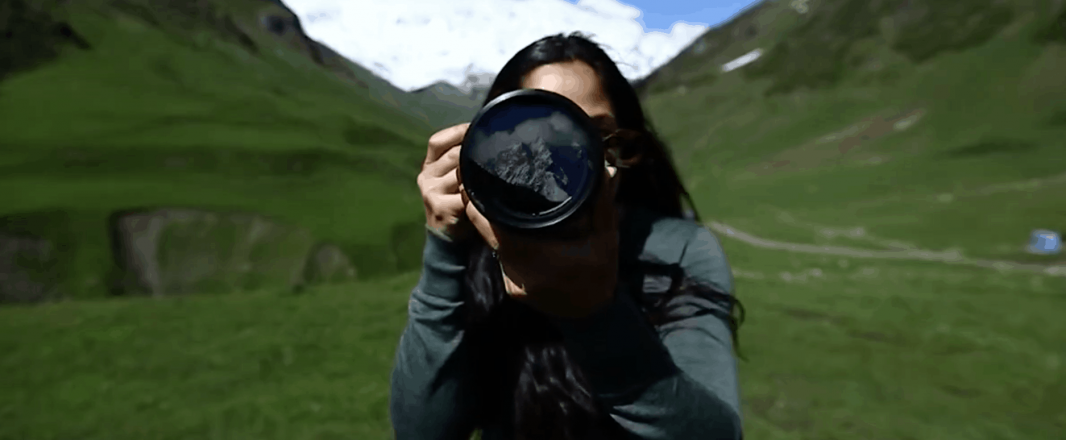
Recently, it wrapped up the first physical “familiarisation” trip of Georgie, under the similar “A Digital Day In the Life of …” theme. The campaign, co-funded by USAID and the Georgian National Tourism Administration, brought 16 international travel influencers to Georgia where they travelled to different regions in late May and early June. They published 88 stories on the Steller platform and more than 200 Instagram stories and posts, as well as 10 Georgia Collections.
The campaign reached more than four million people globally, with roughly 275,000 people liking, sharing, and commenting on the content produced. Clearly pleased with the campaign, Georgia will run similar Digital Day campaigns in winter 2022 with Steller.
To ensure a good user experience, it does not allow “blatant monetisation”, which means no advertising on the platform. It monetises through sponsored content, working with tourism boards and creating content for brands. Content creators can also earn through transactions which Bangs says is an “emerging economic model”.
“If you as a storyteller has a geotag and shows a hotel around the place you are writing about, and people book the hotel through Trivago, then you earn a fee.”
Self-funded between Bangs and his friends, it has a team of 25 people scattered across the world, creating its own content as well.
Online travel has moved on from transaction to inspiration
Recalling Mungo Park, which lasted about one year, Bangs says, “We couldn’t make it work. The page load times were slow and there was the feeling then that one got inspiration offline and then came online to book, and and they wanted to book fast. Online travel was all about transactions then. Now everyone is thinking differently, inspiration is everywhere.”
He is aware of growing scepticism around influencers. “I’ve never been a big fan of influencers myself, which is why we spend a lot of time working with individual influencers who see themselves as storytellers and are not narcissistic or vanity-driven,” he says.
The difference between Mungo Park and Steller is the former was driven by celebrities, with names such as Tom Clancy and Martha Stewart, while Steller is influencer-driven. “Influencers have emerged as the new celebrities and they bring more reach than celebrities.”
Steller works with a global network of influencers and while English is the main language, it seems to have found audience traction in Indonesia with Bahasa Indonesian content.
He admits that storytelling in travel is as old as time and has of course evolved over the years. In the social media age, where 15 seconds is the new attention grab, content has been condensed into pithy soundbites, images of people posing with cocktails – a world where even sunsets have become commoditised.

Said Bangs, “For many, it has become an ego-driven perspective of somebody’s experience. The best travel storytellers go beyond themselves and see the world from the other side, people such as Paul Theroux, Jan Morris, Rudyard Kipling – they were driven by curiosity.
“Travel writing, at its finest, can contribute to a higher consciousness of people and culture and it drives people to be curious. When we select our influencers, we try not to use those who promote themselves. We look for people who tell an inspirational and informative story.”
While Covid has been devastating to travel, Bangs says “hopefully there is cause for optimism. It has forced everybody to step back and evaluate the way we experience the world, why we do it, how we do it. It’s a chance to refresh, re-examine and re-architect the way we experience the world.”
With places such as Venice and Dubrovnik questioning themselves as to how they manage tourism better, Bangs says, “when they reopen, they will do it differently with different quotas. Even national parks in the US have enjoyed a pristine period and may think of quota systems”.
The same heightened consciousness applies to carbon offsets in travel which equals more respect for the planet. “This is a good thing, assuming Covid ends,” he laughs.
• Featured image credit: Steller in Georgia