Events might have been due for a makeover, but the onslaught of the pandemic and its repercussions on travel and events have undoubtedly quickened the evolutionary cycle.
When the pandemic hit the industry early this year, GlobalSign.in, the team behind GEVME, an event management software, had to think quickly and on its feet. By February, most of its clients were already postponing or cancelling events.
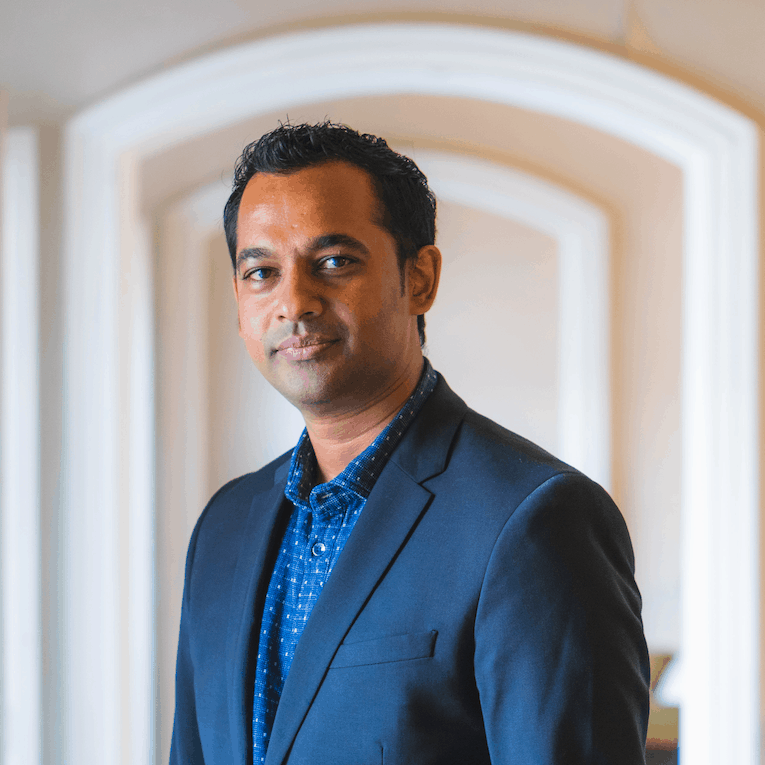
“We talked to them about what they needed. It was clear that there was an immediate need to move events online, and clients needed guidance and a platform to host these events,” said CEO Veemal Gungadin (pictured).
This was an important step in educating its customers about virtual events, live video- streaming, and the logistics involved for both. One-one-one sessions, webinars, and online content targeted for events professionals were used to help clients launch their digital events, said Gungadin.
Once some countries started reopening its borders and lifting some restrictions, the talk around the hybridisation of events picked up speed.
“There are things unique to meeting others face-to-face that virtual alternatives cannot capture yet. To unleash the full value of events, event owners of the future must leverage the now tried-and-tested digital tools in the new ‘traditional’ events of the future – blending the boundary-breaking potential of digital events with the serendipity of analogue meetings. The future of events will be hybrid,” said Gungadin.
This makeover of events is being embraced enthusiastically by countries like Singapore, a destination that has always been keen on the MICE industry. It has been the top Asia Pacific city of the annual International Congress and Convention Association (ICCA)’s global rankings for 18 consecutive years.
It is therefore no surprise that it has shown keen interest in showing the world how the hybridisation of events not just allows events to continue while we fight the pandemic, but also how it can be the better way for future events even when we are rid of the pandemic.
Gungadin’s team, as one of Singapore’s poster child in this arena, has been actively evangelising the concept.
“Moving towards hybrid events will give more people opportunities to participate, and not just for the audience but also for speakers, with some conducting their sessions in-person and other remotely. This will make events richer and more diverse,” said Gungadin.
He said advances in interpretation and translation technology that is possible in a virtual environment will also help overcome language barriers. GEVME recently announced a new partnership with Interprefy, the world’s leading remote simultaneous interpreting platform.
The look of hybrid
Gungadin, however, cautions that putting on a hybrid event is not just about slapping on a digital component as an add-on. “It’s not enough to set a camera in front of a podium or a stage and call it a day. Both digital and in-person attendees should have a high-value experience,” he said.
He added that digital streams of live events should have the production quality of TV shows.
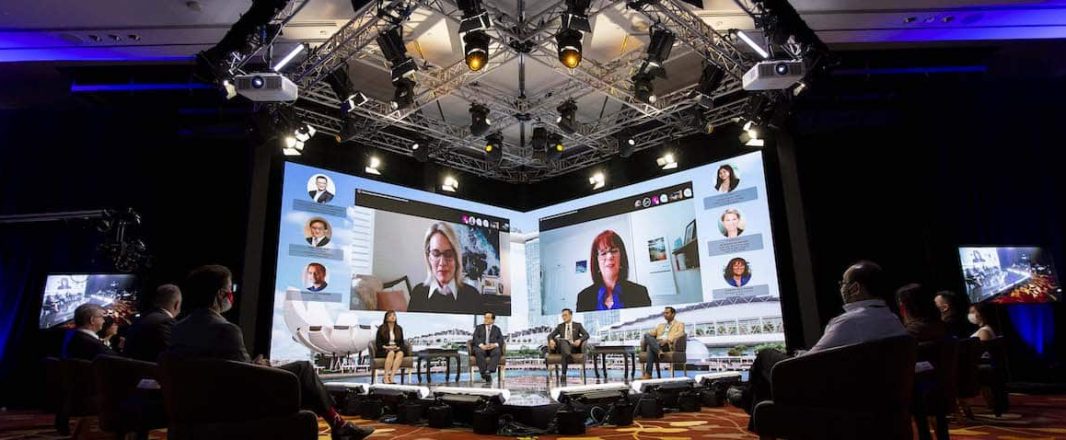
Thinking along the same lines are venue operators like Marina Bay Sands. It launched its Hybrid Broadcast Studio in August designed to accommodate a live audience. The hybrid broadcast studio offers broadcast-quality live-streaming capabilities and has Virtual Reality (VR), Augmented Reality (AR) and Extended Reality (XR) and holographic telepresence embedded.
Gungadin also highlighted how going this way also allows the industry to go green. No more wasted food at buffets, unwanted brochures and name cards can be binned for good.
“Hybrid events might become a way for the industry to reduce waste and go green. Less attendees means less trash,” he said.
Gungadin said the interest and take up of hybrid events is really a necessity these days.
“Whether you like it or not, believe in it or not, you’ll have to accept this is the next new normal of doing events,” he said. His company is partnering with WiT to power its WiT Experience Week, happening next week from September 28-Oct 1. On Oct, WiT will be staged at the Marina Bay Sands’ hybrid broadcast studio in a partnership with the venue as well.
Gungadin said hybrid events were already prevalent in France, UK, Dubai, China and Hong Kong. “So the adoption is already there; the timing of the adoption is just based on one criteria –the regulations within the country,” he added.
At the speed things are pivoting in the meetings and events space, education becomes a critical piece that must keep pace, which is why Gungadin’s team has already teamed up with polytechnics in Singapore to provide curriculum development to incorporate modules that relate to hosting and organising hybrid events.
It is also looking at the possibility of eventually incorporating internships within the curriculum so students can “get their hands dirty” in the industry.