Fancy staying in the middle of a baseball stadium? Try tower eleven hotel
Shinichi Tatebayashi, CEO and founder of SQUEEZE, is understandably very excited about his newest hotel, which he says is a world first. “tower eleven hotel” is a 12-room lifestyle accommodation, with a sauna and hotsprings, located within the Es Con Field Hokkaido stadium in Kitahiroshima, near Sapporo, the home field for the Hokkaido Nippon-Ham Fighters of Nippon Professional Baseball (NPB).
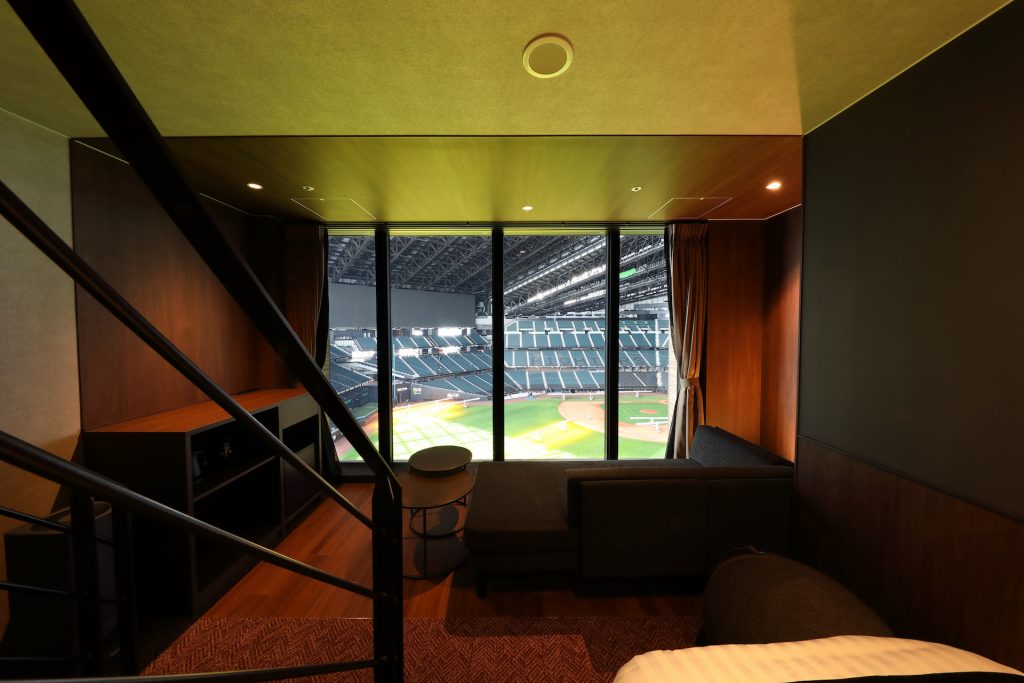
tower eleven hotel – “©H.N.F.”
Since its opening in March 2023, tower eleven hotel has been fully booked with average daily rate of up to US$1,200. SQUEEZE has a management contract with Nippon-Ham Fighters, which owns and operates the ballpark (capacity, 35,000), and occupancy for the next three months including non-game days is about 90%, said Shinichi.
“People love the novelty of staying in a lifestyle hotel in a baseball stadium,” said the entrepreneur who set up SQUEEZE in 2014 with the initial mission of digitising hotel operations in Japan with its software-as-a-service solutions.
Since then, SQUEEZE has evolved beyond hospitality tech to create unique hotel experiences through management contracts with owners seeking to do something different.
During the pandemic, the company increased its number of managed and operated hotels to 26 across Japan. It powers over 5,000 hotel rooms with its tech solutions, which Shinichi says still forms the core of its business because of its scalability.
Its biggest breakthrough on the software front is a partnership with JR East’s pre-paid card called Suica, which can be used not only for JR East trains, but subways and buses as well as paying for things like soft drinks, coffee and newspapers.
It is integrating its suitebook Solutions with Suica which means that customers of its hotel can use Suica to check in, activate the room key and pay through their mobile device.
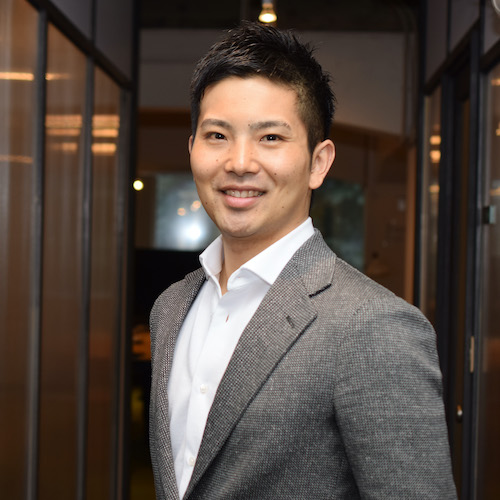
Shinichi Tatebayashi: “People love the novelty of staying in a luxury hotel in a baseball stadium.”
Shinichi said it has started trials with a few hotels and hope to expand the service through JR’s Nihon Hotels which manages about 10,000 rooms. This, he said, could pave the way for a “SUICA Hospitality” programme.
“I think these are interesting times and could pave the way for more innovative hotel experiences.”
He added, “We are also trying to see how we can make remote hospitality happen by using ChatGPT. Because of Covid-19, many people don’t want to interact with people so we can offer remote options – someone who’s working from home can do the check-in procedure by using online video chat. This way, home-based workers can get involved in front desk functions.
“Japan has a serious human resource shortage problem, so remote hospitality is a big opportunity.”
Since its establishment, SQUEEZE has raised $20 million and in April 2020, at the start of the pandemic, raised $8 million to tide the company. It has a team of 40-ful-ltime and 200 part-time staff and runs an operations centre in Phnom Penh, Cambodia, which covers front desk functions remotely.
“We survived the difficult situation caused by the pandemic , and we are relieved it’s over,” said Shinichi. “We are now profitable on a monthly basis and are in good shape to grow”.
“We grew pretty well during the pandemic. Because of our tech-based operations, our breakeven point is lower than traditional hotels and we had increased requests from owners of small, independent hotels who wanted a change and who also realised what technology can do for efficiency and profitability,” said Shinichi.
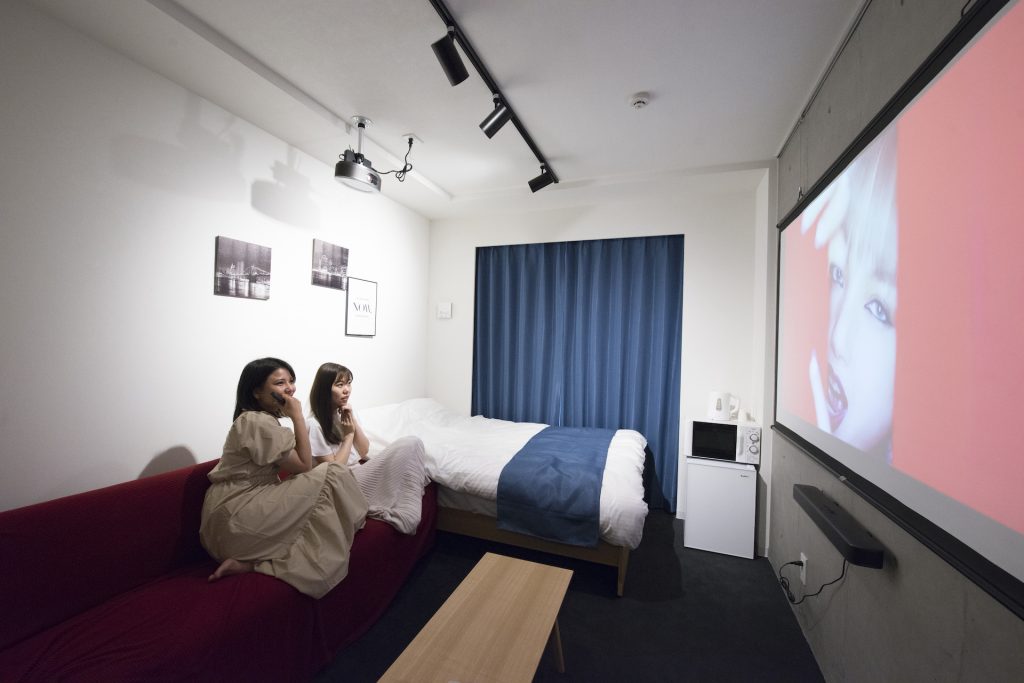
Theater hotels for the movie buffs.
Ever innovating, SQUEEZE has also set up a website called “stay tuned”, which is a curated marketplace of its own hotels. SQUEEZE manages and operates several hotel brands such as Minn, more like apartment hotels which are unmanned and where operations and services are mobile-based or Theatel, which is a “room with theatre” theme brand.
“We want to increase the number of hotels under full management by another 15-20 or create our own signature hotels. We want to work with interesting partners to provide unique experiences.”
He acknowledges brand building is expensive and that “independent hotels can be tough to market” but by getting involved in the management and operations of hotels, as well as providing the technology, it puts SQUEEZE in a good position to create a new kind of hospitality product with tech at its core.
“There is a new space where hotel management and hospitality tech can come together.”
Note: Shinichi Tatebayashi will be speaking at WiT Japan & North Asia, Tokyo, July 5-6. Programme here. Sign up here.