


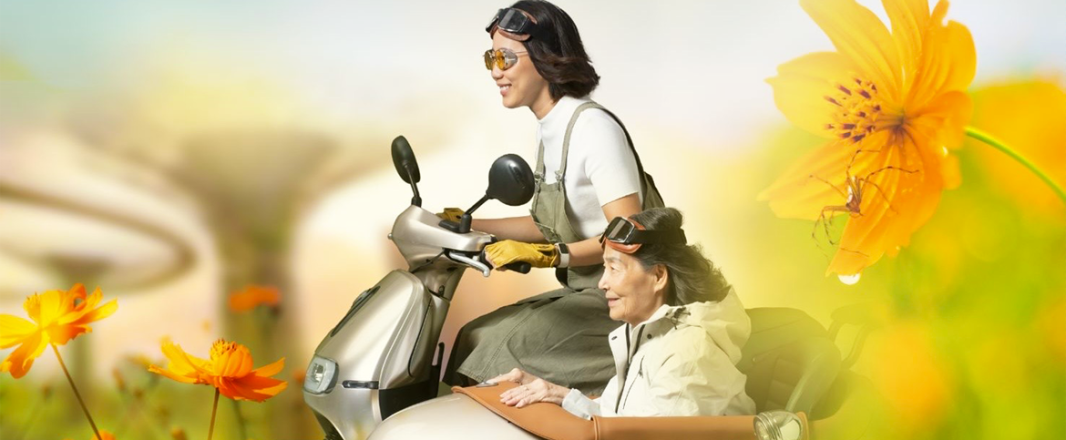
On a humid Singapore morning, deep in the basement of a luxury hotel, Simon Wong is preparing to launch something he’s been quietly building for six years – an electric sidecar fleet. For the co-founder of Singapore Sidecars, the retro-chic ride that’s become a magnet for celebrities and curious travellers, this isn’t just about swapping fuel for battery. It’s the next evolution of a business built as much on philosophy as on engineering.
The road to electric
The journey began in 2019 with a deceptively simple question: how do you get an electric sidecar approved for Singapore’s roads? The mechanical challenge was straightforward enough – build a working prototype – but the bureaucratic hurdle was finding a battery system that met government safety standards.
Wong’s breakthrough came from an unlikely source: a small newspaper article about a Temasek-backed Taiwanese scooter company. What caught his attention wasn’t the scooter itself, but its battery-swap system. “It takes 20 seconds – pop two old ones out, put two fresh ones in, and you’re off,” he says. After a SingPost pilot proved the technology could handle Singapore’s tropical climate without mishap, the path to approval cleared.
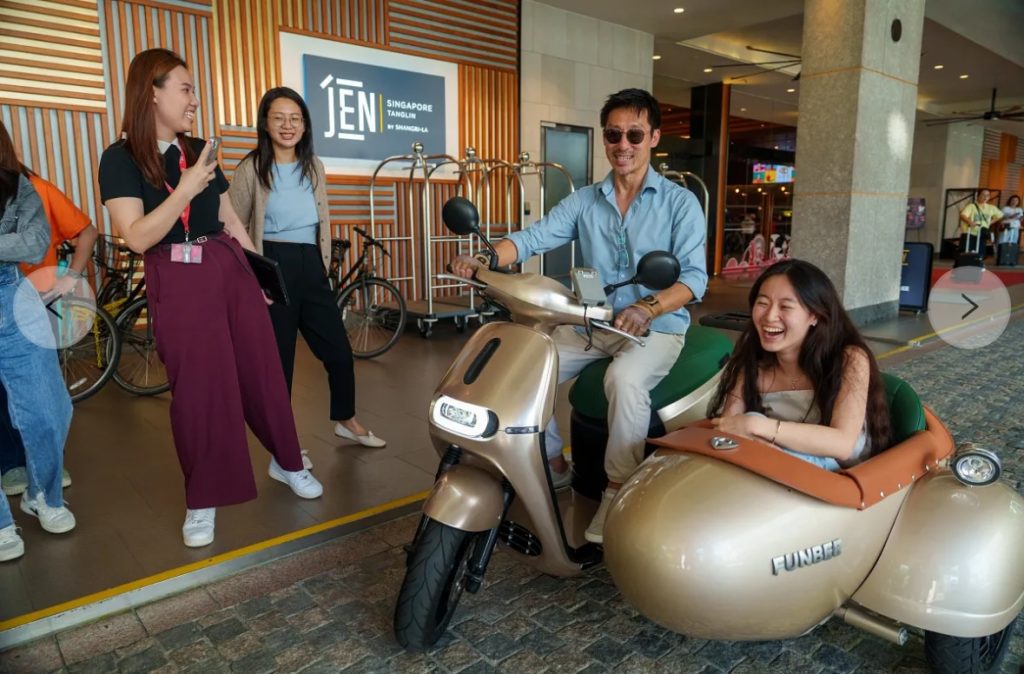
Now, with a custom-built swap station under construction at the Hotel Fort Canning – and plans for several across the city – Singapore Sidecars will launch its first electric tours in the coming months. The rides will be themed around sustainability, pointing out urban solar arrays and other green initiatives along the route. “It’s not just a different ride,” Wong says. “It’s a different story to tell.”
From fundraiser to fleet
The story of Singapore Sidecars didn’t begin with glossy hotel partnerships, but with charity fundraisers. In the years after his wife passed away, Wong channelled his grief into organising events for causes from disaster relief to community projects.
One day, he met Johnny, an engineer with a passion for restoring vintage sidecars, outside a shophouse. They struck up a friendship, and Johnny began bringing his gleaming machines to Wong’s fundraisers. In 2018, they decided to turn the concept into a business.
Their first challenge was convincing anyone to pay for a sidecar ride. At $30 for half an hour, there were no takers. Johnny suggested the counter-intuitive move of raising the price to $120 an hour. “Within days, luxury hotels were calling,” Wong recalls. Soon, Singapore Sidecars was partnered with the likes of Capella, the Fullerton, and the Mandarin Oriental, all under an “overhead-free” model that became the company’s hallmark.
Tai Chi for business
That overhead-free model, Wong says, comes directly from his decades of practising tai chi. “You never overextend. Always find the point of least resistance,” he explains. In push hands, a form of tai chi sparring, you assume your opponent is stronger and redirect their energy instead of meeting it head-on.
For Wong, that means avoiding debt, locking in rent-free bases through strategic partnerships, and reinvesting profits into growth. It’s also why the electric project has been self-funded, with no rush to scale before the infrastructure is ready.
“Life is balance,” he says. “The aim is to move with what’s in front of you, not fight it.”
Designing the future
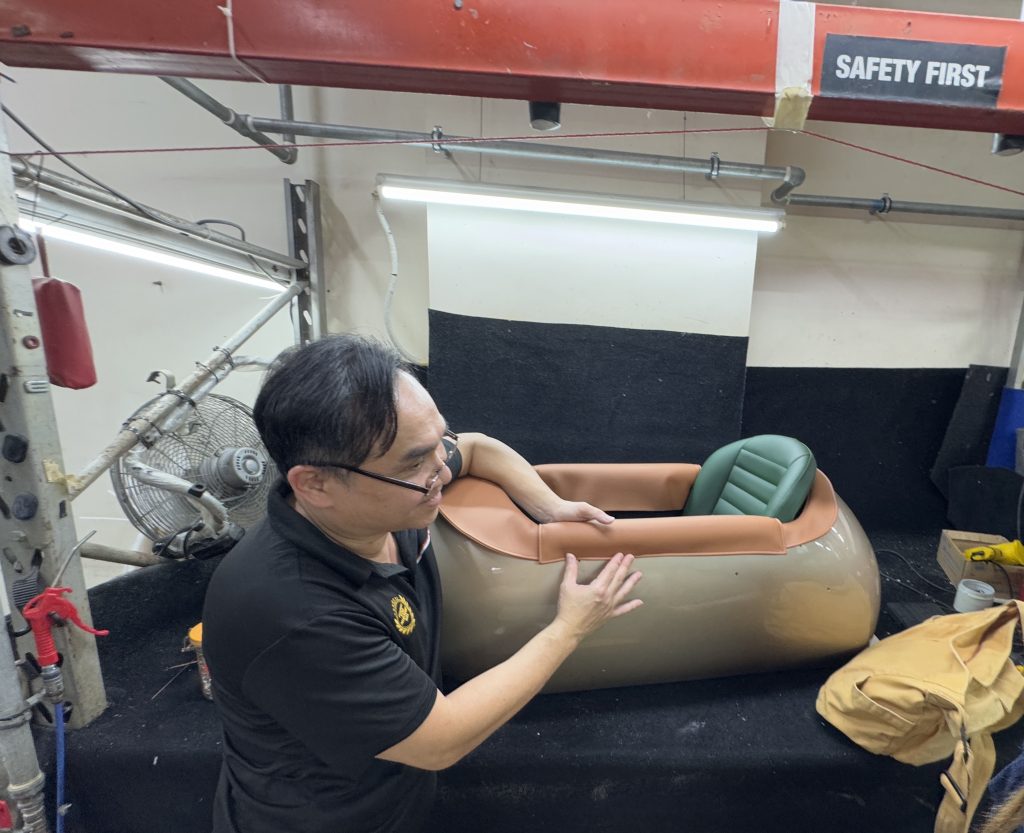
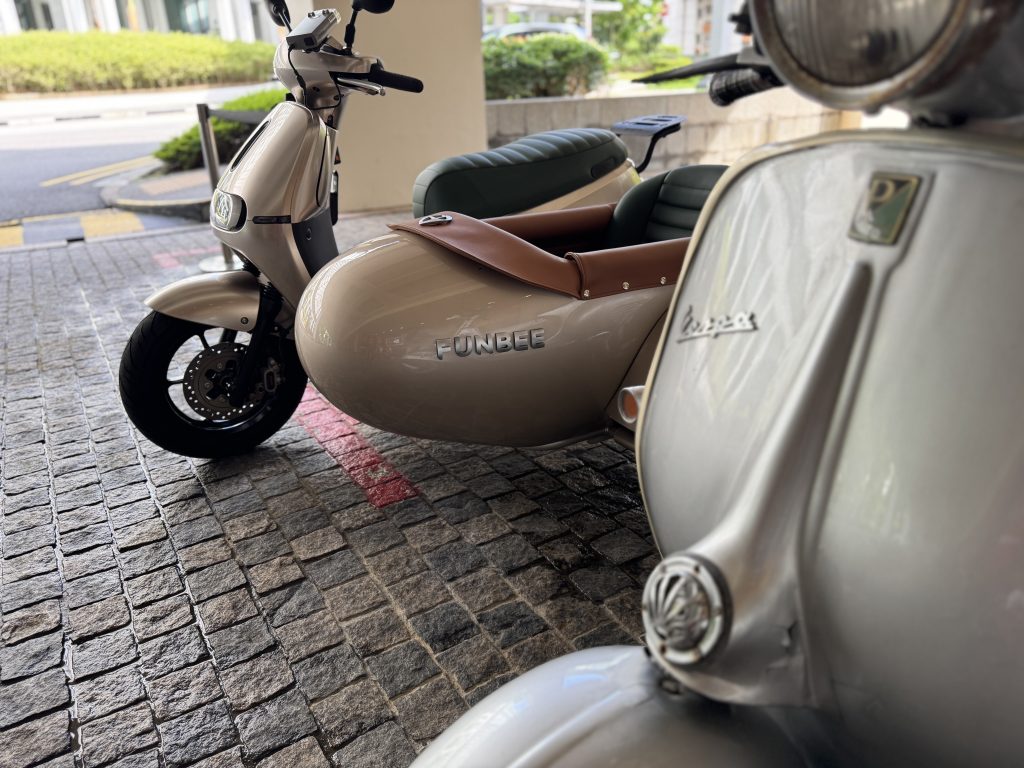
Going electric has also brought Wong back to his roots as a designer. The new sidecar, branded under a sub-label called Funbee, blends retro curves with modern detailing – leather finishes, comfort-focused seating – and the practicalities of housing extra batteries for extended range.
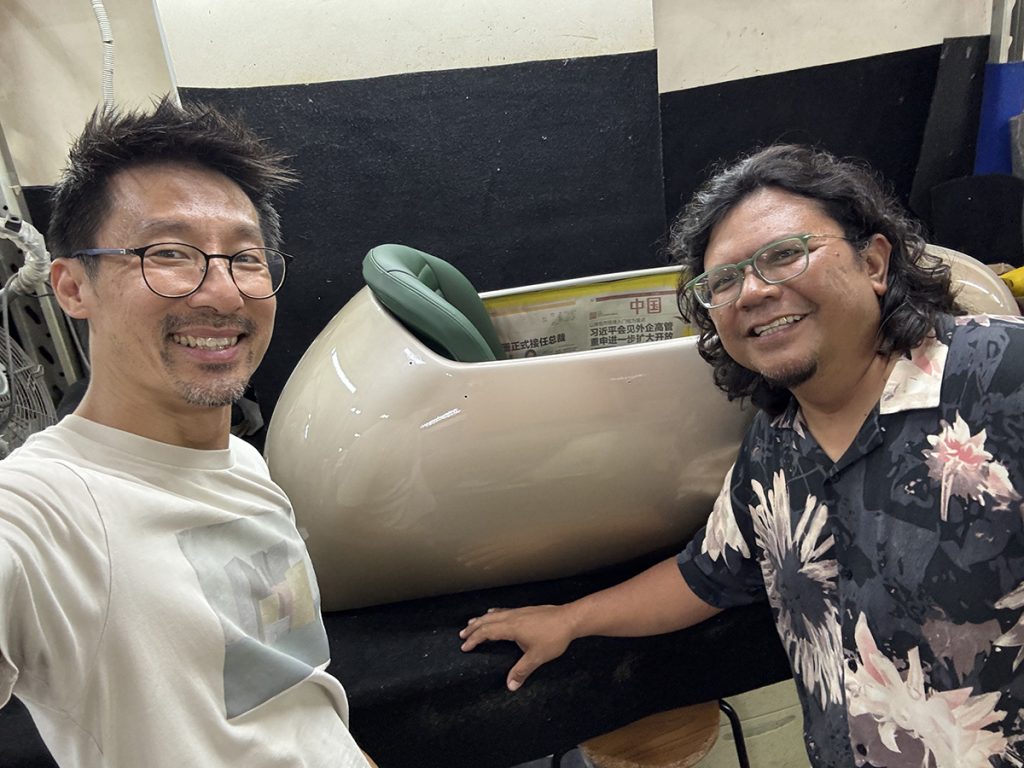
“It’s not just a different ride,” Wong (left) says. “It’s a different story to tell.”
Wong envisions future endurance runs to Malacca and Penang on a single charge, and international expansions in cities like Barcelona and potentially London. But he’s in no rush. “It’s never done,” he says. “When we get access to the kind of manufacturing capacity I dream about, then we can really start building the next versions.”
The long game
Ask him about the long-term plan, and Wong’s answer circles back to tai chi. Eventually, he imagines stepping away from the business entirely, returning to the quiet discipline that has shaped his life. But for now, the ride continues, fuelled by a mix of heritage, innovation, and the balance to move with the current.
“Darkness can turn into light,” he says, reflecting on the personal loss that set this all in motion. “If you have somewhere to channel it, you can make something beautiful. For me, that’s what the sidecar has been and now, it’s electric.”


