Technology and sustainability at the heart of change
THE Year of No Travel may well be “one of the most fertile periods” in the Singapore tourism sector, with new products, experiences and bundled packages being launched, said Keith Tan, chief executive of the Singapore Tourism Board (STB), as he issued a rallying cry on the industry to “keep this creativity coming”.
Speaking at the STB Tourism Industry Conference yesterday (April 7), he urged, “Don’t lose the gains that you have made and make sure you keep innovating and expanding your repertoire so that there is much more to offer to international visitors when they come back to Singapore.”
From dog cruises to Creepy Tales to gamified murder mystery tours, Singapore’s travel industry is pulling out all the stops to adjust to a domestic market, supported by STB programmes such as the SingapoRediscover vouchers (which run to June) and Marketing Partnership Programme (MMP) which has supported close to 300 organisations. A second edition of MMP will be launched this year.
All these will be much needed as the news was also made clear that travel is not going to return anytime soon, and that vaccinations, even while being ramped out, would not be the magic bullet to instantly open borders. Businesses, big and small, will have to find ways to continue to survive the long winter while Singapore works towards a progressive opening.

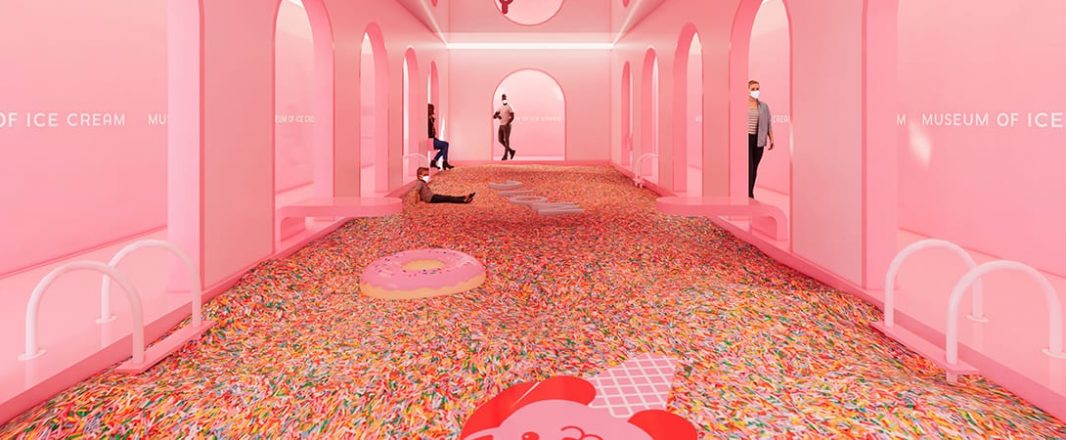
To prepare for the future, new projects are in the works. Tan announced three new attractions – Museum of Ice Cream (MOIC), the popular US-based attraction will open its first location outside the US in second half of 2021; Slingshot, Asia’s tallest slingshot, a new thrill ride concept, opening later this year at Clarke Quay; and SkyHelix Sentosa, Singapore’s first open air panoramic attraction that allows visitors scenic views of Sentosa and Sentosa waterfront, opening 2022.
It has also launched a tender for a new attraction concept in Orchard Road in efforts to diversify the precinct’s charms beyond shopping.

To prepare the industry for digital transformation, Tcube was launched on the same day as the conference. It will help businesses in a three-step Learn-Test-Build framework. Companies can do self-assessment with the Tourism Transformation Index (TXI) and get recommendations on how to transform.
The Singapore Tourism Accelerator programme, launched in 2019, helps test solutions and to date, it has supported 25 startups to develop 35 industry solutions. It will extend the Accelerator to September 2023. Under “Build”, STB has developed a suite of smart services such as Tourism Information and Services Hub (TIH) and Stan.
In preparing for the future, Tan singled out four challenges that will impact Singapore as well as present opportunities.
• “Remote nearly everything”
With the acceleration of remote working and virtual events, how can Singapore retain its value to business travellers and events, and be attractive to digital nomads? How can it continue to offer world-leading, knowledge-building events and activities? Minister For Trade and Industry Chan Chun Sing called on the MICE industry to think quality, not quantity, and think knowledge building vs scale in his remarks at the conference.
• Holistic wellness
How can Singapore become known as a leading urban wellness haven, where wellness offerings and experiences are integrated into the daily life? “This is a serious challenge as “wellness” is not a top of mind association with Singapore yet,” said Tan. Other cities are stepping up, he said, mentioning The Living Room by the Octave Institute in Shanghai and BelleCel in London.
• Environmental sustainability
With this topic rapidly becoming a top of mind concern, how can Singapore become a top sustainable and innovative urban destination? He urged the industry to take this seriously as this was an existential challenge – a younger generation of Singaporeans are giving it more priority as are travellers, citing a Booking.com survey that showed 53% of global travellers want to travel more sustainability in the future.
The Singapore Tourism Accelerator will be expanded to cover solutions for sustainability. With the Singapore government’s 2030 Green Plan, Tan said Singapore could be a good test bed for sustainable tourism solutions, such as a net zero-carbon hotel or entertainment event.
• Technology everywhere, everyday for everyone
Investments have been made by industry in robotics, data analytics and smart technologies, and Tan said as a result, 6,000 man hours were saved daily between April 2016 and January 2020, while 1,354 man hours were saved daily in 2020. Contactless solutions and tools have been adopted at scale during Covid – but that’s only scratching the surface, he said.
“Advances in connectivity, 5G, artificial intelligence, augmented and virtual reality, gamification, voice recognition and many other areas – all will have a profound impact on the way people travel,” he said.
Urging the industry to test solutions, run pilots at platforms such as Tcube, he said, “If we don’t do this, we will run the risk of becoming outdated, unable to keep up with the demands and expectations of discerning quality visitors.”
So the gauntlet has been thrown and the industry has to rise to the challenge. For now though, the private sector’s preoccupation is around how to continue to survive on a small domestic market, with limited inbound travel at least for the next forseeable months.
See related articles:
• Don’t count on travel to return anytime soon, let’s reinvent global travel, STB challenges industry
• Hold your horses. Just because you’ve been vaccinated doesn’t mean you can travel suddenly
• Featured image credit (Artist rendering of the Sprinkle Pool at the upcoming Museum of Ice Cream Singapore): Museum of Ice Cream