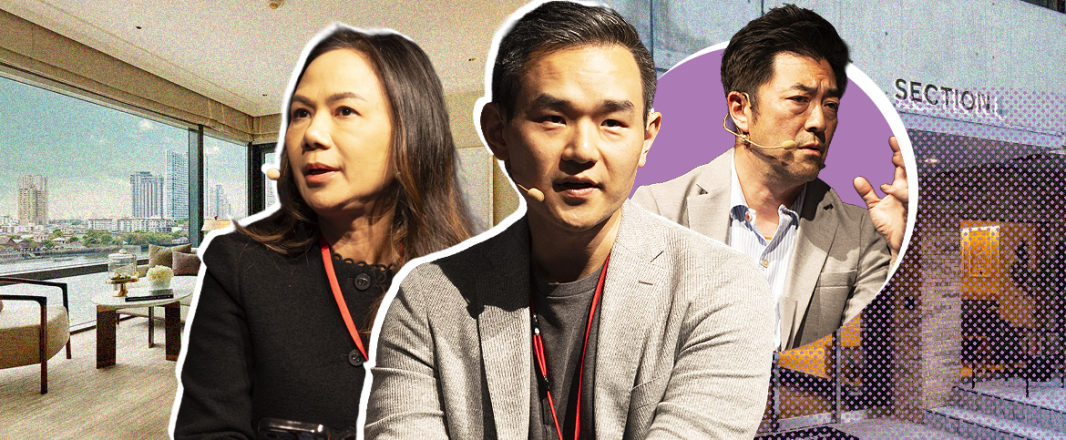
“Is growth just a more optimistic word for survival?”, asked Morris Sim of Montara Hospitality, while moderating a panel about rethinking hospitality.
“We’re fairly lucky that we’ve been able to grow primarily through management agreements with some co-investment,” said Howard Ho, CEO & Co-founder, Section L. “If I look at how the big hotel companies came to be, they started by owning assets before going asset-light. We’re going the other way around – starting asset-light, and then exploring how we can participate in ownership on a selective basis. We’re close to breakeven but we’ll continue investing in growth.”
“To me it’s not about surviving,” chimed in Kamonwan Wipulakorn, Managing Director of Bound and Beyond. “Surviving sounds a bit negative. For us it’s about sustainability.”
These candid remarks underscore the reality facing all hotel brands – you may start small and niche – but the growth imperative demands you chart that growth with vision, values and meaning if you want to stay true to what you created in the first place. This delicate balance between growth and staying true to purpose was captured in a panel during WiT Japan & North Asia 2025 featuring two different hoteliers – one grounded in Bangkok’s ultra-luxury scene and the other reshaping Tokyo’s serviced apartments.
From riverfront icons to urban intimacy with KAIA
Kamonwan represents the team behind Capella Bangkok, recently crowned the #1 Hotel in the World by The World’s 50 Best Hotels. But she’s not resting on awards.
“We didn’t build the hotel to win awards,” she said. “But it proved the power of intention. The charm of the riverfront, the bar, the restraint in design – it all came together.”
Now, she’s launching a new brand, KAIA, to distill what she calls the “new luxury”, not defined by excess, but by emotional resonance, cultural connection, and impact.
“Luxury today is not about abundance,” she said. “It’s about relationships. It’s about reconnecting – to nature, to community, to yourself.”
Low-touch, high-connectivity
If Kamonwan plays at the high-touch end of the spectrum, Ho is crafting a low-touch, high-connectivity model at Section L. Founded in February 2020, “the worst possible time” to launch, he joked, Section L rethinks the apartment-hotel for modern travellers and digital nomads.
“Hotels without strangers” is their guiding philosophy. Guests aren’t just served – they interact, share stories, and form spontaneous community.
Unlike other apartment-hotels that began during the Airbnb boom, Section L was born in adversity, forcing the team to clarify brand purpose and guest values. That clarity, Ho said, shapes everything from employee recruitment (“we hire people with no hotel background”) to guest loyalty.
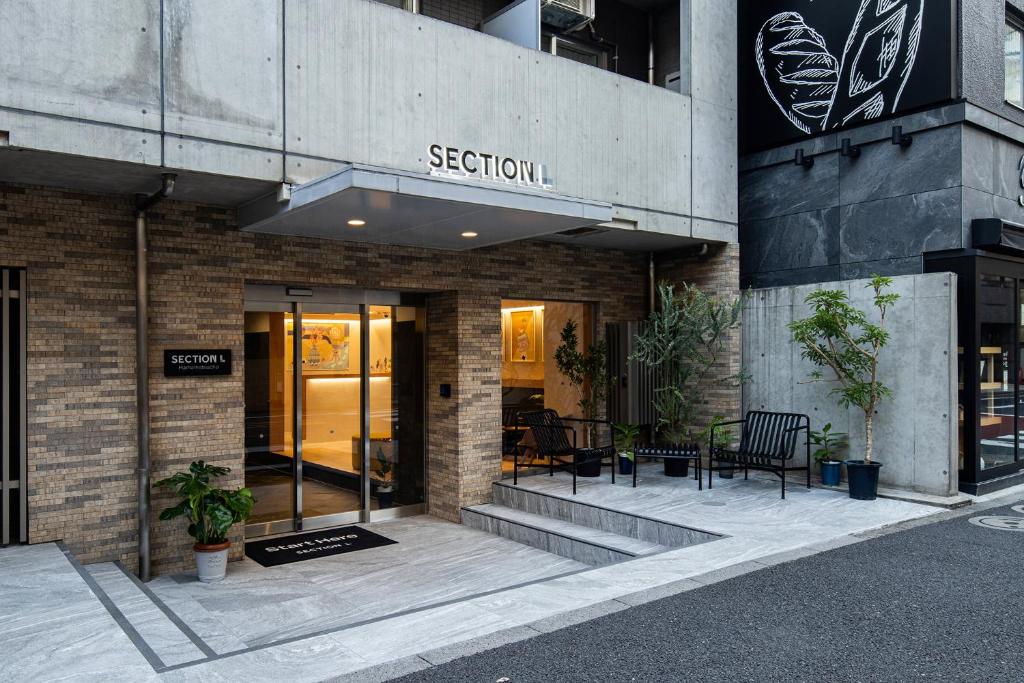
Section L Hamamatsucho, Tokyo
They now operate licensed hotels with 24/7 staff – lean but essential – focusing on extended stays with kitchens and washing machines, a gap Ho identified in Tokyo’s limited corporate lodging options.
To grow, it is launching a new brand called “VOL.” (short for Volume, meaning a collection of stories). “Each property is designed to be a time machine of its neighbourhood, telling its evolving story through the eyes of our neighbours. By paying tribute to what came before and celebrating where we are now, we play a role in the evolution of our city,” said Ho.
Its flagship, which will be a new-build completing in winter 2027, will offer “ample common areas and F&B outlets for guests and locals to experience our interpretation of Asakusa.”
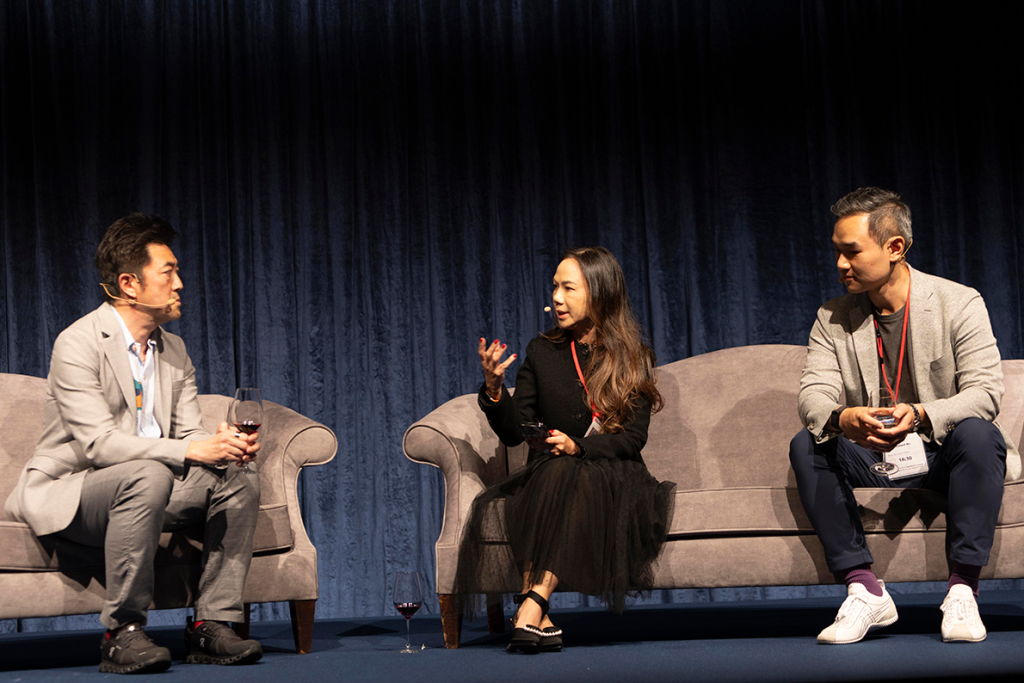
From left: Morris Sim [Moderator], Executive Director, Montara Hospitality Group. Howard Ho, CEO & Co-founder, Section L. Kamonwan Wipulakorn, Managing Director and Executive Director, Bound and Beyond Public Company Limited
Workforce, culture and trust
Both speakers stressed that hospitality’s biggest battleground is people – not AI, not revenue management.
Kamonwan reflected on her pivot from global brands like Marriott and Accor to a new people-first philosophy. “In the past, it was all about SOPs. Now, it’s all about soul.”
She emphasized the need for “talent transformation,” saying, “We are building for the future, not for today. That requires mindset, not just skillset.”
Ho echoed that, sharing how Section L promoted 15 associates internally last year. “We realized we don’t need 10 years of experience. We need people with the right attitude—people who say, ‘I’ll solve the problem.’”
Morris Sim introduced a framework from Stephen Covey’s Speed of Trust:
Trust = (Credibility + Reliability + Intimacy) ÷ Self-Orientation.
Both speakers nodded in agreement. “Trust,” Kamonwan said, “starts with us, as leaders. And it becomes the currency for everything we build for the next 20, 30, 50 years.”
The tech that’s invisible and essential
Despite all the buzz, neither leader is overly wowed by flashy tech.
“Tech must be invisible,” said Kamonwan. “You shouldn’t see it, you should feel it.”
She sees tech as enabler, not centerpiece—especially as KAIA expands into medical wellness, sustainable tourism, and deeper community engagement.
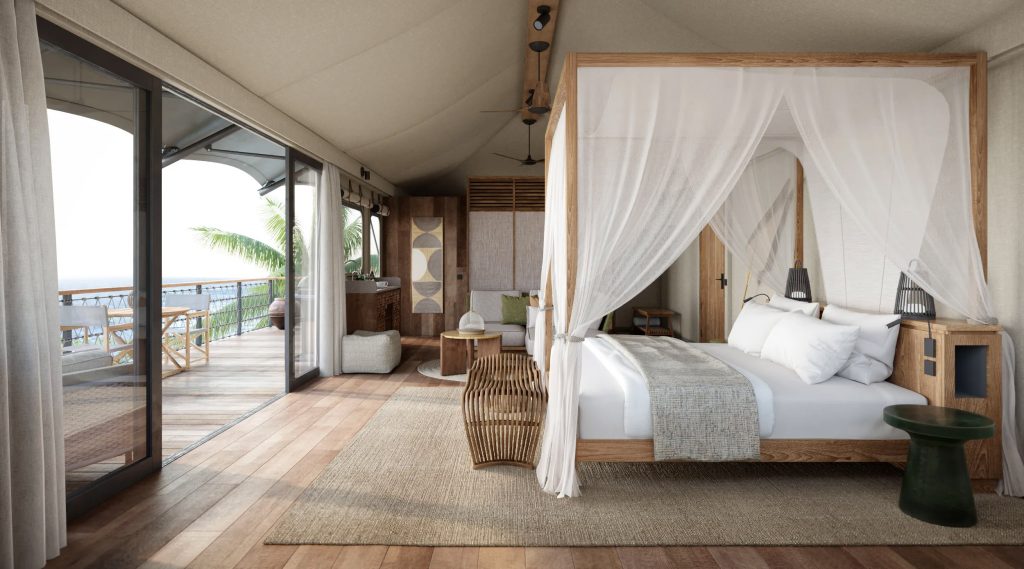
KAIA Koh Phangan
Ho shared his wariness of AI’s pace. “If Johnny Ive and OpenAI build a device that replaces our phones, we may stop using parts of our brain,” he mused. “But it also means the value of human service will increase. We’ll crave face-to-face more.”
The next frontier
Both leaders were asked what keeps them up at night. For Howard: growth. For Kamonwan: how to scale authenticity.
“Staying true to your purpose at scale is hard,” she said. “But necessary.”
Their visions are ambitious. Section L plans to grow in Tokyo and beyond, targeting a generation that doesn’t want a hotel – they want a story. KAIA is exploring new ground in Koh Phangan, with a model that’s minimal in footprint, maximum in impact.
“This is not a hotel for today,” Kamonwan concluded. “It’s a hotel for 2050.”