Tania Platt didn’t start in travel. She started in telecoms, selling international phone minutes – Mother’s Day and Ramadan were peak days – just as they are now in travel. That deep understanding of human connection and the friction in how it’s facilitated still drives her today in her role as Global Head of B2B Travel at Visa.
In her conversation at WiT Phocuswright Middle East 2025 with Phocuswright’s Pete Comeau, Platt brought clarity to the evolving world of B2B payments in travel – how it’s changing, where it’s converging with consumer trends, and what needs to happen for it to keep up with increasingly experience-driven travellers.
“I rocked up to my hotel at 1am and had to pull out a credit card. Why?”
It’s the kind of moment most travellers know well: the friction point where the joy of the journey hits the reality of fragmented payments. “We’re still asking guests to show physical cards at check-in,” said Platt. “Why is that so hard to fix?”
She believes the seamlessness of consumer travel payments – think Uber – is exactly what B2B systems need to emulate. “That’s why the OTA model is gaining traction. Everything is bundled, pre-paid, and you can add on seamlessly. That’s the dream.”
Merchant model momentum
Visa’s own research shows a shift in the OTA world from agency to merchant models – led by Booking.com, which now has over 800 people in its payments team. “It’s about reducing fraud, increasing control, and enabling value-added services,” she said. “And it’s not just happening in the West. In this region, smartphone penetration and digital wallet usage are accelerating this shift.”
Creators, curated experiences, and the conversion gap
Platt lit up when the conversation turned to the creator economy. “Creators are amazing at inspiring travel but they still struggle to monetize,” she said. “What if they could become the front-end, and we power the bookings behind?”
She referenced her own Gen Z son, who planned a trip to Sri Lanka entirely via Instagram and TikTok but had to book everything manually after discovery. “This is where AI could play a role, making the leap from inspiration to action seamless.”
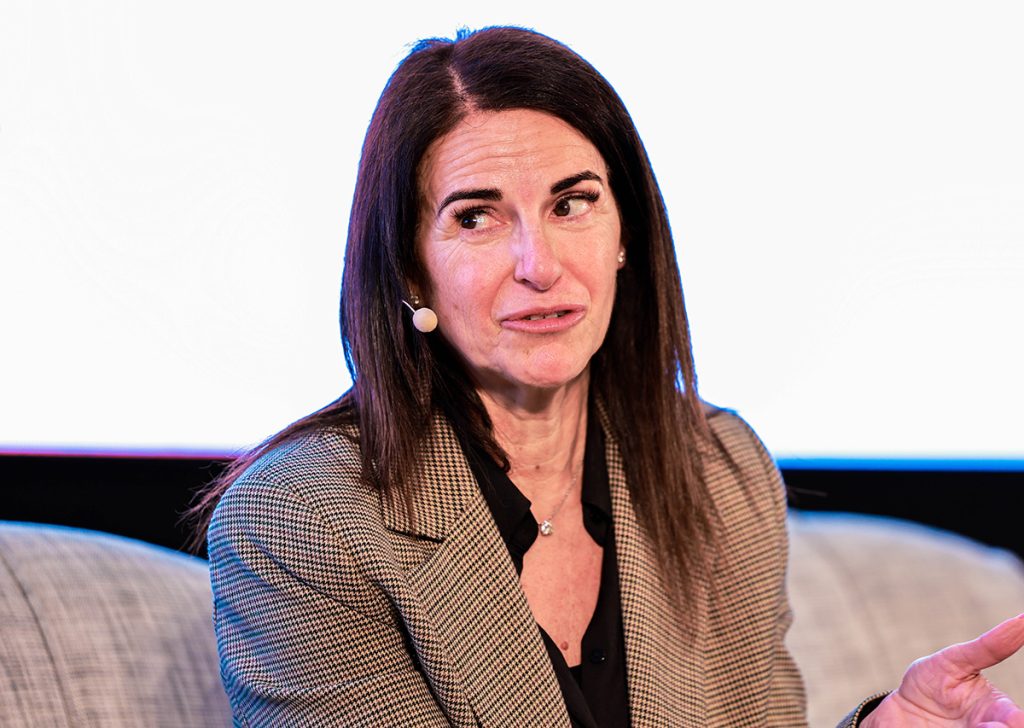
Tania Platt, Global Head of B2B Travel at Visa, believes the seamlessness of consumer travel payments – think Uber – is exactly what B2B systems need to emulate. “That’s why the OTA model is gaining traction. Everything is bundled, pre-paid, and you can add on seamlessly. That’s the dream.”
Hidden gems and the rise of “Experiential Stack Travel”
Visa’s data and Platt’s personal experience show a growing preference for multi-stop, immersive travel. “It’s not just poolside anymore. People are chasing experiences – concerts, sporting events, wellness, culture – and stringing them together,” she said. “It’s travel built around memory-making.”
She highlighted the surge in inbound travel during Ramadan and other cultural periods, and the need for more supply to meet that demand. “We’re seeing travellers come in for religious events while locals stay home. That flips the script and opens up a new opportunity for suppliers.”
AI’s role: Fraud, flexibility, and frictionless flow
Platt sees AI playing an increasingly vital role in fraud prevention, a top priority in payments. But she’s also excited about its potential for personalisation. “If a system knows what you value, it can recommend and bundle the right services and process payment seamlessly. That’s a win for everyone in the chain.”
Personal travels: Eiffel Tower & the Taj Mahal
Asked to share her favourite recent trips, Platt pointed to two: a visit to the Eiffel Tower during the Olympics, and her long-delayed Lady Di moment at the Taj Mahal. “I got a local guide and photographer who literally cleared the crowd. It was bucket list magic,” she said. “I’d postponed that trip five years ago when COVID hit.
Going back now, it was meaningful.”