“Always go a little further into the water” – David Bowie
While much is written about the technology toys of the future, the part that too often seems to be lacking is an exploration of just how creative tomorrow’s talent needs to become, in order to help master the challenges ahead of us.
When it comes to doing the sort of work that matters, music and cultural David Bowie’s advice was simple: to be out there on the edge from a creative point of view, those with ambition need to be try and go to a scary place – then if it’s not scary enough yet, move out further.
“If you feel safe in the area that you’re working in, you’re not working in the right area. Always go a little further into the water than you feel you’re capable of being in,” Bowie advised.
“Go a little bit out of your depth, and when you don’t feel that your feet are quite touching the bottom, you’re just about in the right place to do something exciting.”
In this story, we meet three creative-driven travel practitioners – an artist, an influencer and an entrepreneur – who are combining passion and purpose in a way that takes them into deep water, in a big to move the needle forward.
The Artist: A Fashion Walk on the Wild Side
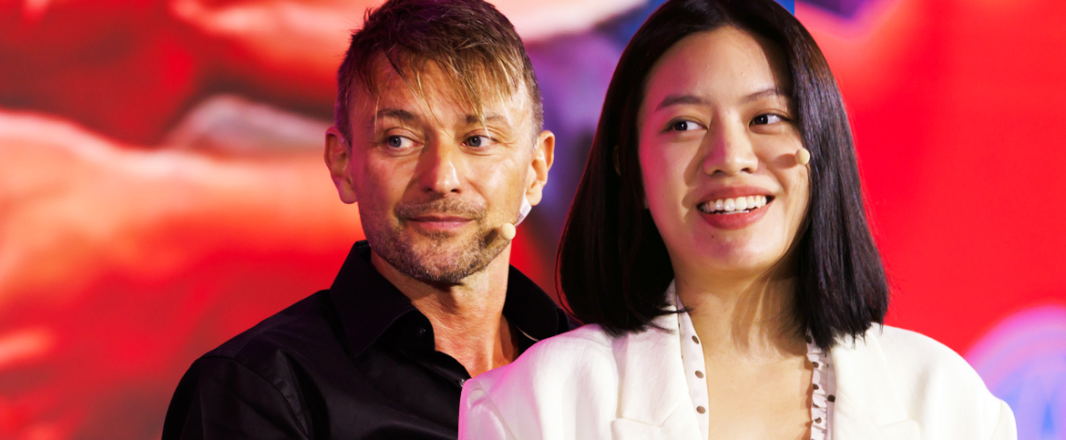
While nobody should ever second-guess an icon, it seems clear to the casual observer that Bowie would approve of the deep creative waters that Kristian Schmidt has found himself in.
“We live in a time when seeing is no longer believing,” noted WiT founder Yeoh Siew Hoon as she introduced Schmidt to the WiT Singapore stage. “With a string of words, AI allows me to steal ideas and create images that never existed. For artists, meaning matters more than ever – our guest today has built a career on meaning.”
The Photographer and CEO of the Livingstone Club is an internationally acclaimed nature and high-fashion photographer, who has produced an impressive variety of commercials, musical videos and movies.
It was his most iconic ‘Whale Shark Series’ which really caught the public imagination, and propelled his art photography career into deep water – and to a whole new level. After scuba diving in Isla Mujeres, Mexico, Schmidt became intrigued by the whale sharks in particular, blown away, he says, by their gentleness and beauty.
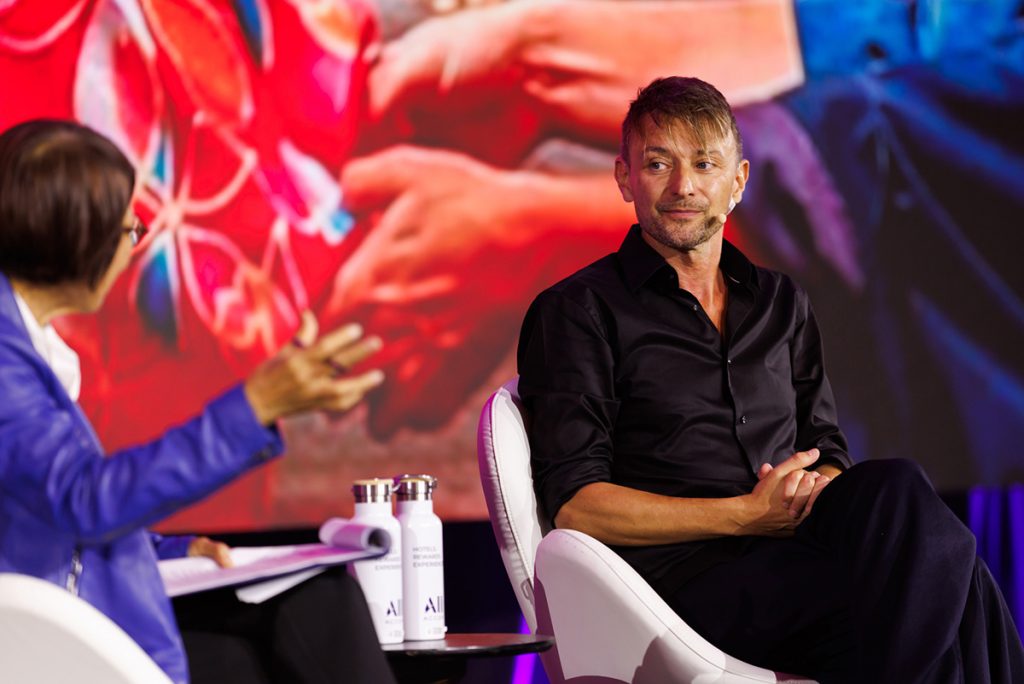
Kristian Schmidt: “I never know what I’m going to get. I have an idea of what a shot wants, and I won’t get that shot again.”
A fashion shoot with a difference was set up in a spot in the Philippines, where whale sharks were plentiful, and could be found close to the surface, feeding vertically. Working with “an incredible underwater model” and an amazing team together, the warm weather shoot was one of the most pleasant he’s had – and also one of the most successful.
Shooting with wild animals does of course come with its risks, he notes. But the key is to learn their unique language. “Animals, you’ll know if something is wrong – so you don’t really do anything if something is up with an animal. The most difficult thing is usually the elements, such as the currents or waves.” he adds.
“I have been whacked by whale shark tails,” he recalls. “But nothing extreme. And working with lions, for instance. You’ll know when they’re angry or upset.”
Generally, he says, the true wildness of a photo shoot tends to come more from the human element. “Behind the scenes, it’s full of comedy and chaos,” he muses. Everybody’s drowning, the lights are falling. It’s usually very comical what’s happening.”
“You get used to that though: I never know what I’m going to get. I have an idea of what a shot wants, and I won’t get that shot again,” he describes of his process. “You take this idea of what to do, and work around the elements.”
The challenges of fieldwork doesn’t necessarily provide as much threat to photographers, as the threat contained by technology. So how does the shadow of AI disrupt an artist like Schmidt?
“It doesn’t. For me, I’ve been very lucky, because we sell prints in many galleries around the world and the sort of price, and the clients that are buying that level of art, don’t want anything fake. They want the story behind it: they want it to be real,” he asserts. “So it hasn’t been a big issue.”
While AI tools can offer artists incredible estimations of reality, this is missing the point of living and sharing the genuine experience. “The client wants the real thing: and then, selfishly, yeah, I want to experience the shoot myself, so I want to go do and these things.”
As a photographer, does he feel that it becomes even more important to tell the incredible stories of the experiences that go into his shoots? “Yeah, these clients do want the story. Obviously in fashion, it’s so much more efficient and fast to use digital tools. But for art, it doesn’t seem like it’s changing.”
Though he acknowledges that arenas like TikTok are very trend driven, Schmidt personally chooses to adopt a style that ideally, will never go out of style.
“When I’m shooting my picture, is very important for me to try to make it timeless, so that I’m going to be able to sell it in 10 or 15 years.”
So what is the image that he has yet to hunt down? Schmidt sees a lot of creative potential in volcanic photography. “I’d like to be looking up to the image of lava,” he says. “So the lava comes down to the ocean at nighttime, in a whirlwind of incredibleness. So we’re going to shoot a model, with a lot of fabric, in front of us – under a Guadalajara nighttime.
“Getting that idea is very hard to do – but it’s fun for us, as is the adventure of going through it all. So much fun.”
The Influencer: Go against the flow and tell the authentic story
In the slightly less pure process of searching for customer attention, what is the place of human creativity? In a social marketplace where we are seeing the dawn of AI-powered influencers, is there still a place for authentic human voices?
One influencer in particular believes that there absolutely is. Dubbed by WiT as “a cultural archivist with a camera”, Prestine Davekhaw, is a content creator whose long game mixes social justice with cultural preservation.
A documentary Photographer for Disappearing Cultures and the Founder of MalaysianPAYGAP, Davekhaw believes that for some people, in today’s marketplace, standing for something might just be the secret to really standing out.
“I think somehow, because AI can copy almost everything, it becomes easier for storytellers who represent authenticity. The only thing you need to do is just to ignore AI and go slow, go old school,” she quips.
“As a photographer and storyteller, I focus on disappearing cultures – so as long as I can work with this last generation of people upholding the tradition, I don’t need AI to try and tell their stories. I can be the one to learn their voices and then amplify them.”
Has she ever been tempted to use Chat GPT to write her content? “No. You do need to have very clear idea of what you want to say before GPT can come and influence it,” she asserts. “So to achieve authenticity, your initial input should be almost like 95%.”
For those producing their own human-centric content from scratch, AI is best mainly as a sub-editor. “I use GPT for correcting my grammar,” she adds. “But even after it corrects my grammar, I often feel like its drops some of that humanity out of my sentences.”
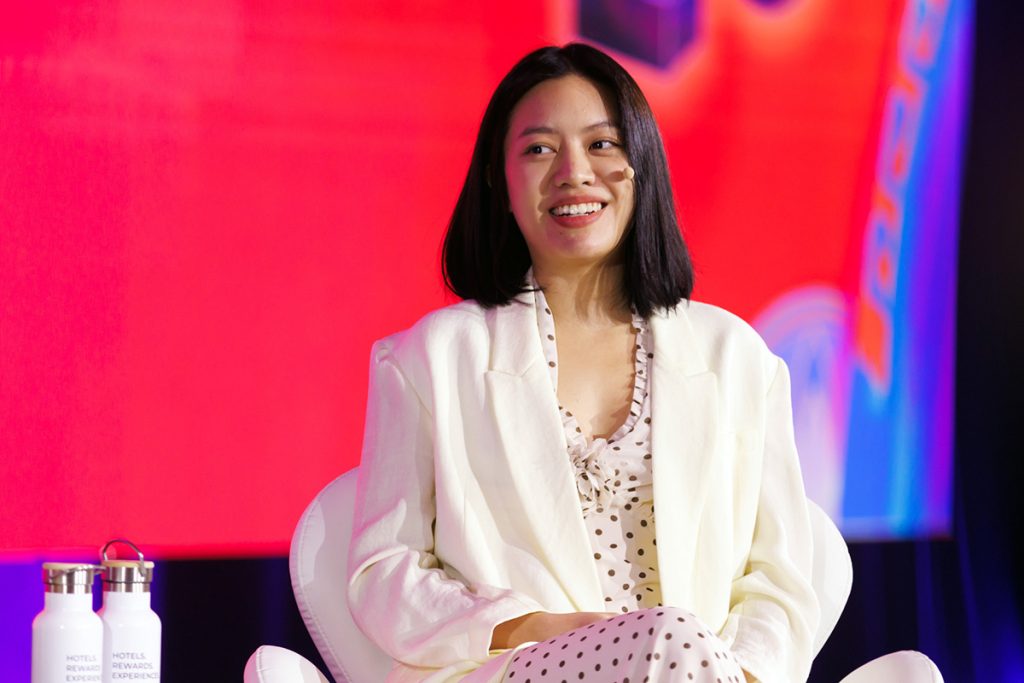
Prestine Davekhaw: “I hope that more travel brands can work with the local communities – really work with the people – because this could really be our last 20 years of working with them, before they disappear.”
Davekhaw challenges those who only see the commercial value of producing 30 videos a month automated, instead of 10 human-made ones. Is the end result, especially for her customers, really better with machines? “What’s the meaning of those 30 videos a month? Will they get into people’s hearts when people see them? To me, I think that would be a challenge to authenticity.”
Sometimes though, the quest for authenticity can feel like a lonely place. So what personalisation tech tool would she actively use? “I imagine something like a travel DNA for like, taste mapping,” she posits. “A lot of websites have that algorithm, but it’s not the core branding.”
She would love to travel to an industry event in Eastern Indonesia for example, and be instantly connected with likeminded folks – who could ultimately help share more great travel ideas. “If I went to Sumba for an event, I’d get to meet people with like-minded taste, and discover the other places they’ve been, that I also want to visit.”
Going forward, she hopes that the mirage-like effects of automation tools does not stop travel practitioners from focusing on what really matters to travel customers – which is genuine human connection.
“I think travel brands are definitely in luck right now: they can scale really fast,” she notes. “But speaking on behalf of the local communities and people upholding cultural heritage, I hope that more travel brands can work with the local communities – really work with the people – because this could really be our last 20 years of working with them, before they disappear.”
The Entrepreneur: Storytelling and connection bring customer love
Many in travel will know Barry Smith from his previous life as co-founder of Skyscanner, which he exited in 2016, after the company was sold to CTrip [now Trip.com] for an eye-watering £1.4 billion.
Yet after what he describes as a sometimes-bumpy post-exit experience, Smith eventually found his calling in storytelling. He is now a co-founder for Noah Media Group, a London-based, Emmy-award winning technology and content production company this is notable for the eye-raising climbing documentary, 14 Peaks: Nothing is Impossible.
A recent partnership with Beautiful Destinations is now helping Noah Media to work with the biggest travel brands to tell stories. As such, he is invested in the business of bringing customers the quality stories they need, when they need them.
“Being able to get users to your product in the first place, but to retain them over time, you need to build human connections, and that’s done through storytelling,” says Smith.
While capturing attention may be easier than ever thanks to social and automation tools, gaining loyalty and trust is much harder, he argues. “Just showing a picture of beautiful beach is not enough: you need to be able to engage with people over time, and I think that’s when they will keep coming back to you.”
“And I think that’s done with proper storytelling, such as the big digital project by Klook on Netflix with Marie Kondo,” he notes. Such deals suggest to Smith that travel companies do have an eye for genuine stories. “I’ve been watching that, and it’s not an advert. That’s storytelling – human connection. And that’s what’s going to get people coming back.
“I’m not going to transact with any site I don’t trust – and trust is a number of things, of which I want to connect on a human level.”
Once you’ve made that connection, what comes next? For many travel companies, overcoming what Smith calls ‘The Maldives Effect’, is critical. Where many people might see a beautiful Maldives photo and seek to book – what they don’t want to find next, is a link to 20 different atolls, and no assistance on how to book.
To this end, Smith is excited by deals in the market, such as the one Expedia recently signed to create what its release calls “world-class, viral travel content at-speed and at-scale”. Such tie-ups help demonstrate the “seamless integration between platforms” that can only benefit customers looking to connect inspiration to the type of quality product that speaks to them. “One of the biggest opportunities in online travel is building that bridge,” says Smith.
So what would the story-driven founder appreciate in a personalised travel tool? “One of the guys mentioned it (yesterday) that the LLM he uses knows him better than his wife,” he smiles. “Just think about what they know about personal preferences over time, and these systems will know so much about you.”
Smith would like a tool that makes super-personalised purchases effortless. “I want videos that I click on, and it uses my particular LLM or some form of agent, to then help me with that transaction,”
However, such power must come with great responsibility. “The suppliers also have a job to do to use that information properly,” he cautions. “Don’t send me to your home page, asking me which atoll I’d like.”