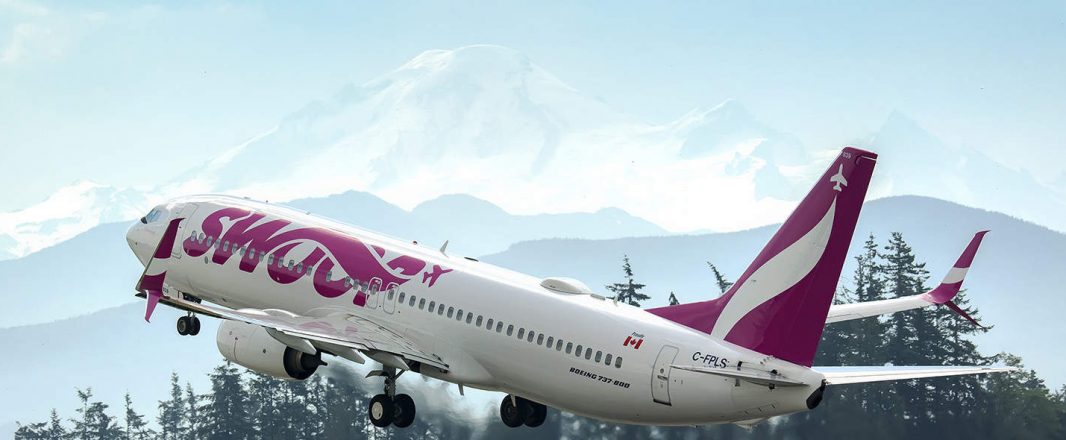
To say that it’s been a major adjustment for Steven Greenway, as he went from Scoot to Swoop, is probably the understatement of the year. Not only was it a change in model, from low cost to ultra low cost (yes, that’s the new term these days, ULCC), it was also a switch from the tropics to the (almost) Arctic conditions of Canada and a completely different market.
Greenway, who served as head of commercial of Singapore-based Scoot from 2011 to 2016, arrived in Calgary in March 2018 to take on the reins of Swoop, the new ULCC set up by Westjet to “swoop” into its home market with a new business model. Set up in September 27, 2017, it began flights on June 20, 2018 and Greenway’s mission was to see it take off.
Clearly, it has been a success as Swoop was recognized as Startup Airline of the Year at CAPA’s Global Aviation Awards of Excellence 2019, handed out in Malta last December.
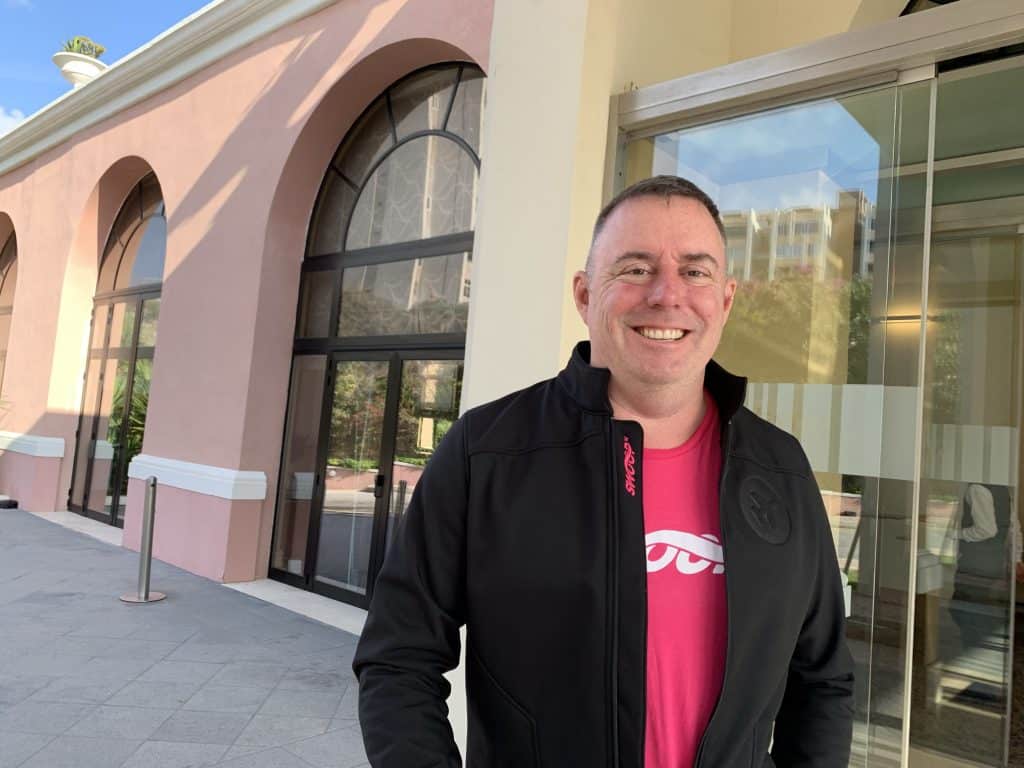
Relating the Swoop story, Greenway said, “March is pretty extreme in Calgary. Let’s just say, there are no snowstorms in Singapore.”
Beyond the weather, the regulatory environment is also different as well as the size of the market. Canada’s population is 35 million people, while at Scoot, he had the whole of Asia (4.46b) as his canvas. Plus, Canada is known as the “graveyard of airlines” – 26 carriers have died, trying to work the market, said Greenway.
Some of the reasons – air fares are high, and so most Canadians do not fly; it’s extremely seasonal; and it’s highly unionized. “It’s ironic, it’s one of the richest countries in the world and yet a lot of people have never been on the plane before. The price point was beyond many Canadians,” said Greenway.
With blank sheet to work from, keeping unit costs low was key
What was exciting was having a blank sheet to work from. “We knew we had to focus on unit costs. If we don’t do that, we are dead in the water. This was tough, Canada’s an incredibly expensive place, but having a blank sheet also meant we could do a lot of digital stuff to control costs where we could. We had to be fearless.”
Getting lift-off was tough. “We started in June and thought we’d launch a route every week but we went into winter last year with one sales channel, our website.”
Getting the right route network was also critical. And here’s another lesson Greenway learnt from his colleagues at Westjet – “no one wants to go from cold place to cold place”.
“In the early days, we were over-exposed to the Canadian market,” he said. Today, it’s punching through North America, Mexico and Jamaica, to offer Canadians a chance to get away from the cold.
Its longest sector is Edmonton-Orlando (six hours) and its shorthaul network where margins are higher is limited. “We have to confront the sheer geographical expanse that doesn’t help the low cost segment. Even before you start making money, taxes and fees, even in secondary airports, are about $90.”
It also had to change consumer behavior. “Canada, to me, is 10-20 years behind. They love going on packaged holidays – a $500 package that includes everything, and they want the sun. This is still very predominant in the psyche. We had no packaging and we bled in the early days.”
Despite these odds, Swoop has flown more than two million people, operates 900 flights a month and was profitable the first calendar year. And 50% of its fares are under $100.
How do you make money on that, I asked Greenway. “Part of our mission is to stimulate the market. When we did surveys, we found we weren’t taking business from Air Canada or Westjet – we were stimulating a completely new market with a completely new product.”
Perhaps there’s something to be said about low expectations but Greenway said that based on its NPS score of 51, 95% of customers said they would recommend Swoop and 94% said they were satisfied.
“It’s simple – pay nothing, and you get a new aircraft and wireless, and you walk away. It’s a really good deal. It’s not that we have flat beds and caviar. It’s what they pay and the experience they have. People simply can’t believe it.”
Digital first was also critical. “We have no paper in the cockpit to offices. We have access to the right talent, Calgary is like Houston.”
In retailing, the vast majority still purchase via the browser. “They check the price on mobile and maybe 20-30% transact.”
However it is making moves to push mobile and is launching a loyalty programme shortly built around personalization. “It’s no annoyance. The booking path is simple, no bundling, we get the data, we offer you. We have a host of features on mobile that’s not available on the website. We use text, not WhatsApp. They have to download the app.”
This year, it will shut down its contact centres. “If you want a cheap fare, we have to force you to behave differently.”
It will be taking delivery of its 10th aircraft shortly. “We wanted to see if the concept would work and it seems it does. People are voting. Safety and punctuality are our key priorities and we want to grow beyond 10 aircraft, maybe 30-40 aircraft, and add new secondary airports. We want to digitalise everything – scale and drive costs lower.”
“Amazonisation”, sustainability key challenges ahead
Said Greenway, “Adjusting has been interesting – it’s driven home the focus of keeping costs low. In Singapore too, airport taxes are doubling and it’s happening all round the world. If you can’t control costs, you are in trouble.”
In his time at Swoop, he’s seen changes in the market. “If you look at Asia, we never had spontaneous behavior till 10-15 years ago, now people in Singapore say, let’s go to Bali for the weekend. Here, we are seeing a lot more weekend travel – people from Calgary going to New York; students going to other provinces to study. That’s the worst type of business – air fare only, no baggage, lowest of the yield – but that’s how AirAsia began.
“When Scoot started, there was no LCC in Singapore, now it’s 30% of total traffic. Our 2m pax – they are not just millennials, but the full demographic, new Canadians such as Indians going for weddings, first time or infrequent travellers.”
Looking into 2020 and beyond, Greenway said the new emphasis on sustainability cannot be ignored. “Yes, it’s stronger in Europe than anywhere else but it’d be a folly to think that wave will not hit us. We are making sure we are prepared for that and run a sustainable business.”
Automatic flying vehicles has also become less of a pipedream. “If these vehicles can travel up to 1,000km, then you have to consider routes like Singapore to Kuala Lumpur where the total journey door to door is four to five hours. A lot of airlines have exposure to shorthaul routes and it will be interesting to see how that plays out in 10-15 years.”
The “Amazonisation of travel” is also real, said Greenway. “I am in a room with staff, who buy from Amazon, who pays for Prime, who interacts with Amazon more than once a week. They are collecting data frequently from customers. How are they going to use the data and move into travel? Do they commoditise airlines so we are one more item in the basket? If someone recommends it to you and ratings are good, do you care where you buy that flight from?
“Are airlines in a defensible position? We started on the backfoot as an industry and it will all be laid to bare the next two years. We are already seeing it in Asia and North America, and I see this happening in the five to 10-year range.”
As for what he misses most about Asia, he said, “The mercantile nature of Asians always wanting to do business, doing a deal. There’s a trading culture inherent in the region.”