


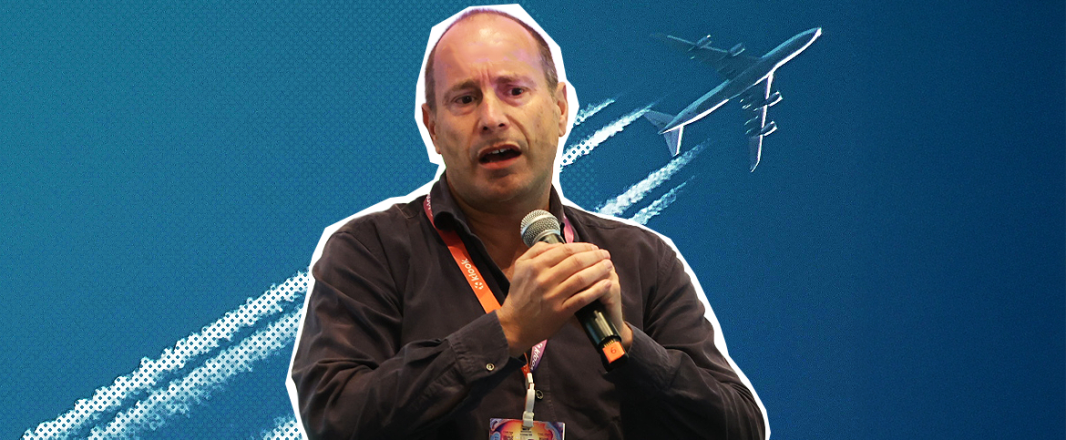
Three coders, one spreadsheet, and a restless idea that refused to stay grounded.
When Barry Smith, Gareth Williams, and Bonamy Grimes decided to start a business together, they had no idea what shape it would take. All they knew was that they wanted to build something – and that whatever it was, they’d do it together.
Speaking at the WiT Bootcamp on October 6, as part of WiT Singapore, Barry Smith, co-founder of Skyscanner, recalls, “We vowed we’d start a business. Whoever came up first with an idea that the other two felt could fly, we’d go all in.”
What followed was a friendly arms race of imagination. Dozens of ideas surfaced – some clever, some crazy. “I think Skyscanner was probably idea number 50 or 60,” says Smith with a grin. “Each of us had an ego that wanted to be the one whose idea the others backed.”
Among the early rejects? Smith’s version of Spotify – years before Spotify existed. And Bonamy’s invention for remembering passwords based on how you typed them – something like a digital fingerprint before biometrics were a thing.
But the spark came from Gareth. His brother, a ski instructor in the French Alps, needed regular flights between London and Geneva. Gareth – a coder frustrated by the inefficiency of checking each airline manually – wrote a script that scraped fares from Ryanair, Buzz and Go Airlines, and compiled them into a neat spreadsheet.
He showed it to Barry and Bon: “Here are my flight prices for the next three months, day by day. Would you use this?”
Barry laughs at the memory. “I looked at Bon, devastated that Gareth had come up with the idea.”
That spreadsheet would become version one of Skyscanner.
Bootstrapping in the bust
It was the early 2000s – the ashes of the dot-com bust still warm. The idea of another internet startup didn’t exactly inspire confidence.
“Imagine three coders pitching to investors right after the crash,” says Smith. “We’d say, ‘We don’t know the commercial model yet, but we know travellers need access to all flight data.’ You can guess how well that went down.”
They didn’t raise money. Instead, they bootstrapped for eight long years – contracting for income, coding by night, and scaling quietly.
“We just shared income and kept going,” says Williams. “It wasn’t glamorous, but we had loyal users. When we finally did raise capital, it was because we knew the product worked.”
Between 2006 and 2008, they raised a modest US$6 million – the only primary capital Skyscanner ever needed. Later funding rounds, including Sequoia Capital’s headline-making investment, were secondary – for early shareholders and staff.
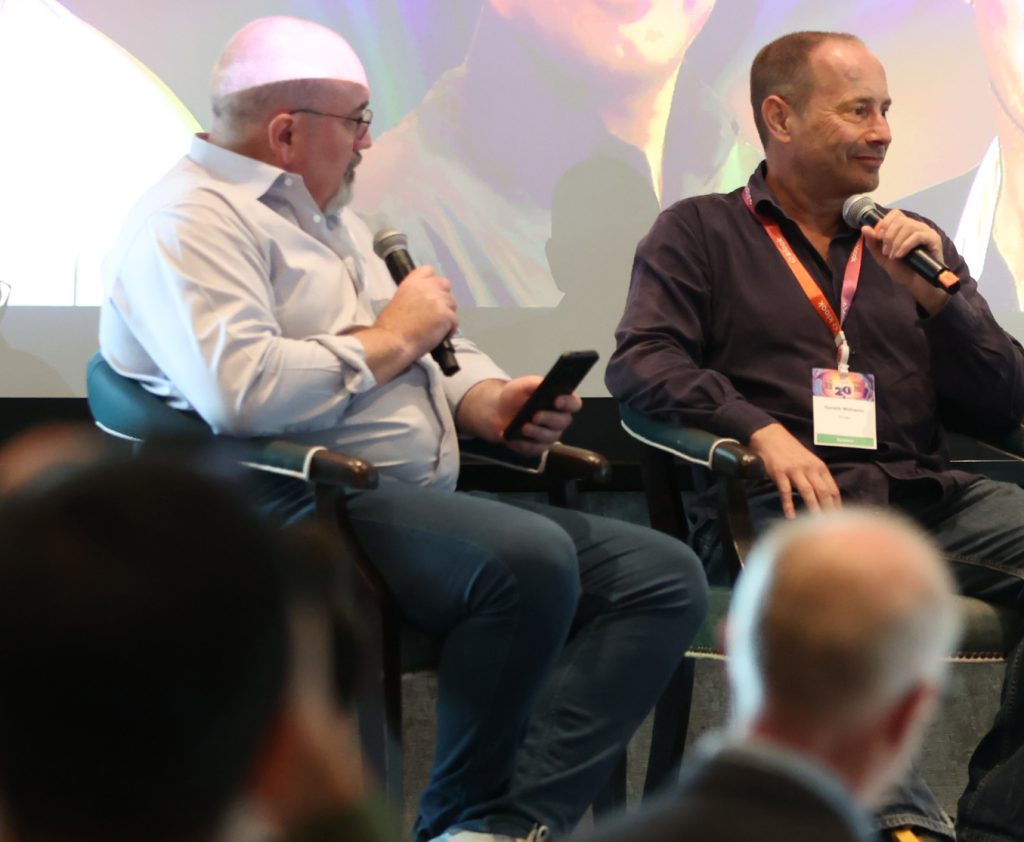
Gareth Williams, co-founder of Skyscanner, interviewed by Agoda’s Timothy Hughes during the WiT Bootcamp at WiT Singapore: The Next 20
The sequoia moment
In the mythology of startups, few names loom larger than Sequoia Capital. Back in 2003, the trio would sit around a kitchen table in Edinburgh and joke: “Imagine if Mike Moritz from Sequoia ever invested in us.”
Ten years later, that joke became an email.
“I got a note from Mike’s assistant saying they wanted to learn more,” says Williams. “I did the exact thing I now hate – I wrote back thanking them and saying we didn’t need the money.”
That humility or perhaps defiance intrigued Sequoia. When they saw how far the team had come on so little capital, they flew to Edinburgh.
“They realised it was a genuine bootstrap story,” says Smith. “They saw we’d built something real, with no external help.”
The Sequoia deal changed everything. “It leveled us up,” he adds. “From a local Scottish startup to a company with a global internet valuation. Suddenly, we weren’t ‘the guys in Edinburgh’ anymore. We were in the same league as our American competitors.”
Scaling smart: The art of going global
While others were burning through cash, Skyscanner was engineering its way to efficiency.
“We built multi-language and multi-currency support very early,” says Williams. “Even before we expanded internationally, we were ready.”
Their localisation system allowed them to add two or three new languages every few weeks – not crude translations, but fully localised versions tested and re-tested.
“Our competitors in the US would create a whole new codebase every time they added a language,” says Smith. “That’s not scalable.”
It was smart, quiet innovation – the kind that doesn’t make headlines but makes history.
Yet Williams is quick to point out that product innovation alone isn’t enough. “If you don’t innovate in how you get customers, you’ll just make Google and Meta rich. We cared deeply about the product, but we had to learn marketing – even if it felt like dipping our feet into a horrible world.”
Back then, SEO was their engine of growth. Today, it would be something different – but the lesson remains timeless: distribution innovation matters as much as product innovation.
Building culture in the cold
Edinburgh isn’t exactly the first city that comes to mind when you think of global tech hubs. But what it lacked in scale, it made up for in soul.
“There’s a great computer science school at Edinburgh University,” says Williams. “The talent was there – they just didn’t yet understand the web economy. So we built that culture ourselves.”
And because few companies were poaching, people stayed. “Our CTO joined as a graduate,” he says. “In Silicon Valley, people change jobs every 18 months. In Edinburgh, they stayed for the journey.”
More important than pay, they found, were purpose and autonomy.
“When we asked what really motivated our engineers, it wasn’t salary,” says Smith. “They wanted to work on the toughest technical problems. They wanted to see their code go live. They wanted good tools and the freedom to build.”
That, more than perks or pay, became Skyscanner’s culture code.
When East met West – The beautiful exit
Williams had sensed their future could be in Asia. His first business trip to the region was to attend a WiT conference around 2006, after which he and his co-founders became regular speakers, learning about the region as well as building relationships.
Over time, Skyscanner caught the interest of Ctrip and when Skyscanner sold to Ctrip (now Trip.com Group) in 2016 for $1.74 billion, it felt like a full-circle moment – Asia meeting Europe in a story of mutual respect.
“I’d met James Liang and Jane Sun years before,” says Williams. “They said all the right things about preserving culture and they delivered.”
Williams stayed on as CEO, overseeing the transition. “It was important to me that it was a good acquisition for them too. They put up a huge amount of money, and it’s gratifying to see that it worked out – for Ctrip, and for the people who stayed.”
Smith, by contrast, laughs at his own post-exit misadventures. “I did everything you’re told not to do, made random investments, joined advisory boards I didn’t care about. I felt like a car going 200 miles an hour that suddenly stopped. I just needed to keep moving.”
What they’d tell the next generation
Twenty years later, Skyscanner’s story reads like a playbook for founders everywhere –especially those outside the Silicon Valley bubble.
Barry Smith’s first rule: Never drop the hiring bar.
“In the early years, we sometimes settled for Bs because we were desperate to fill a role. It never worked. Not once. An amazing engineer is worth a thousand good ones.”
Gareth Williams’ rule: Hiring should be the last resort.
“With AI, there’s so much you can automate before adding people. Every hire adds complexity. The hardest thing in the universe is how humans interact.”
And finally: Choose your co-founders wisely.
“I did,” says Williams, looking at Barry. “We’re still friends 20 years later.”


