EVEN as vaccination programmes, the holy grail on which many of us are pinning our travel hopes, are being rolled out in most countries in the world, it is painfully clear there is still a lot of work to do before we see meaningful volumes of travel return.
And getting it all right is critical to restarting travel.
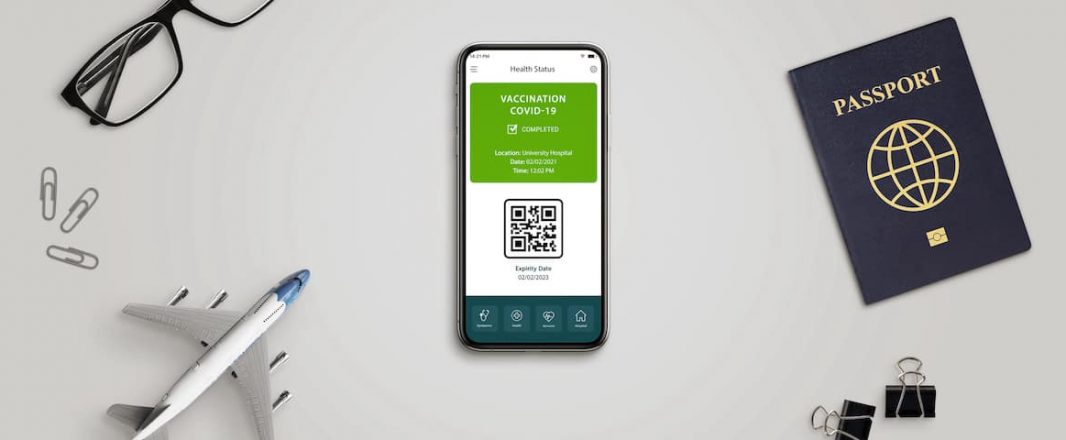
Peppered throughout the two-hour WiT Travel Roadshow which gathered travel and health experts and opinion makers to discuss how to open borders safely, were talks about travel passes.
With already some 25 different ones being floated in the marketplace, it has opened up many questions around which travel pass will become the defacto one, and how new rules around health and travel restrictions that vary country by country, can be managed in such a way that the travel journey can still be frictionless for the consumer.
“Borders will reopen only when governments are convinced they have been able to control the spread of the virus, as well as when the majority of their populations are immunised. Until then, I suppose we just have to hunker down and prepare ourselves for the reopening of the borders,” said Subhas Menon (pictured bottom right), director general, Association of Asia Pacific Airlines (AAPA).

Vinoop Goel (pictured top left), regional director, airports and external relations, IATA, also stressed the importance of giving governments the confidence that when they open the borders, people who come in have the right certificates, and you also give passengers the confidence that they have the right certificates to travel “because no one wants to be stuck at the border”.
“Let’s get confidence in the system” with a digital solution
So while we are all eager to have borders reopened, there is obviously still a lot to be sorted out and framed as standards so that “things will not be messy”. We need to do it right, agreed the panel that discussed travel passes as one of the keys that will help reopen travel.
The issue of having a standard by which vaccination certification, whether in digital or paper form, can be verified by another country as being authentic, is a looming one that needs to be addressed.
Having airline officials and immigration officers figuring out if paper certificates are real, trying to match it with the passenger, is going to be a huge problem when passengers return by millions. This is not even considering the fact that pieces of paper can be easily forged, pointed out Goel.
“We do expect that governments will have a central database of vaccinations, so we can tap into that, or paper credentials can also be converted in a secure manner to a digital credential. Let’s get confidence in the system. And let’s make sure it’s safe and secure. And that can only be done through a digital solution,” said Goel.
But which digital solution and which travel pass will we use eventually? Is it necessary to have just one pass?
“Governments need to come to the party on passes”
According to Menon, it isn’t necessary to have an exclusive arrangement when it comes to travel passes. “As long as they are fit for purpose and the purpose is basically to facilitate travel and enable travellers to go through these complicated processes, they are all fine,” said Menon.
He, however, said these travel passes should be created with open source technology and be compatible with each other.
“The bigger problem is we need governments to come to the party. And our governments have to come and agree with the protocols and agree with the certification formats. They have to talk to each other and accept each other’s protocols and testing formats. Once that is done, I think it should be okay for airlines to go with any travel pass,” he added.
Bringing the government to the party is a task IATA has taken on – not an easy one considering it is also involves wading through different regulations and requirements.
“One of the things we are doing is talking to governments worldwide, explaining what the travel pass does and explaining this to the masses, then making sure they understand that this can replace people, and is more secure and faster and more efficient.
“But we are also trying to find out if there are any regulations that prohibit the implementation of digital solutions as there are countries that have regulations that actually require a paper certificate. We need to overturn those regulations, and to make sure that digital solutions are available; they can be multiple solutions, but they have to be open source, and they have to be interoperable and modular,” said Goel.
Verification and privacy at the heart of issue
Then there is the issue of verification and privacy – to make sure the information out there is correct and not fake and also that the information is secure and the passenger is in full control and owns the data, choosing who they want to share the information with.
 The implementation of travel passes must also involve the health officials who will be now part of the process of inputting the data and verifying it. At the discussion was Dr Walter Lim, deputy country managing director, Singapore, Fullerton Health who said whichever pass or technology is used, the health providers must find it easy to use.
Dr Lim also stressed that while vaccination and travel passes are important, “pre-departure testing will remain the gold standard for months to come”.
By his estimate, we could bring the possibility of opening borders forward if we achieve herd immunity in Singapore sooner. It is recognised by the government, he added, that having open borders is important to Singapore, a country where “the port is the heart, and the airlines and airport are lungs” – all vital organs and channels for the economy.
He said Singapore can show that this can work with the right pieces in place – travel passes, pre-departure and on arrival testing, daily or alternate day testing and vaccination. International events are already coming back, he noted.
Steven Greenway, strategic commercial advisor of Zamna, a company that uses blockchain to securely share and verify data between airlines and travel authorities to check passenger identities, cautioned that this new need to check health statuses of passengers is far more complex than the Advanced Passenger Information System (APIS) that was implemented for security reasons, post-911 and warned of “chaos at first”.
Health status and identification, he said, is more complex because it will need to include information on vaccination, testing and insurance.
He said the key was to link identity with health and to make that identity “persistent”. How do we connect all the dots in a GDPR-secure way, yet create a process that is frictionless for the traveller?
“We are already seeing significant health status fraud and challenges in connecting it to identity,” he said, urging for the industry to move towards a Self Sovereign ID.
Suffice to say, we are far from being ready to open up the whole world but, as Dr Lim says, “hang in there” and that bilateral travel bubbles may just be the first baby steps we need to pilot some of these new travel processes that are being created to accommodate a post-pandemic world.
Note: The on-demand video of the Travel Roadshow can be watched here
Featured Image credit: Getty Images