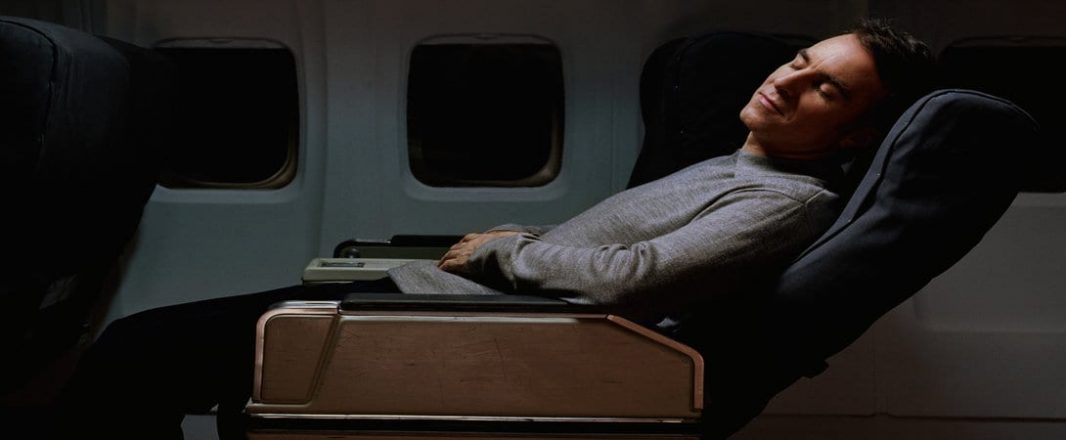

Flying is one of my “me” times. I guard it jealously. I turn into an anti-social hermit. I put on my noise-cancelling headphones and I am in my own headspace.
I used to be a social flyer. I’d talk to strange people and make up stories. I’d make friends, back in those days when making friends wasn’t as easy as today. You needed to click then to be friends, today you just need one click and you are friends.
I found flight romantic. I still do. The idea of flying still enchants me. I’ve flown across the Pacific on a single-engined aircraft and learnt about bladder control when we had to cross five hours over the Pacific ocean. I’ve landed in Vanuatu with a fuel cap missing. Why are stories such as these more romantic after the fact?
So even as often I fly these days, I still love flying. And today the romance is in the idea that you are in this space where no one can get you by email or phone. Me time, down time, unplugged time.
Yes, someone – Connexion by Boeing – tried to invade our space a few years ago but it didn’t work. Too costly. Too slow.
But now, technology has moved on. I was at a SITA media event this week and learnt that their OnAir service, which offers airlines connectivity services, is getting good uptake from carriers.
This week, Singapore Airlines was the latest to announce it would provide Wi-Fi and GSM passenger connectivity on its long-haul fleets, using OnAir’s connectivity services operating over Inmarsat’s SwiftBroadband.
Following an introductory launch earlier in the year, in-flight connectivity is now available on 14 SIA aircraft, including all five Airbus A340-500s which are deployed on the world’s longest non-stop flights, between Singapore and both Newark and Los Angeles, as well as on Airbus A380-800s. It will also be available on the airline’s Boeing B777-300ERs.
 Ilya Gutlin (left), president, Asia Pacific geography of SITA himself admits to having mixed feelings about it. “It’s the only place where the office can’t get you,” he says, even as he tells us that due to technology, the cost will be a fraction of what it used to be and also because the devices are lighter, it won’t cost the airlines too much to carry them.
“More and more people are addicted to their cellphones these days,” he says.
How passengers will behave with access to the web – which means we can send email, text messages and SMSes and surf the web – is an unknown. “It will be up to each airline to control that,” says Gutlin.
I dread to think how this will be done. Can you imagine the message alerts, beeping and ringtones that will go off? And how about calls on Skype? Imagine the conversation.
“Can you hear me?”
“Are you there?”
“Can you hear me now?”
Yes, I can hear you!
I predict lots of air fights.
Gutlin also says that SITA’s been testing out lots of new technology – like airport geolocation services where airports or airlines can track us, know where we are and tells us the shortest route to the plane, or where the nearest shops are.
He admits they haven’t been able to monetize this technology but conjectures that maybe Google will take it up, as they have most things else to do with tracking our behaviour.
Airports are using the technology to understand customer behaviour like, where we spend most of our time, which shops we frequent and what we buy. A pilot study in ongoing at Dallas Fort Worth airport.
So anyway, the biggest investment airports will be making in the next few years will be one, in improving customer experience and secondly, to cut costs. This means investment in smartphones, followed by social media.
As for check-in kiosks, well, the idea didn’t work in Singapore – SIA has removed them but Gutlin says the pipeline for kiosks orders is strong globally. Taipei for instance has ordered lots as have airports in Europe.
The biggest stumbling block to a seamless airport experience is of course immigration and customs – try boarding a flight with an e-ticket in Delhi, without a printout. And this is a problem that’s not going to go away anytime soon, no matter how advanced the technology. Apparently airports spend 4% of revenues on IT and communications.
Gutlin sees a future where check-in halls at airports will get smaller (“other than bag drops, the check-in process needs to move on”), where there will be use of mobile for disruption management, in particular, and where every staff will have a mobile device.
And of course where every passenger with a mobile device will be able to communicate, non-stop, inflight.
Help.