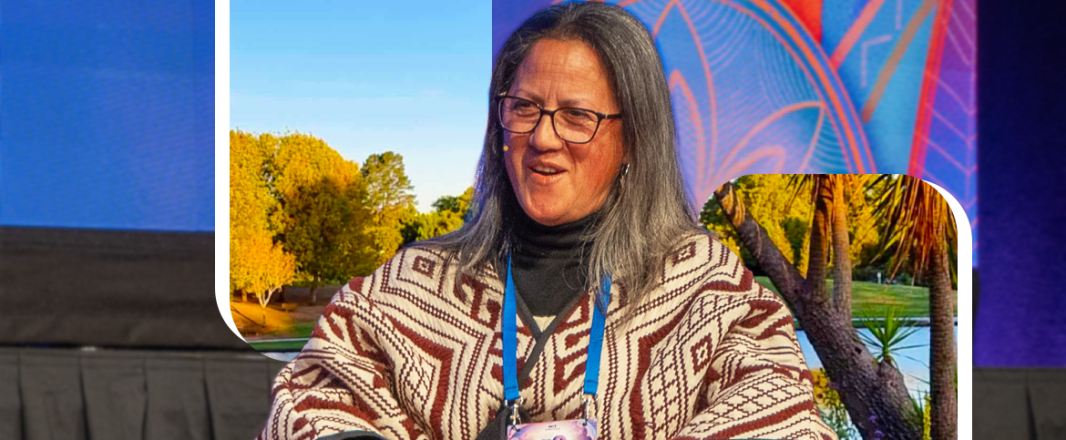
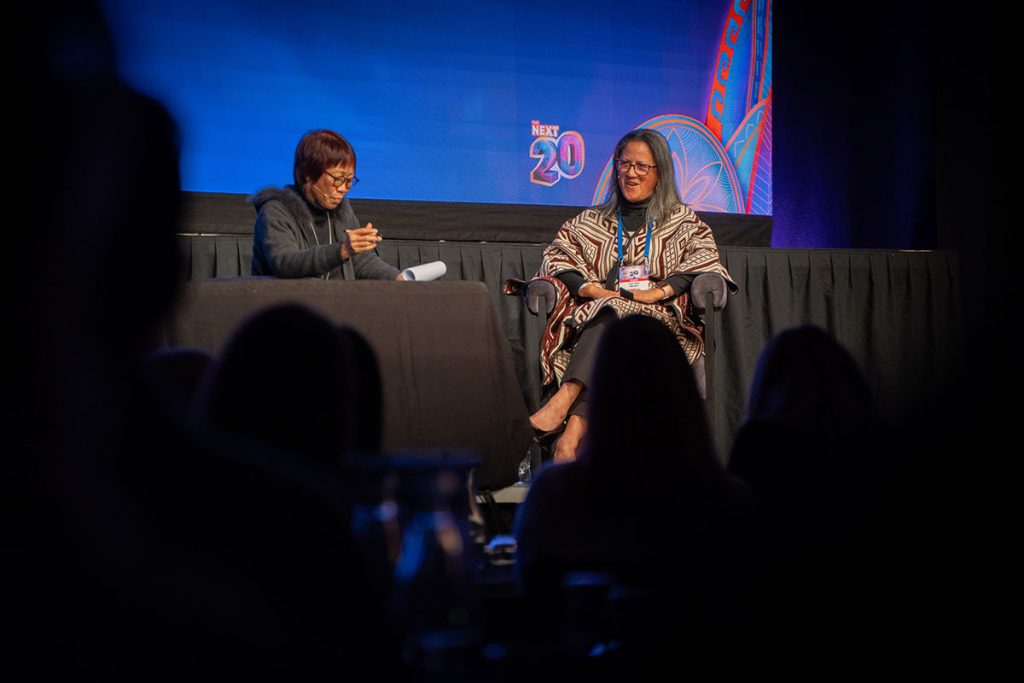
A couple of months before my coffee chat with Lee Ann Muntz, a board member of the Māori Tourism Board, a line she had said in the Zoom call had stuck with me. “We don’t commercialise culture. We culturalise commerce.”
I wanted to get deeper into that during our conversation. But first, I wanted to get to know her better.
Muntz grew up in Turangi, on the banks of the Tongariro River, which feeds into the Waikato, the same river that runs through Hamilton, and the same river that would, decades later, become the spine of her own regional tourism strategy.
She credits the community that raised her, alongside her brothers, with instilling values she still works from today. Pocket money wasn’t handed out; it was earned. She was scooping ice cream from age 12, then doing potatoes and chips in her mother’s fish-and-chip shop, before working her way through hospitality and restaurants and, eventually, into tourism proper.
Tourism found her by accident, not design. She started in banking before joining a kapa haka group, and playing representative netball for the New Zealand Māori team and basketball alongside it. The turning point came when a group of Native American visitors arrived and asked her to put on an authentic cultural experience. That single request, and what came out of delivering it, is what eventually led Muntz and her husband to start their own company, Aotearoa Experience.
The four Rs, and asking the community what it actually wants
The founding relationship mattered as much as the founding idea. The American visitor group Muntz worked with described themselves as values-based investors, operating on what she calls the four Rs: relationships, reciprocity, responsibility and redistribution.
At the end of that first trip, they gifted her the programme framework and told her to adapt it into her own exchange. She turned to her own network first – a pan-tribal kapa haka group she’d been part of at Waikato University – and asked each community what it actually wanted to offer, weighing social, economic, cultural and political goals rather than assuming what visitors should see.
A sector worth $1.2 billion, still finding its footing post-Covid
NZ Māori Tourism’s most recent published figures – 2023 data – put the sector’s contribution at $1.2 billion to GDP, spread across 3,595 tourism businesses employing more than 15,000 people, up from $975 million in 2018.
Asked whether growth had accelerated since, Muntz was careful not to guess without current data. What she could speak to directly was the operating environment: COVID taught the sector resilience and how to pivot, but hospitality and retail are moving through another genuinely difficult stretch right now, and most operators are simply doing what they can within it.
What she is seeing, unprompted by the numbers, is a shift in recognition. Māori operators picked up a notable share of wins at the recent Tourism New Zealand Awards – names spanning geothermal and cultural experiences, forest-based operators, and island-based cultural tourism.
The common thread is landscape and culture presented together: honouring ancestors and carrying their stories onto a genuinely public stage, rather than treating heritage as backdrop.
What travellers want, not necessarily what they do
Demand for her own company’s experiences comes almost entirely through direct relationships, primarily from the United States. The process starts with questions: what are you interested in, how do you like to travel, and only then does an itinerary get built.
Where a story belongs to another community, she asks permission, or finds someone from that community authorised to tell it.
Asked whether the growing wave of Asian travellers now visible in Queenstown – Indian, South Korean – is showing up in overall tourism numbers in Māori businesses, Muntz described it more as transit – where large volumes move through part of the “golden triangle” circuit toward Rotorua rather than staying put in one place.
Asked if better storytelling might lead travellers to spend more time rather than check-the-box travel style, Muntz admitted to a skill gap she sees across much of NZ Māori tourism more broadly: operators who need better tools in marketing, promotion and technology to actually slow travellers down long enough to hear the story being offered.
Her one organic brush with influencer marketing was almost accidental – a friend’s well-connected cousin ended up in a corporate box at a national kapa haka event, and the resulting exposure, in her words, “just exploded,” without ever being planned as a campaign.
Building an alternative to Rotorua along 425 kilometres of river
Muntz pointed to growing engagement with other Indigenous visitor groups, including Japan’s Ainu community and to a deliberate ambition to build alternative destinations beyond the near-automatic Rotorua association most Asian travellers currently default to.
Her answer is the Tainui-Waikato region: a rohe made up of four confederated tribes, with the tribal boundary spanning from Auckland in the north, Mōkau in the sounth and covering the Waikato, Hauraki and King Country areas.
The concept is the ancestral Waikato River – 425 kilometres long, originating from the slopes of Mount Ruapehu through the tribal lands of Ngāti Rangi and Ngāti Tūwharetoa, through Lake Taupō and the heart of Hamilton along the Waikato River, and out to the Tasman sea at Port Waikato.
Her idea is to build a cultural tourism strategy anchored to the river, with Hamilton positioned as the central anchor point in a hub-and-spoke model – the idea being to eventually hand the model off to operators who can aggregate experiences along the river themselves.
Culture as the vehicle, not the cost centre
Pressed on the “culturalise commerce, not commercialise culture” line that had opened the conversation, Muntz credited it to her organisation’s CEO. The distinction, simply put, is about sequencing: focus on the cultural experience itself first, and treat economic return as something that follows from getting that right, rather than starting from the bottom line and working backwards.
That same instinct for boundaries showed up in one of Māori tourism’s stated principles: you arrive as a visitor – and you leave as family.
I drew a comparison to omotenashi, the Japanese hospitality tradition of anticipating a guest’s needs before they’re voiced, a concept Muntz recognised readily.
The Māori equivalent, manaakitanga, comes from the same instinct: it is, she said, her responsibility to look after others, a value embedded early enough that she sometimes overdoes it – and she’s unapologetic about that.
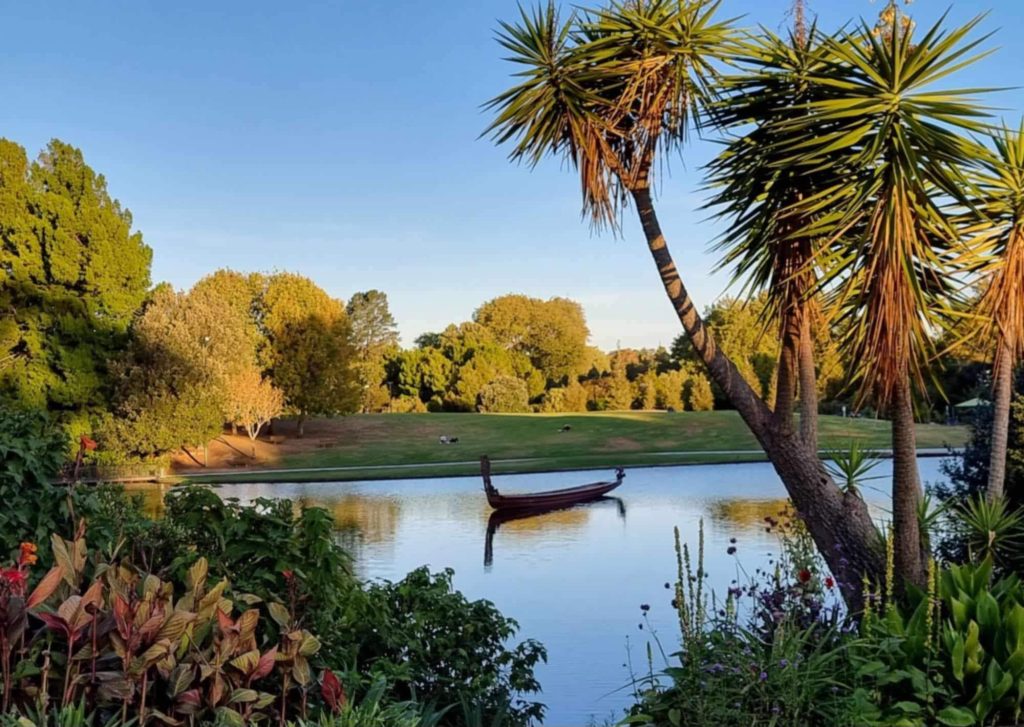
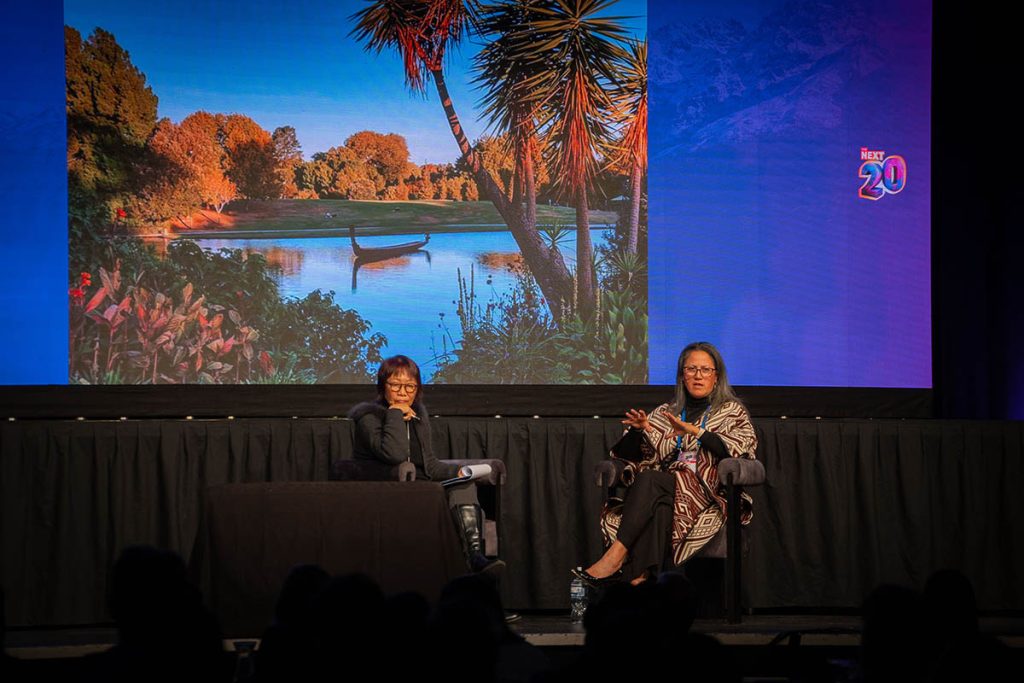
She closed on an image she’d shared ahead of the session: a waka resting on Hamilton Lake, culture and landscape captured in a single frame. It’s her responsibility, she said, to uphold the integrity of that culture within its landscape – wherever she happens to be standing.