The majority of travellers will consider booking domestic and international trips but only if airlines, airports, hotels and car rental companies collectively implement 10 different safety measures.
This is the finding in a new independent research released on August 24 by Travelport. The study was conducted in July 2020 with 5,000 travellers across the US, UK, India, Australia and New Zealand, as well as in-depth interviews with 29 leading travel suppliers.
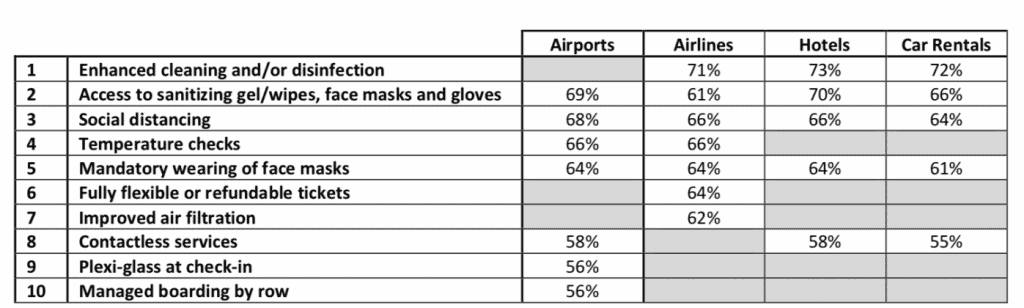
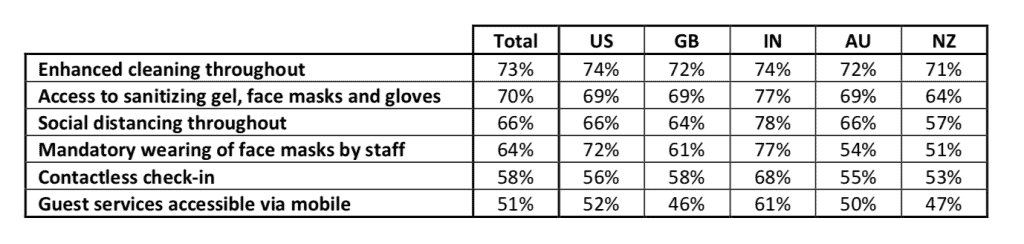
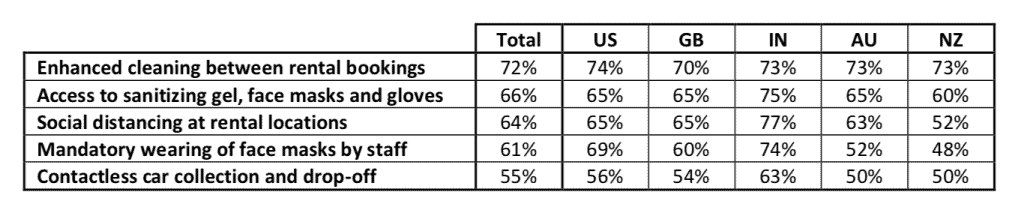
The 10 separate safety measures respondents in the survey said they want adopted by airports, airlines, hotels and car rental companies include social distancing rules, mandatory use of face masks and ready access to sanitising gel or wipes, face masks and gloves. The percentage figures in the chart below represent the number of travellers who said they would not travel unless the respective measure is in place.
Air
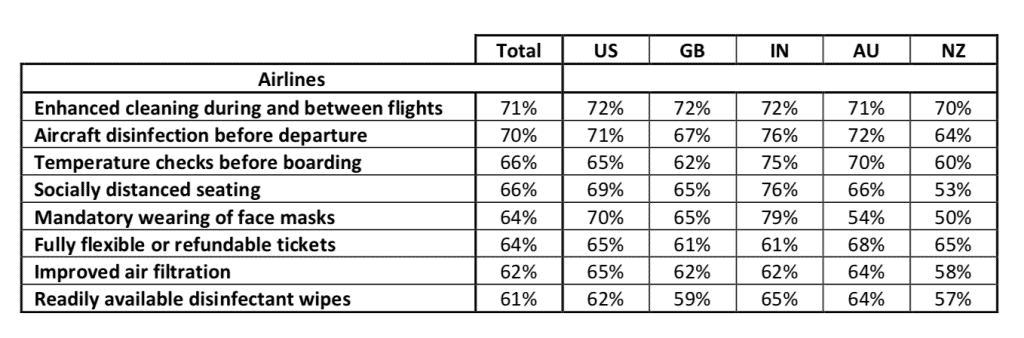
Overall, more than half of travellers said that to consider booking a flight, they need to know in advance that a wide array of specific measures have been implemented by both the airport and airline. At the airport these include temperature checks on arrival (66%), plexi-glass at check-in desks (58%), and managed boarding by row (56%).
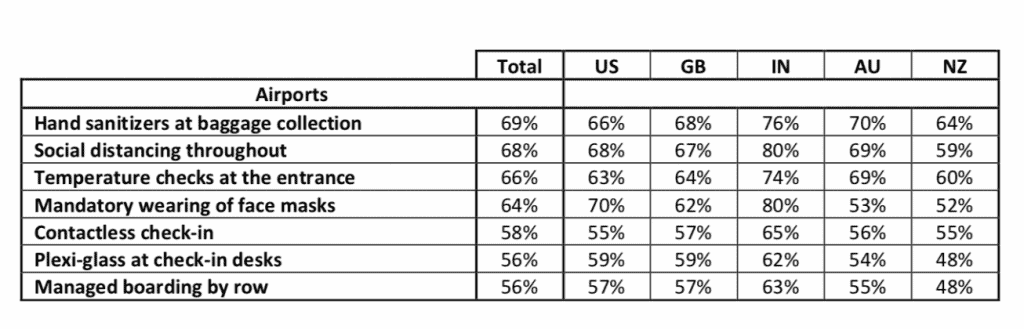
When it comes to airlines, measures in high demand include enhanced cleaning (71%) and disinfection (70%), further temperature checks before boarding (66%), socially distanced seating (66%), and fully flexible or refundable tickets (64%).
Hotels
For travellers to have the confidence to book a hotel room, the study showed the majority want six specific safety measures in place including enhanced cleaning (73%) and guest services accessible via their mobile phone (51%)
Car rental
To book a car rental, according to the study, the majority of travellers want five key safety measures in place both at rental destinations and in vehicles including contactless car collection and drop-off (55%).
Greg Webb, Travelport chief executive officer, said the study highlighted the “criticality” these measures are now playing to restore confidence in travellers. “However, for the majority of travellers to return to the skies the industry now needs to work together to not only ensure a wide array of safety measures are in place throughout the travel journey, but to collectively communicate these changes to travellers using a range of channels and merchandising technologies.”
On a country level, the study revealed demand for almost every safety measure is highest in India. Demand in New Zealand, while still high, tended to be the lowest across the five countries assessed.
When it comes to age groups demand for safety measures was again high across all categories. However, it was highest among baby boomers and lowest among millennials.

Derek Sadubin, managing director, CAPA – Centre for Aviation, added that many suppliers, such as airlines, have already implemented the safety measures travellers say they need to book a domestic or international trip. “But we still have a long way to go. Collaboration and communication are now key to restoring traveller confidence and securing a strong and responsible industry recovery.”
The safety measures, currently undertaken by more than 80 of the world’s largest airlines, can be found in the recently launched Travelport Airline Health & Safety Tracker. The tool, which is free of charge and available to both Travelport customers and the wider industry, is delivered to both online and offline travel agencies through the Travelport Covid-19 Smartpoint Plugin, Travelport’s API-based merchandising solution, Branded Fares Data File and the company’s Covid-19 Resource Hub for the general public.
The full results of both the quantitative and qualitative components of the research are captured in Travelport’s Guide to Travel Recovery report, which can be downloaded from the company’s Covid-19 Resource Hub.
• Featured image credit: Helin Loik-Tomson/Getty Images