
Removal of offline and static rates core to global strategy to limit distribution partners and offering best price on ALL.com
Fresh from an intense few days at her division’s huddle in Bangkok last week, Kerry Healy, chief commercial officer, Middle East, Africa, Turkey & Asia Pacific for Premium, Midscale & Economy, Accor is supercharged to take on the mission of driving commercial success for the 21 brands in her region. Healy took on the new, expanded role following the last restructure and relocated from Singapore to Dubai.
In this interview with WiT, she recaps the past year and the opportunities ahead as Accor aligns commercial strategies to bear on 90 percent of its brand portfolio.

Kerry Healy: “I’ve learned that it is indeed possible to address rate integrity, a challenge many believed couldn’t be overcome. This has been a particularly rewarding achievement, given the complexities involved.”
Q: It’s been nearly a year since you moved to Dubai from Singapore. What have the first 12 months taught you? What do you know now that you didn’t?
Reflecting on my first 12 months in Dubai, one of the most striking lessons has been the pace at which life and business move here – everything is faster and more dynamic.
Another key insight is the region’s heavy reliance on international tourism flows, even as domestic tourism continues to grow, which contrasts with the more balanced tourism dynamics I experienced in Asia.
I’ve learned that it is indeed possible to address rate integrity, a challenge many believed couldn’t be overcome. This has been a particularly rewarding achievement, given the complexities involved.
Q: How did you fix rate integrity?
Our unwavering commitment to ensuring that our customers find the best price on ALL.com has been central to fixing rate integrity. Drawing on best practices from our experience in Asia, we implemented the use of Fornova across our properties, which has significantly enhanced our ability to manage rate distribution effectively.
This was coupled with thorough education and partner management, including the strategic removal of many offline contracts, resulting in an impressive improvement of around 40% in our rate health score. Recognising the fast-paced nature of the distribution landscape, we made a decisive move last October across the Middle East region to eliminate static rates from all wholesale partners.
This was done in anticipation of Accor’s global strategy to limit B2B distribution players next year. At the same time, we worked to harmonise promotions and offers across our digital platforms, ensuring a consistent and competitive pricing approach.
Q: What were three key learning points from the Bangkok event?
First, while it’s not a new lesson, it was a powerful reminder of the importance of bringing our team members together. Given the diversity within the MEA APAC region, fostering a One Team culture is crucial for sustained success. We live by the motto that what gets measured gets done, and this event reinforced the need for that unity. Second, past results don’t guarantee future success. We left the event with a sharper focus and a clear prioritisation, by brand and by market, on what success looks like for 2025 and beyond. This ensures that we remain dedicated to delivering exceptional results for our hotels and owners. And lastly, automation emerged as a critical factor in scaling our growth. As we continue to expand, leveraging automation will be essential to maintaining and accelerating our momentum.
Q: You witnessed the rise of South-east Asia – do you think Middle East will follow a similar path or will leapfrog it? If so, why? What are the characteristics that make the ME region unique and a powerful force to reckon with, in terms of the future of global travel?
The Middle East is rapidly emerging as a global travel powerhouse, with the potential to outpace other regions. Home to two of the three busiest air routes globally, including Riyadh-Jeddah and Riyadh-Dubai, and with the expansion of airlines like Emirates, Etihad, and the newly launched Riyadh Air, the region is solidifying its strategic importance.
Saudi Arabia is a key market for Accor, leading our property growth pipeline in the Middle East.
We’re also seeing strong corporate market growth, with a 30-40% increase since 2023, especially in Dubai, Doha, and Riyadh. Have you seen how many consultants are sitting on planes on Sunday heading into Riyadh ?
Looking ahead, the Middle East will host major global events, including the 2034 World Cup in Saudi Arabia and Expo Riyadh 2030, further cementing its role as a key player in the future of global travel. It is really a very exciting time as the region is maturing.
Q: How is the PME division performing in ME as compared with the rest of Asia? What customer trends are you seeing that’s interesting?
Accor’s Premium, Midscale, and Economy division is performing exceptionally well in the Middle East, particularly in key markets like the United Arab Emirates and Saudi Arabia. These markets are driving strong overall performance, and we expect this momentum to continue through the rest of the year and into 2025.
In terms of customer trends, we’re observing a growing demand for personalised experiences and a heightened focus on wellness offerings. Travellers in the Middle East are increasingly seeking accommodations that cater to their individual preferences, whether for business or leisure, and are prioritising health and wellbeing during their stays. These trends are shaping our approach and ensuring we continue to meet and exceed guest expectations in this dynamic region.
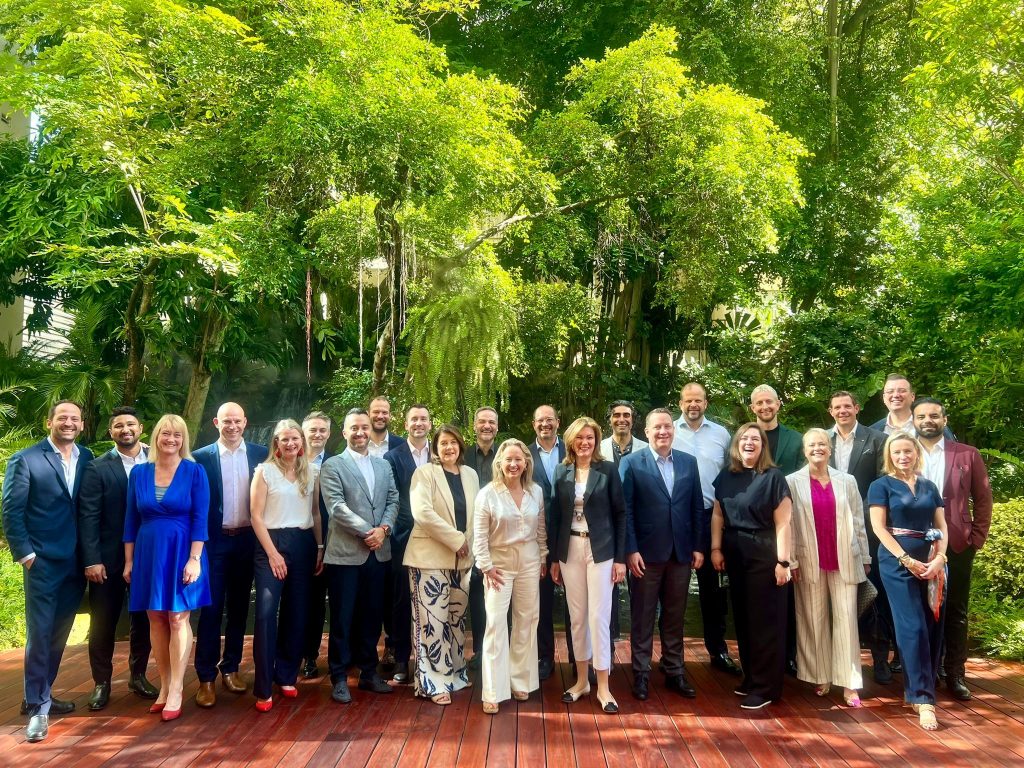
Hello everyone, Kerry Healy (centre) and CCO Karelle Lamouche, on her left, with the commercial teams from Middle East and APAC.
Q: What are the characteristics of the Middle East distribution landscape that make it different from Asia? It doesn’t seem to have the big local players such as Traveloka, Ctrip or MakeMyTrip, does it?
The Middle East distribution landscape is distinct from Asia, largely due to the continued dominance of traditional travel agencies and tour operators. Unlike Asia, where digital platforms like Traveloka and Ctrip lead, the Middle East relies more on these traditional channels, with the shift to online being slower.
Global players like Booking.com and Expedia hold strong positions in the region by offering localised services and filling the gap left by the lack of large local competitors. However, the landscape is evolving, especially post-COVID-19, with the rise of regional platforms like Wego and Almosafer, and the increasing presence of global OTAs like Trip.com and MakeMyTrip, reflecting the region’s growing appeal to international travellers. I would say that the pace of growth will accelerate.
Q: What are the biggest opportunities for the PME division in Middle East?
The four biggest opportunities for Accor’s Premium, Midscale, and Economy division in the Middle East are:
Branded Residences: The surge in demand for branded residences, particularly in Saudi Arabia, the UAE, Egypt, and Türkiye, offers significant growth potential. Accor’s diverse brand portfolio is well-positioned to meet this demand, offering tailored solutions through Accor One Living.
Sustainable Tourism: With travellers increasingly seeking eco-friendly and culturally meaningful experiences, Accor’s commitment to sustainability, such as eliminating single-use plastics and expanding vegetarian options, positions us as a leader in responsible hospitality.
Domestic Tourism Growth: The push for domestic tourism in the UAE and Saudi Arabia is driving demand for high-quality, affordable accommodations. The growing trend of staycations is particularly strong, with properties like Mövenpick Resort Al Marjan Island leading the way.
AI and Technology Integration: Leveraging AI to enhance guest experiences while maintaining the human touch allows Accor to deliver personalized service and valuable insights, meeting the evolving needs of modern travellers.
All of this will be underpin a deep focus on our brands.