
Ronnie Varghese, head of digital for Almosafer, the flagship consumer travel brand of Saudi Arabia’s Seera Group, is the first to admit his initial scepticism when the company announced it wanted to actively pursue an omni-channel strategy in 2019.
Almosafer had started as a social media booking agent, with a small team selling hotels on Twitter in 2012. Customers would see offers on Twitter and then contact its call centres and book the rooms. Towards the end of 2016 Almosafer became a fully-fledged OTA and started adding flights on the platform and that’s when business boomed, said Varghese.

Ronnie Varghese, head of digital for Almosafer
A boom in online business followed with an exponential growth crossing one billion in sales in 2018. This growth caused Varghese to question whether an omni-channel strategy was really needed. “When most of the big brands are actually going from physical to digital … it was a big question for us, like, is there any value in scaling omni-channel when you can increase your reach online?”
To answer the question, the group conducted in depth customer research – a key objective being to identify if there were needs that were not being met in the online space.
Through that research, which involved following customer journeys on channels such as WhatsApp, it learnt that in the online space, customers were very comfortable buying commoditized products but not for customised needs.
“We knew that there was an opportunity for us to capture that. The other thing about being an OTA is it’s more difficult to build those long term relationships with customers because, as much as they may love our brand, if they found a better price somewhere else, they would go to another brand so that stickiness didn’t exist.
“And our offering was essentially the same as most of our other competitors. And it becomes price competition versus how do you build value and build a relationship with your customer?”
The need it identified was for Saudi customers who wanted to book travel for very specific needs. For example, couples going on honeymoons, usually their first trip together, with questions such as which restaurants to take their partner to and big family trips where an important question is, can we book adjoining rooms or multiple rooms together?
These nuances were not being addressed by any online platform and these customers needed to speak to an advisor. Said Varghese, “In the Saudi market, specifically, people love talking to other people, there is a culture of talking about travel, there’s a culture of sharing experiences. When you speak to an advisor who’s coming from a place of experience, they can share facts about a destination. And that reassures customers when they make their travel decisions. We also learnt that our customers wanted the personal touch.”
All this pointed to a very clear need for an omni-channel strategy, said Varghese. That means “creating a seamless experience across different channels for our customers”.
So as it had invested in its digital channel it started investing in its retail stores in 2019, where customers could visit and develop relationships with its expert advisors. It now has 34 Almosafer stores in Saudi Arabia, five of which were opened in 2019, two airport stores and eight airport countries, and one store in Kuwait. It employs a total of 230 travel advisors across the Kingdom.
One unexpected channel was WhatsApp. “Saudi customers love to speak to their advisors, families, friends through voice notes and images. So we started leveraging WhatsApp as a communications channel to create these human interactions for our customers as well.”
Business picked up even further – until March when Covid hit and travel stopped – but that was also when the omni-channel strategy helped the group adapt and respond to its customers, said Varghese, through the different phases of the pandemic.
In the first phase, when countries and borders closed down, customers started calling to cancel and amend their bookings. Call centres were swamped. The group reallocated staff from the closed retail stores to the call centres, and to manage WhatsApp conversations.
One of the challenges was to be able to differentiate and prioritise customers with more immediate needs. “With technology, we were able to very quickly deploy an API that when a customer contacts us on WhatsApp, we can tell based on their order ID whether they’re a customer who needs to be seen Immediately versus a customer that we can get back to in a shorter period of time.”
By deploying its tech assets and people, it was able to get through phase one fairly smoothly.
In phase two, which involved helping expatriate customers who were stranded in Saudi Arabia and needed to get home, it managed to secure approval from different governments to operate charter flights. It was the first private company that offered repatriation flights to countries like Egypt, India, Pakistan and the Philippines. It created a landing page for these new customers and had it translated into several languages. It again used WhatsApp to communicate with these customers.
Through operating these repatriation flights starting from June, it gained deeper insights into customer behaviour but to find out more, it did more research to find out what behaviours would be changed after Covid and found that key decision drivers were social distancing, safety and hygiene and recommendations on safe destinations.
In the current phase three of the pandemic, with people starting to think about travelling again, it realised there was a lot of confusion over basic questions such as where can I actually travel to, are airports safe, what do I need actually?
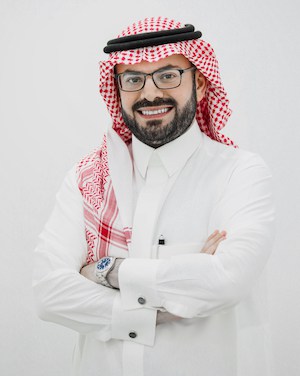
Fahad Alobailan, vice president of retail, Almosafer
“What made this even more challenging is the fact that there’s so much information and so many different sources. And very little of that was authoritative and it was constantly changing. Customers just didn’t have confidence in being able to pick up and make a travel decision.
“We realised that the biggest service that we could provide to our customers is … making that information available and pulling all that information from various sources and keeping it real time and giving them that one source of truth,” said Fahad Alobailan, vice president of retail, Almosafer.
The content was translated into different languages. “Again, it was using technology and human capital In a seamless and integrated way – we used our technology to build a platform that allowed us to connect to all these various sources of data for our content team and our design team to actually take this information and present it in the best possible translated way.”
It also had to pivot its business to the domestic market and built up new domestic products and offerings “that customers didn’t even know were available before”.
“A lot of it was around communication of safety, but also communication of what options are available that people were not aware of before. What was neat about having our advisors as part of this process is once we built this platform, it was very easy for us to then make this information available to our advisors as well as through our WhatsApp and phone channels,” said Alobailan.
With retail stores starting to open up again, it is seeing customers walk in to speak to advisors.
“That’s how we have adapted quickly to this current phase but things are evolving very quickly. We don’t know what’s next. We don’t know how different countries will open up at their different timeframes, etc etc” said Alobailan.
What is clear is “we need to be adaptable to every single one of these things that might change from a travel or health perspective”.
Concluded Varghese, “Through the pandemic, we realized that omni-channel allowed us to be much more responsive to the needs of the market by leveraging technology and human capital. Technology gives us the ability to scale things and allows our advisors to be able to use that technology to serve our customers in the best way possible.”
Note: WiT Virtual Middle East will be held November 24 between 2pm-6pm Dubai time. Sign up for free here.
• All images credit: Seera Group