



Australia’s sheer size and various territorial offerings were on full display, showcasing a country that’s not just competing on the global stage, but also carving distinct identities among its own incentive destinations.
At Australia Next 2025 in Melbourne, destination leaders from Sydney, Canberra, Cairns & the Great Barrier Reef, the Northern Territory, Adelaide and the Gold Coast delivered a largely unified message. Incentive travel to Australia is evolving from a reward-led model into an experience-led ecosystem, underpinned by improved connectivity, new infrastructure and clearer ROI narratives for planners.
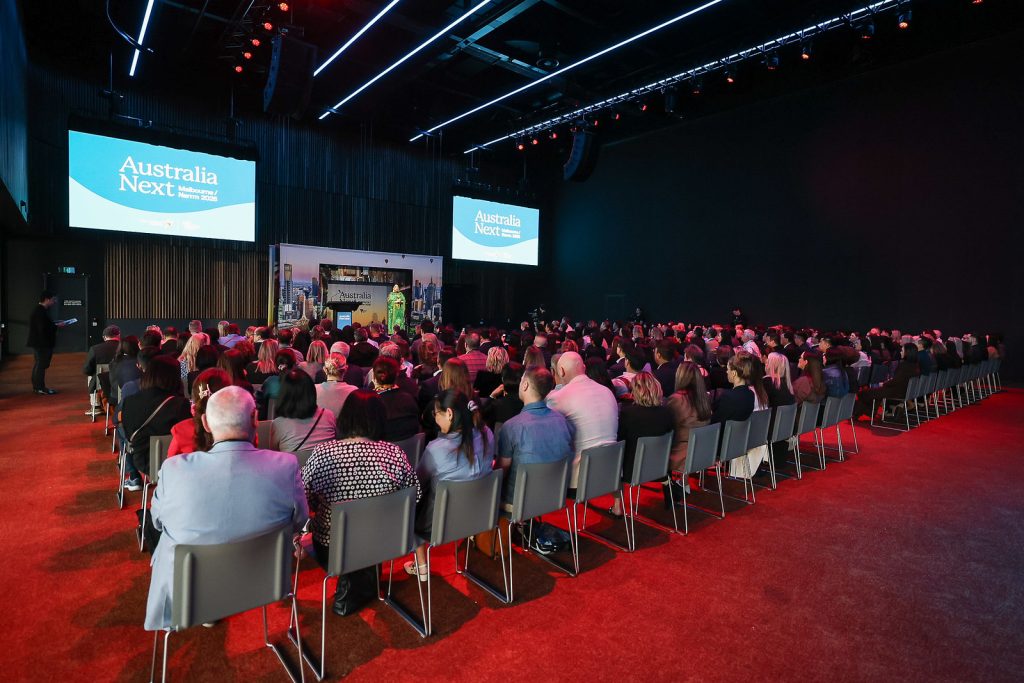
Australia Next 2025 opened with performances rooted in Australia’s deep cultural history
More connectivity and easier access
Speaking to various business owners at Australia Next, connectivity, both physical and digital, came up repeatedly. They told WiT that for planners balancing cost, delegate time and experience density, Australia is becoming easier to sell.
“Sydney is Australia’s gateway city,” says Carolin Lenehan, Executive General Manager at Business Events Sydney. “Most airline connections already come through Sydney. And now we have a whole new greenfield airport near the World Heritage-listed Blue Mountains.”
The upcoming Western Sydney International Airport is expected to strongly influence how incentive groups enter and move through New South Wales. Improved connectivity reduces friction in itinerary planning, shortens transit time and increases the feasibility of multi-destination programs, something platforms and incentive management systems increasingly optimise for.
Not that it needed one, but Lenehan says Sydney itself has undergone a “glow up,” driven by new hotels, refreshed precincts and expanded venue inventory. “We’ve had an explosion of new hotel developments around Darling Harbour,” she notes, pointing to how supply growth helps planners balance premium experiences with budget control.
Elsewhere, momentum is just as strong. In the Northern Territory, access has been a persistent misconception. Darwin is benefiting from increased Asia-Pacific connectivity, including services from Singapore, Kuala Lumpur and China, making the Northern Territory far more accessible than many planners assume. Adelaide, long seen as harder to reach, is changing that narrative with new international routes from Asia and even direct links to the US.
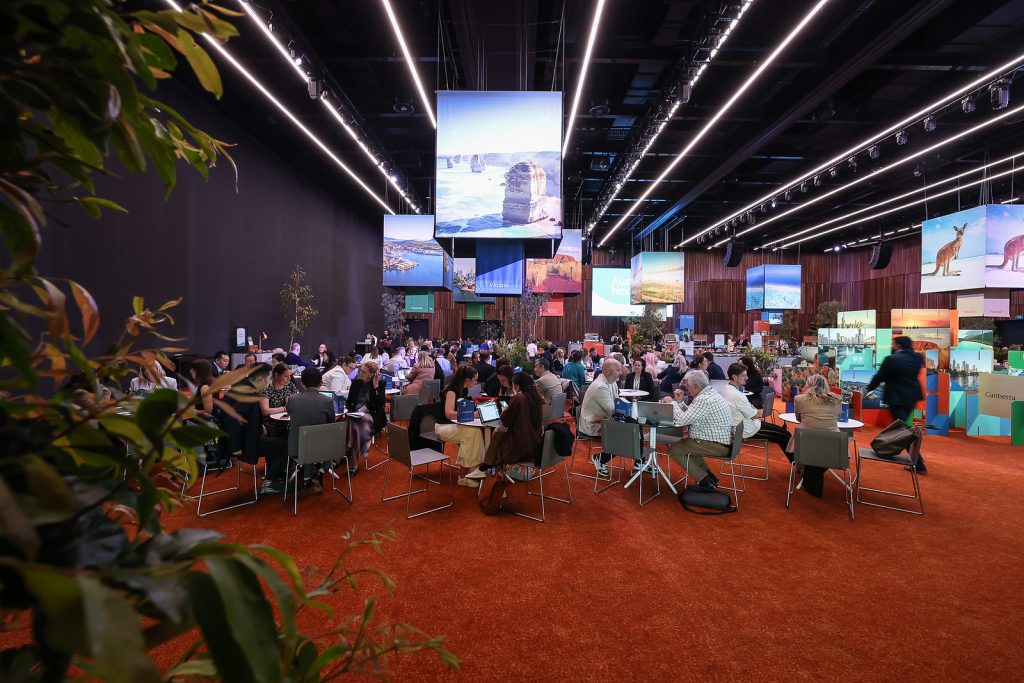
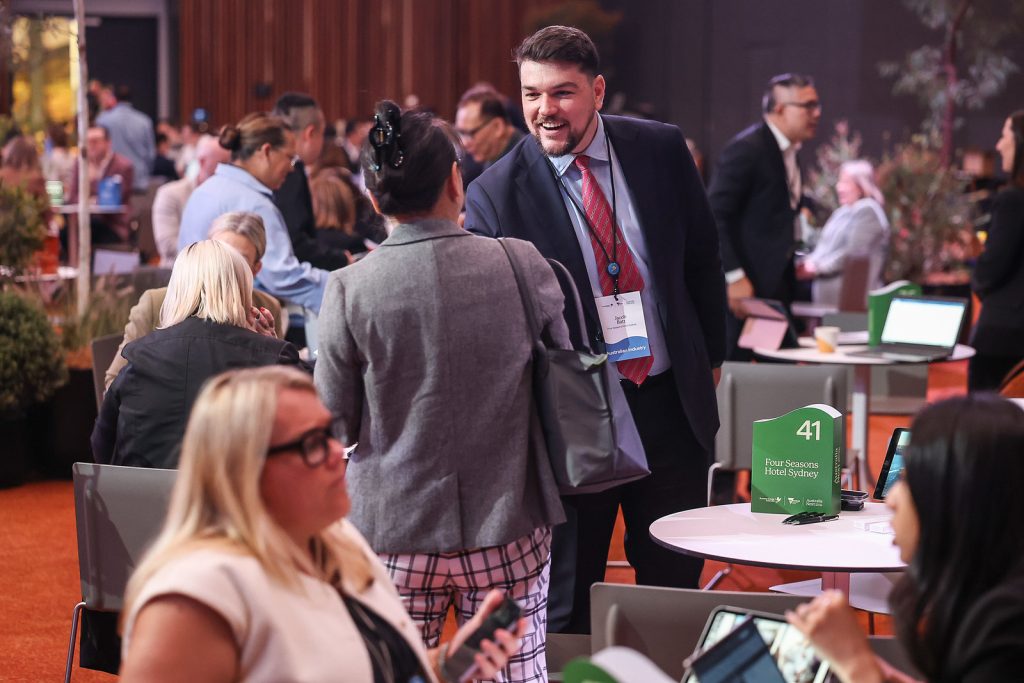
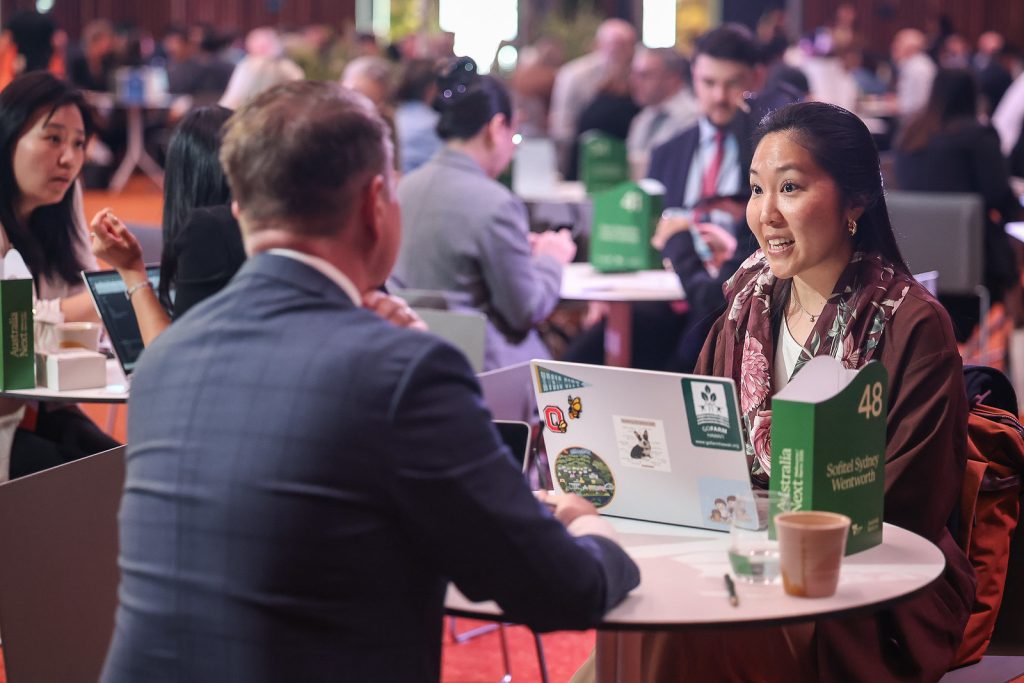
Booths representing the many destinations and hospitality offerings of Australia’s incentive travel industry
Queensland offers similar flexibility. “We’ve got two airports, Gold Coast Airport and Brisbane International, only an hour apart,” says Brooke Campbell, Executive Director at Experience Gold Coast. “Virtually anywhere in Australia is a one-or-two-hour flight away.”
For Canberra, connectivity is less about volume and more about efficiency. “We’re pushing for more direct links from key Asian markets,” says Michael Matthews, CEO of Canberra Convention Bureau. “But what clients love is that once you’re here, there’s no congestion, no pollution. You look up at the sky at night in Canberra, and you see the stars while still being in the city.”
Wellness as performance, not perk
Across all destinations, wellness has shifted from being a ‘nice-to-have’ to a strategic design element, closely linked to productivity, engagement and probably most importantly, retention.
Lenehan points to a Sydney incentive group that recreated the city’s iconic fun run. “They walked across the Harbour Bridge, ran around the Opera House and finished with a big group photo at Luna Park,” she says. “Everyone feels better on the other side.”
In Canberra, wellness is built into the daily flow. Matthews describes how incentive groups often start with a 5km walk or run around Lake Burley Griffin. “You build wellness into your day,” he says. “After that, you’ve still got a full day to do everything else.”
He also highlights a new lakeside sauna experience. “You get hot, jump in the water, get out, jump in again… that Scandinavian thing,” he laughs. “And the Hyatt is a 10-minute walk away. You don’t have to go hours into the middle of nowhere to feel like you’ve taken a breath.”
In Cairns, the conversation shifts to nature-led wellbeing. “You can come to Cairns and really connect with your colleagues,” says Tara Bennett from Business Events Cairns & Great Barrier Reef. “But you can also connect with nature and connect with yourself.”
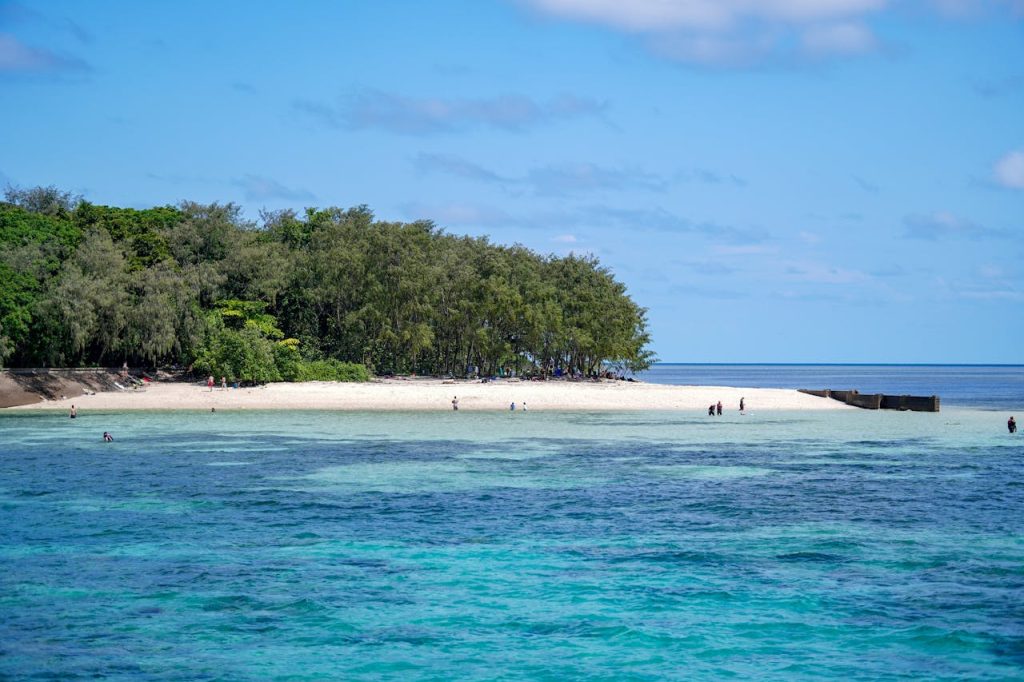
“You can come to Cairns and really connect with your colleagues,” says Tara Bennett from Business Events Cairns & Great Barrier Reef. “But you can also connect with nature and connect with yourself.”
She describes reef experiences that go beyond sightseeing. “Seeing the Great Barrier Reef, you almost feel like you don’t exist when there’s a whole world around you. That’s a very special moment that you can connect with, yet you feel elated that you’re part of this incredible world.”
For the Northern Territory, wellness is inseparable from culture. “We come to disconnect from busy lifestyles and be able to take a moment to be in the space and to think and breathe and do all of those things without the pressures of being in the big city,” says Vanessa Johnson, Marketing Executive at Northern Territory Business Events – Darwin. “It’s about taking them out of their comfort zone.”
“We don’t really compare ourselves so much to the Melbournes and Sydneys,” says Rebecca McCaig, Director, Business Events at Northern Territory Business Events. “We’re not a big city. Our population in Darwin is only 120,000. When we position ourselves, we don’t think about what the big cities are doing. We just focus on what we’ve got to offer. And we’re pretty confident that that’s quite unique.”
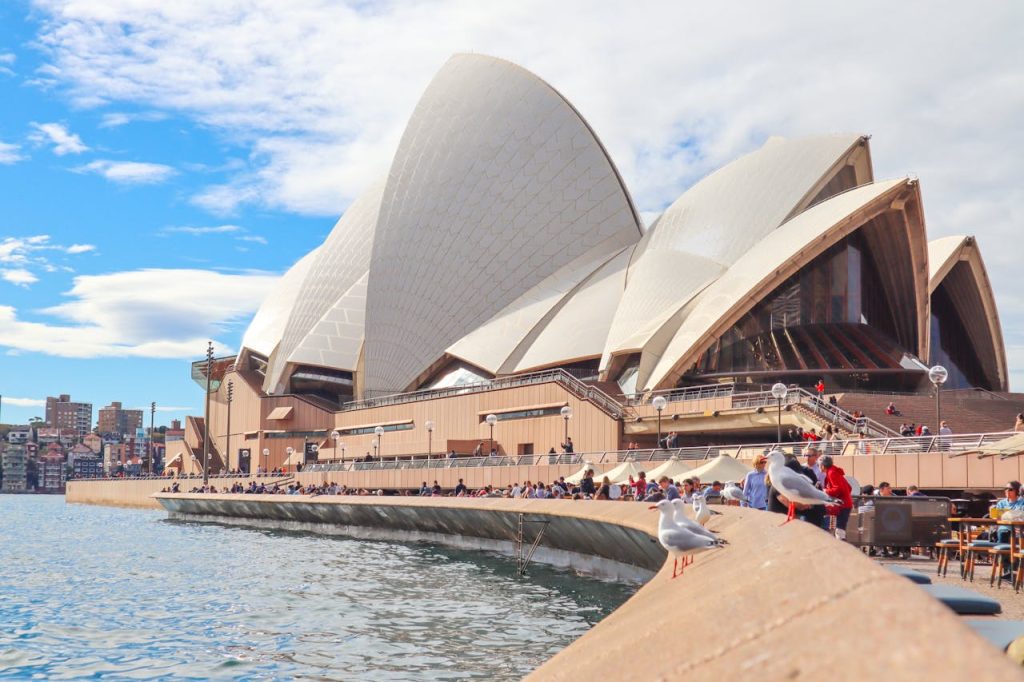
“Clients don’t want to drive past the Opera House, they want to be inside it. Behind the scenes. Dining there,” says Carolin Lenehan, Executive General Manager at Business Events Sydney
Sustainability and data lead to decision confidence
For incentive buyers, sustainability is increasingly a procurement requirement and Australia is leaning into measurable credentials.
“Adelaide leads Australia in sustainability,” says Mark Phelps from Business Events Adelaide. He points to the Adelaide Convention Centre’s Platinum EarthCheck certification and the city’s renewable energy investments. “When companies look at their environmental impact, Adelaide ticks the box.”
Canberra makes a similar claim. “Since 2020, Canberra has generated more renewable energy than it uses,” Matthews says. “That’s not a story, that’s data.”
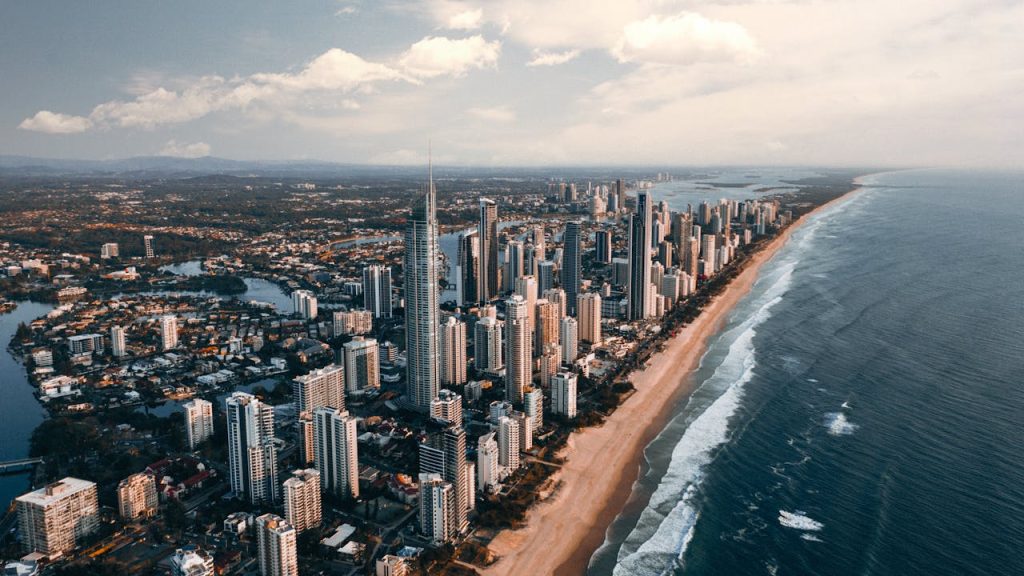
“We’ve got two airports, Gold Coast Airport and Brisbane International, only an hour apart,” says Brooke Campbell, Executive Director at Experience Gold Coast. “Virtually anywhere in Australia is a one-or-two-hour flight away.”
For planners under pressure to report ESG outcomes, this kind of proof matters. It also feeds into travel-tech platforms that increasingly track carbon impact, supplier certifications and local sourcing.
On the Gold Coast, sustainability shows up in supply chains. “We pride ourselves on our food and beverage,” Campbell says. “A lot of it is locally based produce. We promote our local farmers from a sustainability point of view.”
In the Northern Territories, Johnson adds another layer. “Cultural sustainability is just as important,” she says. “Booking Indigenous-led experiences supports communities and keeps culture alive.”
Experience design and story-led incentives
If there’s one area where Australia is leaning hardest into differentiation, it’s experience design coupled with storytelling.
“We’re seeing far more experience-driven programs,” says Lenehan. “Clients don’t want to drive past the Opera House, they want to be inside it. Behind the scenes. Dining there.”
In Canberra, Matthews highlights the ability to layer culture and nature seamlessly. “You can visit national institutions in the morning, then go mountain biking or wine tasting in the afternoon,” he says. “City culture, then nature adventure, all in one day.”
Adelaide’s pitch is surprise. “There’s a couple of unique experiences that you can get in Adelaide and South Australia that you can absolutely not get anywhere else. One of those is the Minato safari park,” Phelps says. “Adelaide is very easy to get around. 15 – 20 minutes from the airport to your hotel. Another 20 minutes and you’re in the Cleveland Wildlife Park cuddling a koala, feeding kangaroo,” he adds. “It’s bang for buck, and delegates don’t spend half their time on buses.”
For the Northern Territory, the story is ancient and immersive. “It’s about listening to stories about our culture,” McCaig says. “Walking on country. Experiencing Uluru under the stars. These are moments people carry with them.”
Cairns sells immersion at scale. “We have this incredible, pristine natural environment,” Bennett says. “But also a wealth of experiences, reef, rainforest, culture, all in one place.”
The Gold Coast, meanwhile, is reframing itself beyond beaches. “We align incentives with major events like supercars, airshows, international cricket,” Campbell explains. “It turns a business trip into a shared moment.”
What this means for incentive planners
For incentive planners evaluating destinations through data, ROI and delegate sentiment, Australia’s message is clear:
- Don’t play it safe with the usual cities alone. Delegate groups who have “been to Australia” multiple times are often eager to try something offbeat. All destinations suggested pairing the familiar with the novel. For instance, incentive planners can expand a Sydney program with Canberra on the itinerary (“the multi-destination trip,” as Canberra’s Michael Matthews calls it), or add a Queensland beach extension to a Melbourne conference.
- Match experiences to corporate goals. As Lenehan advised, always begin by asking “what’s your purpose?” Incentives are more successful when their activities tie back to the company’s values. Does the client care about innovation? Include high-tech VR tours of Australia’s space program or AI-assisted wildlife tracking. Is community impact a pillar? Build in a reef restoration or wildlife hospital volunteer day. Several bureaus gave examples of CEOs joining employee teams on fun runs or kayak clean-ups, which became symbolically powerful.
- Tailor group size and itinerary style carefully. “Quality over quantity” was echoed by multiple speakers. Gold Coast’s Campbell recommends 70–200 people for best engagement, with smaller waves working well there. Many cities noted that very large groups can be broken into “waves”, too. Adelaide hosted a 1,200-person incentive by rotating 500 – 600 at a time across multiple venues and tours. For smaller groups, it’s often easiest to do more personalized digs. All bureau’s emphasized that knowing your group profile matters too. For instance, a mostly Indian delegation might not envision jungle treks initially, but often comes back raving after a cultural nature experience in Far North Queensland. The key is bridging that gap.
- Leverage event schedules and special funds. Gold Coast’s Campbell noted a brand-new incentive-funding program, up to USD $70 per person off accommodations for qualified 2-night stays (up to 250 pax) through 2027. Bureaus suggested that planners should also watch the events calendars, aligning travel with the Australian Open tennis in Melbourne, or a Brisbane F1, or a Canberra festival can elevate a trip.
- Sell the “soft ROI.” Hard-dollar budgets are crucial, but these experts repeatedly emphasized the intangible payoff. Every bureau we spoke with noted that many incentive travellers book a private trip back for vacation, which is an ongoing economic win for the region. One bureau remarked that often delegates return as self-funded tourists, or even consider studying (or retiring) in Australia after experiencing it firsthand. That’s the halo effect.
Tour operators and incentive houses are sometimes wary of selling far-flung destinations, but each bureau agreed that while Australia is still considered a “premium” destination, that premium is justified by quality and experience, not just price. If anything, creative use of local assets (farms, parks, indigenous knowledge) means planners can get more experiences for comparable spend.


